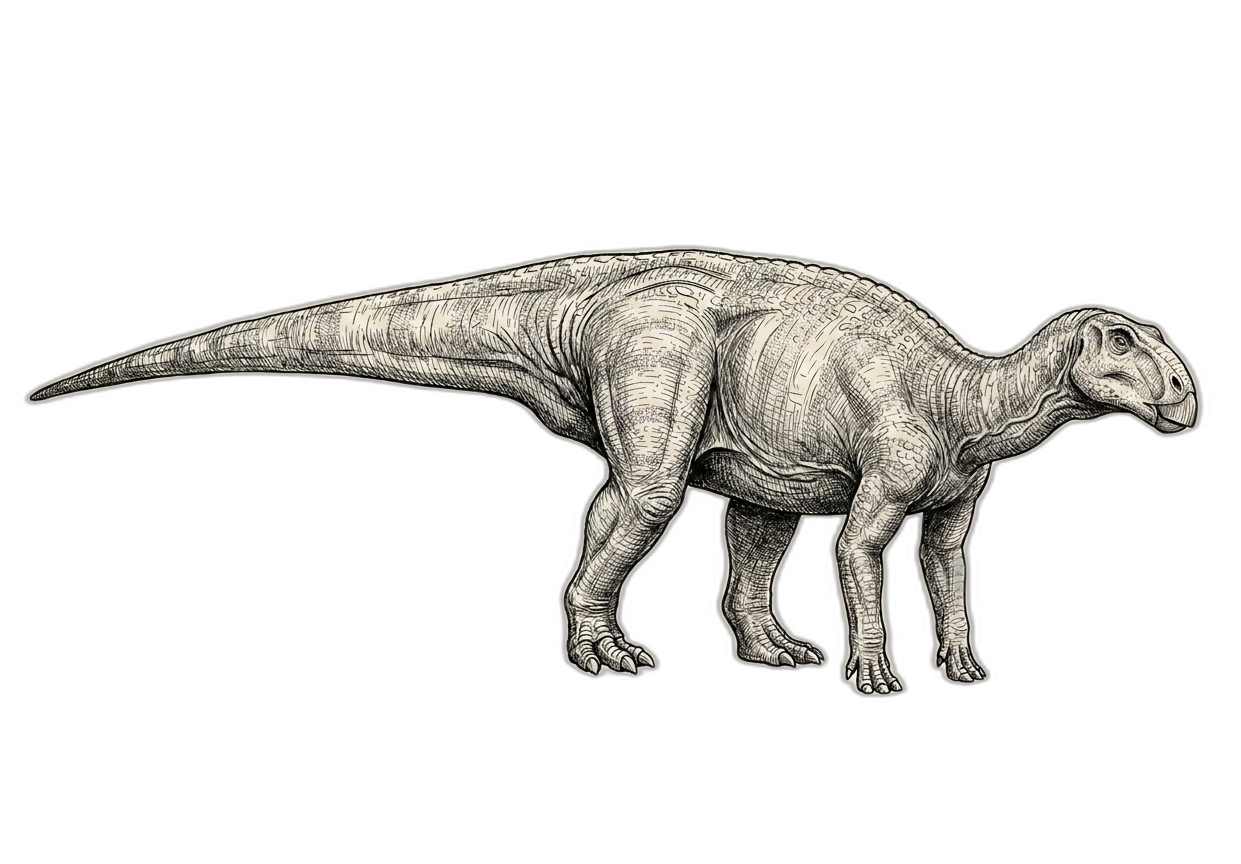
About
Tenontosaurus tilletti was a robust dinosaur that inhabited the floodplains and forests of Early Cretaceous North America approximately 115 to 108 million years ago. Its most distinctive feature was an extraordinarily long tail, reinforced by a lattice of bony tendons that kept it rigid and elevated—a characteristic that inspired its name, meaning 'sinew lizard.' This tail accounted for more than half the animal's total length of 6 to 8 meters and likely served as a counterbalance during locomotion and possibly as a defensive weapon.
Tenontosaurus possessed a relatively small head with a beak for cropping vegetation, backed by rows of leaf-shaped teeth ideal for processing tough plant material. While primarily when foraging, its strong hindlimbs suggest it could rear up on two legs to reach higher vegetation or flee predators. The forelimbs were sturdy with five-fingered hands capable of supporting weight.
This dinosaur holds exceptional scientific importance due to its frequent association with Deinonychus antirrhopus fossils. Multiple sites in the Cloverly Formation preserve Tenontosaurus skeletons surrounded by Deinonychus teeth and remains, providing some of the most compelling evidence for cooperative hunting in non-avian dinosaurs. With over 50 known specimens ranging from juveniles to adults, Tenontosaurus is among the best-understood ornithopods of its time, offering invaluable insights into growth patterns, behavior, and predator-prey dynamics in Cretaceous ecosystems.
Quick Facts
- Scientific name
- Tenontosaurus tilletti
- Group
- Ornithopod · Iguanodontia
- Lived
- Early Cretaceous, 115–108 million years ago
- Diet
- Herbivore
- Movement
- Walked on two or four legs
- Fossils found in
- Cloverly Formation, Antlers Formation and Cedar Mountain Formation (United States)
- Discovery credited to
- 1970, John H. Ostrom
- Holotype
- AMNH 3040, American Museum of Natural History
- DinoVault record
- DVL-0135
Where fossils were found
Cloverly Formation
+2 more formations
Montana, Wyoming, Oklahoma, Texas +2 more · United States
115–108 million years ago(7m year span)
Where Tenontosaurus Roamed
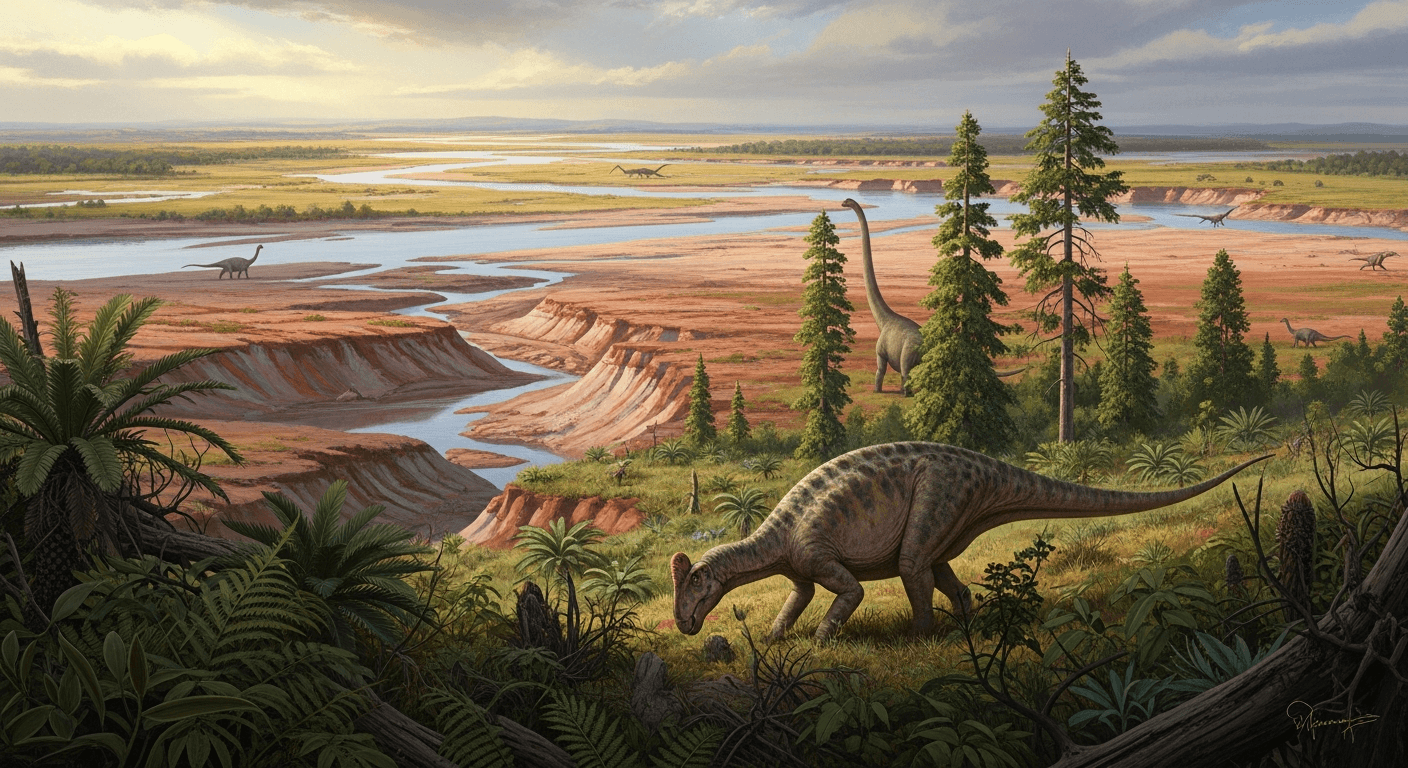
During the Early Cretaceous, *Tenontosaurus tilletti* roamed the coastal lowlands of western Laramidia, a landmass that would later become North America, where lush floodplains and river systems bordered the nascent Western Interior Seaway as it began its transgression across the continent. This warm, humid environment supported dense fern prairies and conifer forests under a subtropical climate, providing ample forage for these herbivorous ornithopods.
Keep exploring the vault
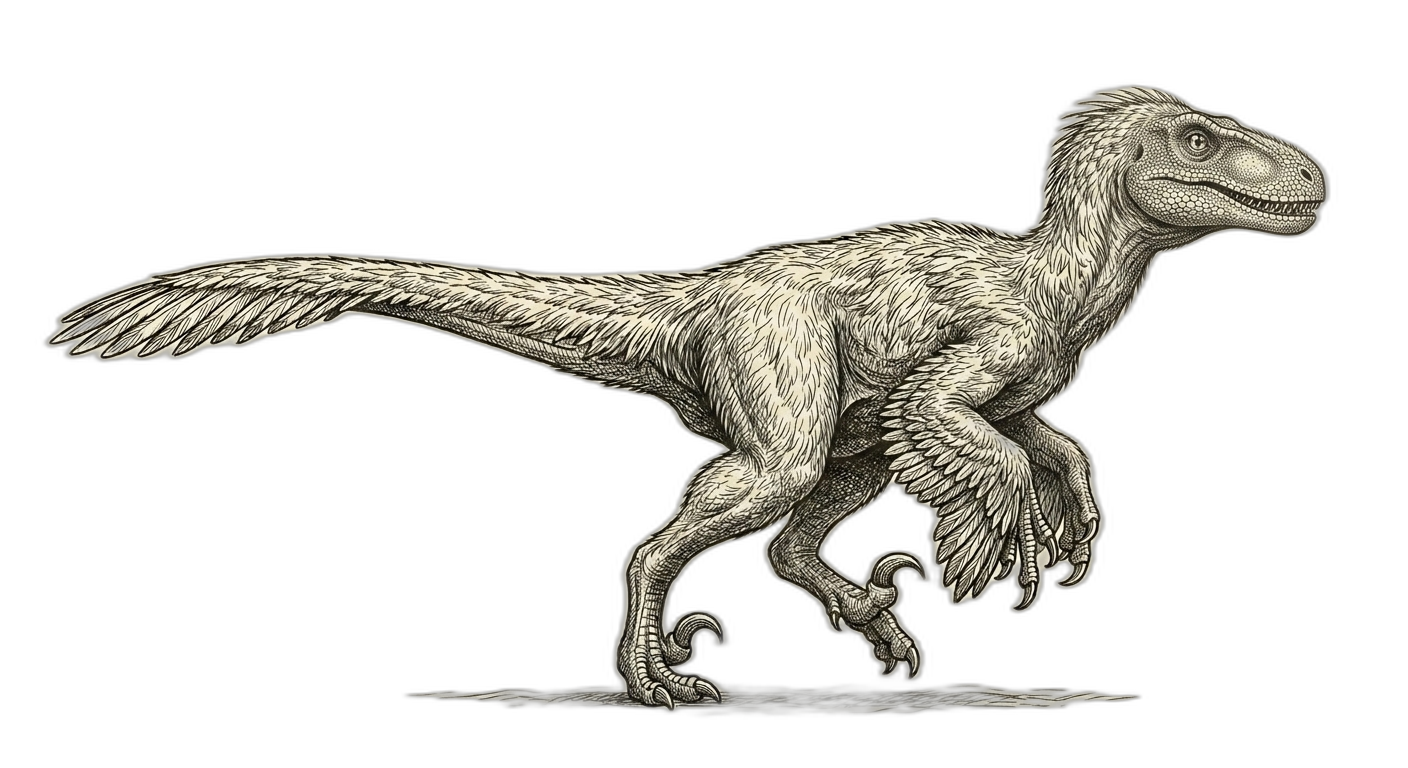
Deinonychus
Deinonychus antirrhopus
Multiple Tenontosaurus skeletons have been found associated with Deinonychus teeth and remains in the Cloverly Formation, including the famous 'predator trap' sites suggesting pack hunting or at least group feeding on Tenontosaurus carcasses.
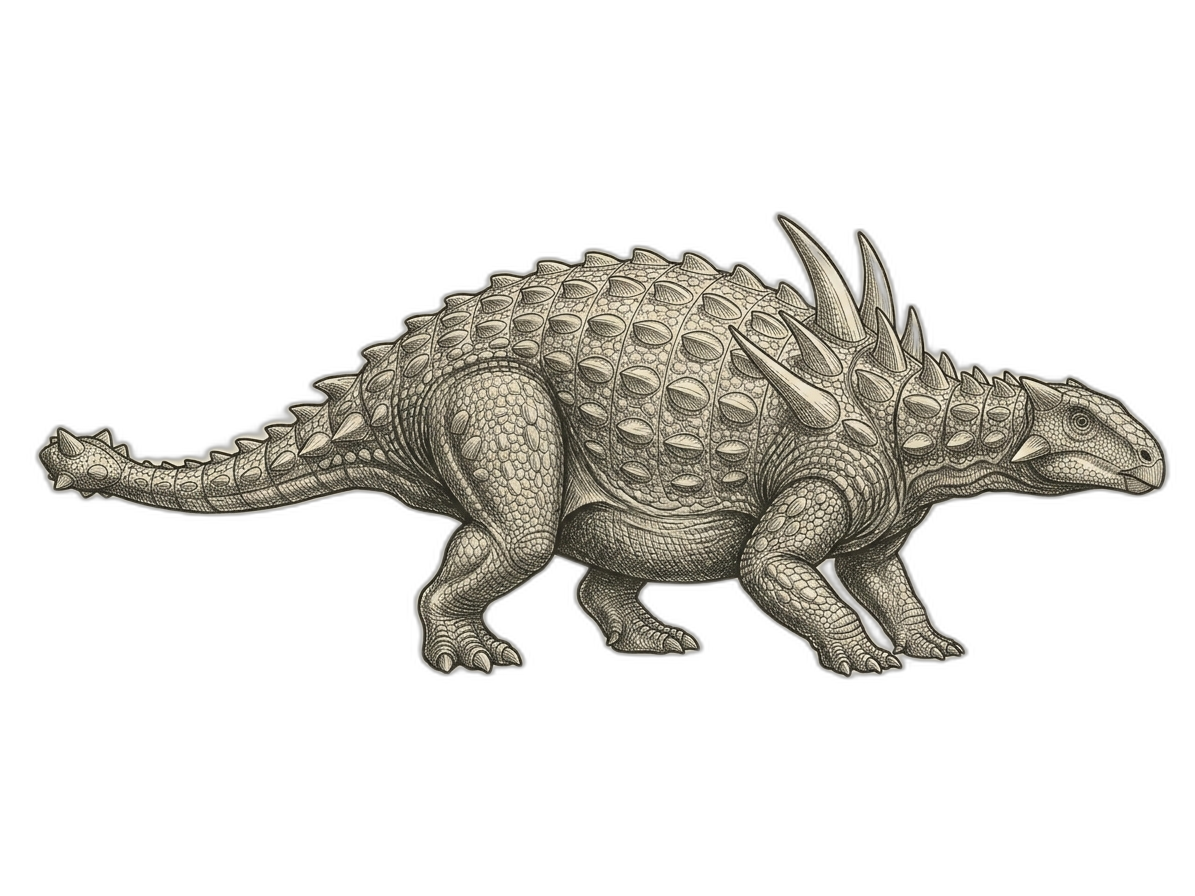
Gastonia
Gastonia burgei
Both herbivores co-occur in the Cedar Mountain Formation with similar body masses (Tenontosaurus ~800kg, Gastonia ~1800kg).
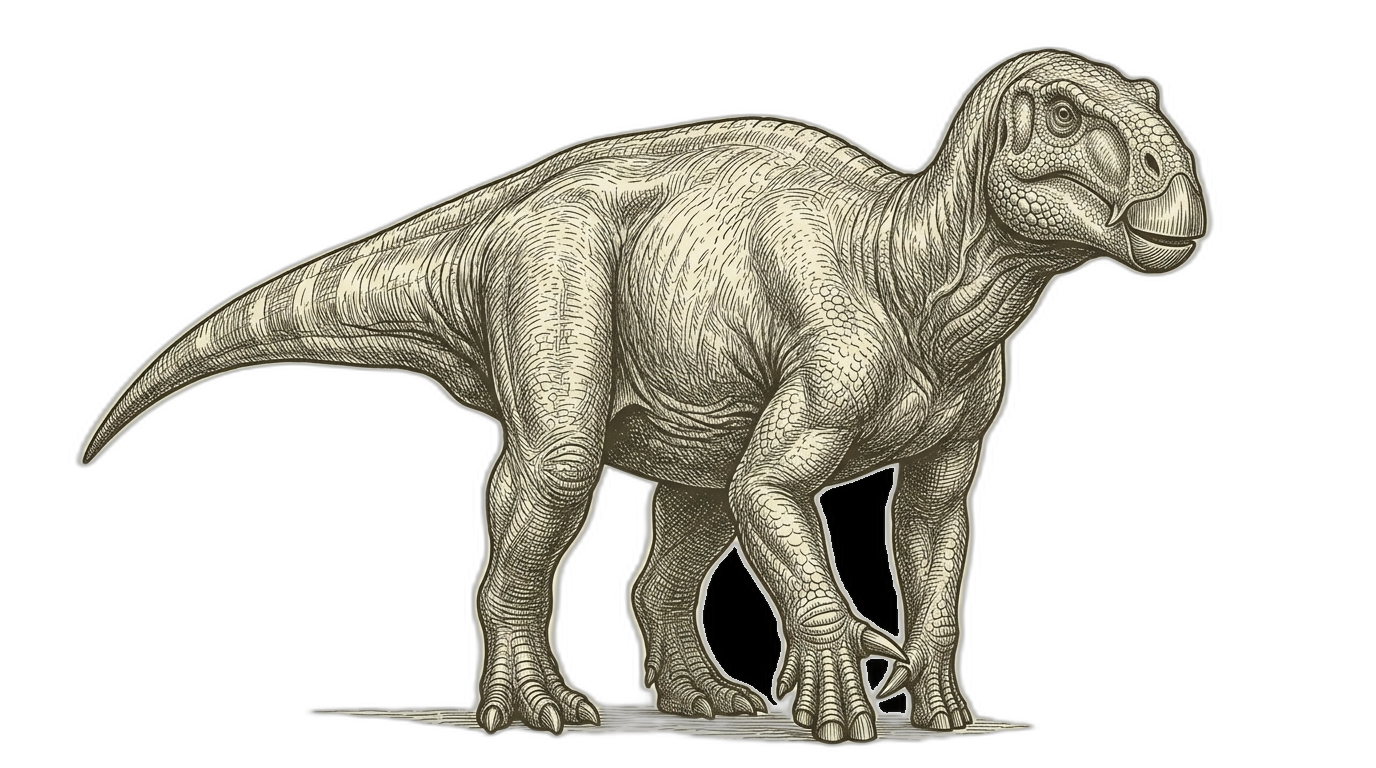
Iguanodon
Iguanodon bernissartensis
Both are basal iguanodonts that evolved similar body plans with robust forelimbs, large thumb spikes (or in Tenontosaurus's case, robust hands), and facultative bipedality.
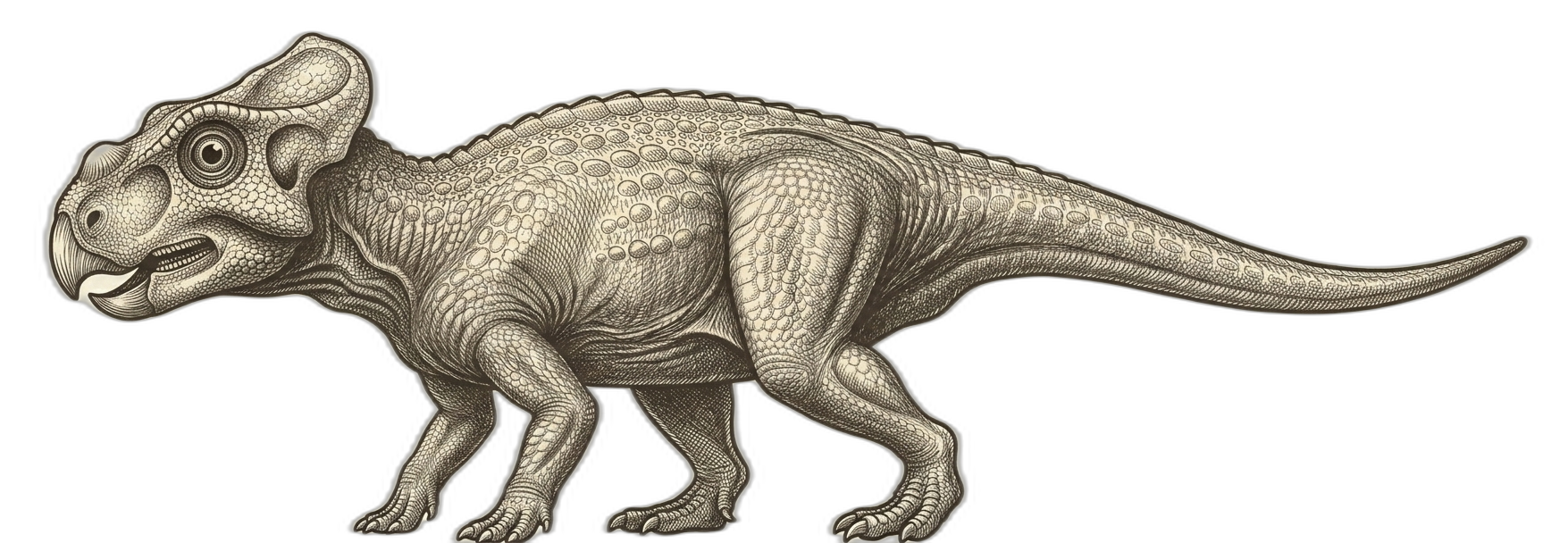
Aquilops
Both occur in the Cloverly Formation.
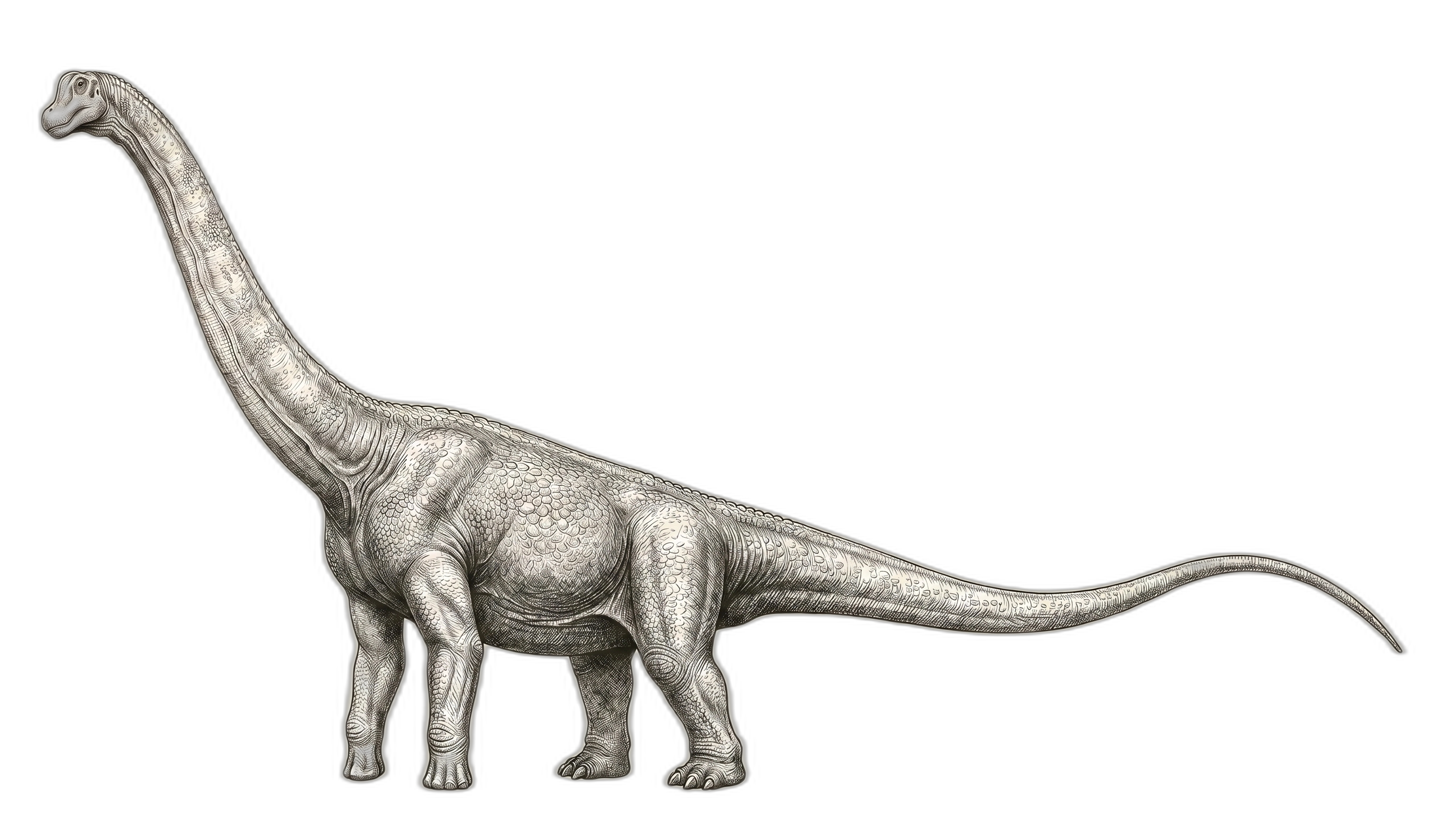
Sauroposeidon
Sauroposeidon proteles
Both occur in the Antlers Formation of Oklahoma/Texas.
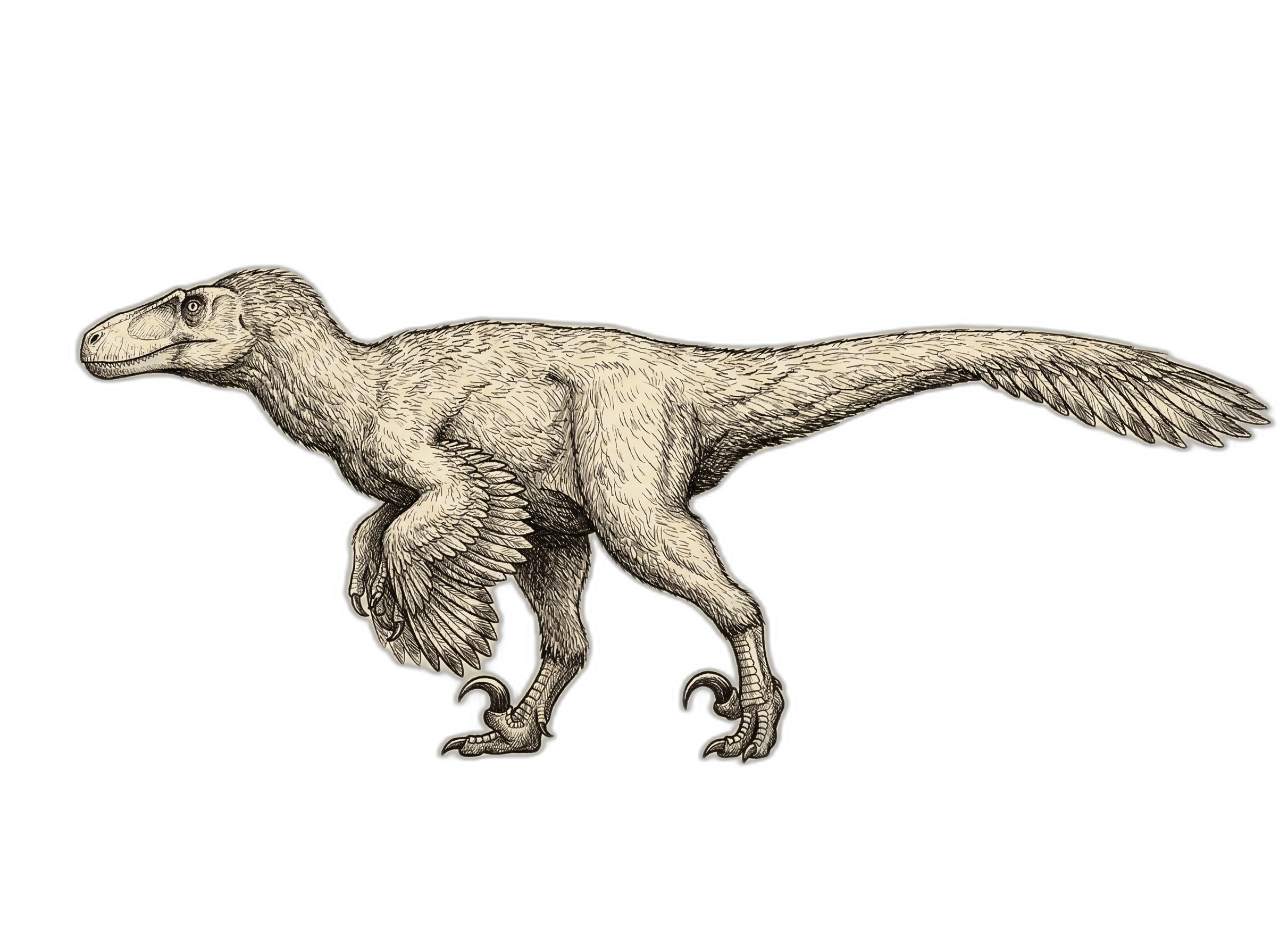
Utahraptor
Utahraptor ostrommaysorum
Both occur in the Cedar Mountain Formation.
Sources & Citation
- Length estimates
- Forster, C.A. (1990). The postcranial skeleton of the ornithopod dinosaur Tenontosaurus tilletti. Journal of Vertebrate Paleontology 10(3):273-294
- Height estimates
- Estimated based on skeletal reconstructions; Forster 1990
- Weight estimates
- Benson et al. (2014). Rates of dinosaur body mass evolution. PLoS ONE 9(5):e97055
- Speed estimates
- Biomechanical estimate based on limb proportions and facultative bipedality