Ornithischia — Thyreophora
Ankylosaurs
201–66 Ma
8
vault species
135
million years
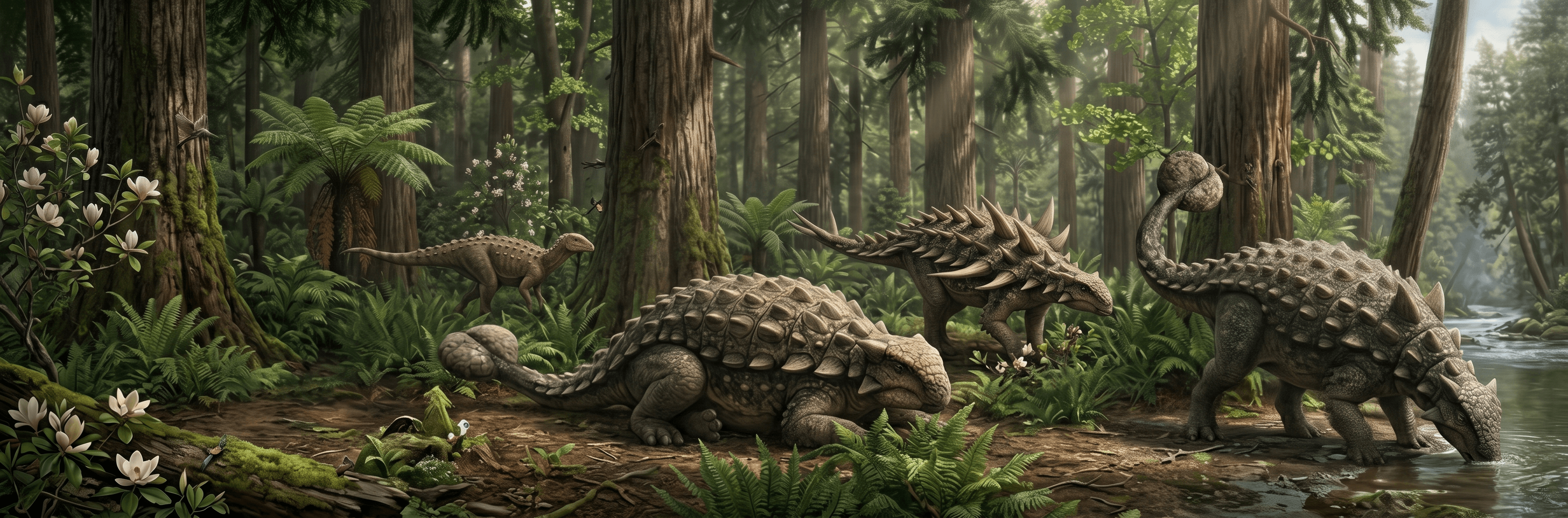
What is a Ankylosauri?
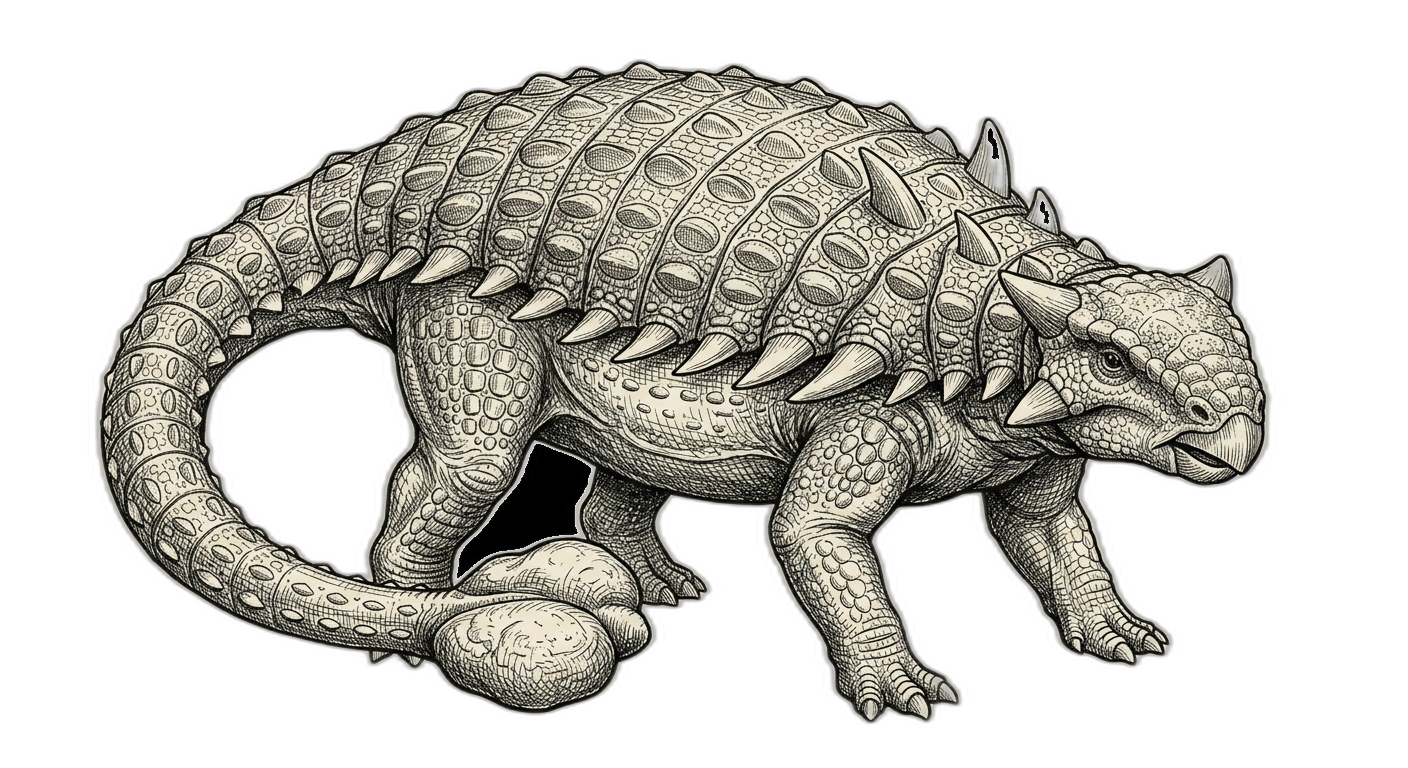
Ankylosaurs are heavily armored ornithischian dinosaurs covered in osteoderms — bony plates, spikes, and knobs fused into the skin. The group is divided into nodosaurids (spiky, no tail club) and ankylosaurids (broader body, bony tail club).
First appearance
~201 Ma (Early Jurassic)
Largest known
Ankylosaurus (~8 m, ~8 tonnes)
Tail club force
Estimated 800–4,500 N impact force
Two families
Nodosauridae (no club) + Ankylosauridae (club)
Skin preserved
Borealopelta — colour chemically detected
Evolution & History
Ankylosaurs represent one of the most committed evolutionary experiments in passive defense in the history of life. Their armor wasn't just a shield — it was fused directly into the skin, forming a continuous mosaic of bone over the back, neck, and flanks. The most derived ankylosaurids added a final weapon: a tail club of fused vertebrae and bone that could be swung with enough force to shatter the lower leg bones of a large theropod.
The lineage begins in the Early Jurassic with Scelidosaurus — a modest, lightly armored animal that hints at what the group would become. Over 130 million years, ankylosaurs slowly escalated their defenses, diverging into two parallel strategies: the nodosaurids, which invested in elaborate shoulder spines and neck armor, and the ankylosaurids, which traded some lateral protection for the devastating tail club.
Borealopelta, discovered in 2011 in an oil sands mine in Alberta, provided an extraordinary window into ankylosaur biology: the specimen was so well-preserved that skin color was chemically detectable, revealing reddish-brown countershading. This suggests ankylosaurs faced enough predation pressure to evolve camouflage despite their armor — a humbling reminder that even the most fortified animals in Earth's history weren't safe.
Key Species in the Record
Scelidosaurus
Earliest thyreophoran, ~200 Ma
Gastonia
In vault →Early nodosaurid with elaborate lateral spines
Euoplocephalus
In vault →Most completely known ankylosaurid — the reference animal for the group's anatomy
Borealopelta
In vault →Extraordinary skin preservation — reddish-brown countershading chemically confirmed
Zuul
In vault →Near-complete specimen with soft tissue intact, 2017 — named after the Ghostbusters monster
Ankylosaurus
In vault →Last and largest ankylosaurid, survived to 66 Ma
Stratigraphic Range
Click any row to expand family-level detail. Amber dots are DinoVault species.
In the Vault
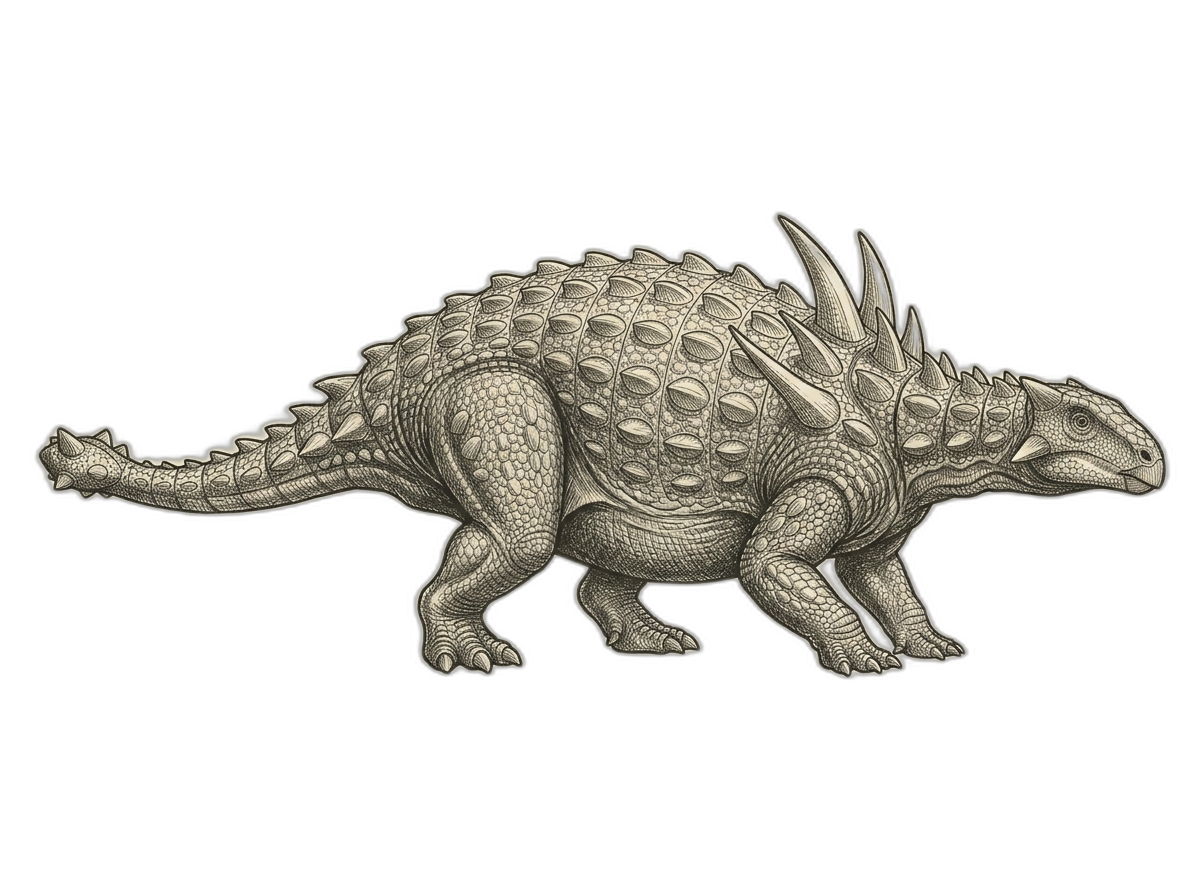
Gastonia
Gastonia burgei
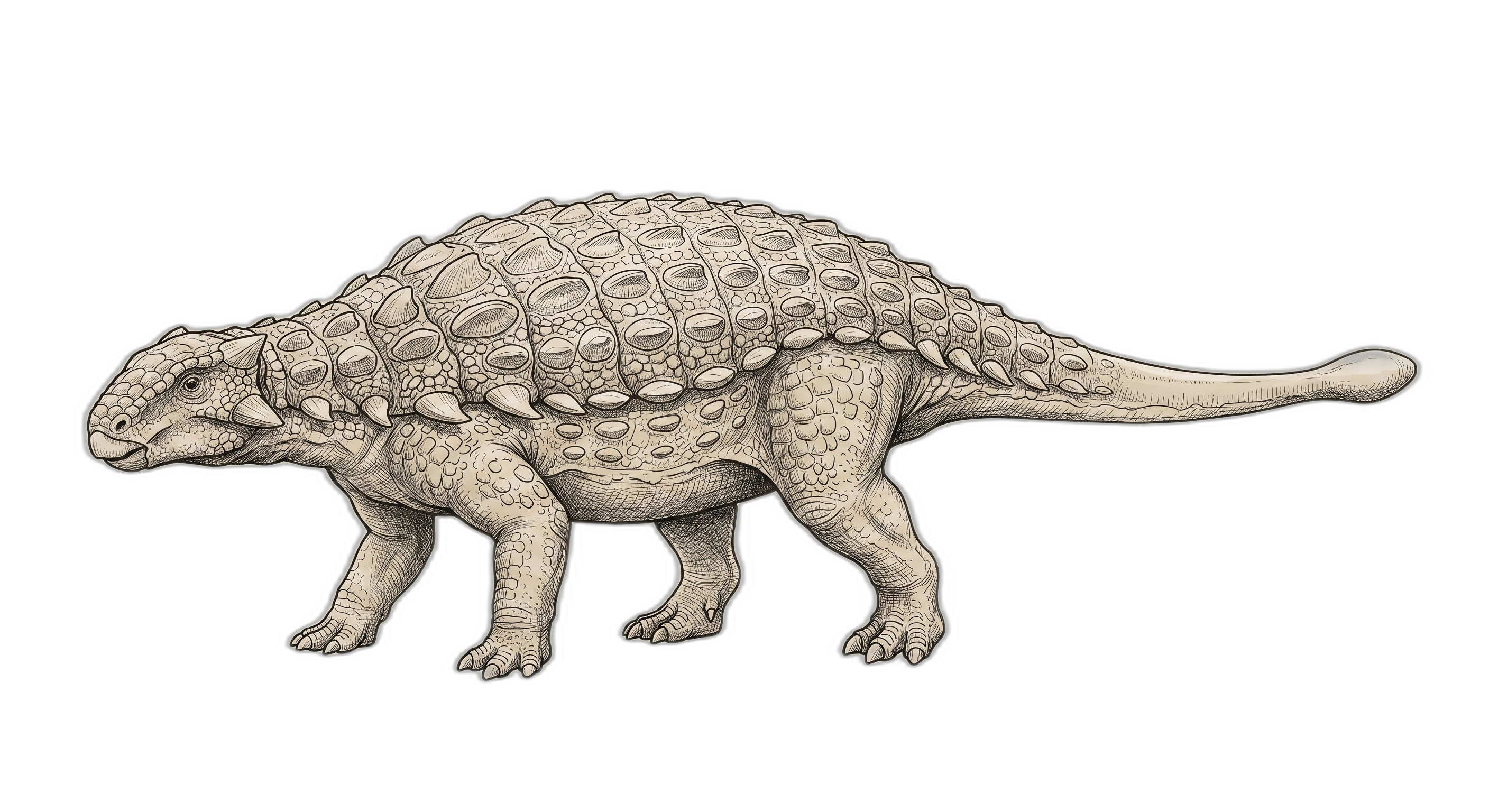
Minmi
Minmi paravertebra
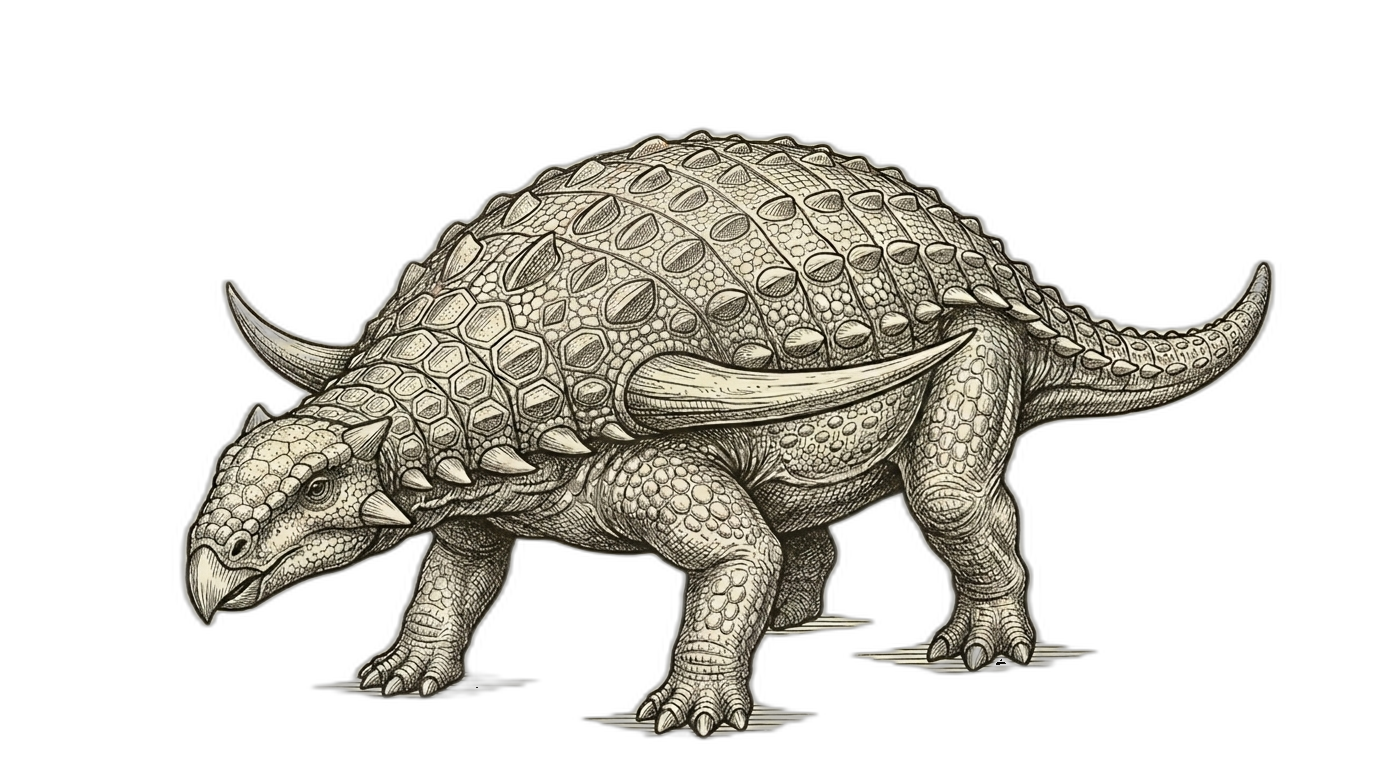
Borealopelta
Borealopelta markmitchelli
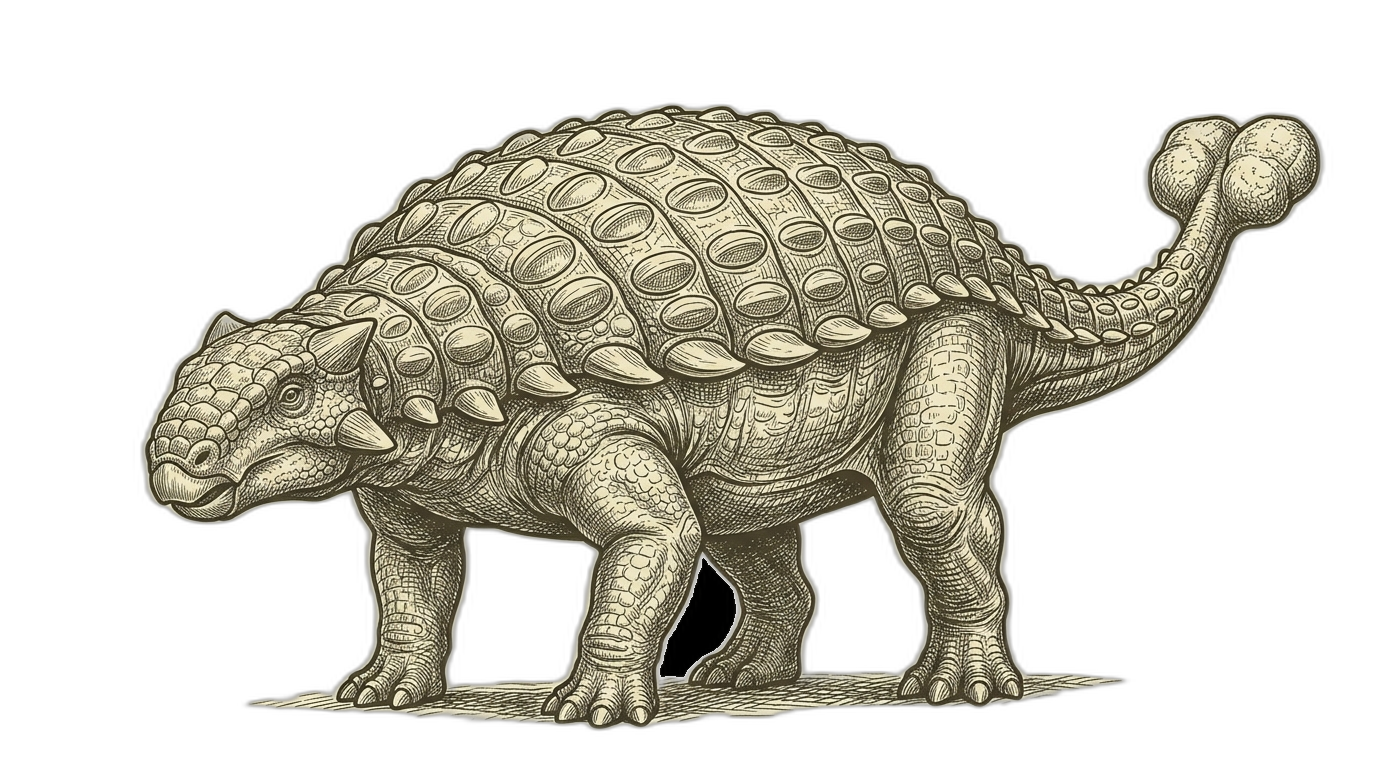
Euoplocephalus
Euoplocephalus tutus
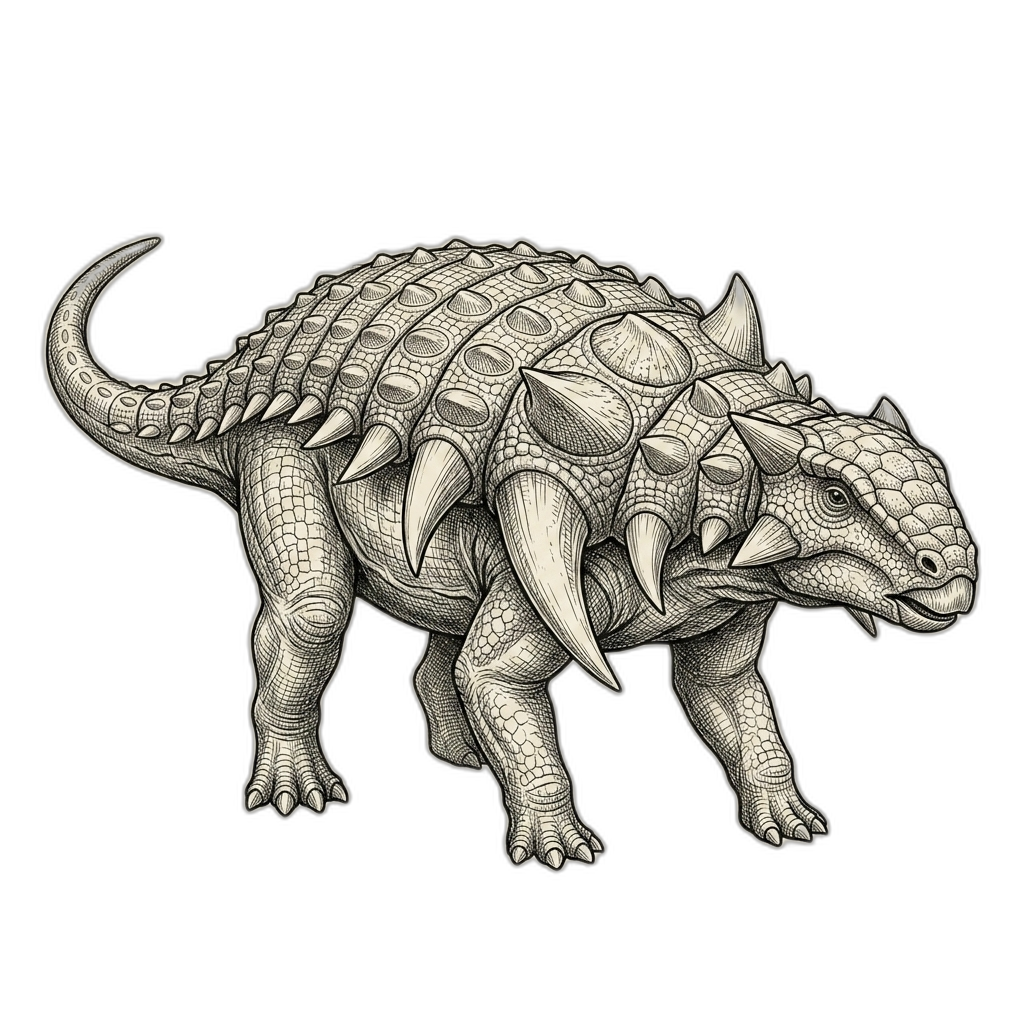
Edmontonia
Edmontonia rugosidens
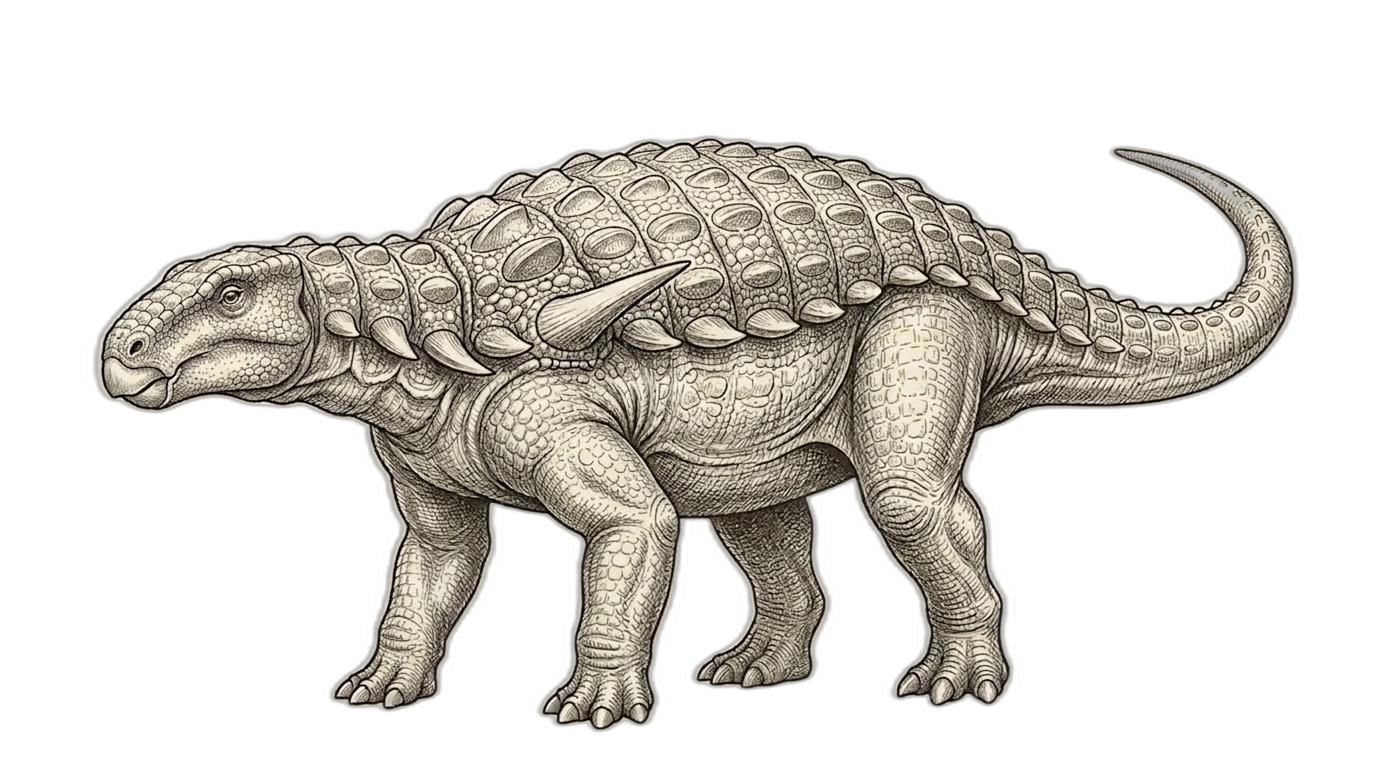
Panoplosaurus
Panoplosaurus mirus
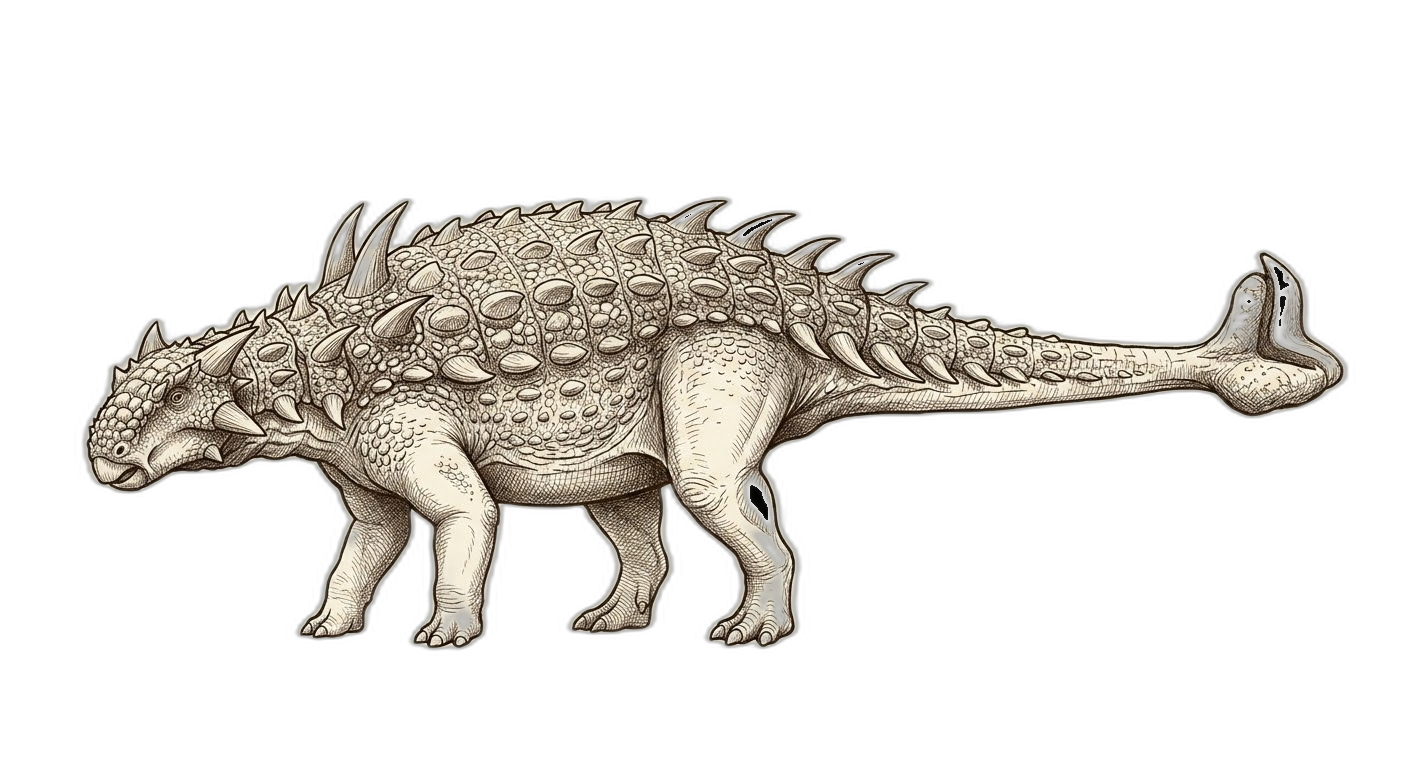
Zuul
Zuul crurivastator
Ankylosaurus
Ankylosaurus magniventris