About
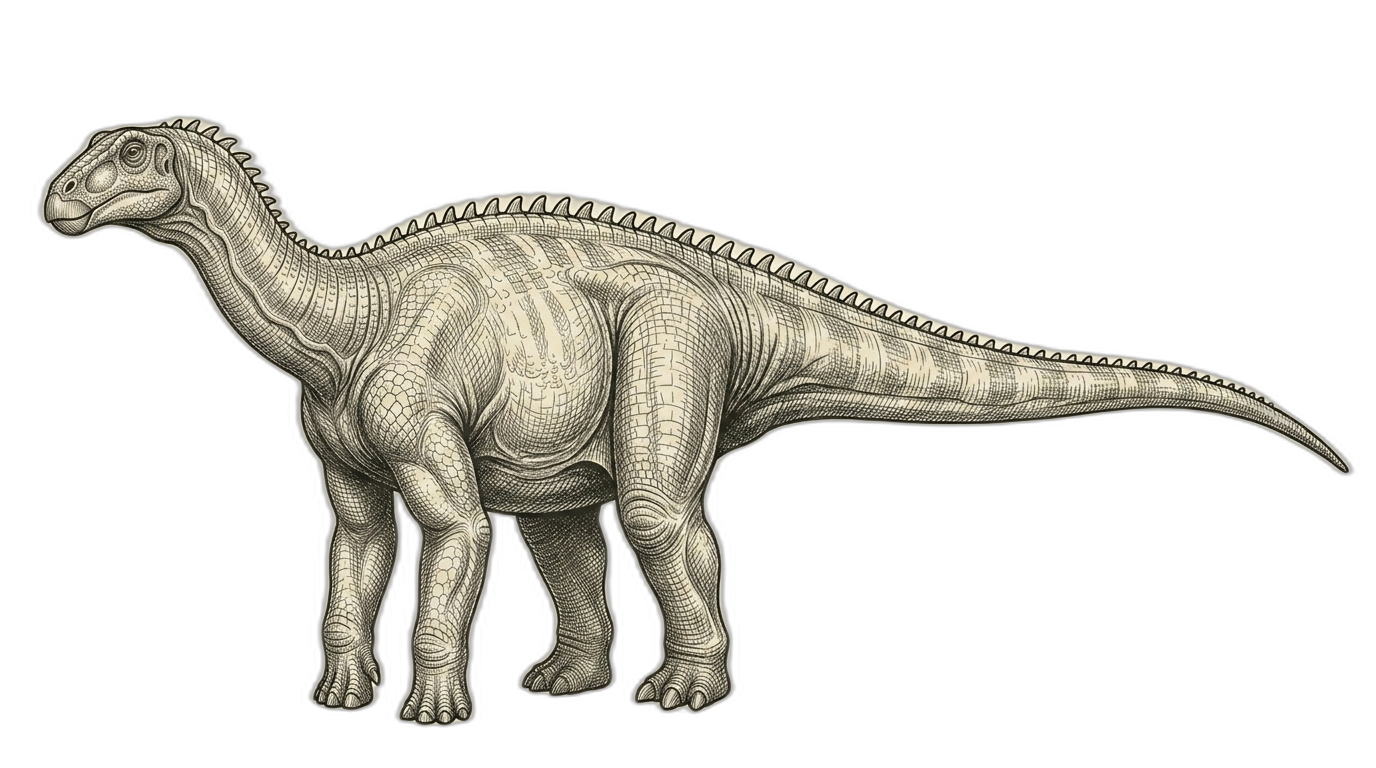
Barapasaurus tagorei stands as one of the most significant discoveries from the Indian subcontinent, representing a crucial window into early sauropod evolution. This massive herbivore roamed the river deltas and floodplains of what is now central India during the Early Jurassic, approximately 190 million years ago. With an estimated length of around 14 meters and weighing up to several tonnes, Barapasaurus was among the largest land animals of its time.
The skeleton reveals a fascinating blend of primitive and advanced features. Its show early signs of the weight-reducing hollows that would become elaborate air sacs in later sauropods, while its limbs were already columnar and robust, supporting its enormous bulk. The spoon-shaped teeth were well-adapted for stripping vegetation from Jurassic conifers and ferns.
Discovered in 1961 near the Pranhita-Godavari Valley, the excavation yielded remarkably complete material from multiple individuals, though curiously lacking any skull material. The fossils were recovered from the Kota Formation, a rich deposit that has yielded numerous Early Jurassic . The naming of this dinosaur honors both Indian heritage and culture—'bara pa' meaning 'big leg' in several Indian languages, while the species name commemorates the renowned Bengali poet Rabindranath Tagore. Barapasaurus remains pivotal in understanding how sauropods evolved their distinctive body plan.
Quick Facts
- Scientific name
- Barapasaurus tagorei
- Group
- Sauropodomorph · Vulcanodontidae
- Lived
- Early Jurassic, 196–183 million years ago
- Diet
- Herbivore
- Movement
- Walked on four legs
- Discovery credited to
- 1961, S.L. Jain, T.S. Kutty, T. Roy-Chowdhury, and S. Chatterjee
- Holotype
- ISI R 50, Indian Statistical Institute, Kolkata
- DinoVault record
- DVL-0015
Where Barapasaurus tagorei Roamed
During the Early Jurassic, Barapasaurus roamed the eastern margins of Gondwana, in a region that would eventually become peninsular India, situated along the northwestern shores of the young Indian Ocean as it began to form from the rifting supercontinent. This warm, humid landscape featured extensive river systems and floodplains that supported lush vegetation, providing ample resources for one of the earliest known giant sauropod dinosaurs.
Keep exploring the vault
Dilophosaurus
Dilophosaurus wetherilli
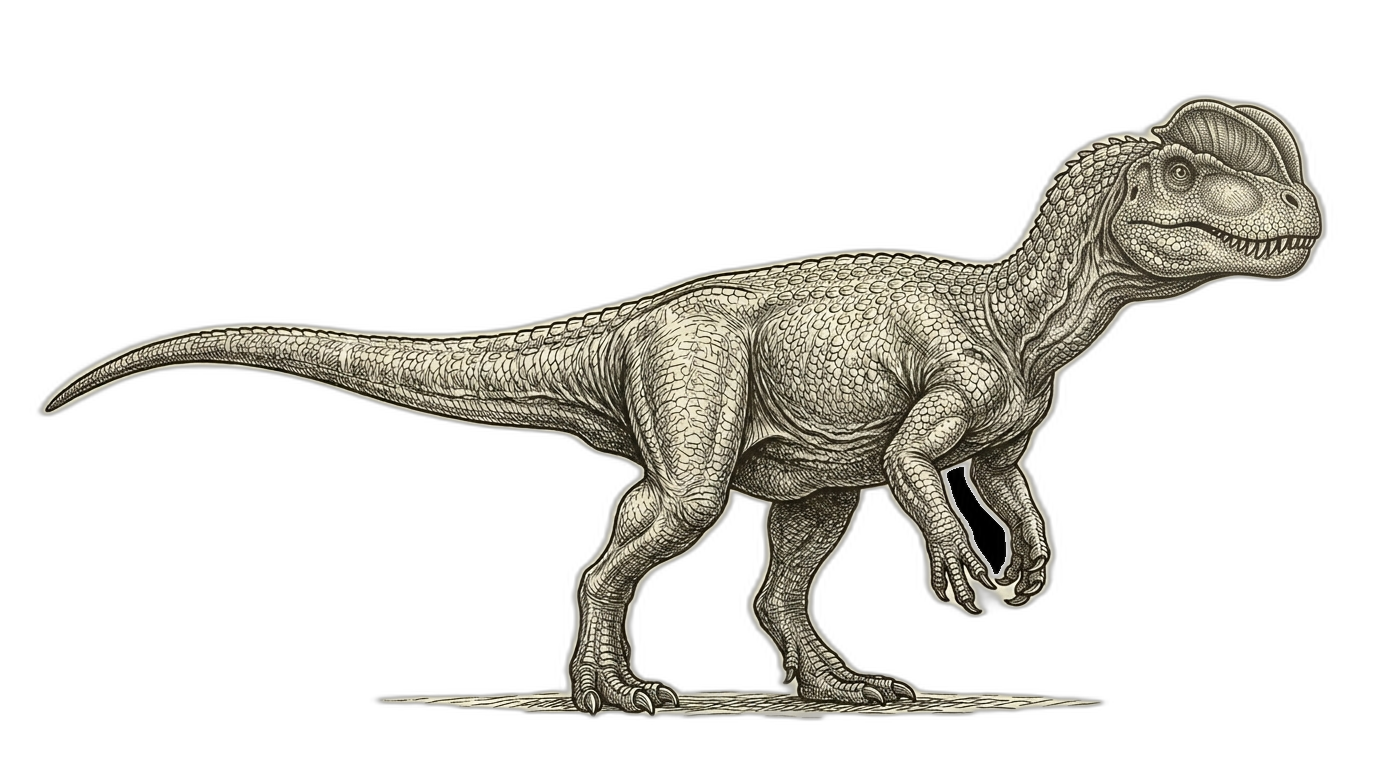
Dilophosaurus was a large Early Jurassic theropod (approximately 193 mya) that could have posed a threat to juvenile Barapasaurus, though adults at 14m would have been largely immune to predation.
Massospondylus
Massospondylus carinatus
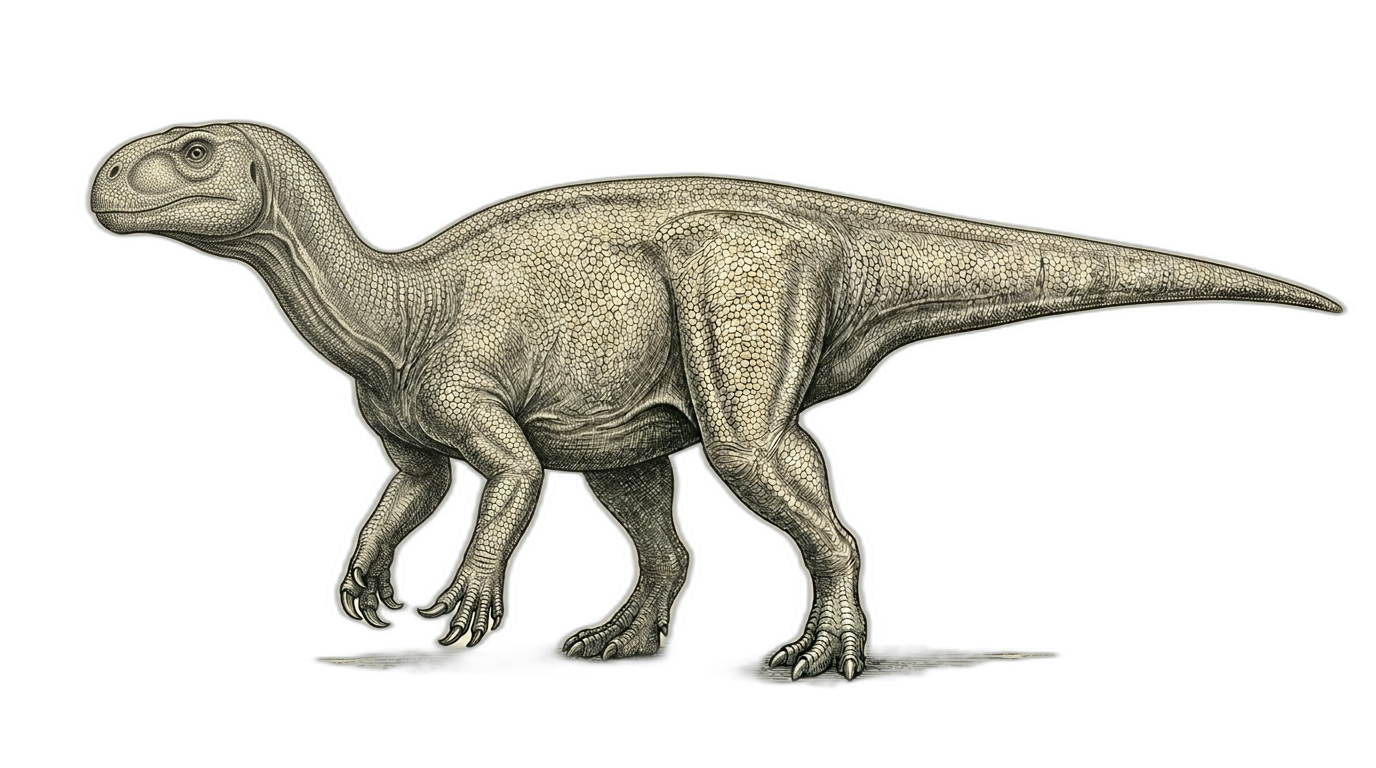
Massospondylus represents the type of basal sauropodomorph from which early sauropods like Barapasaurus evolved, showing the transition from bipedal/facultatively quadrupedal forms to obligate quadrupeds with longer necks.
Whale Lizard
Cetiosaurus oxoniensis
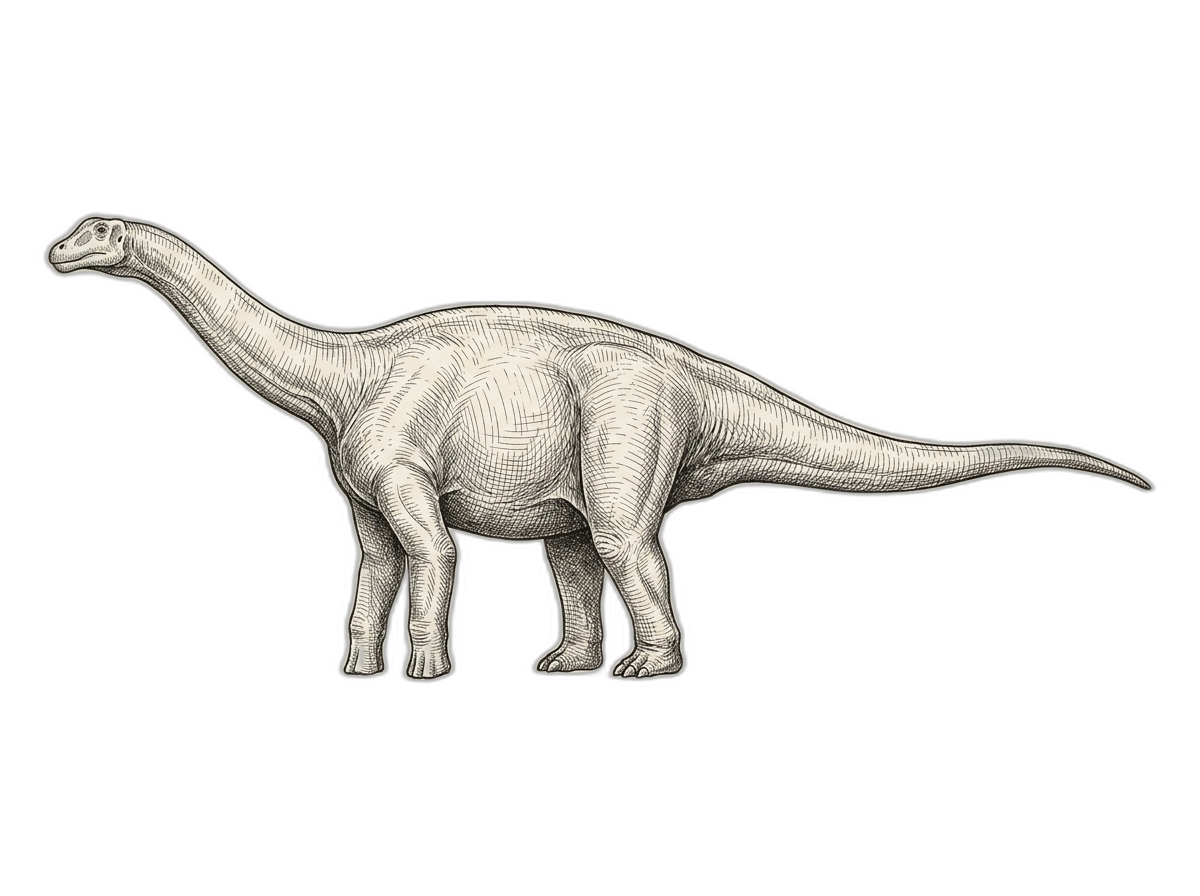
Both represent early sauropod lineages experimenting with large body size and elongated necks during the Jurassic, with Barapasaurus in the Early Jurassic of India and Cetiosaurus in the Middle Jurassic of Europe showing parallel development of the classic sauropod body plan.
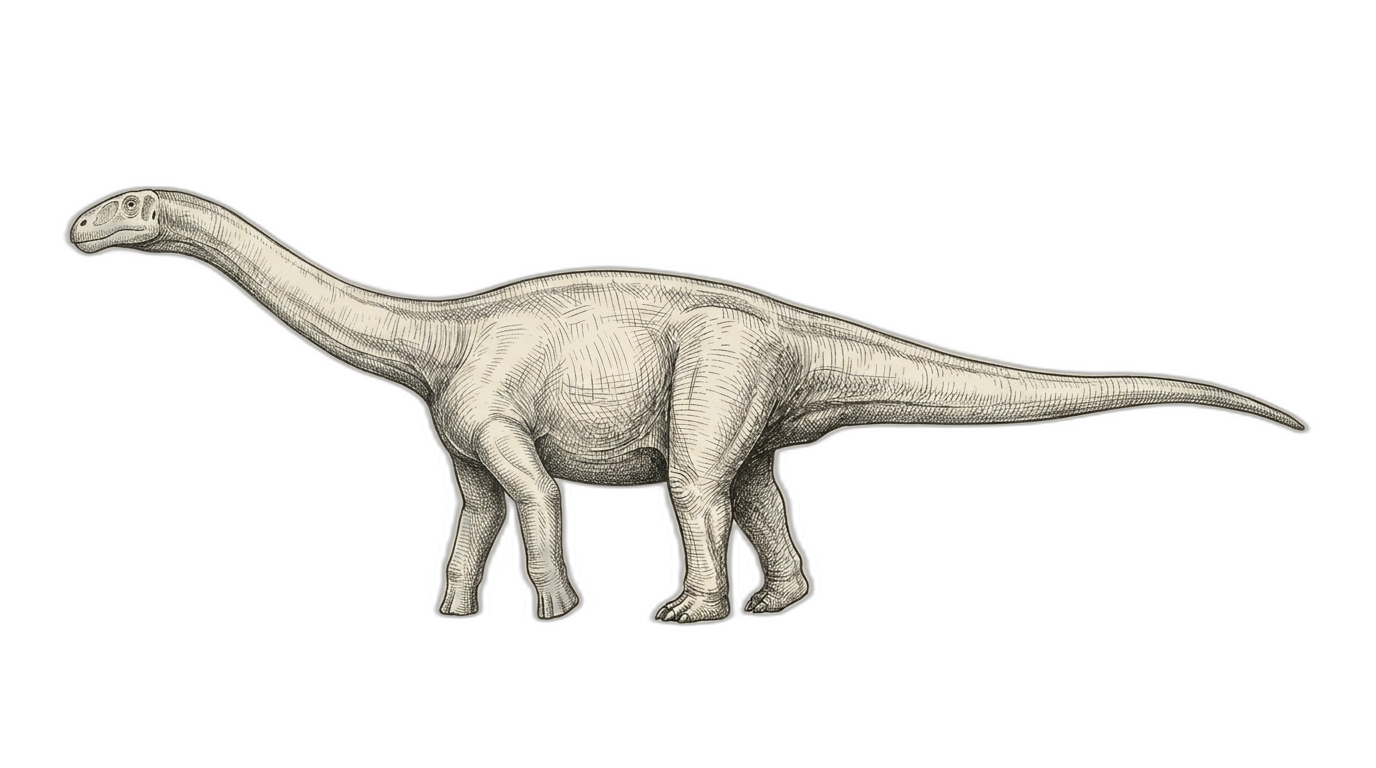
Vulcanodon
Same family: Vulcanodontidae
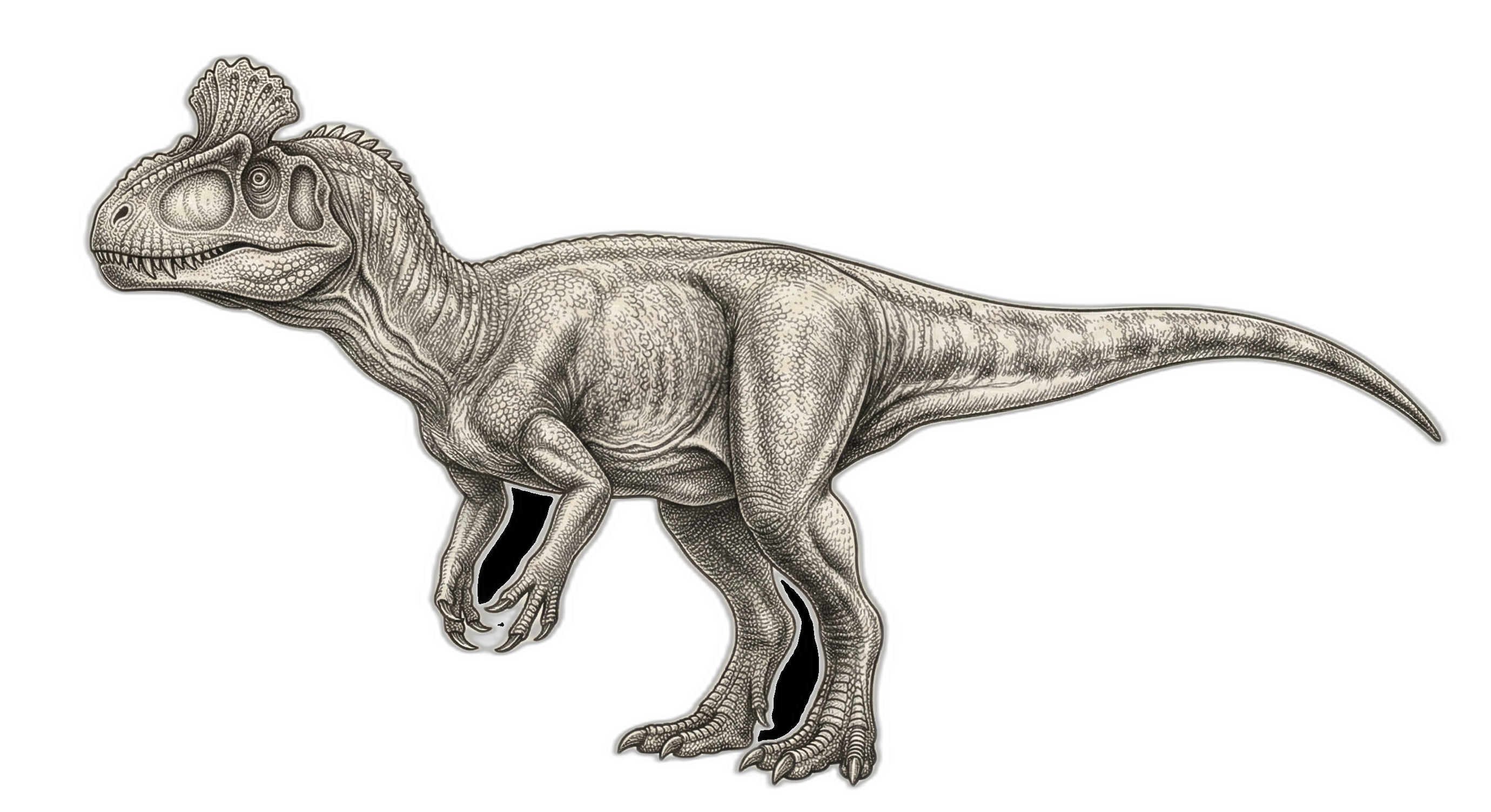
Cryolophosaurus
Cryolophosaurus ellioti
Cryolophosaurus lived during the Early Jurassic (approximately 190 mya) and represents one of the few large theropods known from this time period, making it a plausible contemporary predator in Gondwanan ecosystems.
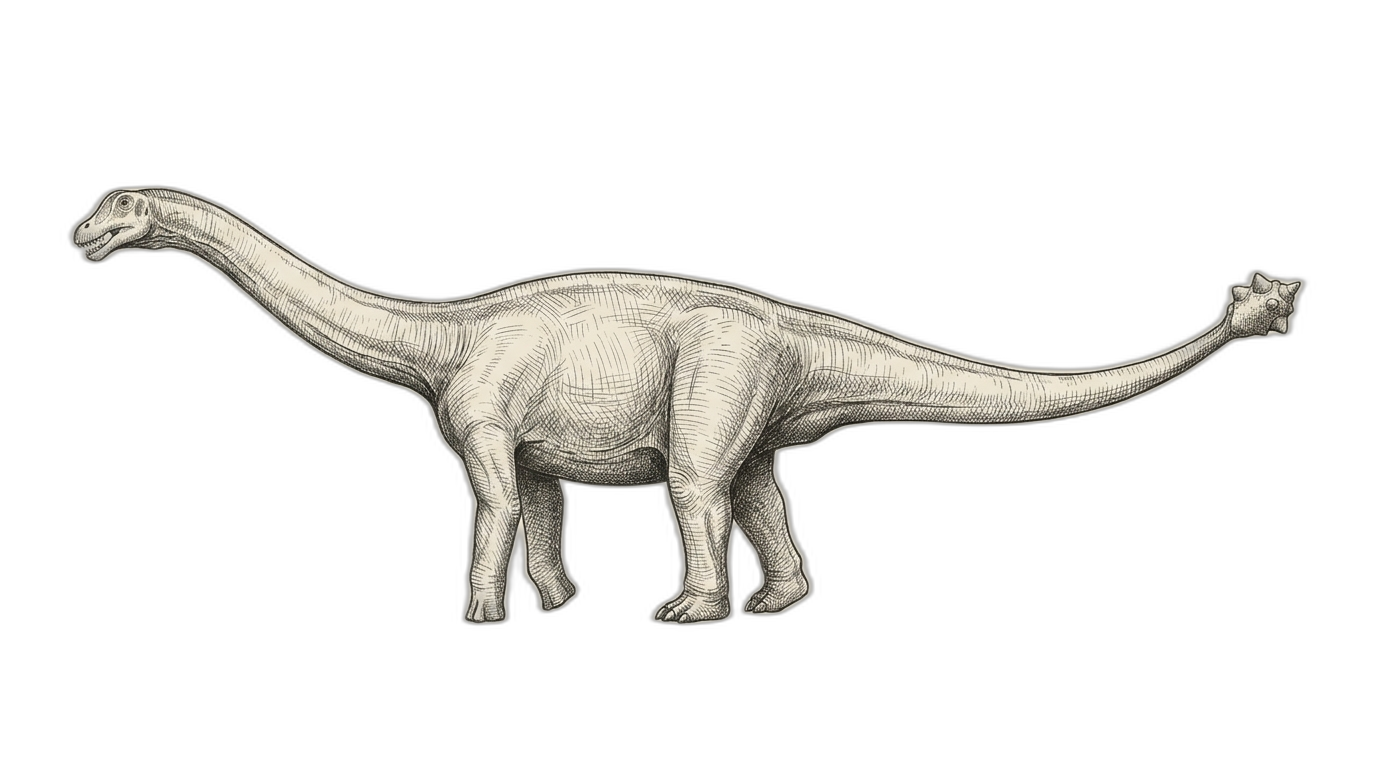
Shu Lizard
Shunosaurus lii
Shunosaurus and Barapasaurus represent parallel early sauropod experiments in Asia and India respectively, both relatively primitive forms showing the transition from basal sauropodomorphs to the giant long-necked body plan that would dominate Jurassic ecosystems.
Sources & Citation
- Length estimates
- Jain et al. 1975, 1979; Bandyopadhyay et al. 2010
- Height estimates
- Estimated from skeletal proportions; Jain et al. 1975
- Weight estimates
- Volumetric estimates based on skeletal reconstructions; Wilson & Upchurch 2003
- Speed estimates
- Biomechanical estimate for large sauropods