About
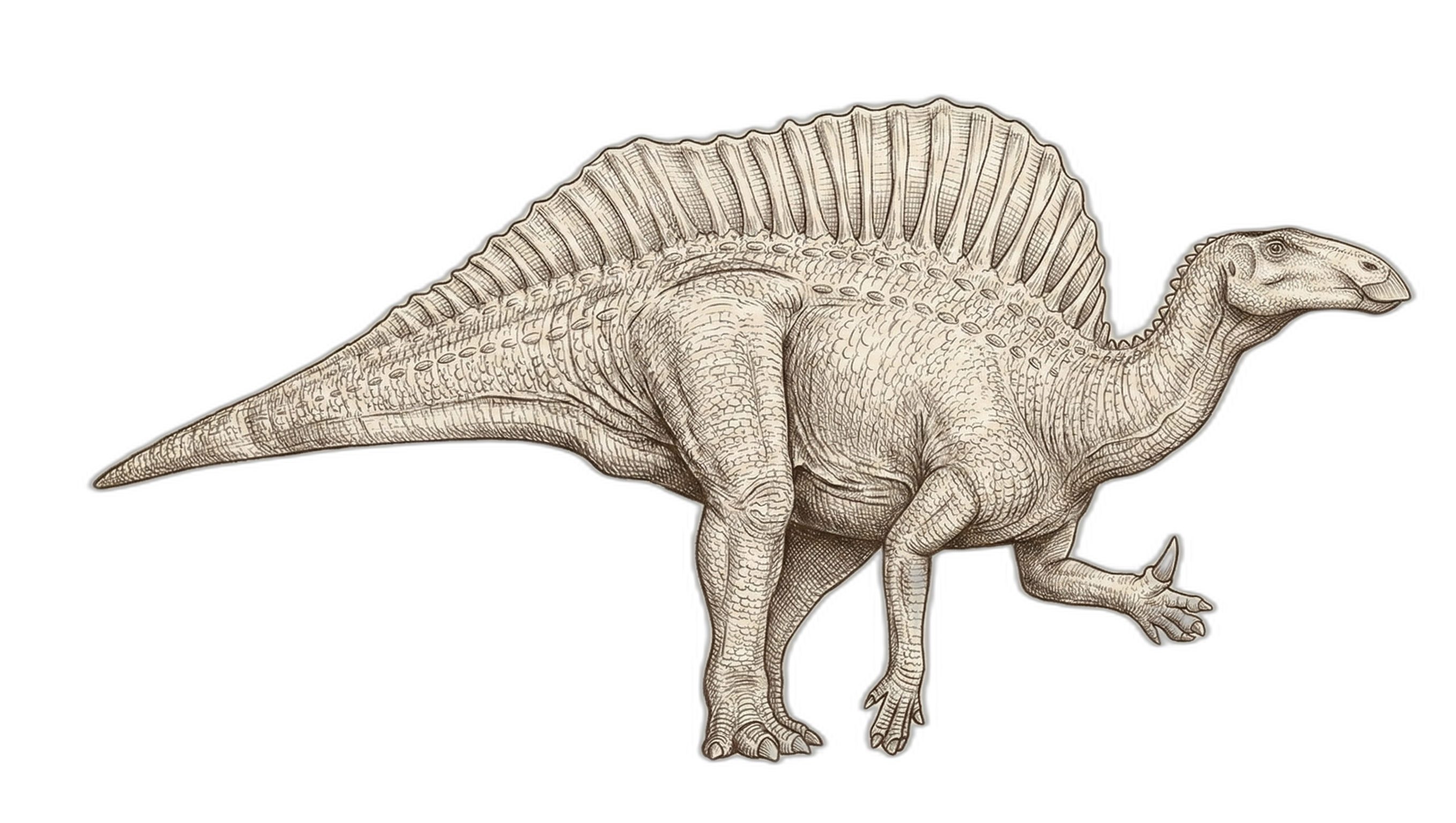
Ouranosaurus was a striking dinosaur that lived approximately 110 million years ago in what is now the Sahara Desert of Niger. Its most distinctive feature was a series of tall extending along its back, which may have supported either a skin (similar to Spinosaurus) or a fleshy hump like a modern bison. This structure likely served for in the hot Early Cretaceous climate, fat storage, or visual to other members of its species.
As a basal hadrosauriform, Ouranosaurus represents an important evolutionary step toward the duck-billed dinosaurs that would later flourish in the Late Cretaceous. It possessed a distinctive skull with a flat, duck-like snout and small thumb spikes on its hands — remnants of the defensive weapons seen in its iguanodontid relatives. Its teeth were adapted for processing tough vegetation, and it likely spent much of its time foraging along river systems in a landscape quite different from today's desert.
French paleontologist Philippe Taquet discovered and named this dinosaur after finding two remarkably complete skeletons in the Elrhaz Formation at Gadoufaoua, Niger, in 1965 and 1970. The genus name incorporates 'ourane,' which in the local Tuareg language refers to a monitor lizard considered brave or bold. A third, less complete specimen has since been identified from Cameroon's Koum Formation.
Ouranosaurus shared its environment with formidable predators including Suchomimus and Kryptops, as well as the massive crocodilian Sarcosuchus. The Gadoufaoua deposits have proven extraordinarily rich in dinosaur fossils, offering a rare window into African dinosaur communities during the Early Cretaceous — a time and place still underrepresented in our understanding of dinosaur evolution.
Quick Facts
- Scientific name
- Ouranosaurus nigeriensis
- Group
- Ornithopod · Iguanodontia
- Lived
- Early Cretaceous, 125–112 million years ago
- Diet
- Herbivore
- Movement
- Facultative_biped
- Fossils found in
- Elrhaz Formation, Agadez Region, Niger
- Discovery credited to
- 1965, Philippe Taquet
- Holotype
- GDF 300
- DinoVault record
- DVL-0101
Where Ouranosaurus Roamed
During the Early Cretaceous, Ouranosaurus inhabited the lush river systems and floodplains of what is now the Sahara Desert, then part of the northern margin of Gondwana where Africa remained connected to South America. This region featured a warm, semi-arid to seasonally wet climate with meandering rivers cutting through open woodlands, offering abundant vegetation for these sail-backed herbivores.
Keep exploring the vault
Spinosaurus
Spinosaurus aegyptiacus
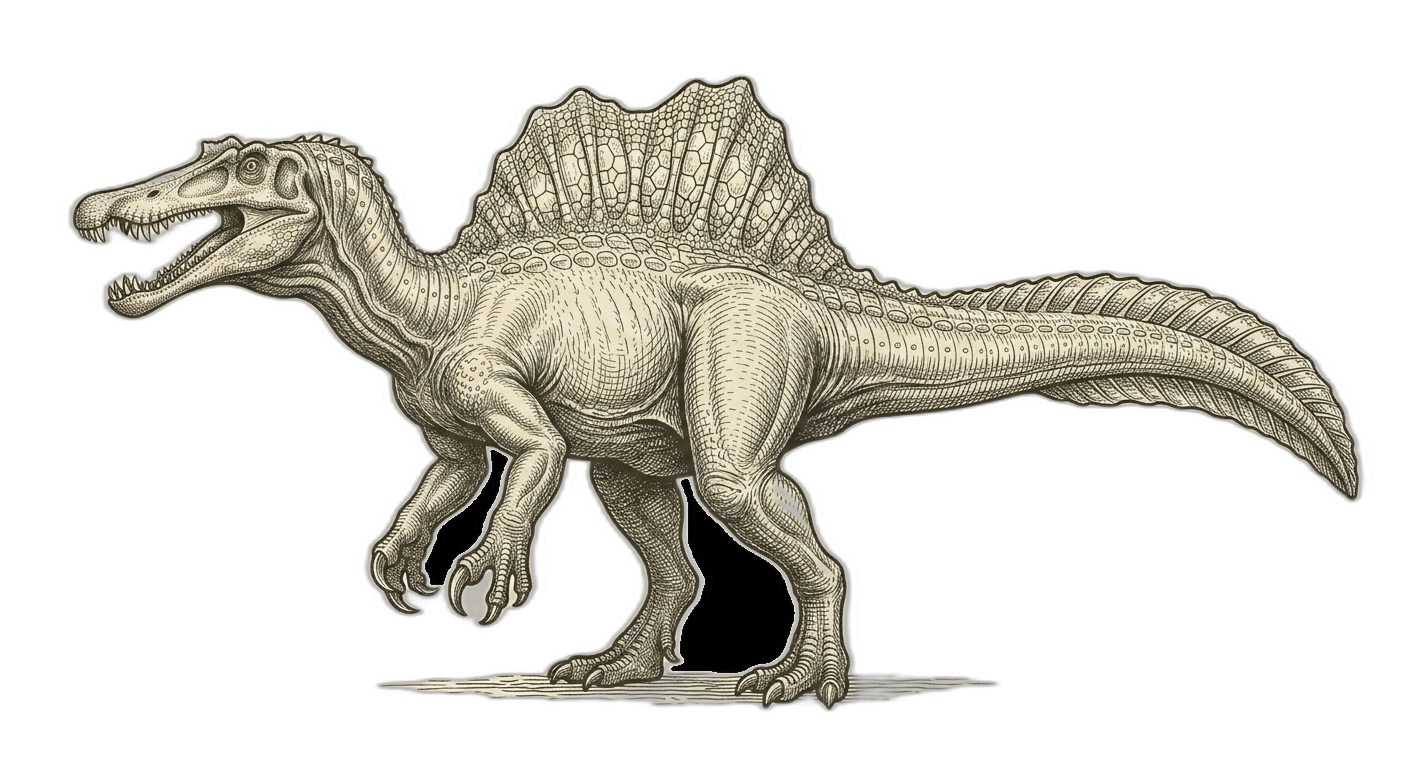
Spinosaurus inhabited the same general North African region during the Early-Mid Cretaceous.
Iguanodon
Iguanodon bernissartensis
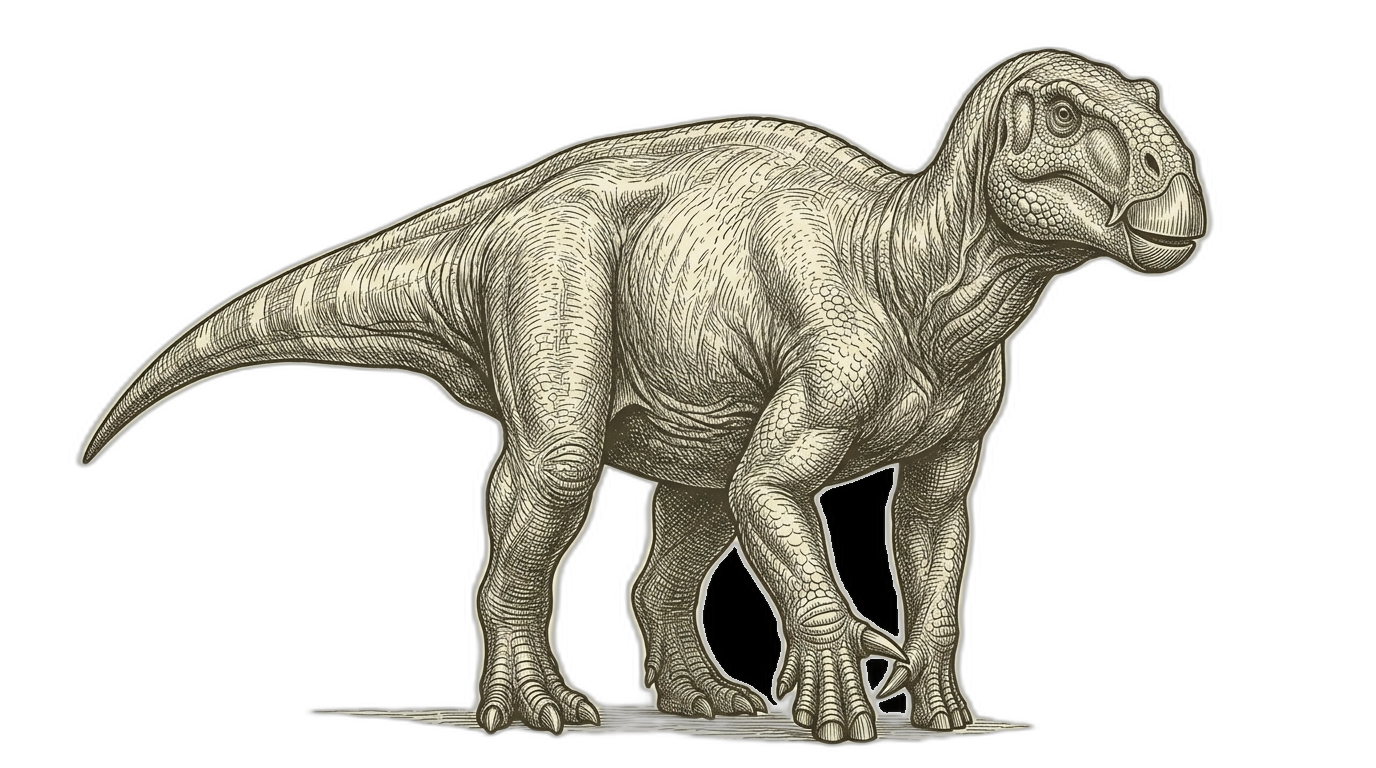
Both are large iguanodontian ornithopods of similar size (7-10m) and diet.
Muttaburrasaurus
Muttaburrasaurus langdoni
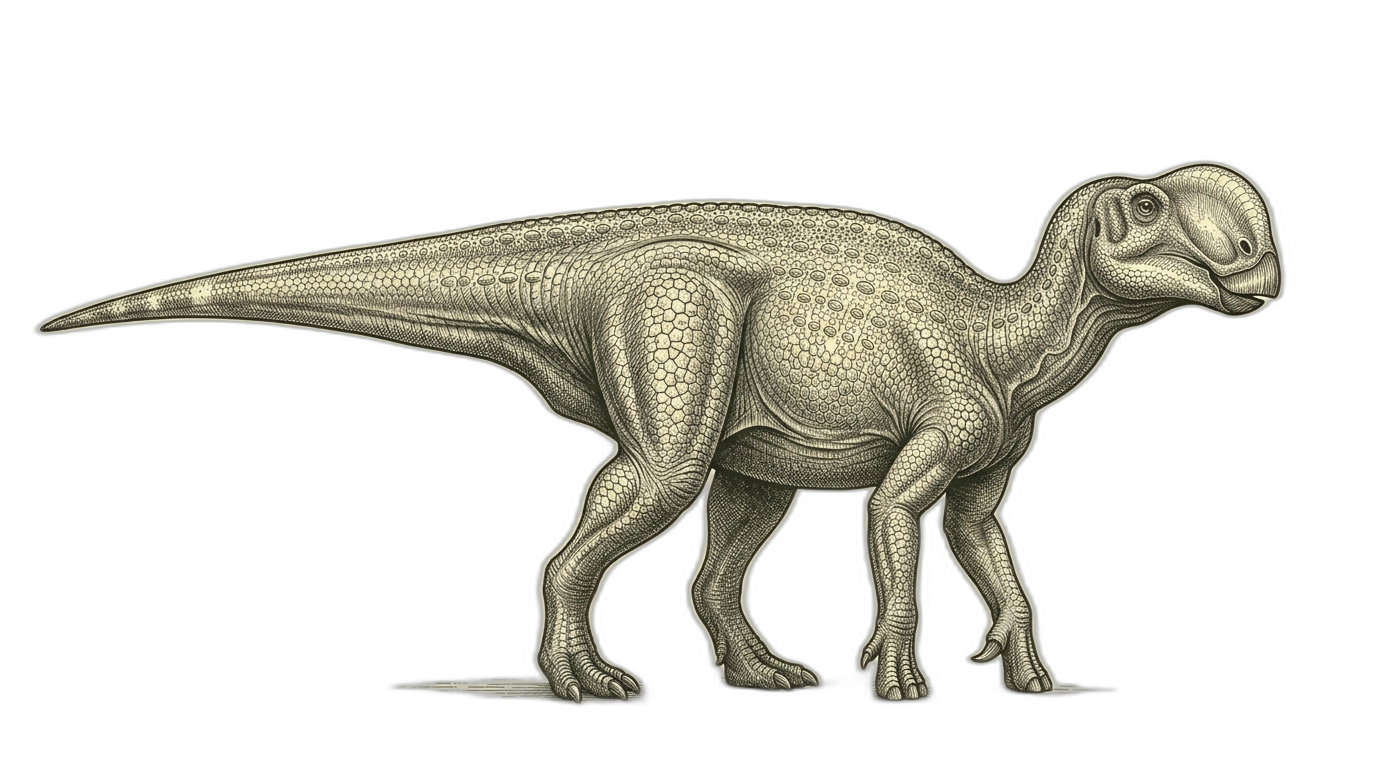
Both are medium-large iguanodontian ornithopods from the Early Cretaceous that independently evolved robust skull structures and similar body plans on different continents (Africa and Australia), representing parallel adaptations in the ornithopod browsing niche during Gondwanan fragmentation.
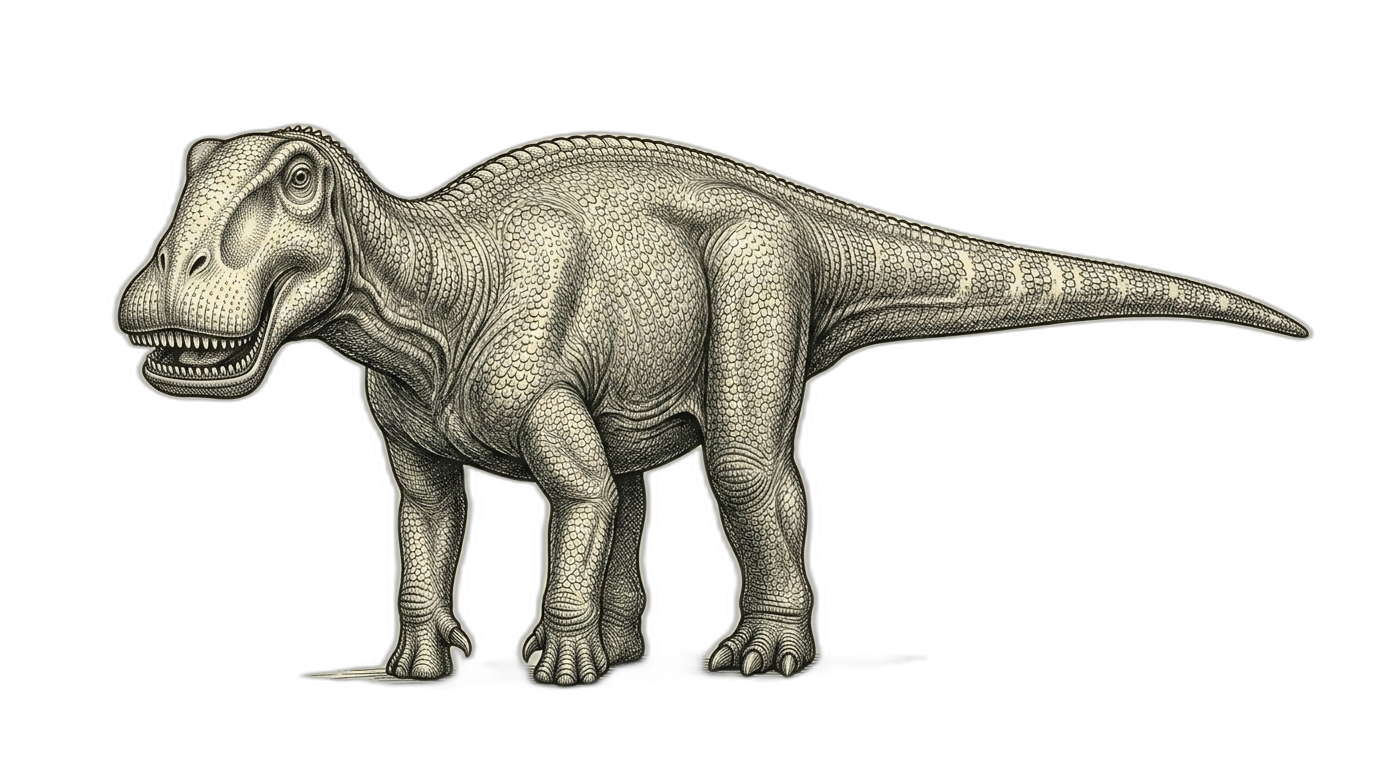
Nigersaurus
Nigersaurus taqueti
Both Ouranosaurus and Nigersaurus are known from the Elrhaz Formation of Niger (Aptian-Albian).
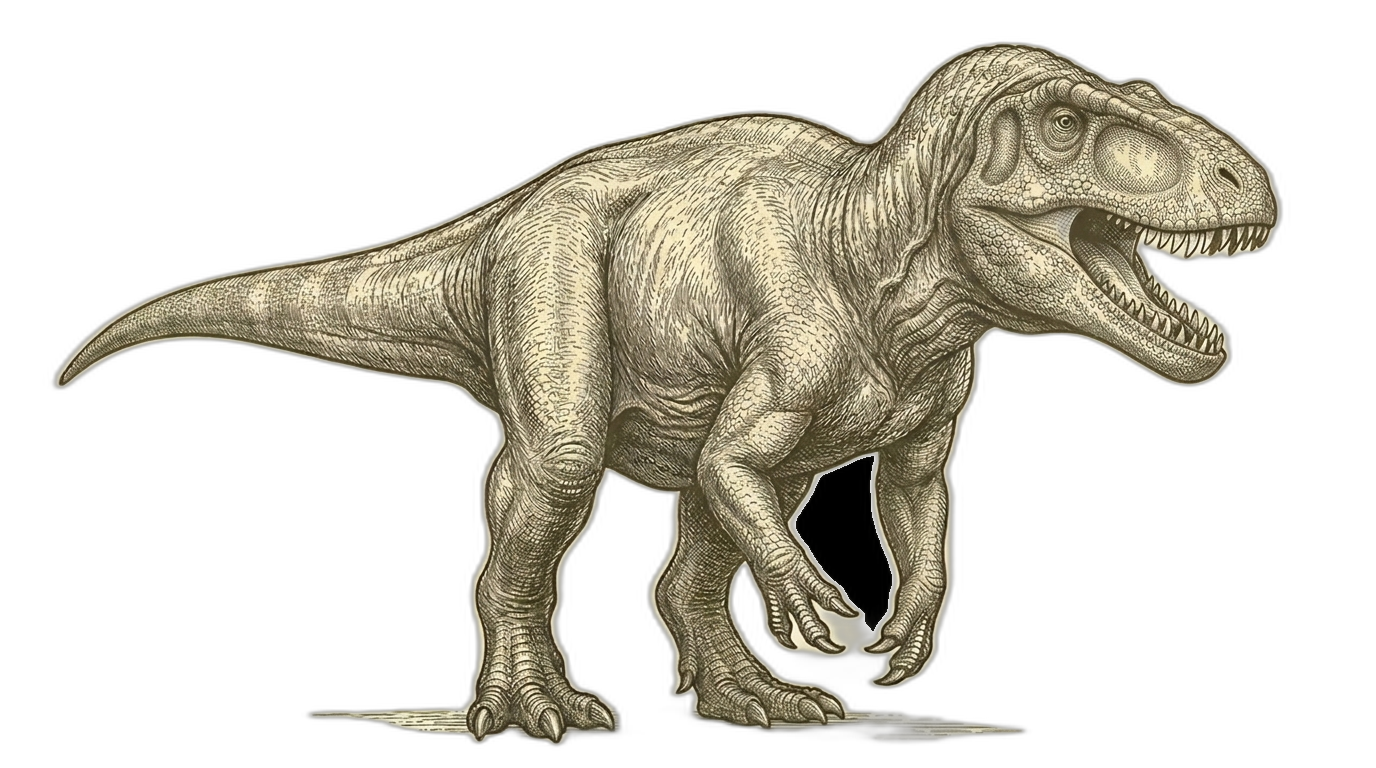
Carcharodontosaurus
Carcharodontosaurus saharicus
Carcharodontosaurus was a dominant predator in North African Cretaceous ecosystems.
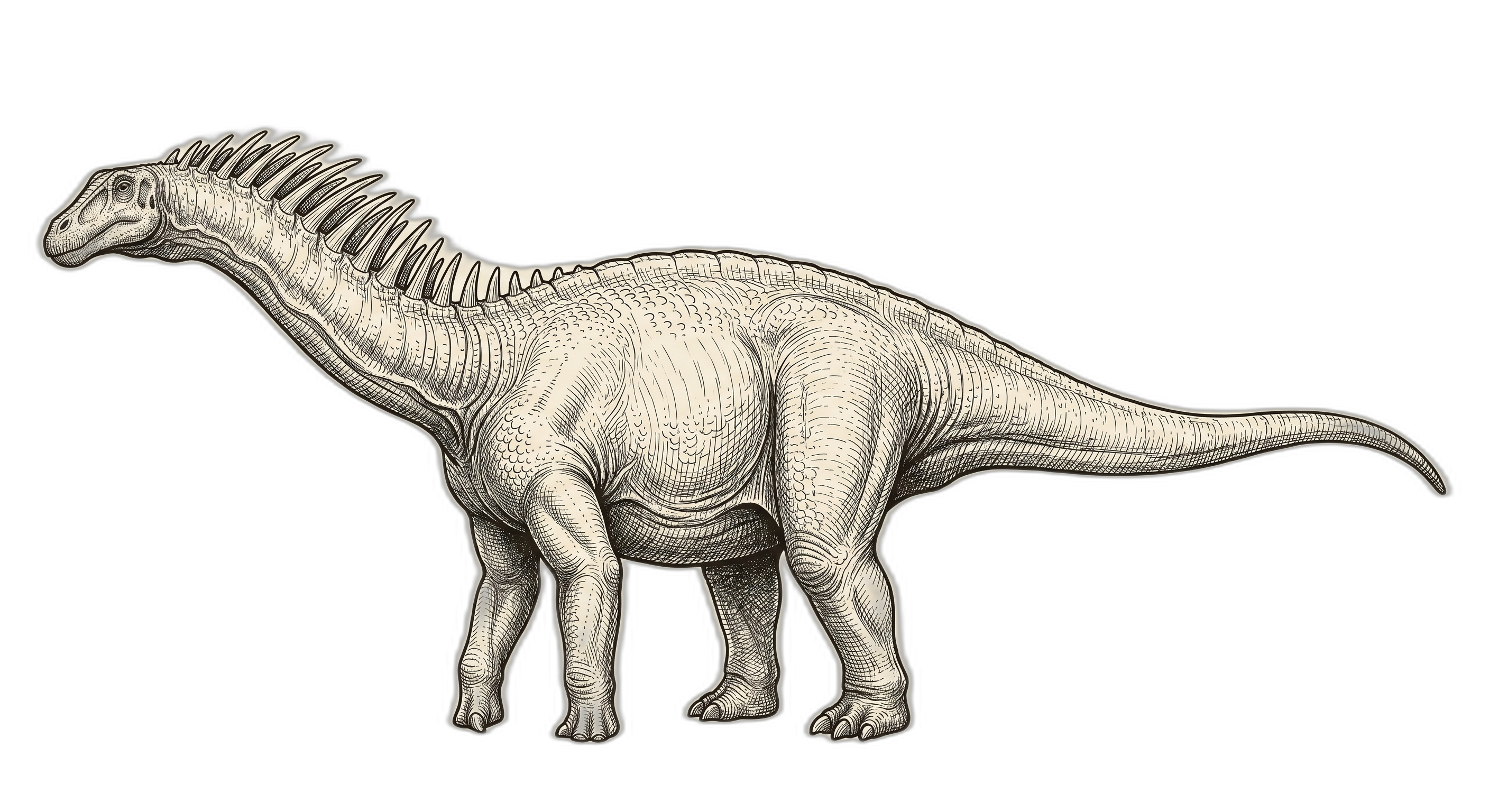
Amargasaurus
Amargasaurus cazaui
Both Ouranosaurus and Amargasaurus independently evolved prominent elongated neural spines forming sail-like or ridge structures along their backs during the Early Cretaceous.
Sources & Citation
- Length estimates
- Taquet 1976; Bertozzo et al. 2017; based on two near-complete specimens
- Height estimates
- Estimated hip height from skeletal reconstructions; Taquet 1976
- Weight estimates
- Taquet 1976; Paul 2010 mass estimates
- Speed estimates
- Estimated from limb proportions; comparable iguanodontian biomechanics