About
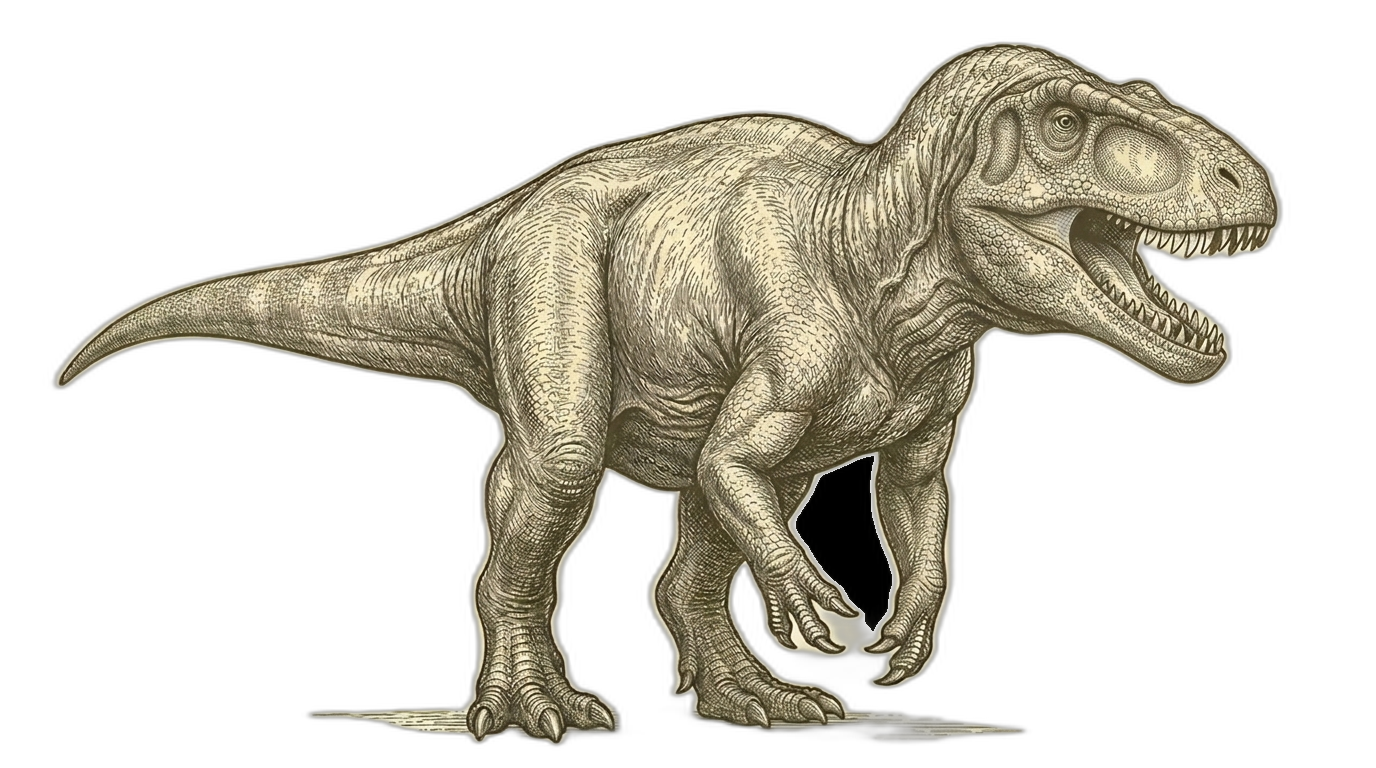
Carcharodontosaurus was one of the largest predators ever to walk the Earth, dominating the river systems and coastal floodplains of North Africa during the mid-Cretaceous period. This massive shared its ecosystem with other giants including Spinosaurus, making the Kem Kem region one of the most predator-rich environments in prehistory. With a skull reaching up to 1.6 meters in length and jaws lined with blade-like teeth, Carcharodontosaurus was built for taking down large prey, likely including the huge sauropods that roamed the region.
The discovery history of this dinosaur reads like a tragedy of war and science. German paleontologist Ernst Stromer first described specimens from Egypt in the 1930s, only to have the original fossils destroyed during an Allied bombing raid on Munich in 1944. For decades, Carcharodontosaurus was known mainly from Stromer's detailed descriptions and illustrations. Then in 1995, American paleontologist Paul Sereno's team discovered a massive partial skull in Morocco's Kem Kem Beds, bringing this back into the scientific spotlight.
Carcharodontosaurus belonged to the , a family of giant predators that achieved global distribution during the Cretaceous. These dinosaurs represented a different evolutionary lineage from the tyrannosaurs that would later dominate the Northern Hemisphere. While tyrannosaurs evolved bone-crushing bite forces, carcharodontosaurids were slashers — their laterally compressed, serrated teeth were designed to inflict massive bleeding wounds, much like a great white shark.
Recent studies suggest Carcharodontosaurus may have had relatively limited compared to T. rex, relying more on its keen sense of smell and ambush tactics. The hot, humid environment it inhabited was crisscrossed by river systems teeming with giant fish and crocodilians, creating a competitive landscape where multiple apex predators somehow coexisted — a paleontological puzzle scientists are still working to understand.
Quick Facts
- Scientific name
- Carcharodontosaurus saharicus
- Group
- Theropod · Carcharodontosauridae
- Lived
- Early Cretaceous, 121.4–93.9 million years ago
- Diet
- Carnivore
- Movement
- Walked on two legs
- Fossils found in
- Kem Kem Group (Drâa-Tafilalet, Béchar, Morocco, Algeria)
- Discovery credited to
- 1925, Charles Depéret and Justin Savornin
- Holotype
- IPHG 1922 X46 (destroyed); neotype SGM-Din 1 (1995 Moroccan skull)
- DinoVault record
- DVL-0024
Where fossils were found
Kem Kem Group
Drâa-Tafilalet, Béchar · Morocco, Algeria
121.4–93.9 million years ago(27.5m year span)
Where Carcharodontosaurus Roamed
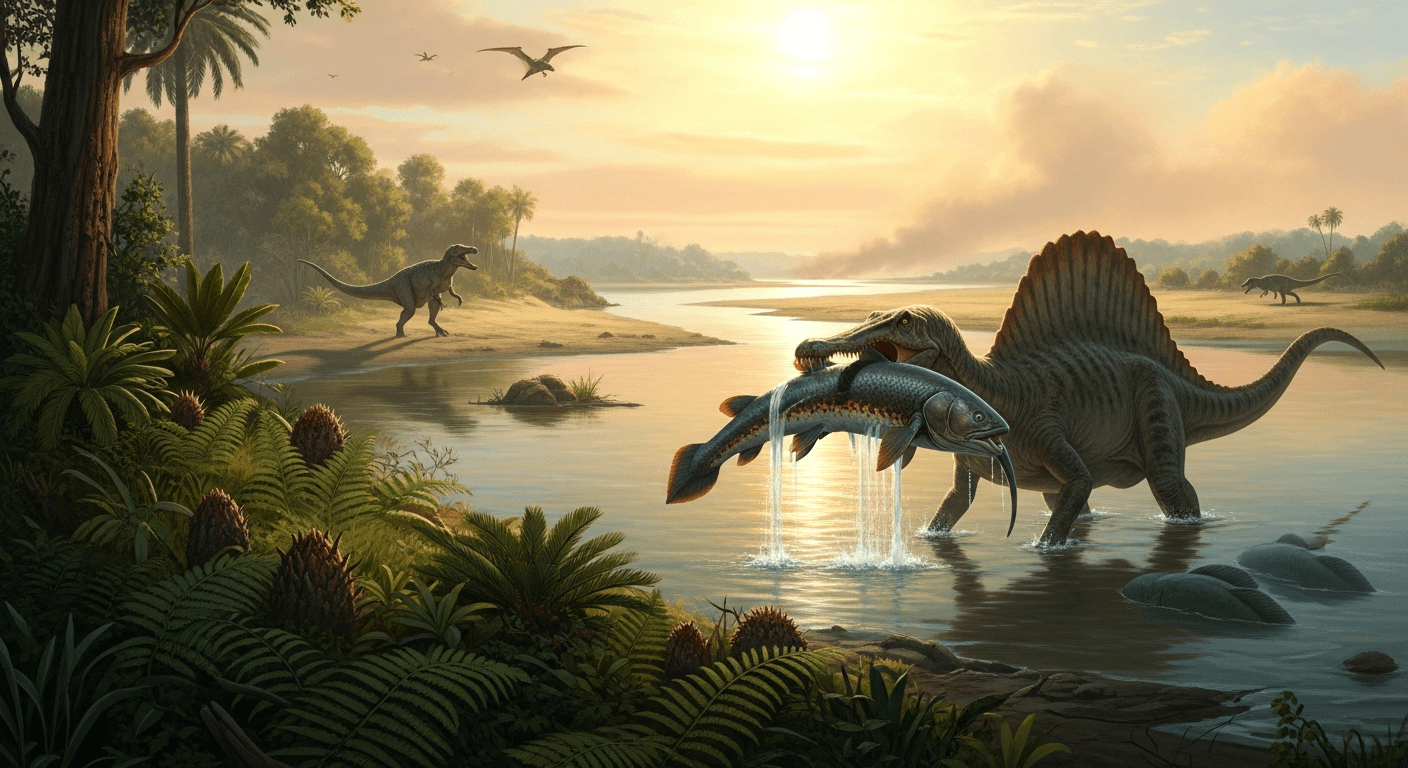
During the mid-Cretaceous, Carcharodontosaurus saharicus prowled the river deltas and coastal floodplains of northern Gondwana, in a region now known as the Sahara Desert but then characterized by lush, humid environments bordering the southern margins of the Tethys Sea. This apex predator dominated a landscape of winding river systems and mangrove-like wetlands, sharing its territory with giant crocodilians, massive fish, and fellow theropods in one of Earth's most diverse Cretaceous ecosystems.
Keep exploring the vault
Nigersaurus
Nigersaurus taqueti
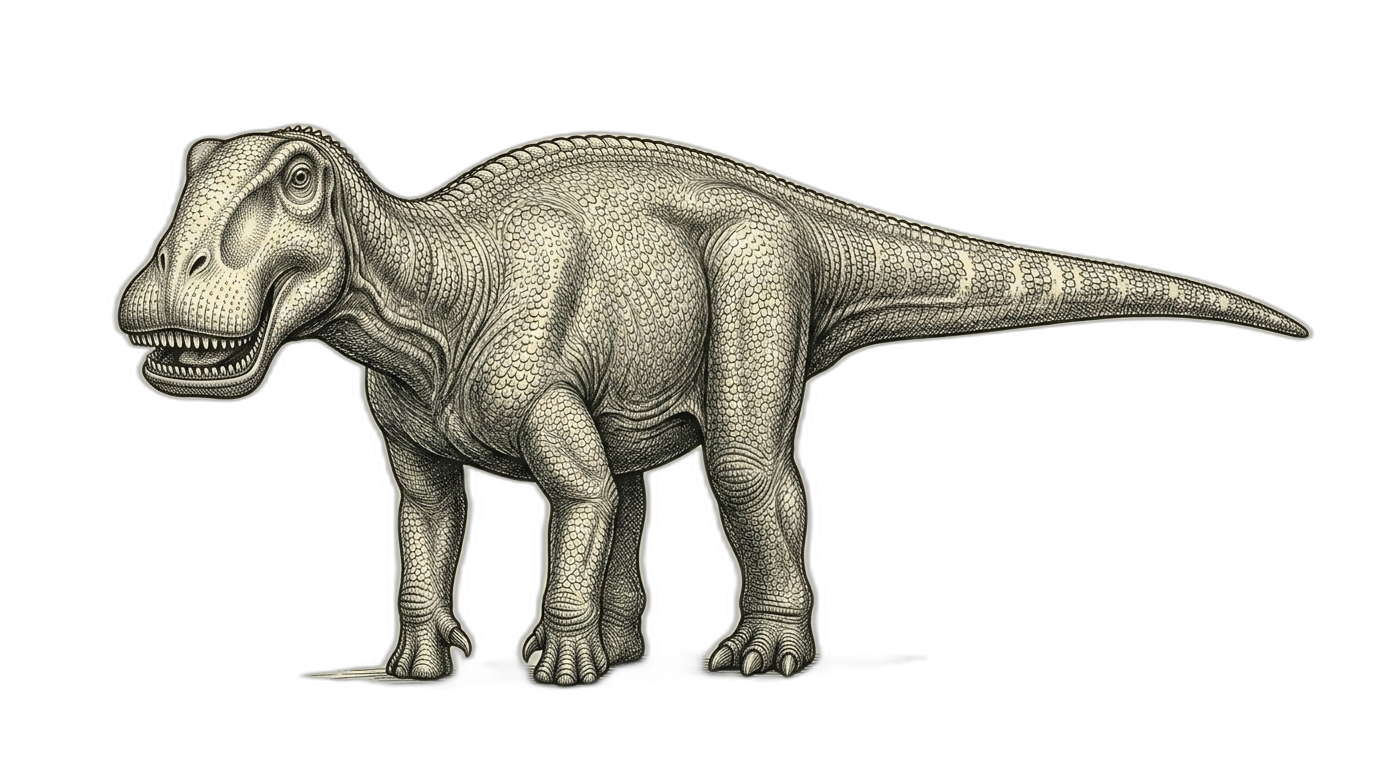
Carcharodontosaurus saharicus was a large theropod predator from the same Elrhaz and related formations of North Africa during the mid-Cretaceous.
Ouranosaurus
Ouranosaurus nigeriensis
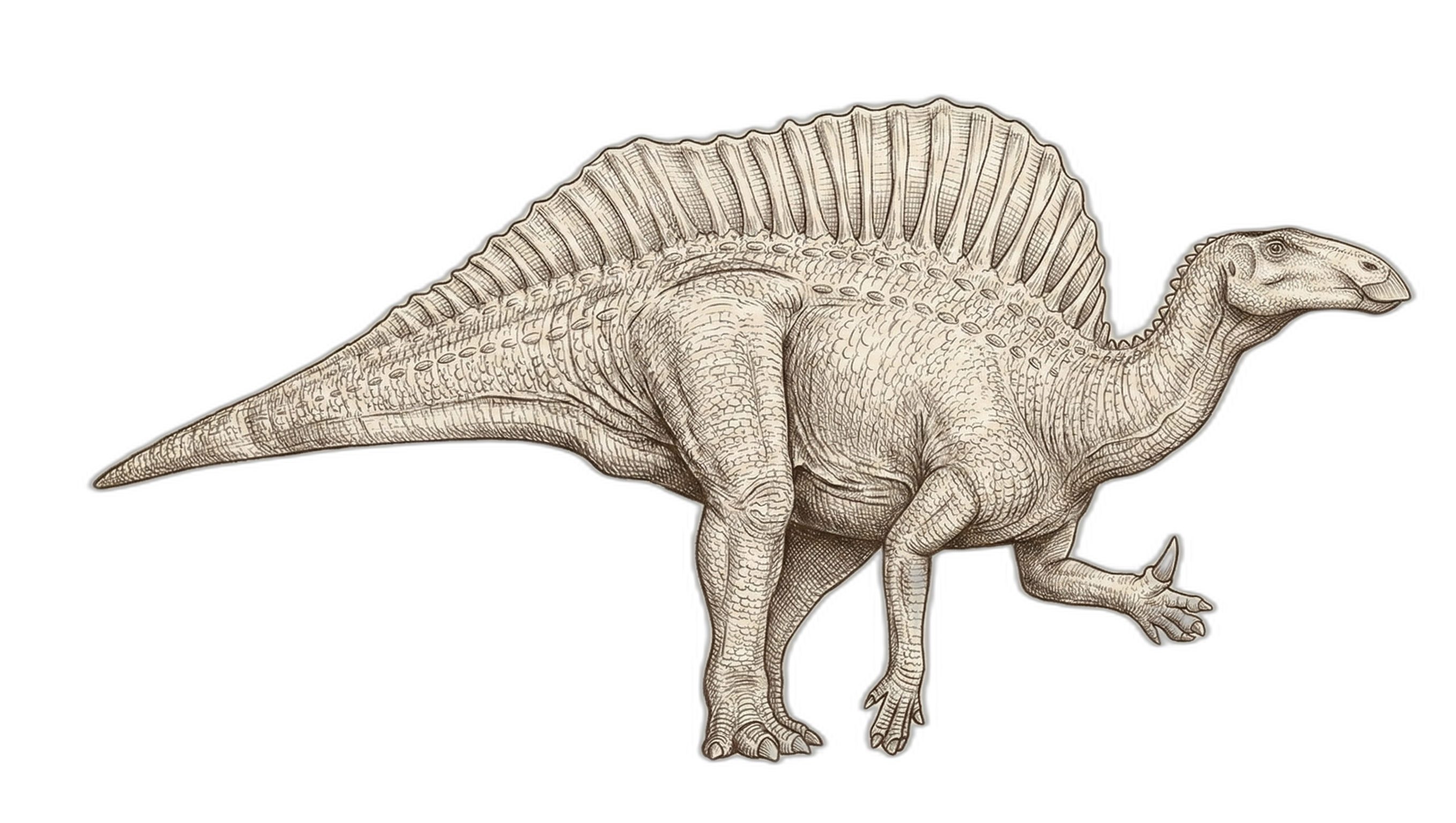
Carcharodontosaurus was a dominant predator in North African Cretaceous ecosystems.
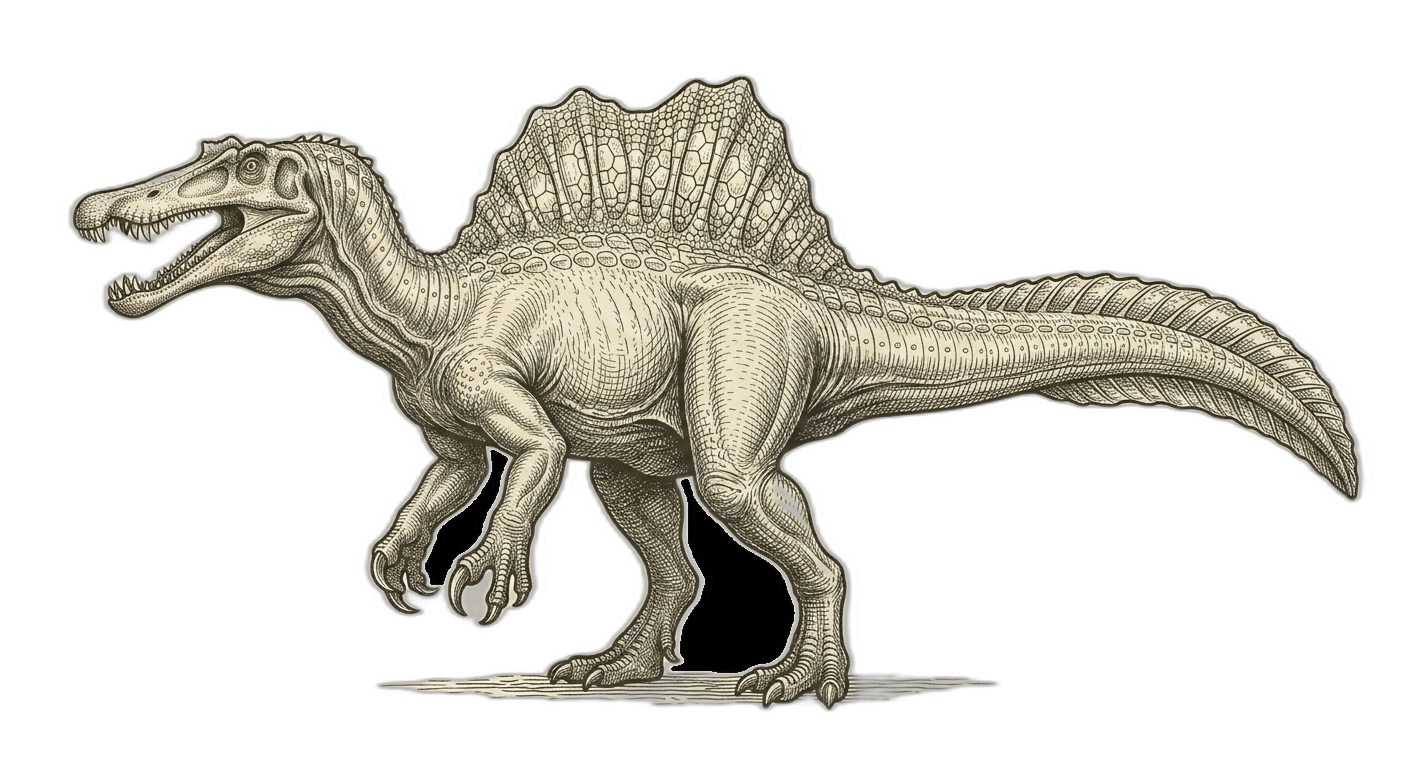
Spinosaurus
Spinosaurus aegyptiacus
Both Carcharodontosaurus and Spinosaurus are known from the Kem Kem Beds of Morocco (Cenomanian, ~100-94 mya).
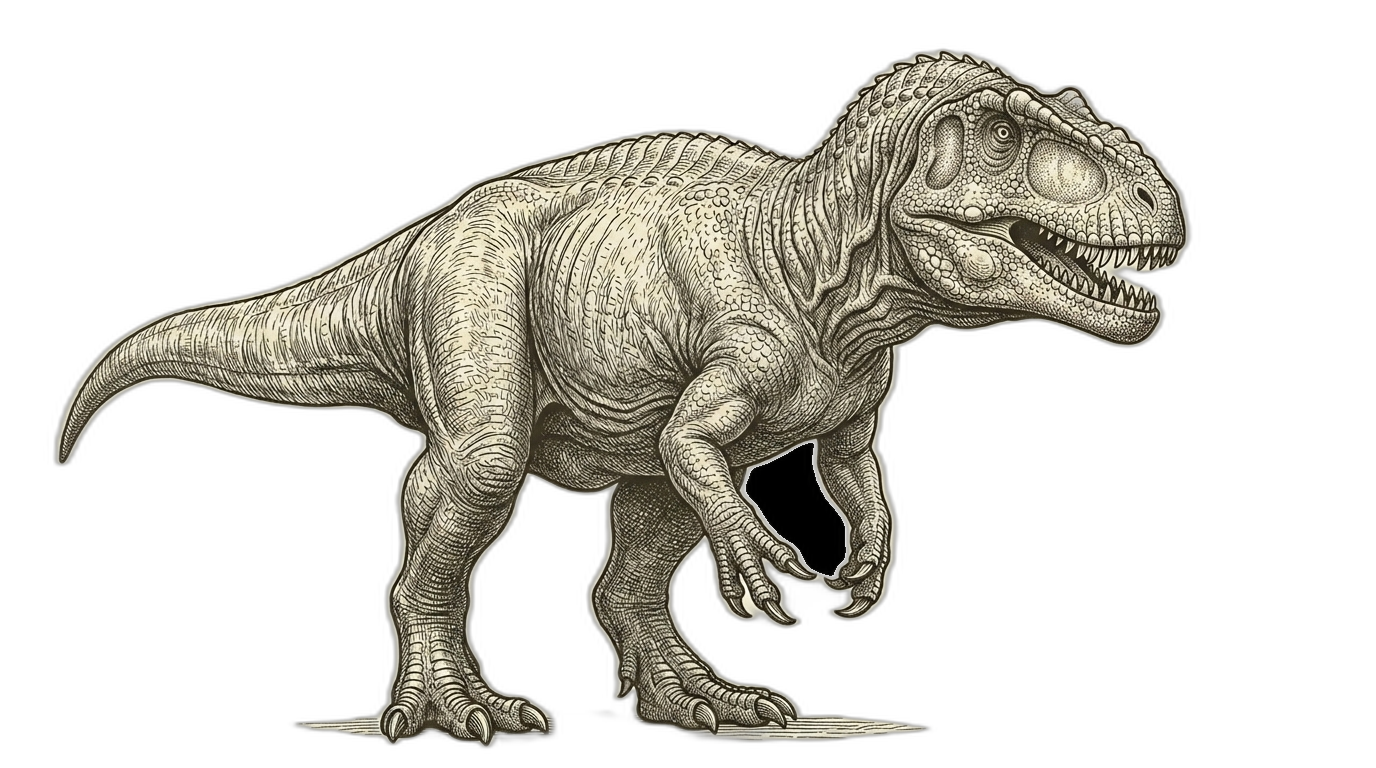
Giganotosaurus
Giganotosaurus carolinii
Both are carcharodontosaurids that independently evolved to become the apex predators of their respective continents (Africa and South America) during the mid-Cretaceous.
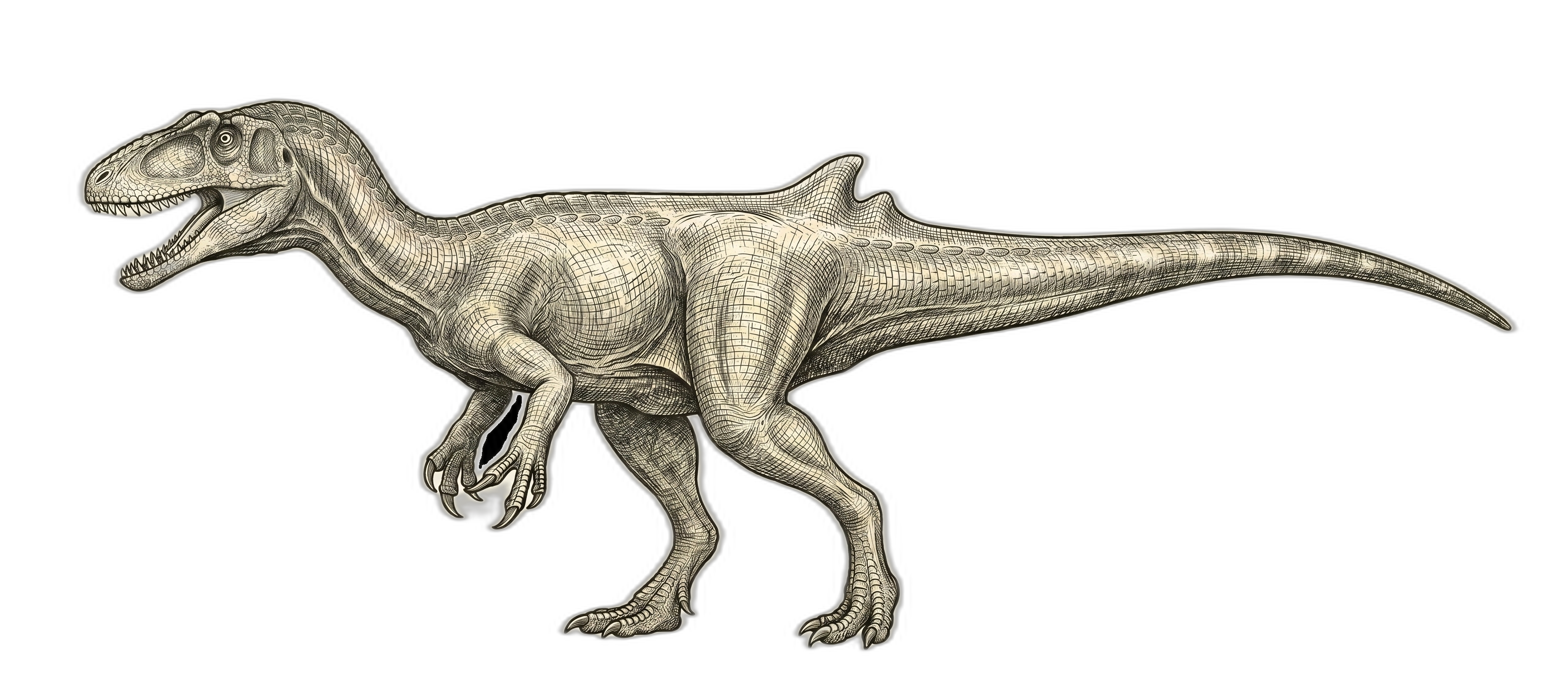
Concavenator
Concavenator corcovatus
Same family: Carcharodontosauridae
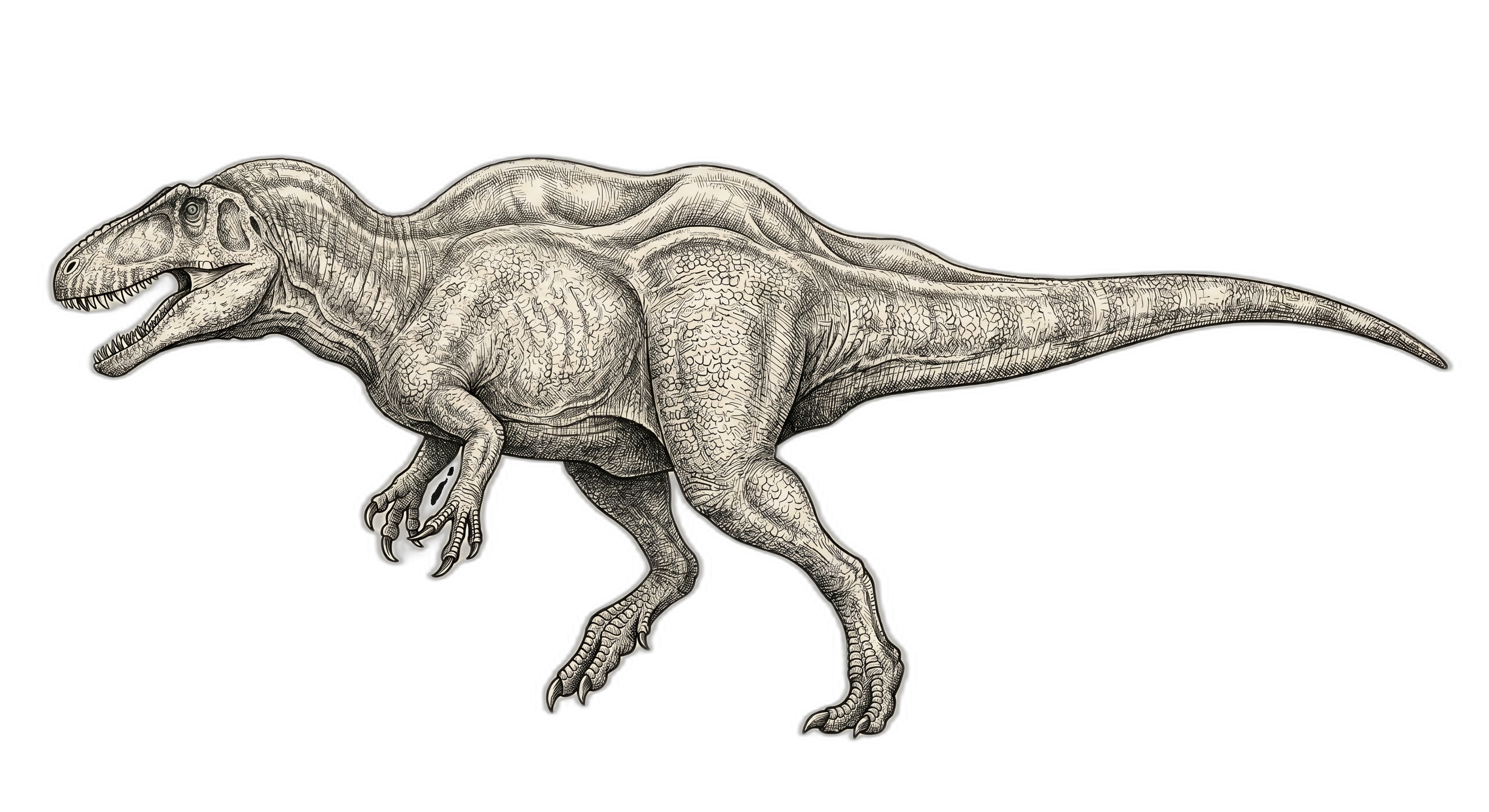
Acrocanthosaurus
Acrocanthosaurus atokensis
Same family: Carcharodontosauridae
Sources & Citation
- Length estimates
- Sereno et al. 1996; Brusatte & Sereno 2007; estimates based on partial skull and fragmentary postcranial material
- Height estimates
- Estimated hip height based on limb proportions scaled from related carcharodontosaurids
- Weight estimates
- Therrien & Henderson 2007; mass estimates vary significantly due to incomplete material
- Speed estimates
- Biomechanical modeling of large theropods; no direct trackway evidence for this genus