About
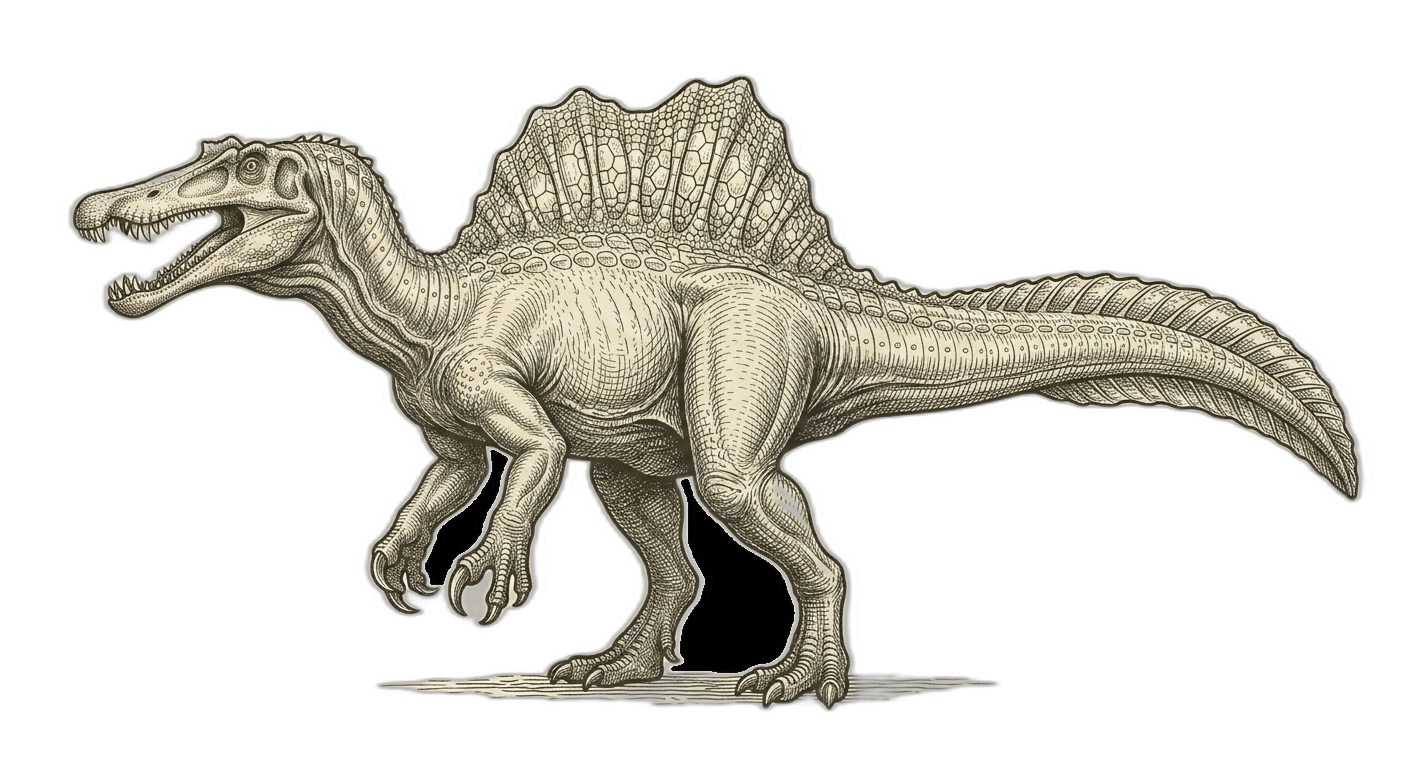
Spinosaurus was a truly bizarre giant — a dinosaur that defied the typical blueprint by becoming a semi-aquatic predator. Growing longer than Tyrannosaurus rex, this North African hunter possessed a 1.75-meter tall along its back, a crocodile-like snout filled with conical teeth, and dense bones that may have helped it sink and walk along riverbeds. Recent discoveries suggest it spent much of its life in water, pursuing large fish like the car-sized coelacanth Mawsonia.
The discovery history of Spinosaurus reads like an adventure novel marked by tragedy. German paleontologist Ernst Stromer discovered the first fossils in Egypt's Bahariya Formation in 1912 and described the species in 1915. Tragically, the original specimen was destroyed when Allied bombs struck Munich's paleontology museum in 1944 during World War II. For decades, scientists had only Stromer's detailed drawings and notes to work from.
The 21st century brought Spinosaurus back into the spotlight. New material from Morocco's Kem Kem beds, including a remarkably complete specimen described in 2014 and a paddle-like tail discovered in 2020, revolutionized our understanding. These finds revealed an animal far stranger than anyone imagined — with short hind legs, a deep tail for swimming, and proportions unlike any other known dinosaur.
Scientific debate continues about just how aquatic Spinosaurus truly was. Some researchers envision it as a pursuit predator swimming after fish, while others see it as more of a wading heron-like hunter. What's certain is that Spinosaurus represents one of the most dramatic examples of a dinosaur adapting to an unexpected ecological niche.
Quick Facts
- Scientific name
- Spinosaurus aegyptiacus
- Group
- Spinosaur · Spinosauridae
- Lived
- Early Cretaceous, 110.1–93.9 million years ago
- Diet
- Piscivore
- Movement
- Walked on two legs
- Fossils found in
- Kem Kem Group (Drâa-Tafilalet, Béchar, Morocco, Algeria)
- Discovery credited to
- 1912, Ernst Stromer
- Holotype
- BSP 1912 VIII 19 (destroyed 1944) · Bavarian State Collection of Palaeontology and Geology, Munich
- DinoVault record
- DVL-0128
Where fossils were found
Kem Kem Group
Drâa-Tafilalet, Béchar · Morocco, Algeria
110.1–93.9 million years ago(16.2m year span)
Where Spinosaurus Roamed
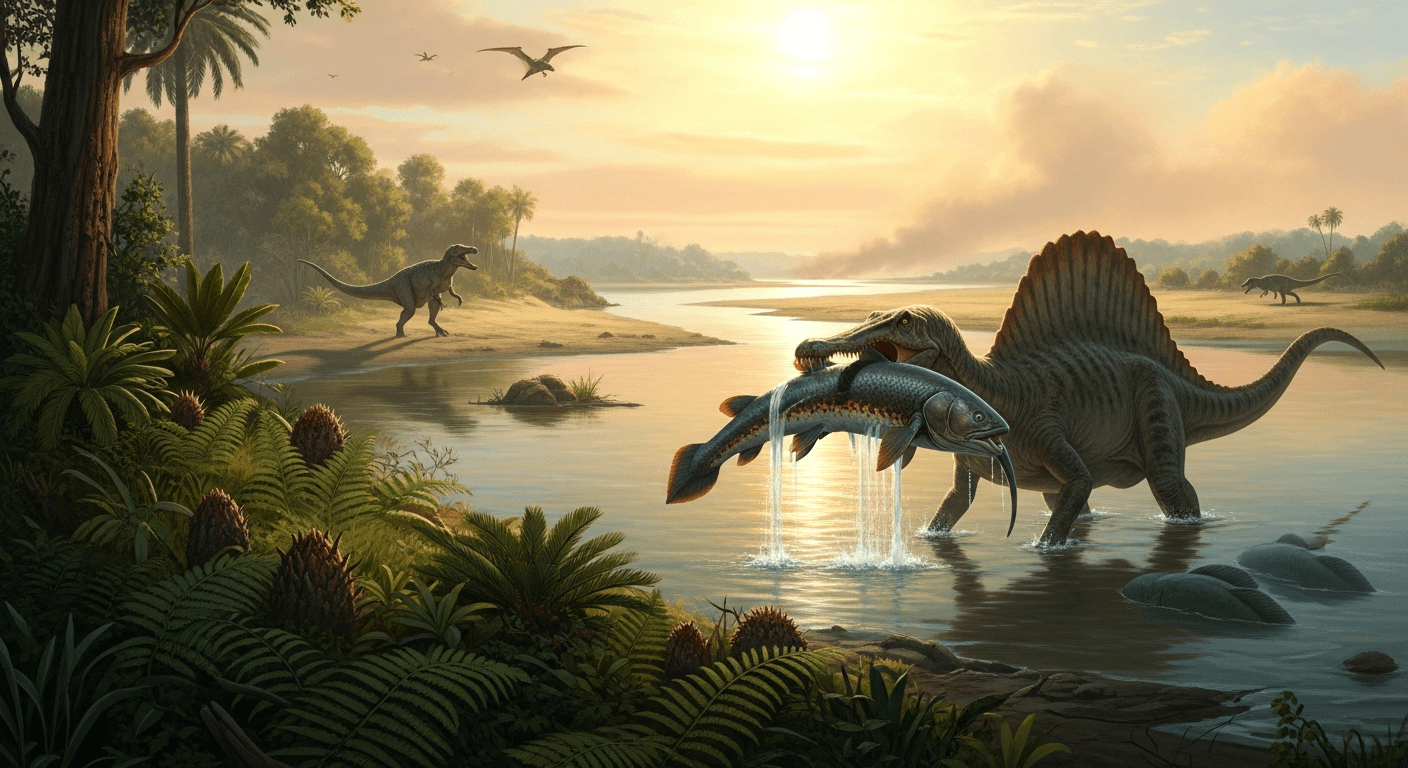
During the mid-Cretaceous period, Spinosaurus inhabited the coastal river systems and tidal flats of northern Africa, part of the fragmenting supercontinent Gondwana, where lush deltaic environments bordered the southern margins of the ancient Tethys Sea. This warm, humid region featured vast mangrove-lined waterways teeming with giant fish and coelacanths, creating an ideal hunting ground for this semi-aquatic apex predator.
Keep exploring the vault
Ouranosaurus
Ouranosaurus nigeriensis
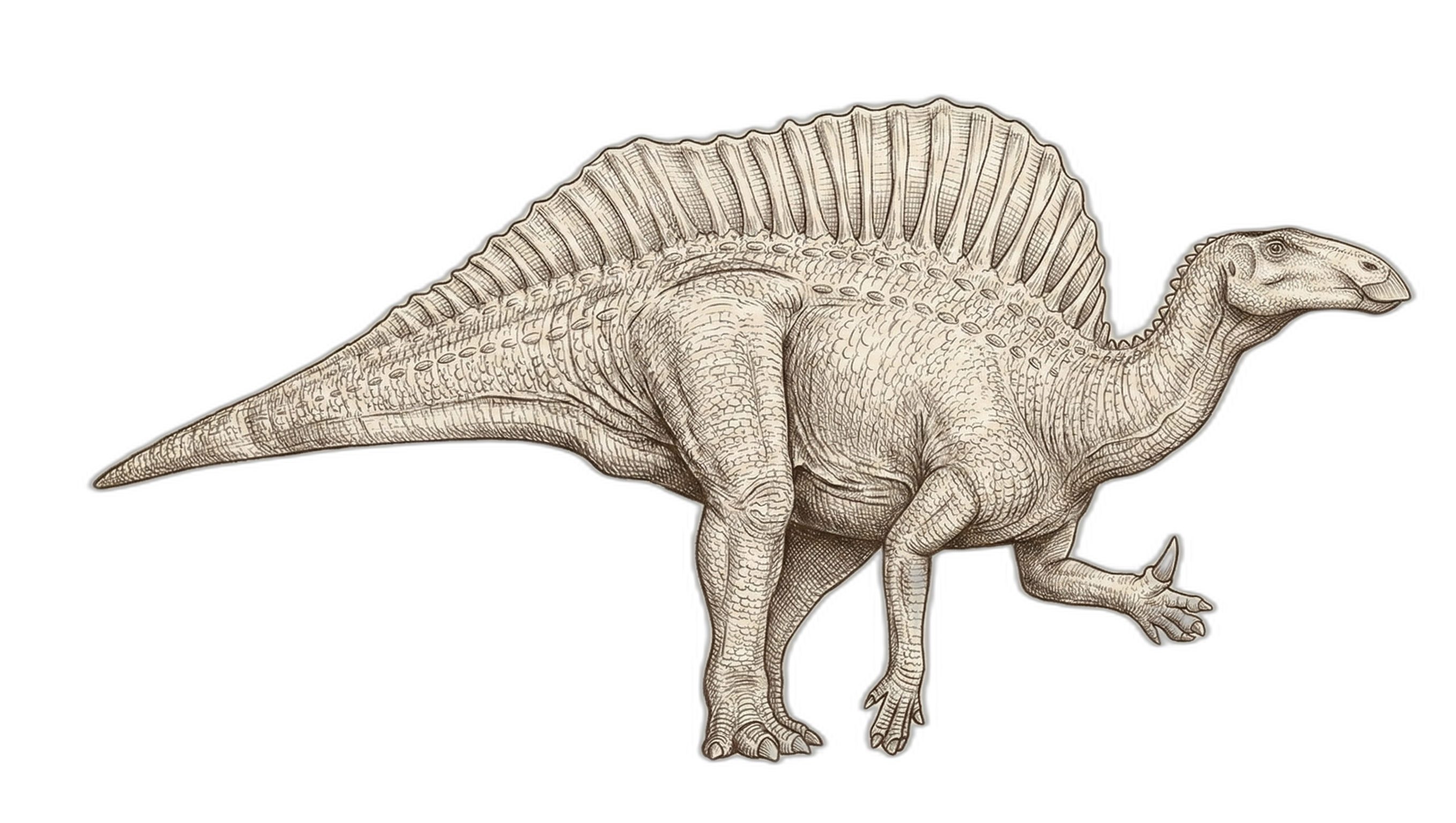
Spinosaurus inhabited the same general North African region during the Early-Mid Cretaceous.
Carcharodontosaurus
Carcharodontosaurus saharicus
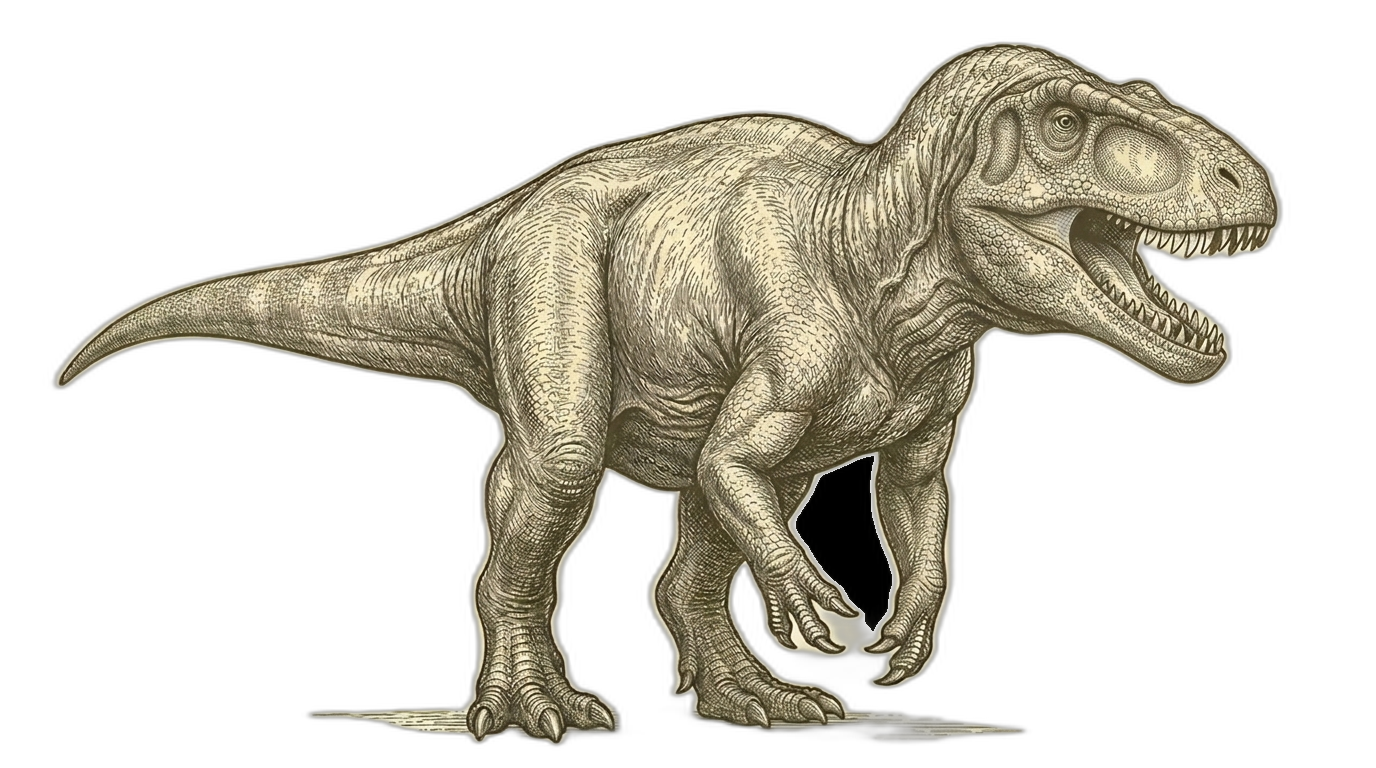
Both Spinosaurus and Carcharodontosaurus are known from the Kem Kem Beds of North Africa (Morocco/Algeria), dating to the Cenomanian stage.
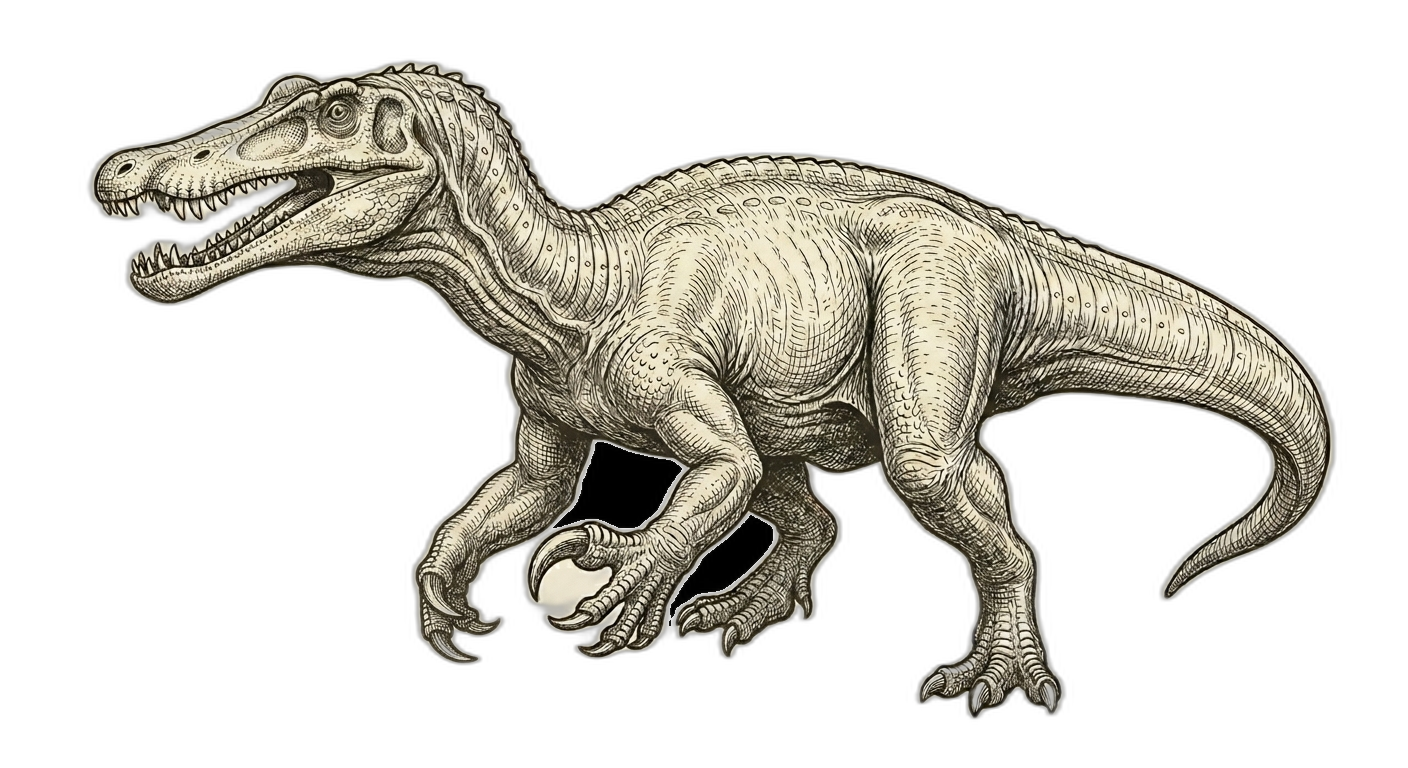
Baryonyx
Baryonyx walkeri
Baryonyx and Spinosaurus are both spinosaurids that independently developed elongated crocodile-like snouts, conical teeth adapted for fish-catching, and semi-aquatic lifestyles.
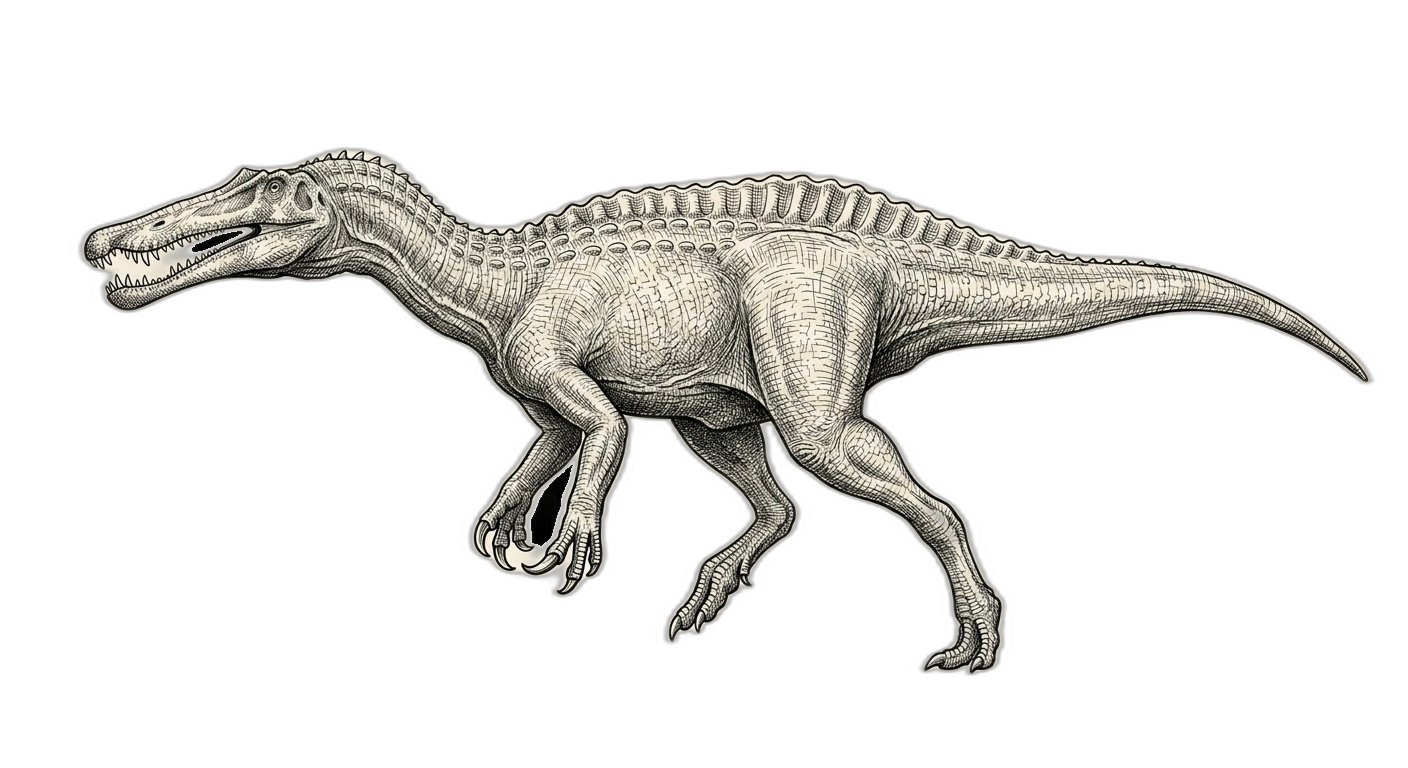
Suchomimus
Suchomimus tenerensis
Same family: Spinosauridae
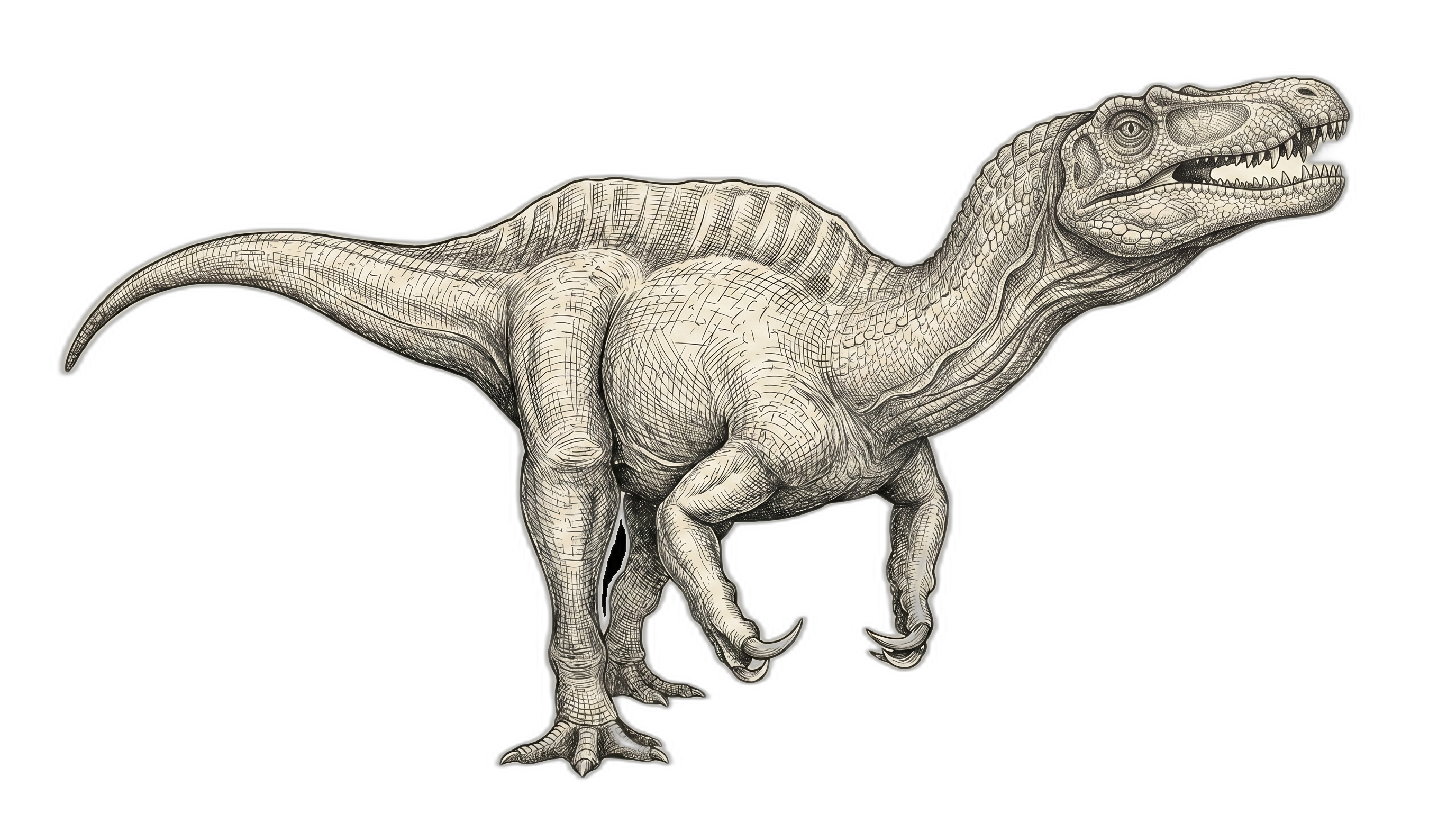
Irritator
Irritator challengeri
Same family: Spinosauridae
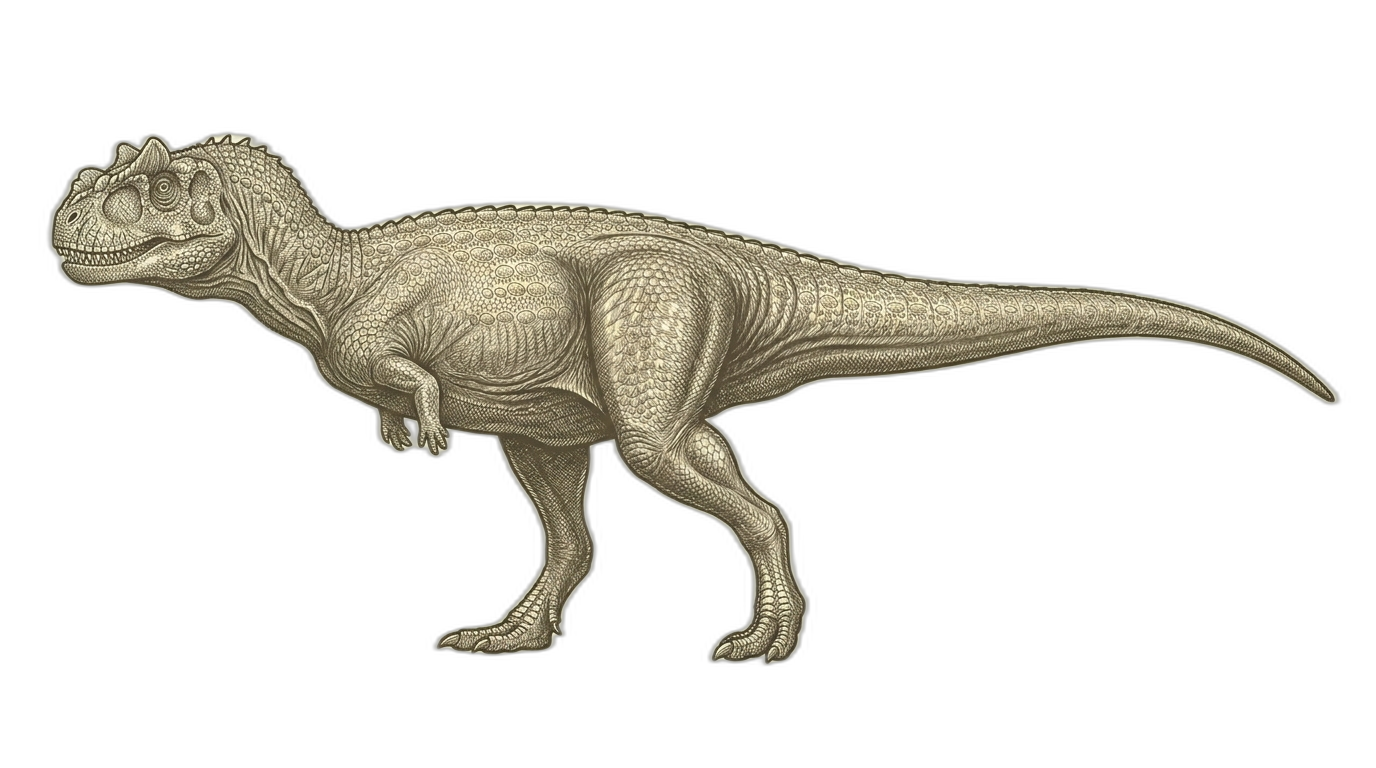
Rugops
Both species co-occurred in the Kem Kem Formation of North Africa during the mid-Cretaceous.
Sources & Citation
- Length estimates
- Ibrahim et al. 2014, 2020; Dal Sasso et al. 2005; composite reconstructions
- Height estimates
- Ibrahim et al. 2014; hip height reduced compared to earlier estimates due to short hindlimbs
- Weight estimates
- Estimates vary widely; Dal Sasso et al. 2005; Ibrahim et al. 2014; proportions uncertain
- Speed estimates
- Land speed poorly constrained; short hindlimbs suggest slow terrestrial locomotion; swimming speed unknown