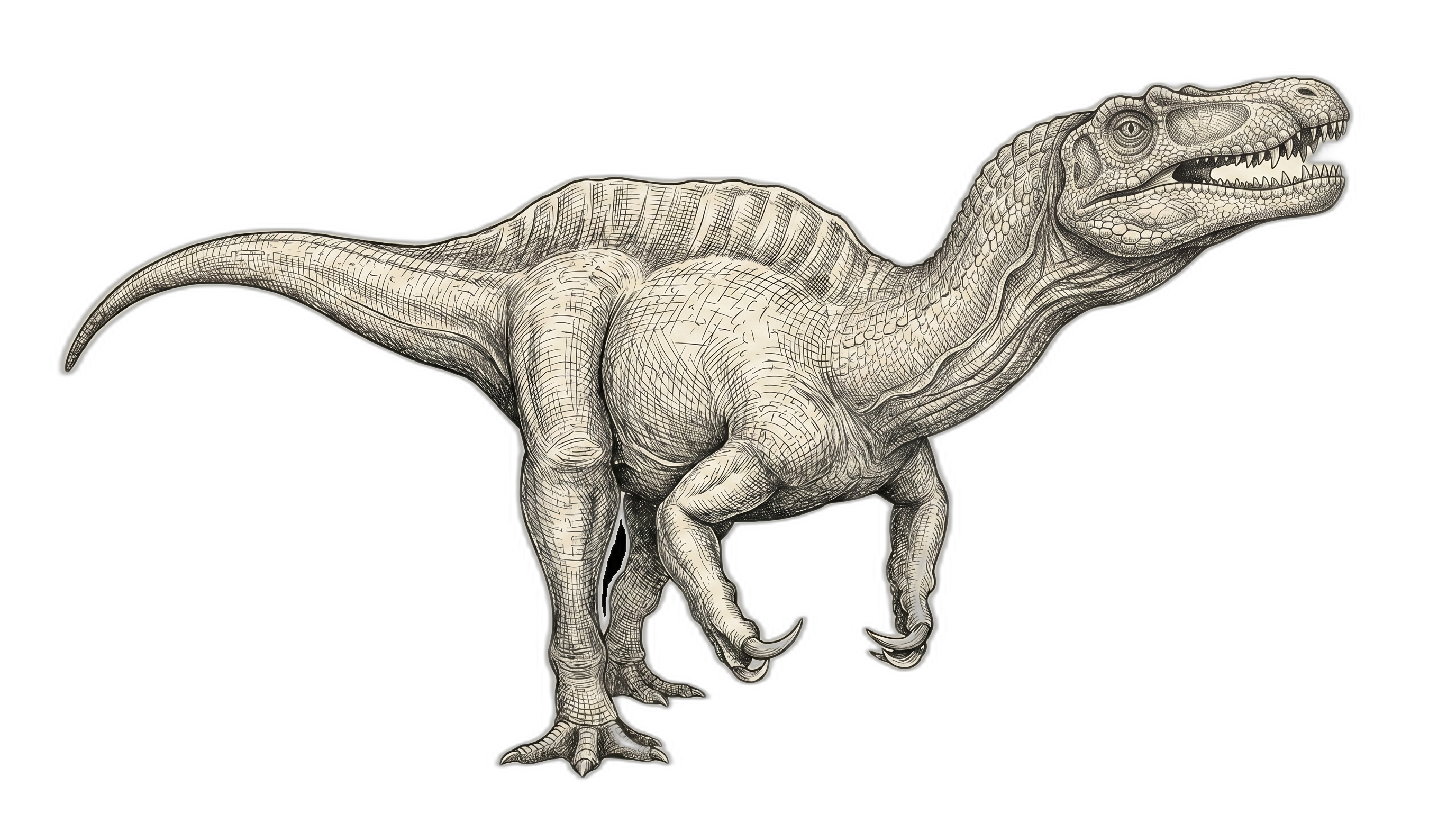
About
Irritator was a medium-sized that prowled the coastal lagoons and rivers of what is now northeastern Brazil approximately 110-113 million years ago. Like its more famous relative Spinosaurus, it possessed an elongated, crocodile-like snout filled with conical teeth perfectly adapted for snatching fish from the water. Its narrow skull and interlocking teeth suggest it was primarily a fish-eater, though it likely opportunistically preyed on other small animals.
The discovery story of Irritator is as memorable as the dinosaur itself. The nearly complete skull was acquired by fossil dealers in Brazil before being sold to the State Museum of Natural History in Stuttgart, Germany. When paleontologists David Martill, Arthur Cruickshank, Eberhard Frey, and others began studying it in 1996, they discovered that the dealers had heavily modified the skull with plaster and automobile body filler to make it appear more complete and impressive—a deceptive practice that required months of careful work to undo.
The genus name directly reflects the researchers' frustration with this tampering, derived from 'irritation.' The species name honors Professor George Edward Challenger, the fictional scientist and explorer from Arthur Conan Doyle's adventure novel 'The Lost World,' which itself was set in a Brazilian plateau where dinosaurs had supposedly survived.
Despite the challenges presented by its altered , Irritator has proven scientifically valuable, providing important information about spinosaurid skull anatomy and the diversity of these unusual fish-eating theropods in Early Cretaceous South America.
Quick Facts
- Scientific name
- Irritator challengeri
- Group
- Spinosaur · Spinosauridae
- Lived
- Early Cretaceous, 110–108 million years ago
- Diet
- Piscivore
- Movement
- Walked on two legs
- Fossils found in
- Santana Formation (Romualdo Member), Ceará, Brazil
- Discovery credited to
- 1996, David M. Martill, Arthur R.I. Cruickshank, Eberhard Frey, Paul G. Small, and Mick Clarke
- Holotype
- SMNS 58022 · Staatliches Museum für Naturkunde Stuttgart
- DinoVault record
- DVL-0070
Where Irritator Roamed
During the Early Cretaceous, Irritator challengeri inhabited the coastal lagoons and river systems of northeastern Gondwana, in what is now Brazil's Santana Formation—a region characterized by warm, tropical conditions where freshwater environments met the expanding South Atlantic as Africa and South America slowly drifted apart.
Keep exploring the vault
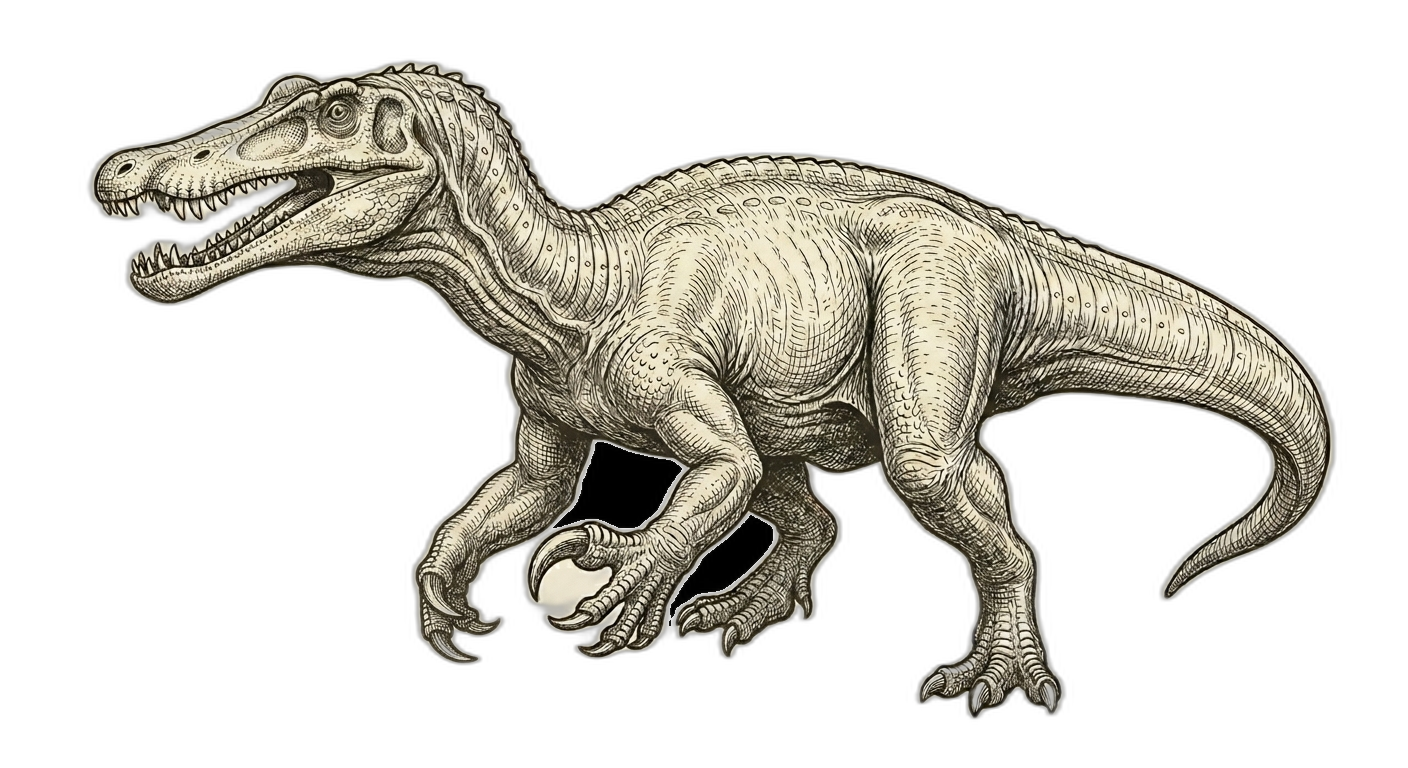
Baryonyx
Baryonyx walkeri
Both Irritator and Baryonyx are spinosaurids that independently developed elongated crocodile-like snouts, conical teeth, and piscivorous adaptations for catching fish.
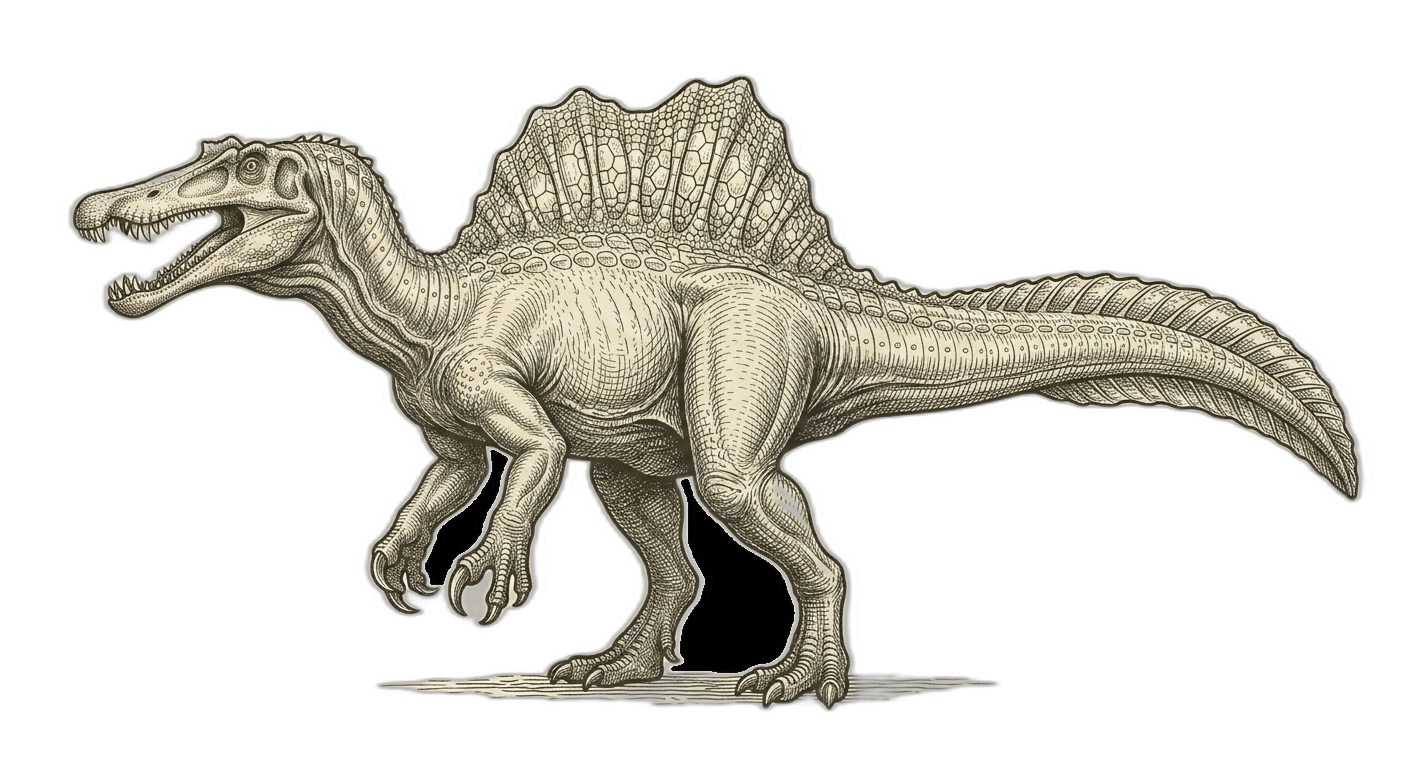
Spinosaurus
Spinosaurus aegyptiacus
Irritator and Spinosaurus are both spinosaurids that evolved specialized fish-eating adaptations including elongated snouts with pressure-sensing neurovascular canals, interlocking conical teeth, and retracted nostrils.
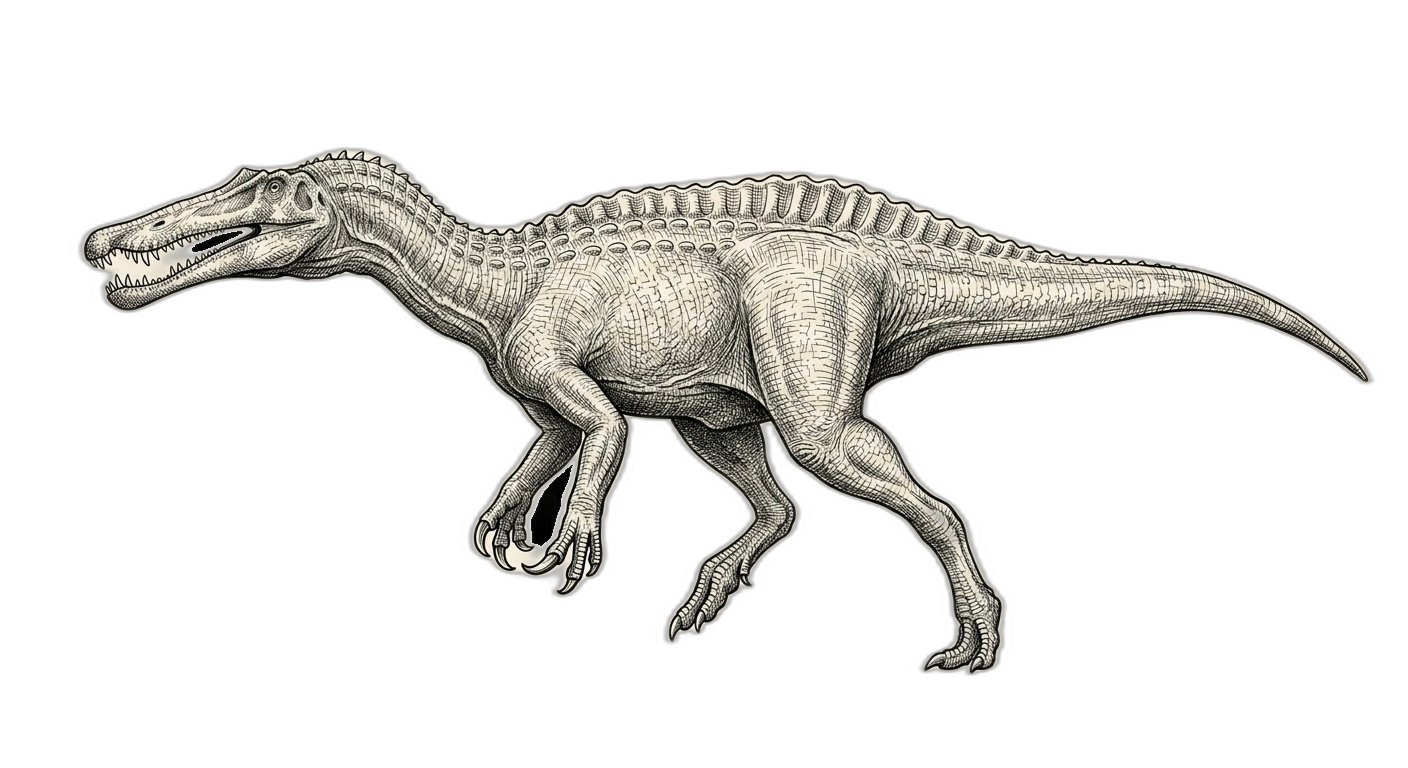
Suchomimus
Suchomimus tenerensis
Both Irritator and Suchomimus evolved the characteristic spinosaurid bauplan for aquatic prey capture, including gharial-like snouts and hook-shaped thumb claws likely used for grasping fish.

Tupandactylus
Both Irritator and Tupandactylus are known from the Santana Formation of Brazil, representing contemporaneous fauna from the same Early Cretaceous ecosystem.
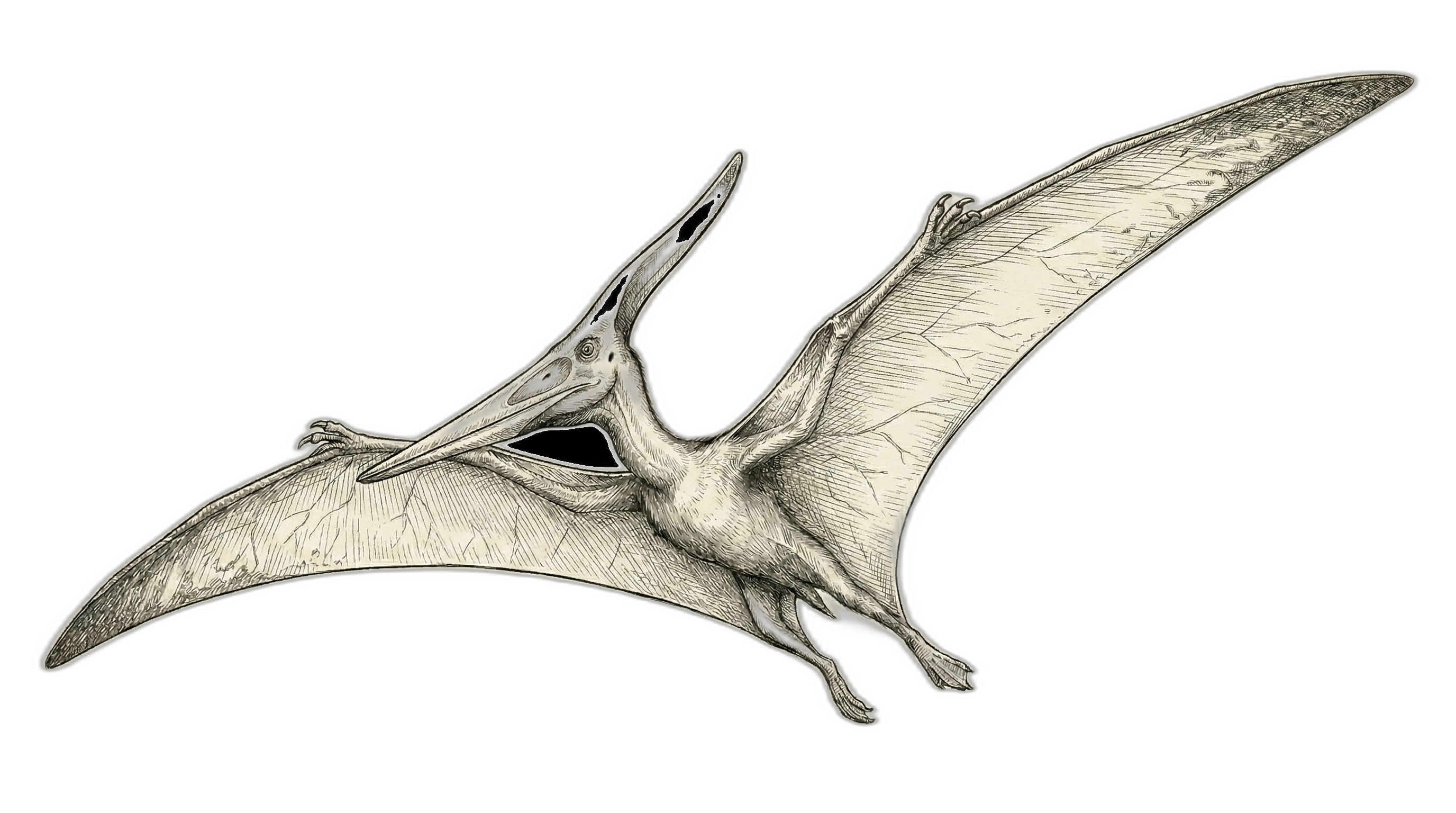
Pteranodon
Pteranodon longiceps
Both Irritator and Pteranodon evolved specialized adaptations for piscivory in their respective lineages (theropod dinosaurs and pterosaurs), representing convergent evolution toward fish-catching lifestyles with elongated jaws, though through completely independent evolutionary pathways.
Sources & Citation
- Length estimates
- Sues et al. 2002; Machado & Kellner 2005; estimates based on skull proportions compared to more complete spinosaurids
- Height estimates
- Extrapolated from spinosaurid body proportions; postcranial material limited
- Weight estimates
- Mass estimates extrapolated from skull size and spinosaurid proportions; no postcranial remains described