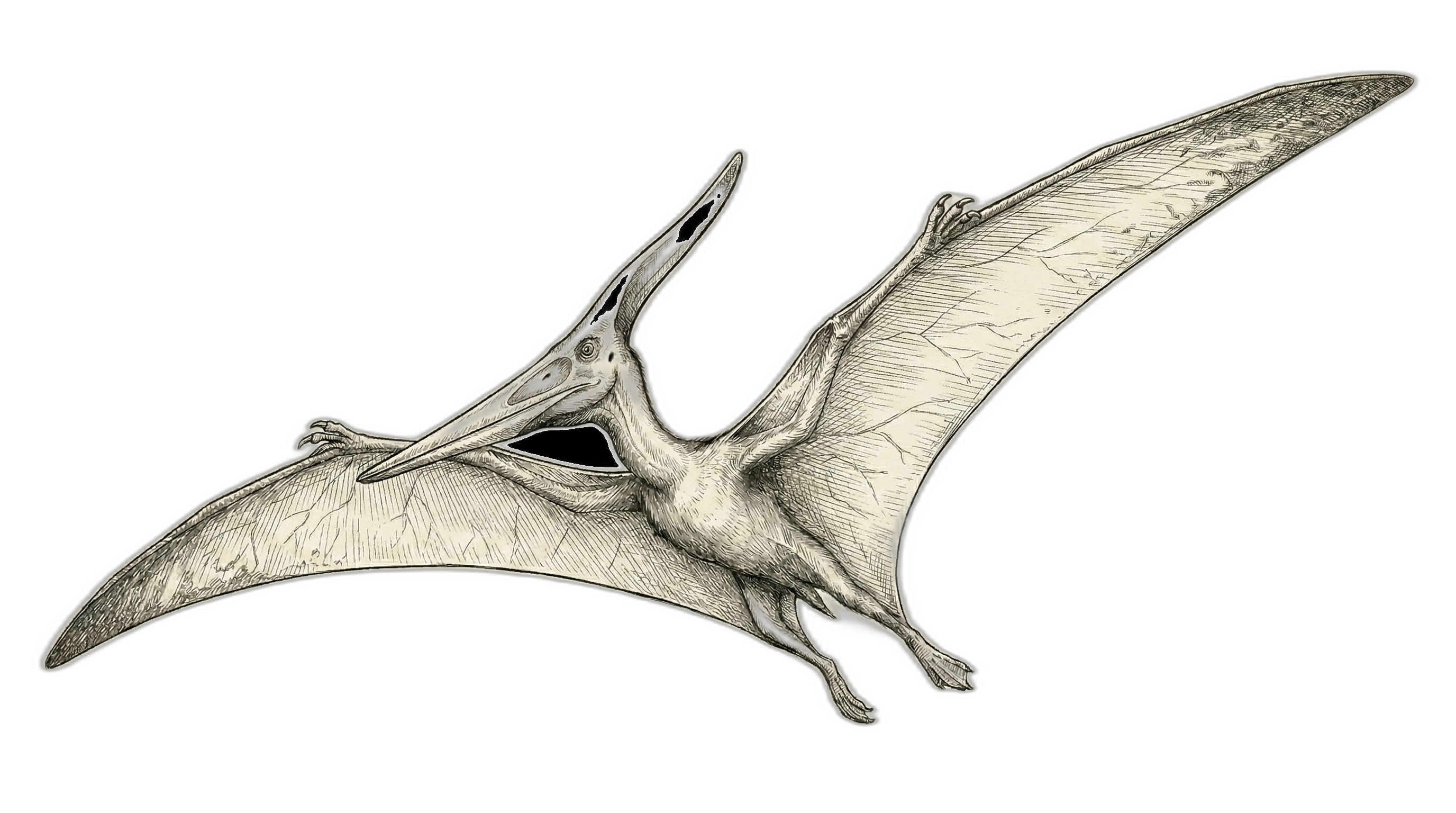
About
Pteranodon longiceps was a magnificent flying reptile that dominated the skies above the shallow sea that once divided North America. Unlike its distant cousin Pterodactylus, Pteranodon was completely toothless, possessing a long, narrow beak perfectly adapted for snatching fish from the water's surface while in flight. Its most striking feature was a prominent backward-projecting , which varied dramatically between individuals—males bore elongated crests sometimes exceeding 80 centimeters, while females displayed shorter, rounded versions.
This pterosaur's skeleton was a masterwork of biological engineering for flight. Hollow, bones reduced weight dramatically, allowing an animal with a 6-meter wingspan to weigh less than 20 kilograms. The elongated fourth finger supported the wing membrane, while the other three fingers formed small claws at the wing's leading edge. On the ground, Pteranodon walked quadrupedally, folding its wings and using all four limbs.
Thousands of Pteranodon specimens have been recovered from Kansas chalk deposits, making it one of the best-represented pterosaurs in the fossil record. These sediments preserve an ancient marine environment where Pteranodon likely spent its days soaring on thermals, scanning for fish, ammonites, and small marine creatures below. The abundance of fossils has revealed remarkable insights into growth patterns, , and population structure—transforming our understanding of pterosaur biology and cementing Pteranodon's place as an icon of prehistoric life.
Quick Facts
- Scientific name
- Pteranodon longiceps
- Group
- Pterosaur · Pteranodontidae
- Lived
- Late Cretaceous, 86–84.5 million years ago
- Diet
- Piscivore
- Movement
- Walked on four legs
- Fossils found in
- Niobrara Formation, Kansas, USA
- Discovery credited to
- 1876, Othniel Charles Marsh
- Holotype
- YPM 1177, Yale Peabody Museum of Natural History
- DinoVault record
- DVL-0114
Where Pteranodon Roamed
During the Late Cretaceous, Pteranodon longiceps soared above the warm, shallow waters of the Western Interior Seaway, a vast inland sea that divided North America into two landmasses, creating a subtropical coastal environment teeming with fish and marine reptiles. This expansive seaway, stretching from the Gulf of Mexico to the Arctic Ocean, provided ideal hunting grounds for these magnificent pterosaurs, whose fossils are now found in the chalk deposits of Kansas and neighboring states.
Keep exploring the vault
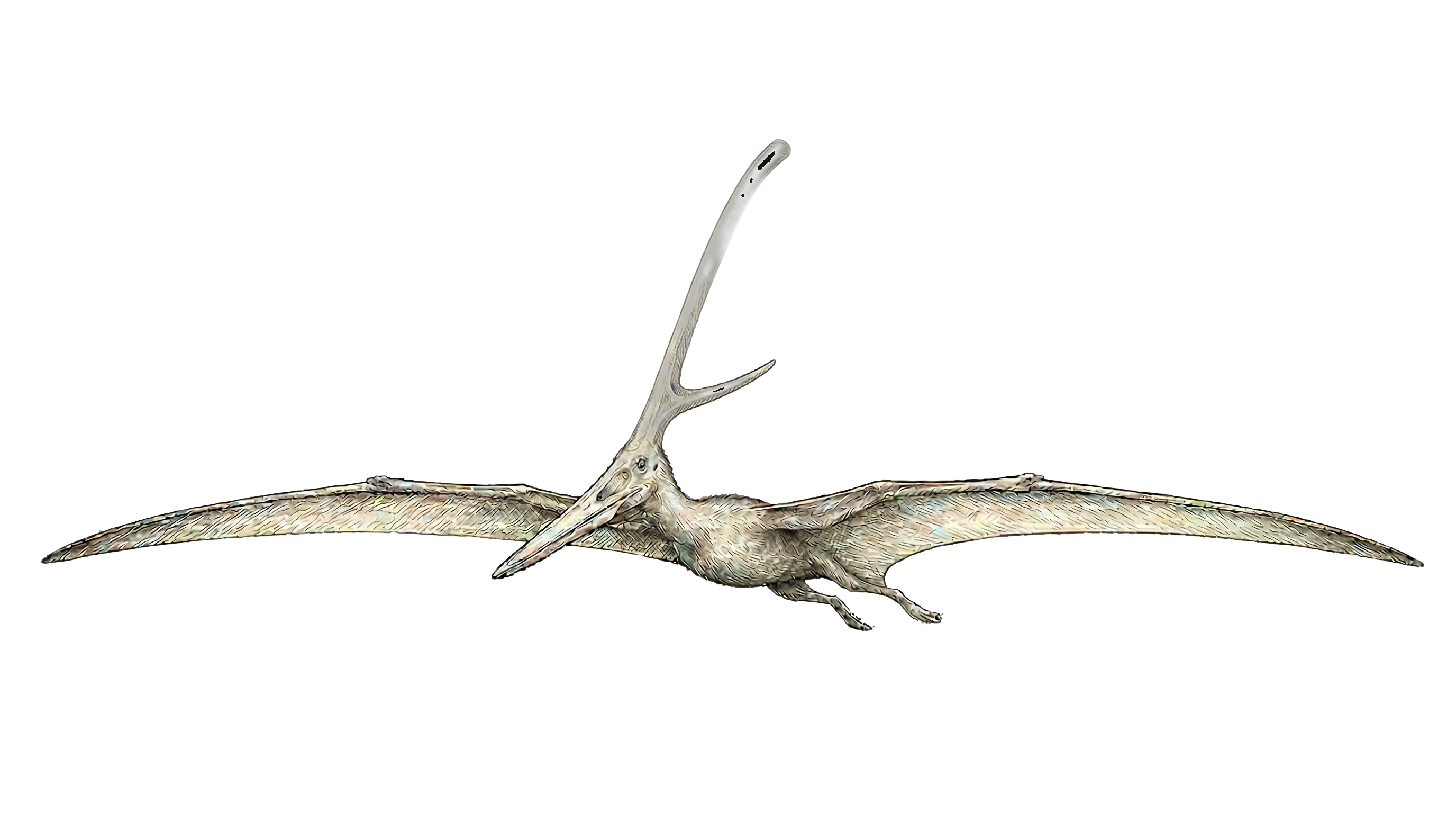
Night Lizard
Nyctosaurus gracilis
Nyctosaurus and Pteranodon both inhabited the Western Interior Seaway during the Late Cretaceous, with overlapping temporal ranges.
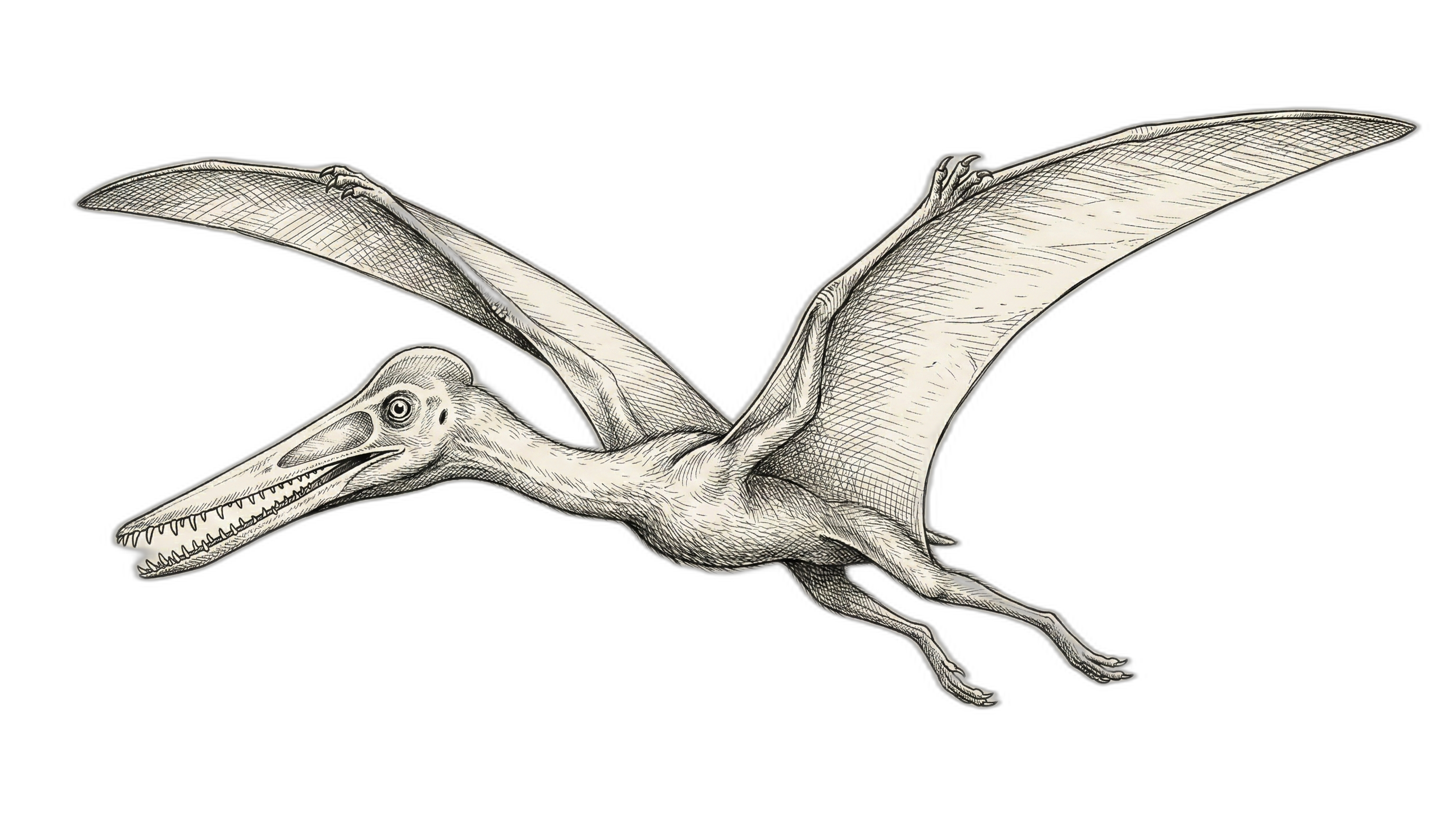
Pterodactyl
Pterodactylus antiquus
Pterodactylus (Late Jurassic) and Pteranodon (Late Cretaceous) represent the pterodactyloid lineage's progression toward larger, more specialized aerial forms.
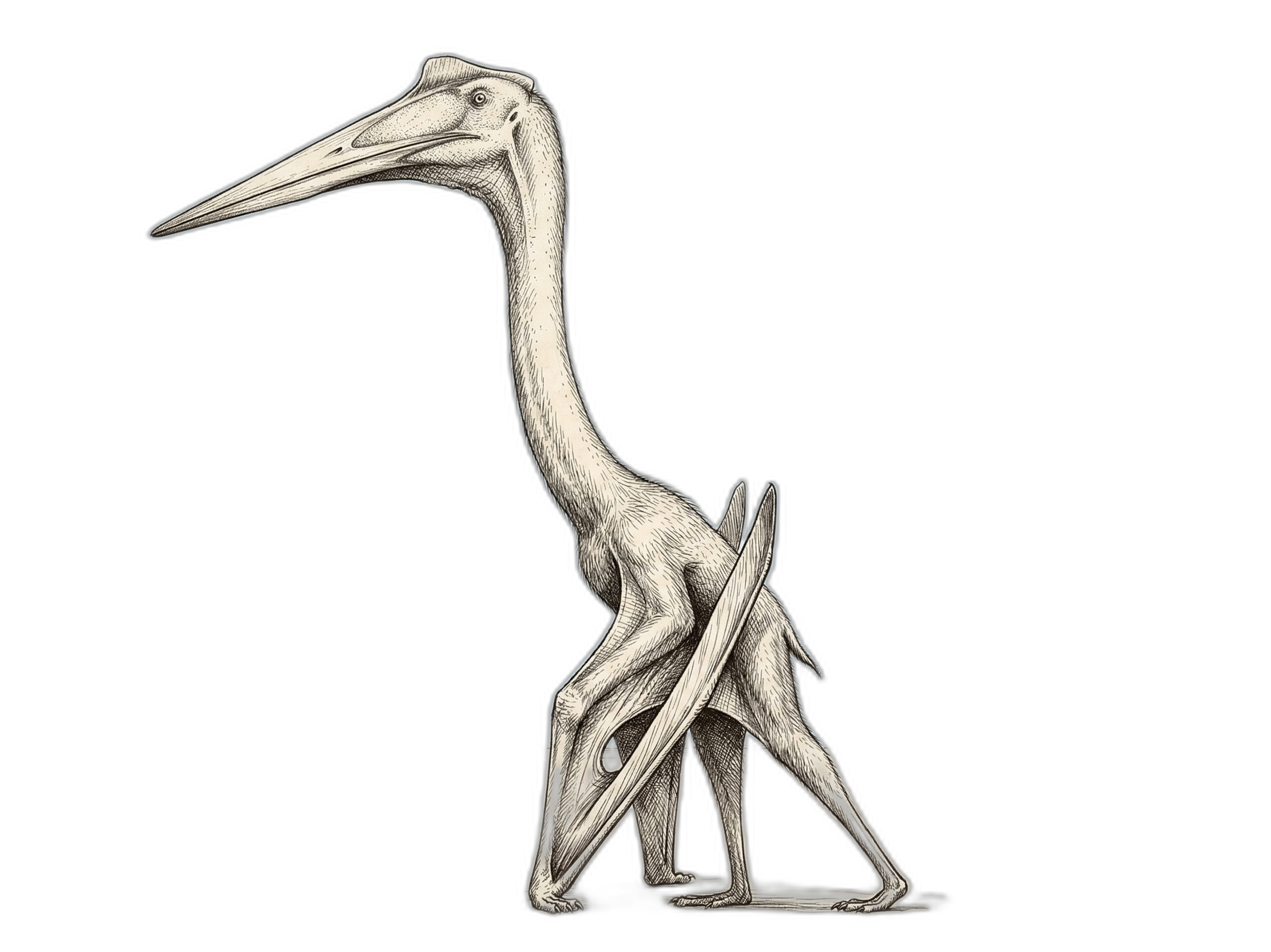
Quetzalcoatlus
Quetzalcoatlus northropi
Both represent pinnacles of pterosaur evolution in the Late Cretaceous, but explored different strategies: Pteranodon optimized for marine soaring and fish-catching with its 6-7m wingspan, while Quetzalcoatlus became a giant terrestrial stalker.

Tupandactylus
Both are crested pterodactyloid pterosaurs that convergently developed large head crests likely used for display and species recognition, though in different lineages (Tapejaridae vs Pteranodontidae) and different continents.
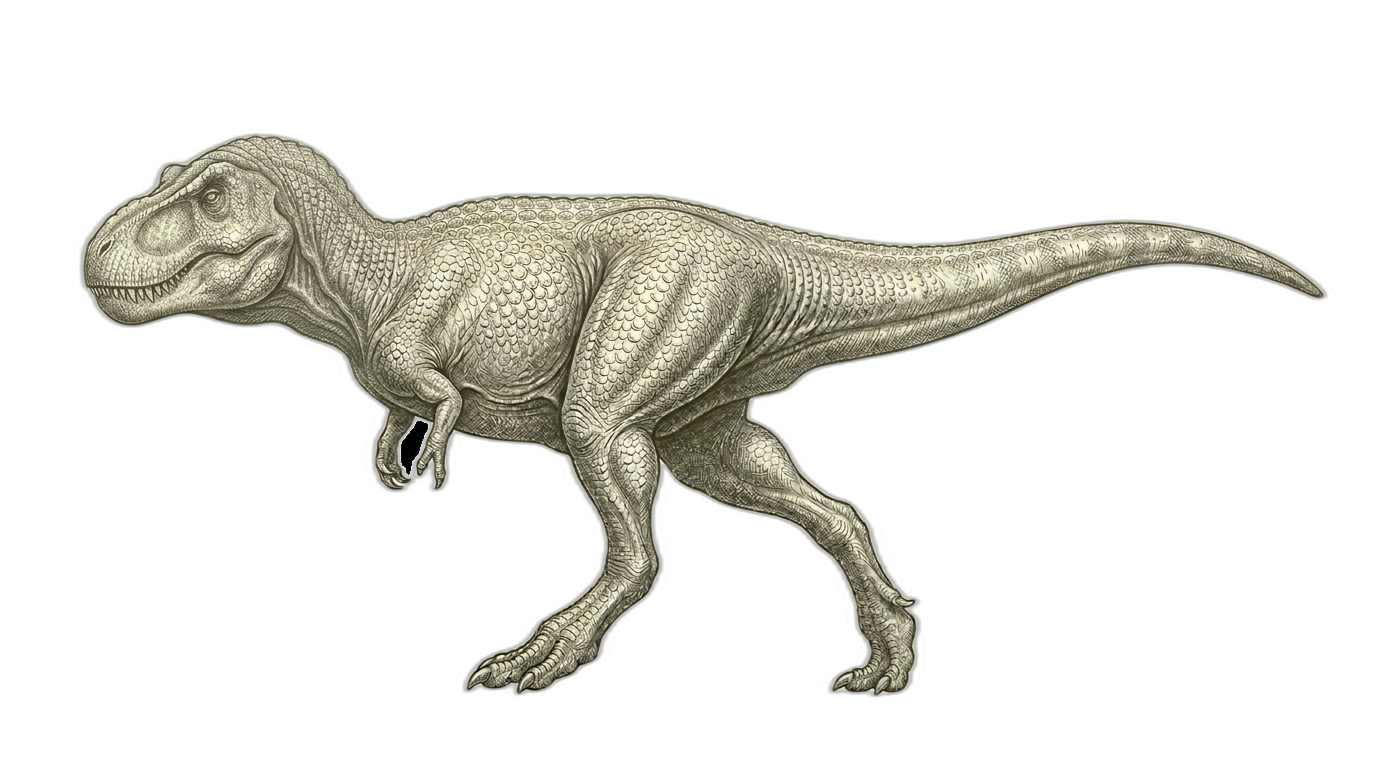
T-Rex
Tyrannosaurus rex
While T. rex appeared slightly later in the Late Cretaceous, both inhabited North American ecosystems.
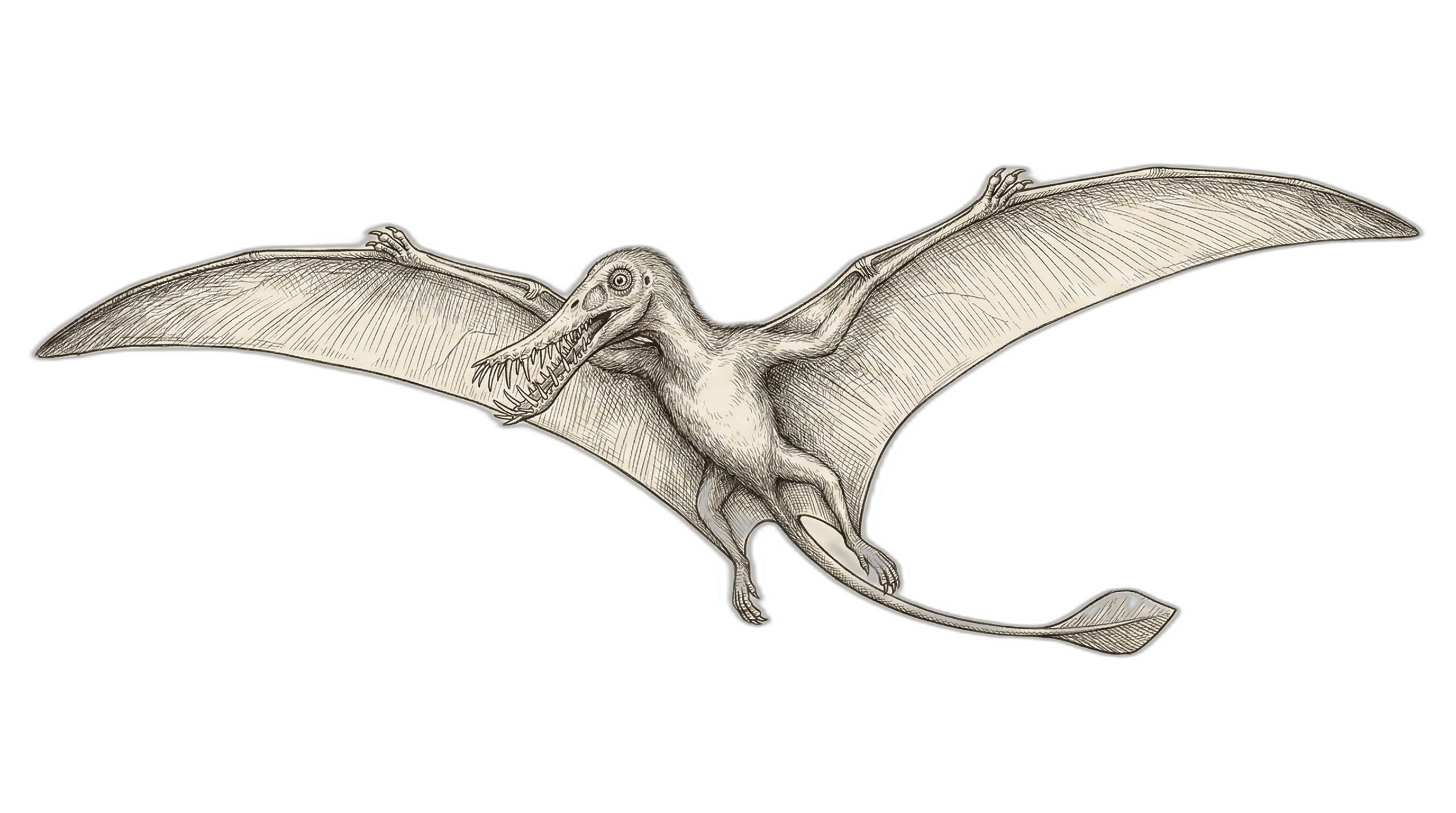
Rhamphorhynchus
Rhamphorhynchus muensteri
Both genera were piscivorous pterosaurs that evolved specialized adaptations for catching fish, but from different pterosaur suborders.
Sources & Citation
- Length estimates
- Bennett, S.C. (2001). The osteology and functional morphology of the Late Cretaceous pterosaur Pteranodon. Palaeontographica Abteilung A
- Height estimates
- Estimated standing height based on skeletal reconstructions; Bennett (2001)
- Weight estimates
- Witton, M.P. (2010). Pteranodon and beyond: the history of giant pterosaurs from 1870 onwards. Geological Society, London, Special Publications
- Speed estimates
- Bramwell, C.D. & Whitfield, G.R. (1974). Biomechanics of Pteranodon. Philosophical Transactions of the Royal Society B - soaring speed estimates