About
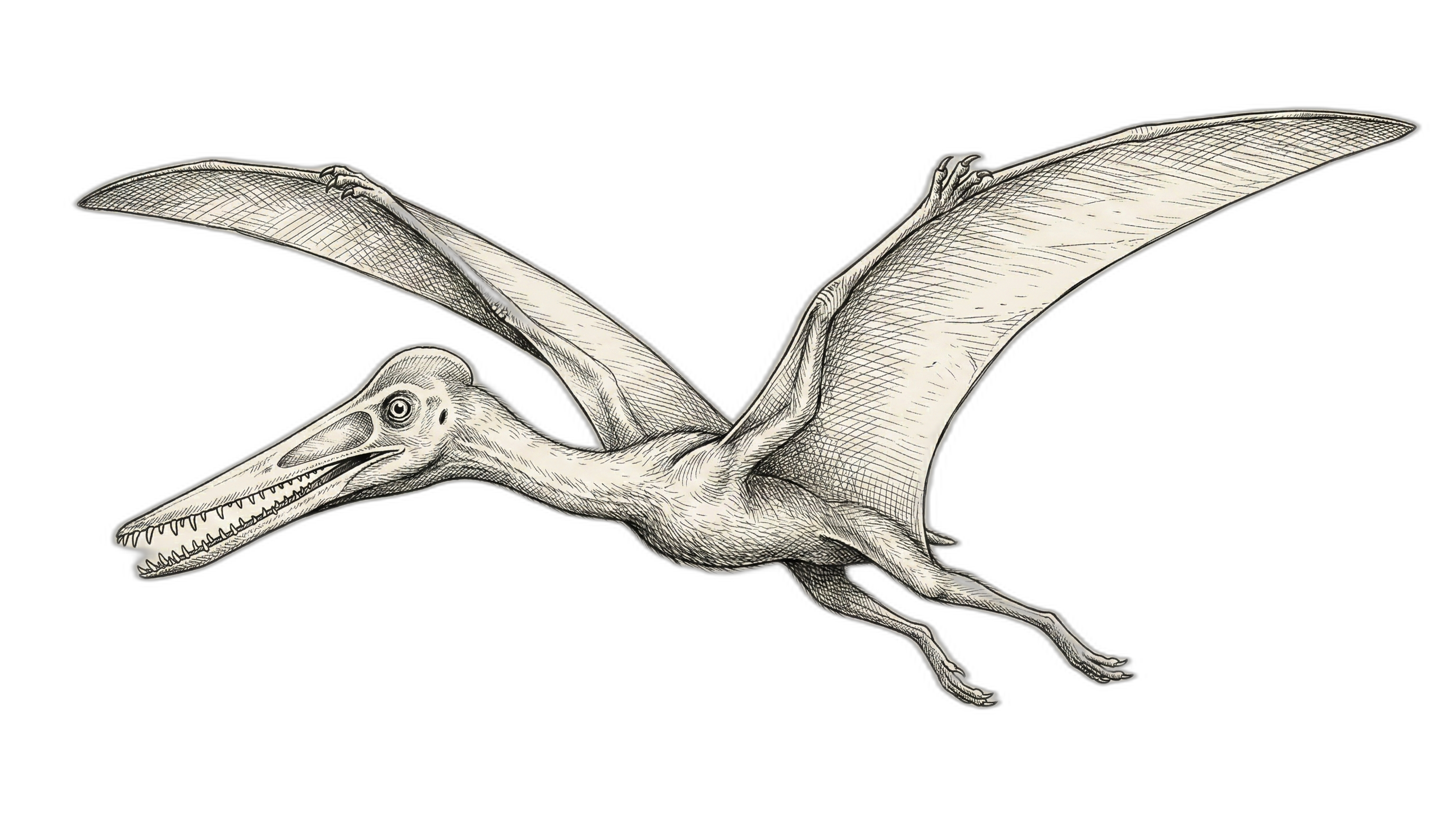
Pterodactylus antiquus holds an extraordinary place in paleontological history as the first pterosaur ever scientifically described, initially baffling 18th-century naturalists who struggled to classify this bizarre creature. This relatively small pterodactyloid possessed a wingspan averaging around one meter, with adults reaching perhaps 1.5 meters across. Its elongated skull featured approximately 90 small, conical teeth ideally suited for grasping slippery prey like fish and crustaceans.
The Solnhofen Limestone deposits where Pterodactylus fossils occur preserve exceptional detail, revealing the wing membranes and even soft tissue impressions. These lagoon environments of the Tethys Sea archipelago provided ideal hunting grounds where Pterodactylus likely skimmed shallow waters or waded along shorelines. On the ground, like other pterosaurs, it moved as a quadruped, using its folded wings as forelimbs.
Pterodactylus exhibited remarkable anatomical adaptations for powered flight, including hollow pneumatic bones, an enlarged breastbone for flight muscle attachment, and a relatively short tail typical of derived pterodactyloids. Studies of growth series have revealed that juveniles had proportionally larger heads and eyes, with crests developing only in mature adults—a discovery that resolved previous taxonomic confusion where juveniles had been named as separate species.
This genus fundamentally shaped how scientists conceptualize Mesozoic aerial ecosystems and remains an icon of prehistoric life.
Quick Facts
- Scientific name
- Pterodactylus antiquus
- Also known as
- Pterodactyl
- Group
- Pterosaur · Pterodactylidae
- Lived
- Late Jurassic, 152–148 million years ago
- Diet
- Piscivore
- Movement
- Walked on four legs
- Fossils found in
- Solnhofen Limestone (Bavaria, Germany)
- Discovery credited to
- 1784, Cosimo Alessandro Collini
- Holotype
- BSP AS I 739, Bavarian State Collection of Paleontology and Geology, Munich
- DinoVault record
- DVL-0115
Where fossils were found
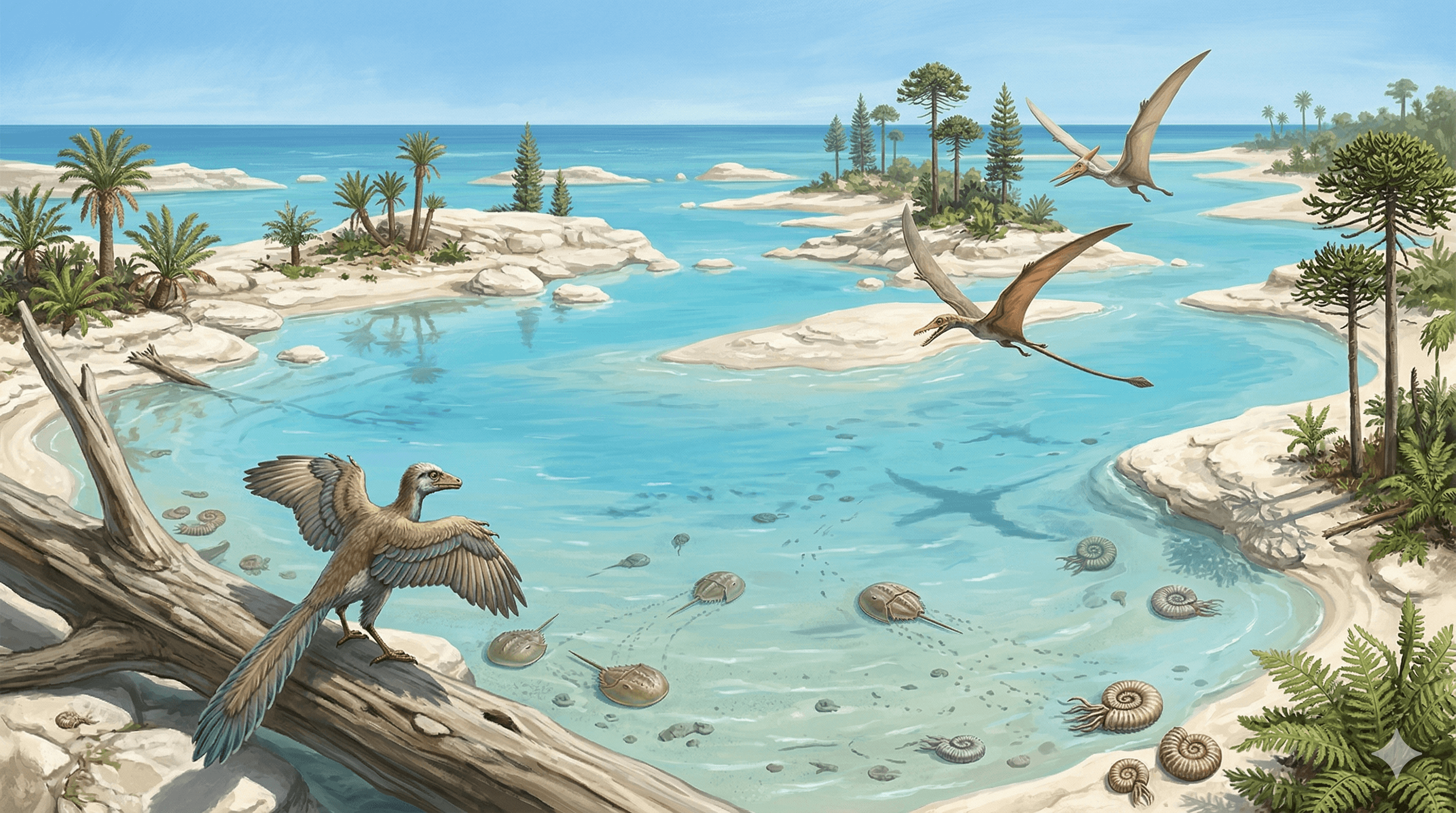
Solnhofen Limestone
Bavaria · Germany
152–148 million years ago(4m year span)
Where Pterodactyl Roamed
During the Late Jurassic, *Pterodactylus antiquus* soared above the shallow tropical lagoons of the Solnhofen archipelago, a chain of islands scattered across a warm, sunlit sea that bordered the northern margins of the Tethys Ocean in what is now southern Germany. These tranquil, hypersaline waters—sheltered by sponge and coral reefs—created the exceptional preservation conditions that would later yield some of the most exquisite fossils in paleontological history.
Keep exploring the vault
Compsognathus
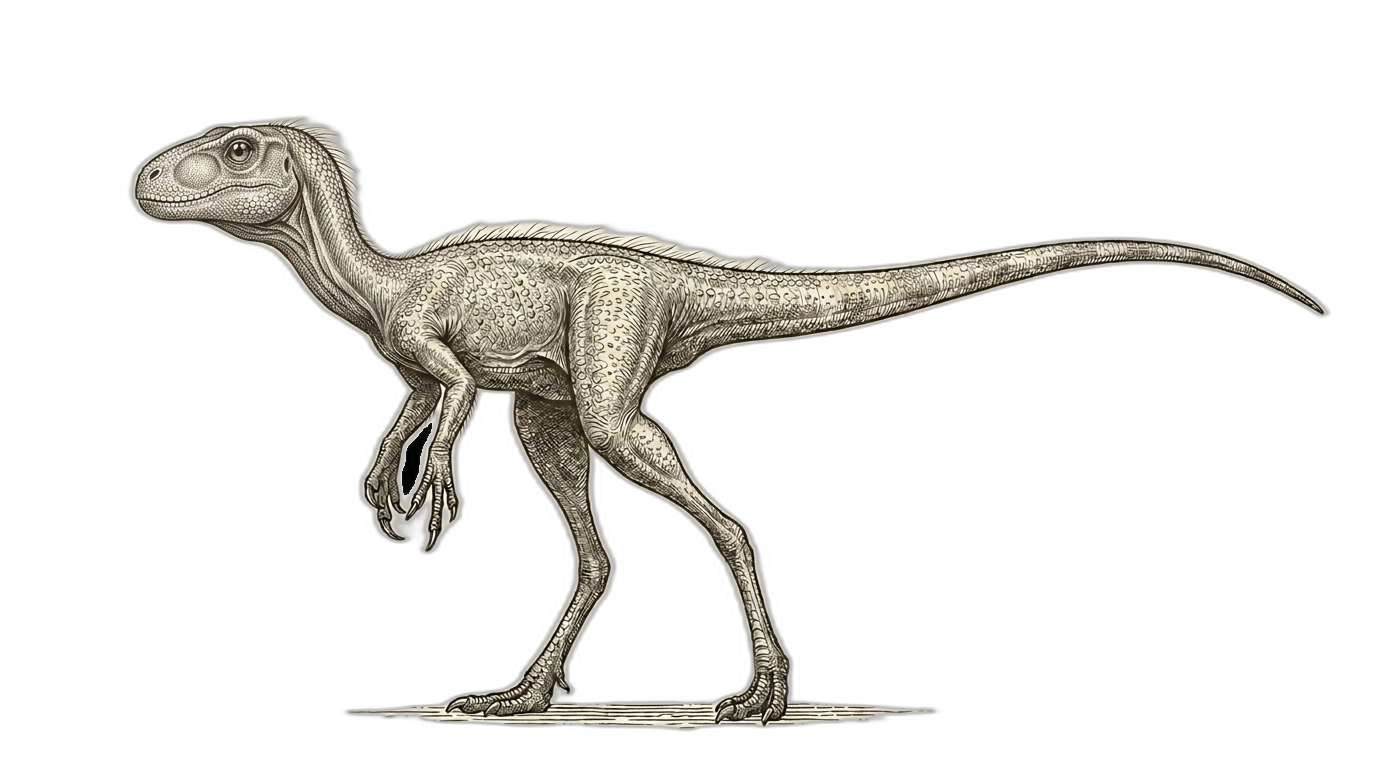
Compsognathus longipes
Compsognathus was a small agile predator (3kg) in the Solnhofen ecosystem.
Rhamphorhynchus
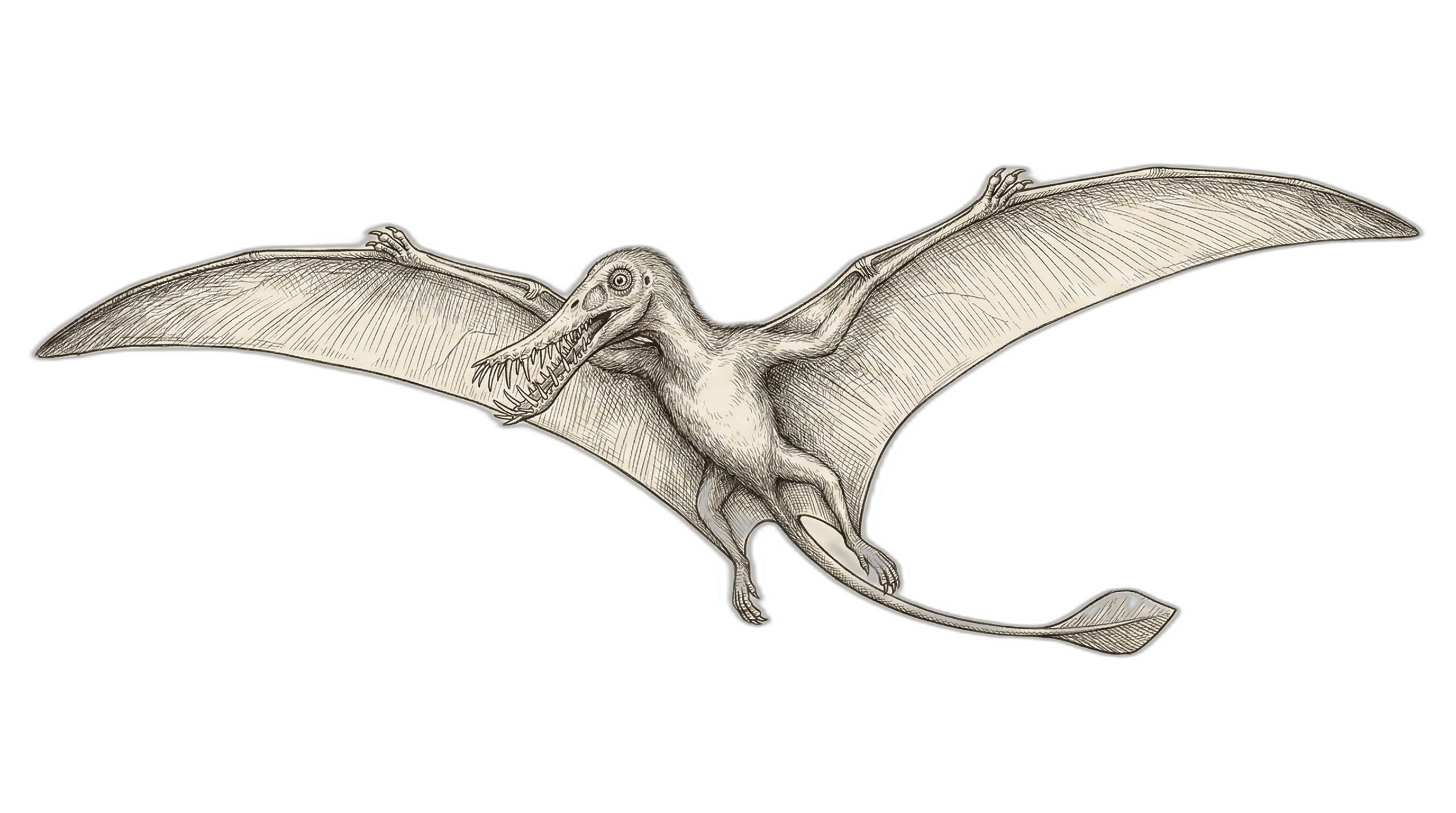
Rhamphorhynchus muensteri
Both Pterodactylus and Rhamphorhynchus are piscivorous pterosaurs from the Solnhofen Lagerstätte, similar in size (1m vs 1.26m), and would have competed directly for fish in the shallow lagoon environment.
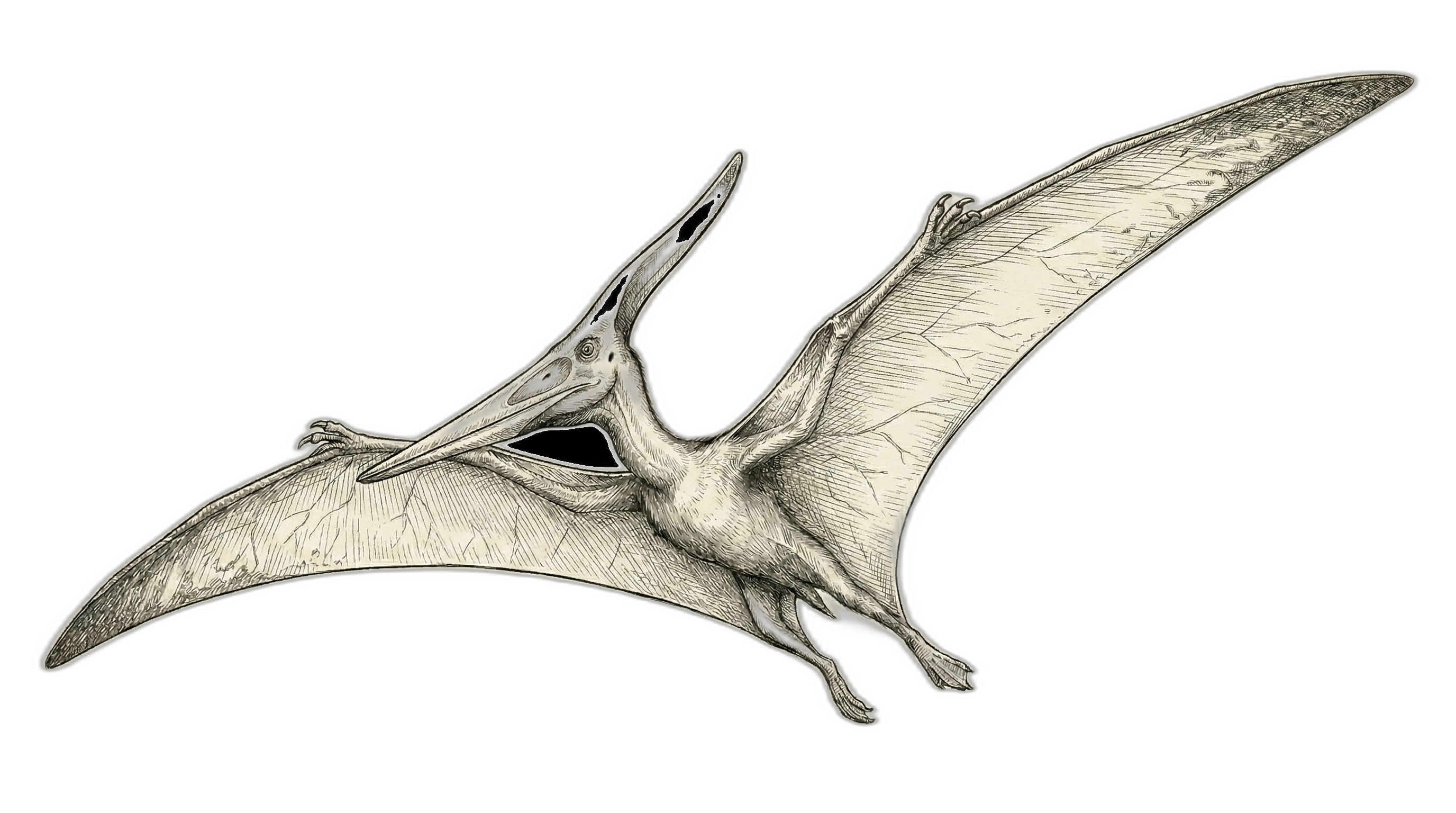
Pteranodon
Pteranodon longiceps
Pterodactylus (Late Jurassic) and Pteranodon (Late Cretaceous) represent the pterodactyloid lineage's progression toward larger, more specialized aerial forms.
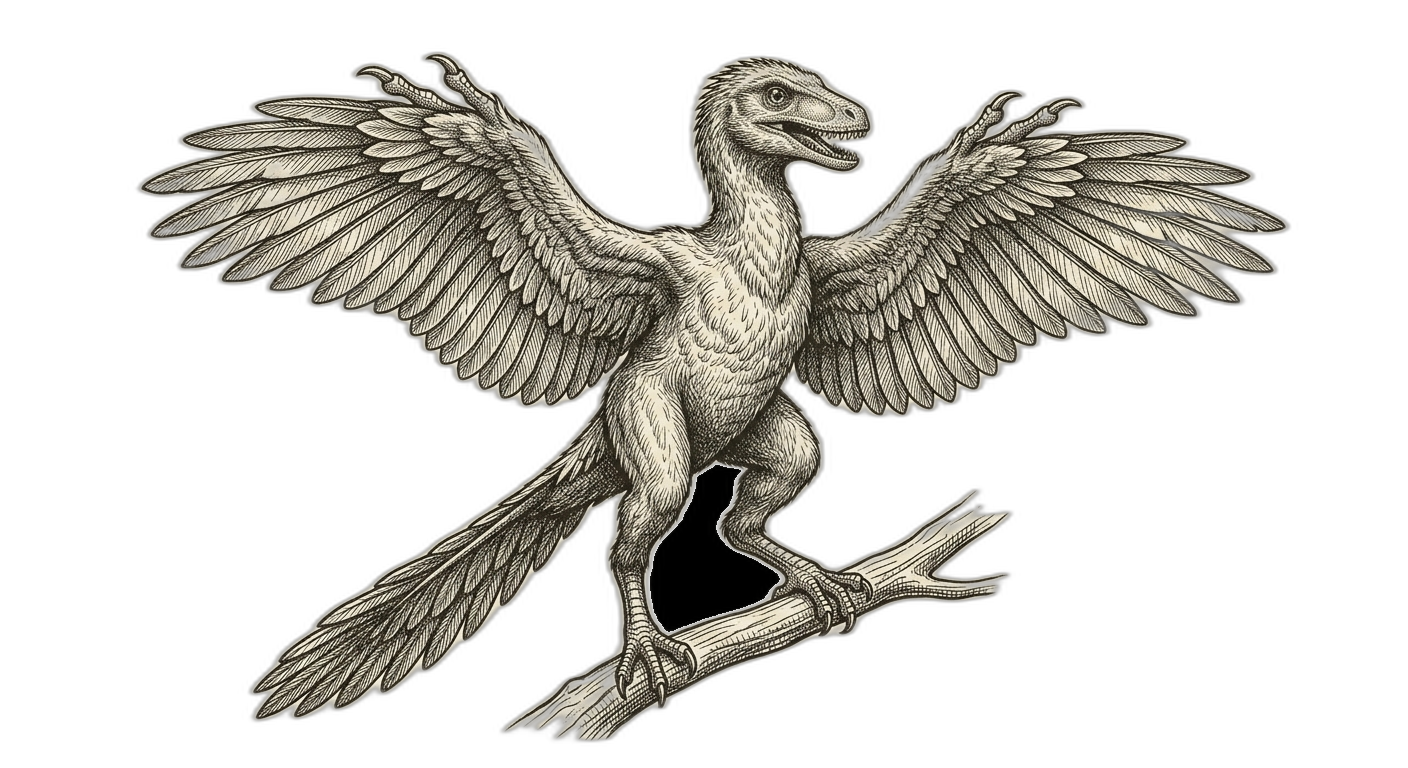
Archaeopteryx
Both Archaeopteryx and Pterodactylus are preserved in Solnhofen limestone, representing two completely different lineages that achieved flight - pterosaurs via membrane wings and theropod dinosaurs via feathered wings.
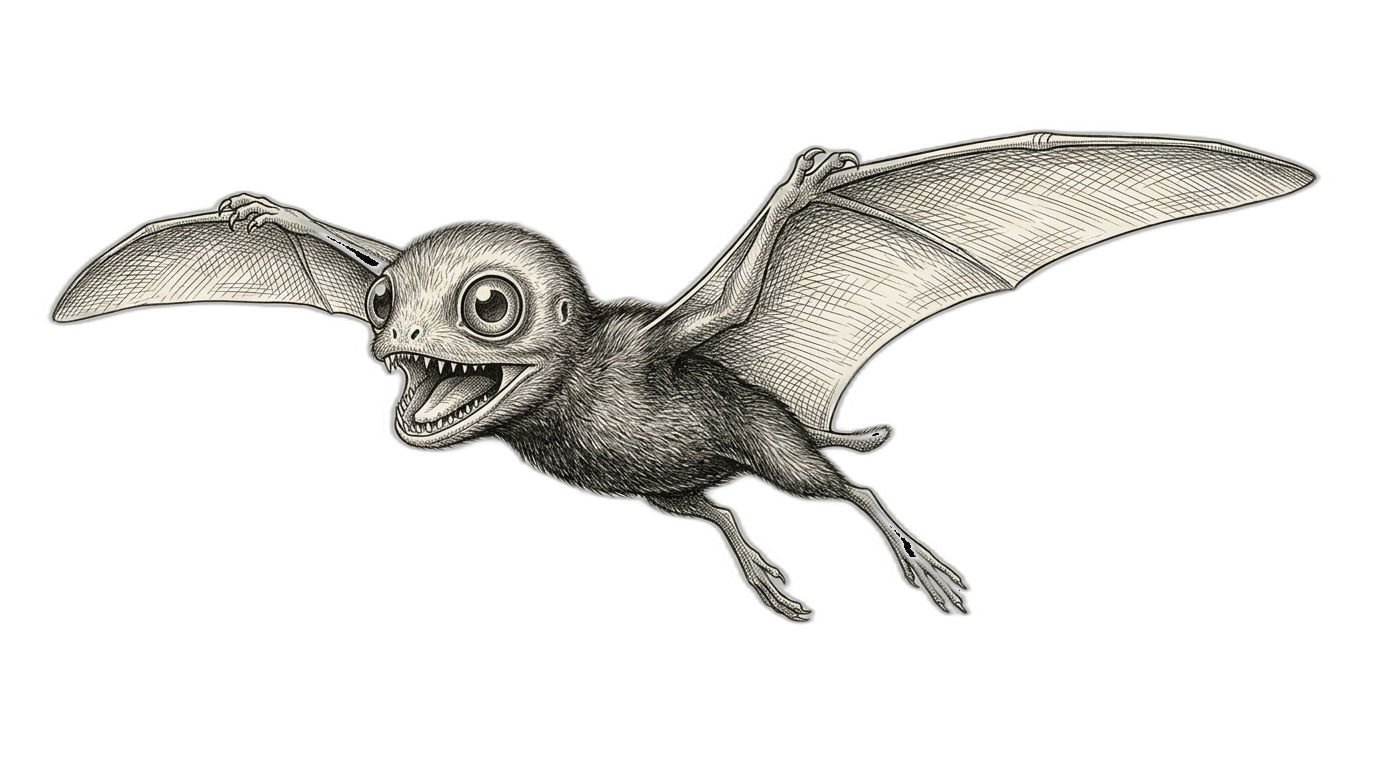
Anurognathus
Both pterosaurs from Solnhofen but with dramatically different ecological strategies - Pterodactylus was a 1m piscivore while tiny Anurognathus (9cm) was an insectivore with a wide gape for catching insects on the wing, similar to modern nightjars.

Tupandactylus
Both are pterodactyloid pterosaurs that independently evolved elaborate cranial crests and similar body plans for powered flight, representing the same evolutionary experiment in flying reptile diversification across different time periods (Late Jurassic vs Early Cretaceous).
Sources & Citation
- Length estimates
- Wellnhofer, P. (1970). Die Pterodactyloidea der Oberjura-Plattenkalke Süddeutschlands.
- Height estimates
- Bennett, S.C. (2013). New information on body size and cranial display structures of Pterodactylus antiquus.
- Weight estimates
- Witton, M.P. (2013). Pterosaurs: Natural History, Evolution, Anatomy.
- Speed estimates
- Biomechanical estimates based on flight membrane analysis; Witton (2013)