About
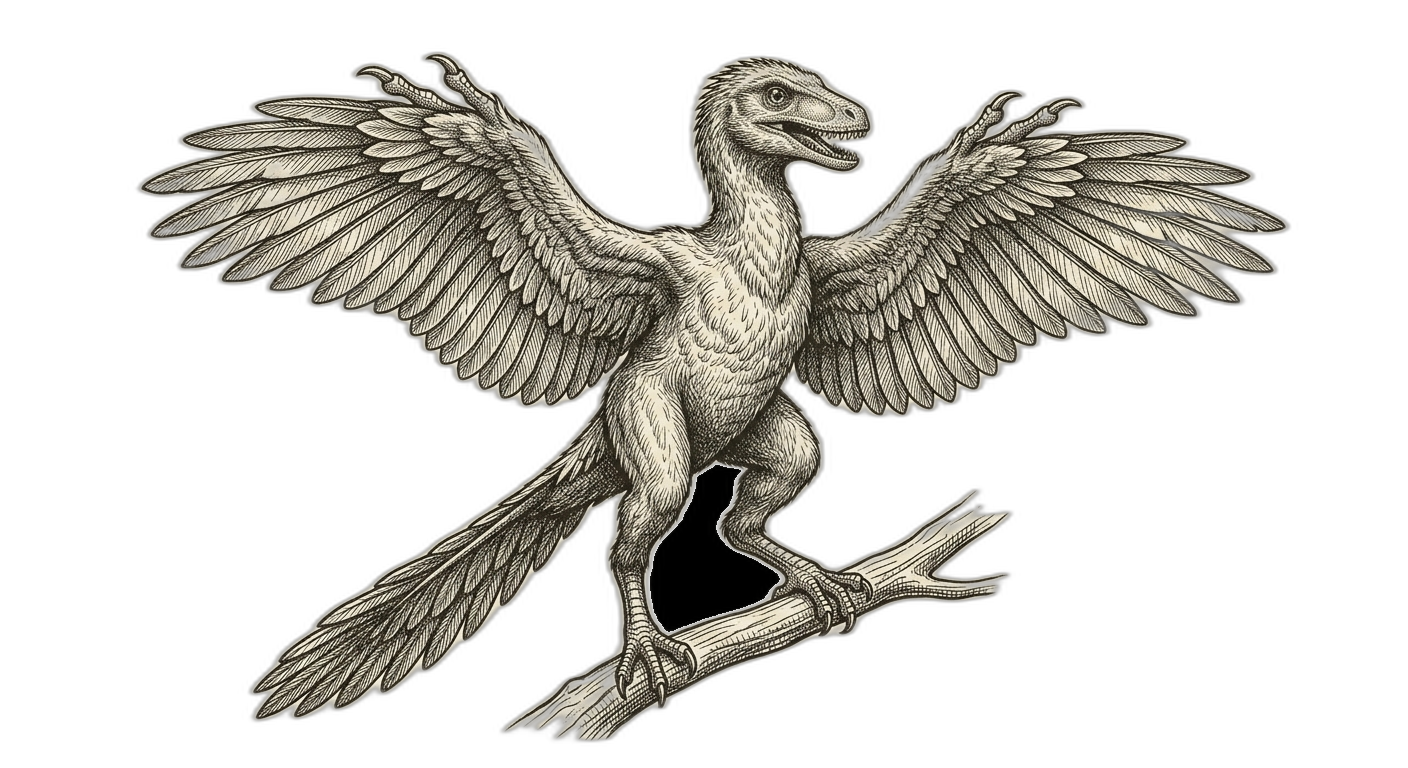
When the first complete Archaeopteryx skeleton was described in 1861 — just two years after Darwin published On the Origin of Species — it caused a sensation. Here was a creature with the wings and feathers of a bird but the teeth, clawed fingers, and long bony tail of a dinosaur. It was the missing link made tangible.
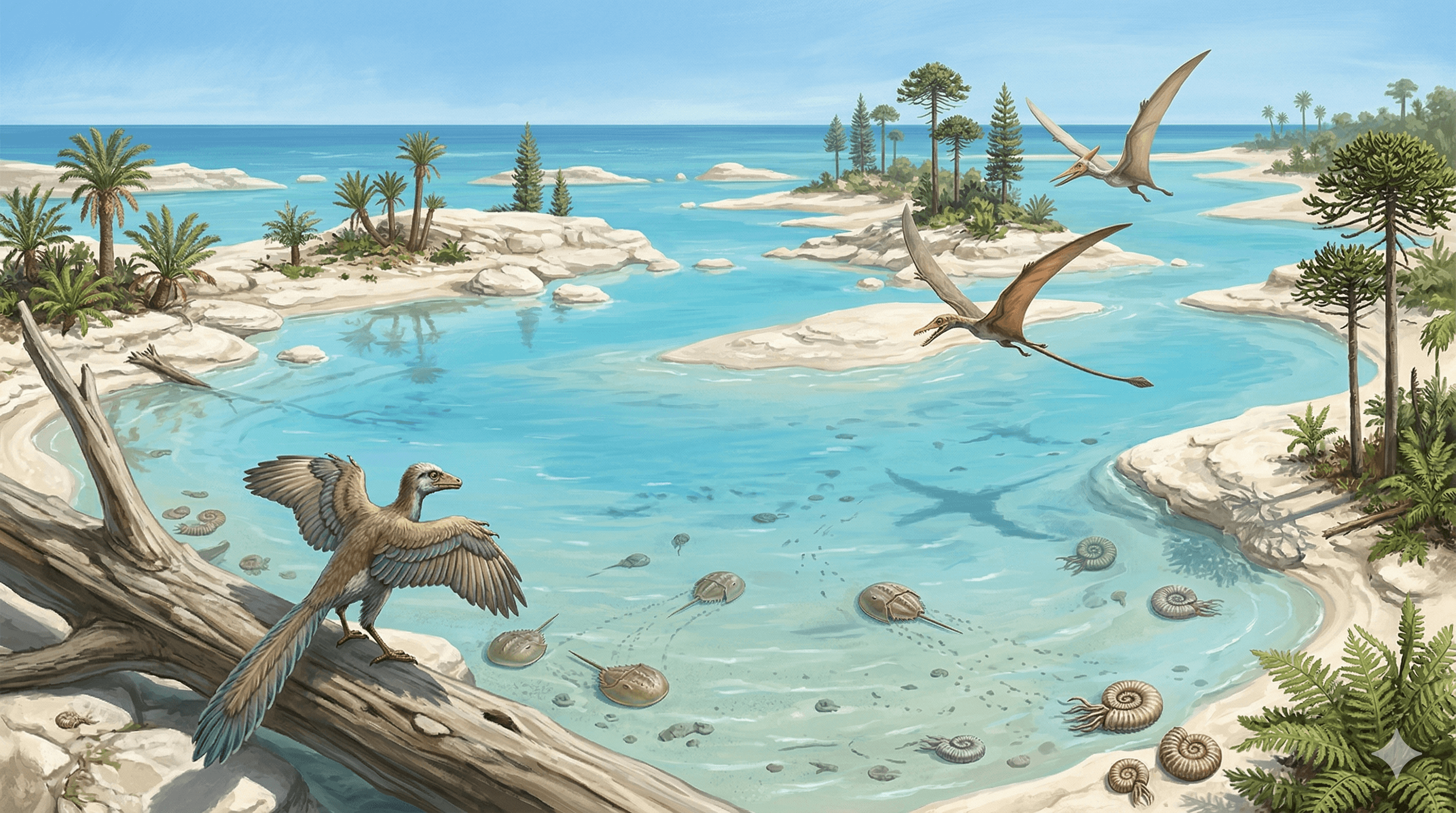
Archaeopteryx was found in the Solnhofen limestone of Bavaria, Germany — a formation deposited in a shallow, warm lagoon. The extremely fine-grained sediment preserved extraordinary detail: not just bones, but the impressions of every individual feather. The quality of preservation is unmatched in the fossil record.
Whether Archaeopteryx could truly fly is still debated. Its wings were asymmetrical — like modern flying birds, not gliding ones — suggesting powered flight was possible. But it lacked the keeled sternum that anchors flight muscles in modern birds, suggesting it couldn't fly as efficiently. The current thinking is that it was a capable, if not elegant, flier.
Archaeopteryx has been removed from and returned to the base of the bird family tree several times as new feathered dinosaur discoveries have complicated the picture. It remains the most important transitional fossil ever found — a window into the moment reptiles became birds.
Quick Facts
- Scientific name
- Archaeopteryx lithographica
- Group
- Theropod · Archaeopterygidae
- Lived
- Late Jurassic, 149.2–145.1 million years ago
- Diet
- Carnivore
- Movement
- Walked on two legs
- Fossils found in
- Solnhofen Limestone (Bavaria, Germany)
- Discovery credited to
- 1861, Hermann von Meyer (description); specimen found near Solnhofen, Bavaria
- Holotype
- MB.Av.101 (Berlin specimen) · Museum für Naturkunde, Berlin
- DinoVault record
- DVL-0011
Where fossils were found
Solnhofen Limestone
Bavaria · Germany
149.2–145.1 million years ago(4.1m year span)
Where Archaeopteryx lithographica Roamed
During the Late Jurassic, Archaeopteryx inhabited a subtropical archipelago along the northern margins of the Tethys Sea, where shallow lagoons and coral reefs dotted the coastline of the European island chain that had fragmented from the ancient supercontinent Pangaea. This warm, semi-arid environment featured scattered islands with sparse vegetation, surrounded by calm, hypersaline waters that would ultimately preserve these remarkable feathered creatures in the fine-grained Solnhofen limestone.
Keep exploring the vault
Anurognathus
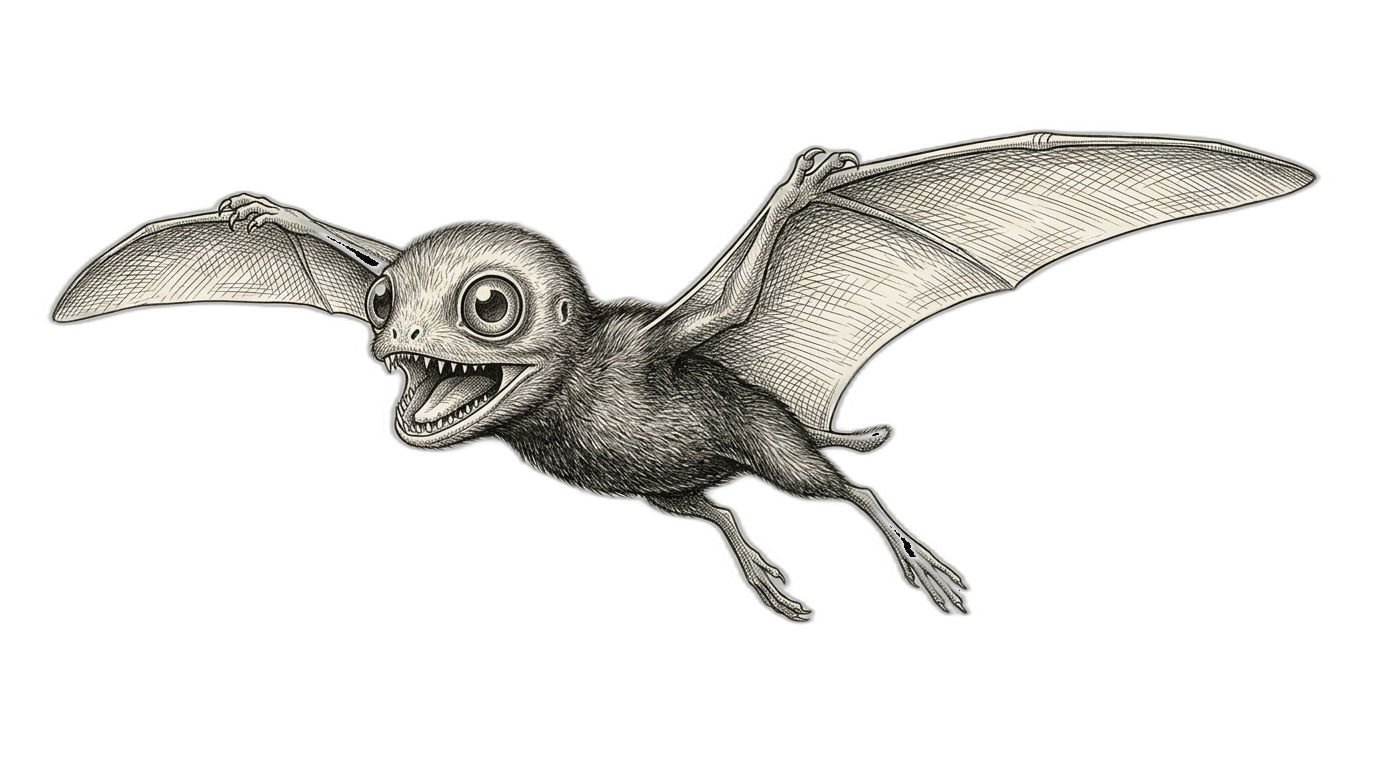
Archaeopteryx at 0.5m and 0.5kg was a small carnivore sharing the Solnhofen lagoon environment.
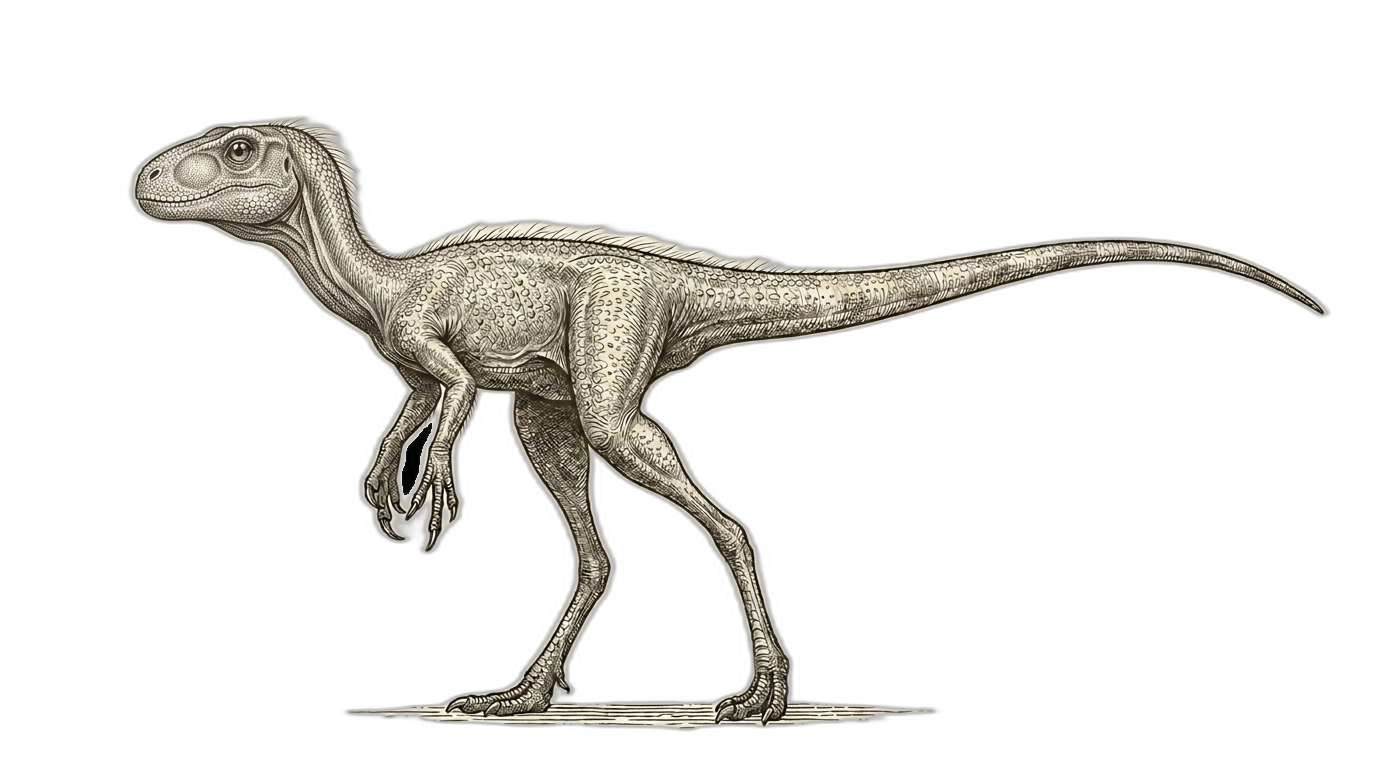
Compsognathus
Compsognathus longipes
Both were small carnivores (~0.5-1m) in the Solnhofen lagoon ecosystem, likely competing for similar prey items such as insects, small lizards, and fish.
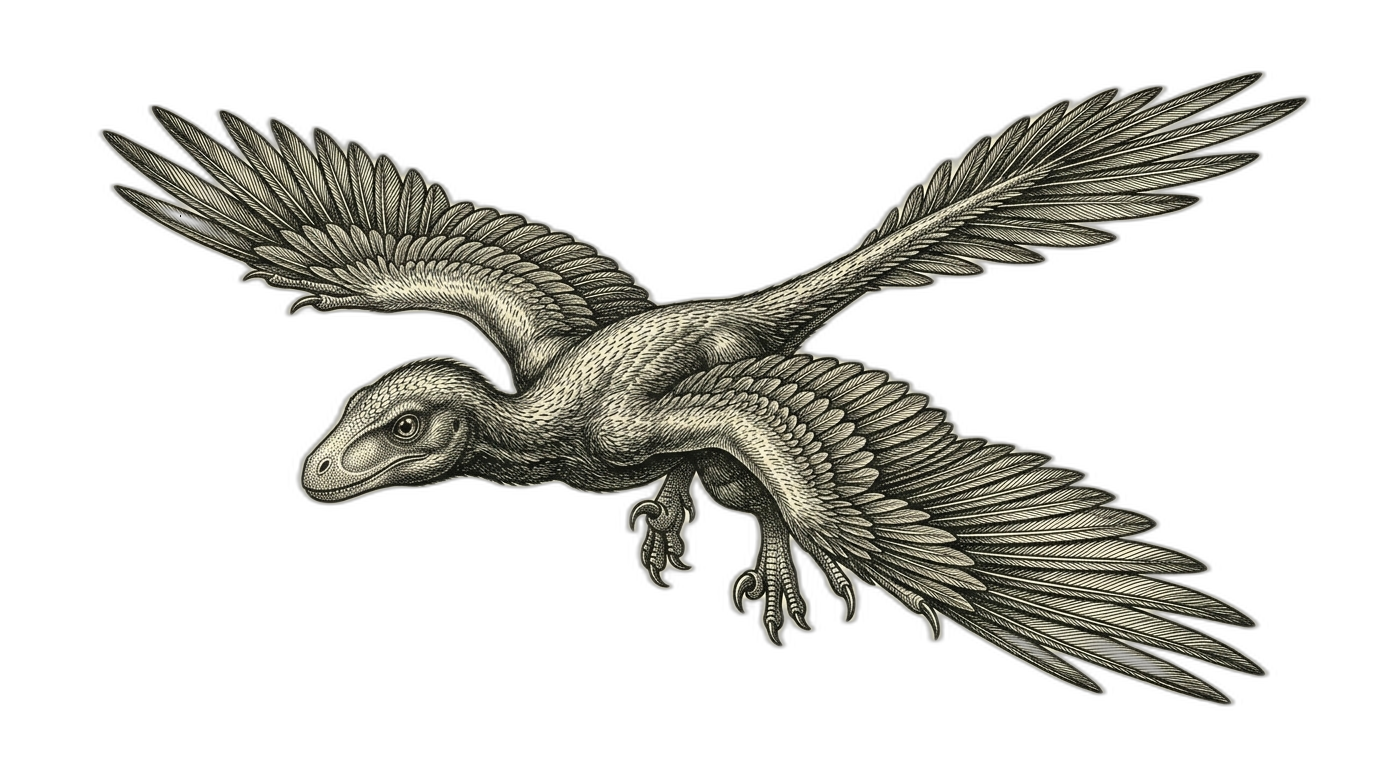
Microraptor
Microraptor gui
Both represent small feathered theropods independently exploring aerial locomotion — Archaeopteryx in the Late Jurassic and Microraptor in the Early Cretaceous.
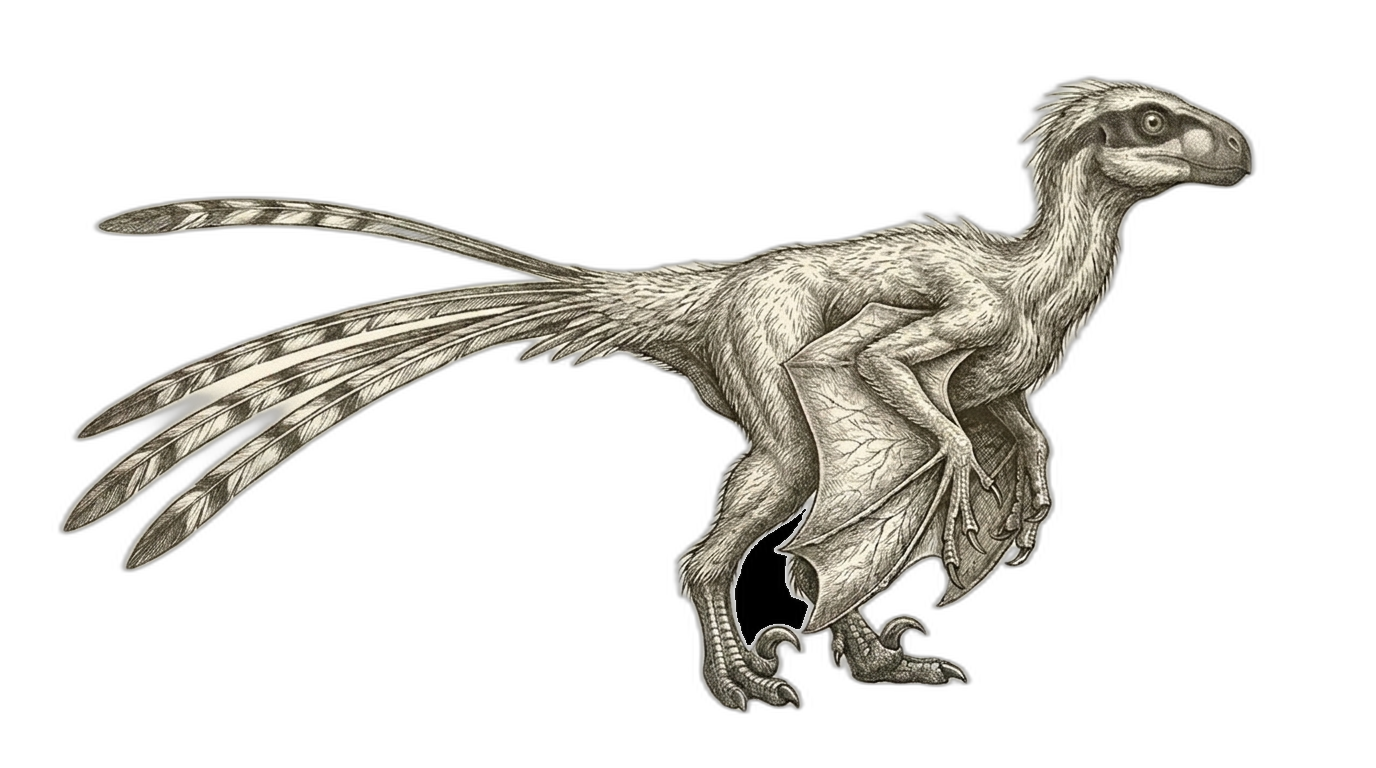
Yi
Both represent parallel experiments in theropod flight evolution.
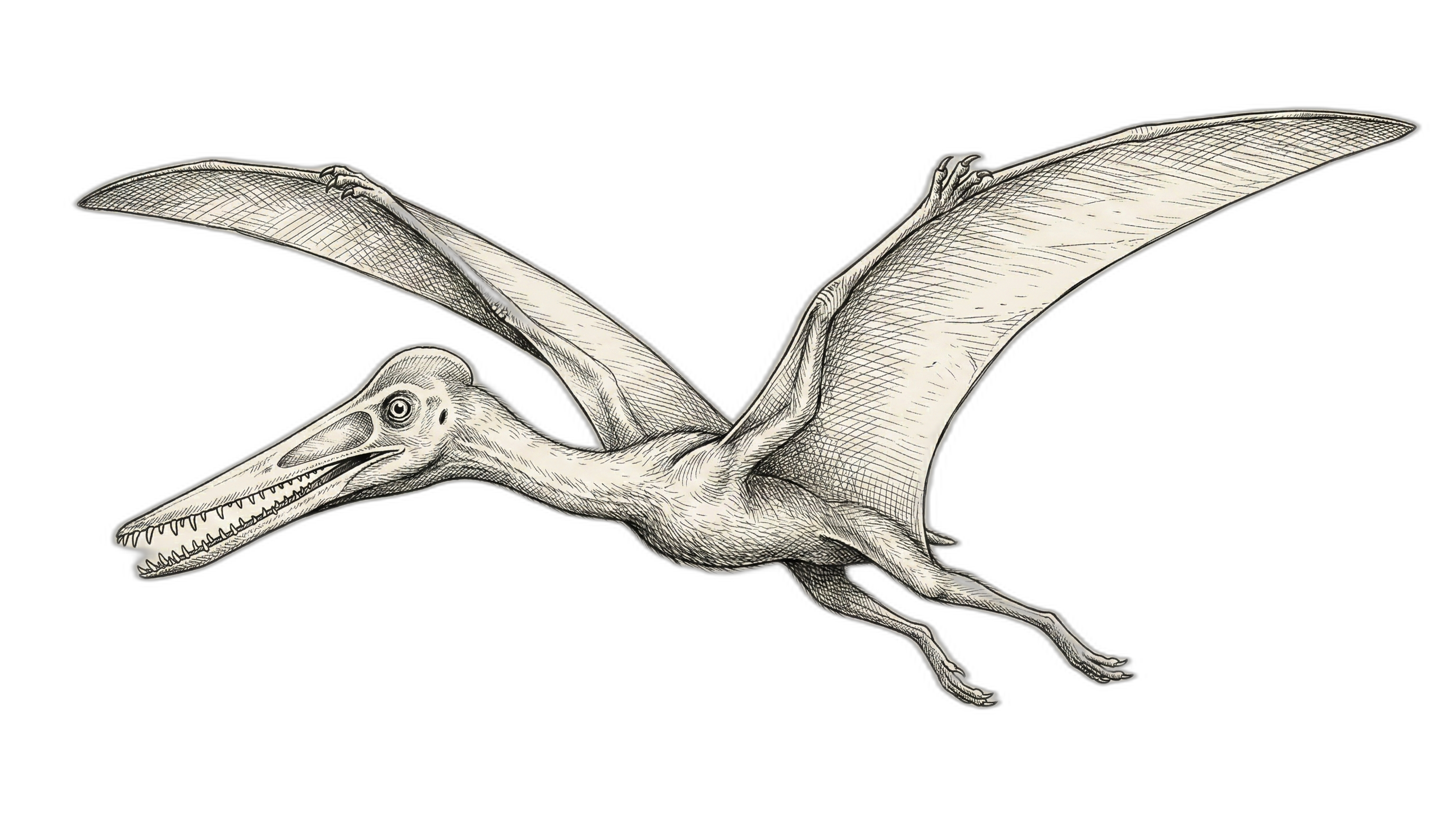
Pterodactyl
Pterodactylus antiquus
Both Archaeopteryx and Pterodactylus are preserved in Solnhofen limestone, representing two completely different lineages that achieved flight - pterosaurs via membrane wings and theropod dinosaurs via feathered wings.
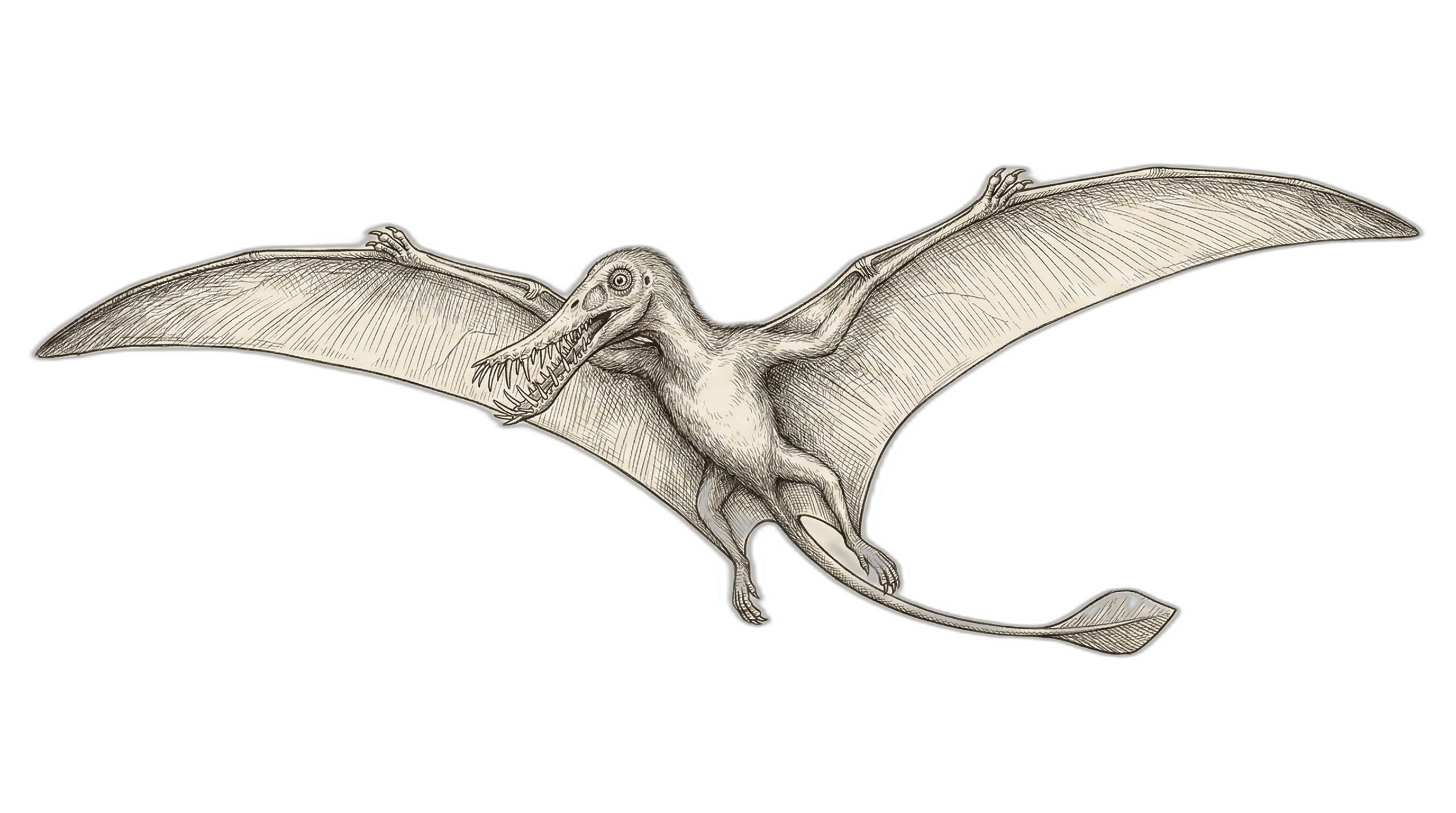
Rhamphorhynchus
Rhamphorhynchus muensteri
Both species are preserved in the Solnhofen Limestone and represent two different evolutionary approaches to flight in the Late Jurassic — Rhamphorhynchus as an established pterosaur lineage and Archaeopteryx as an early avian experimenter.
Sources & Citation
- Length estimates
- Multiple Solnhofen specimens
- Height estimates
- Estimated from skeletal reconstructions
- Weight estimates
- Various estimates based on skeletal proportions