About
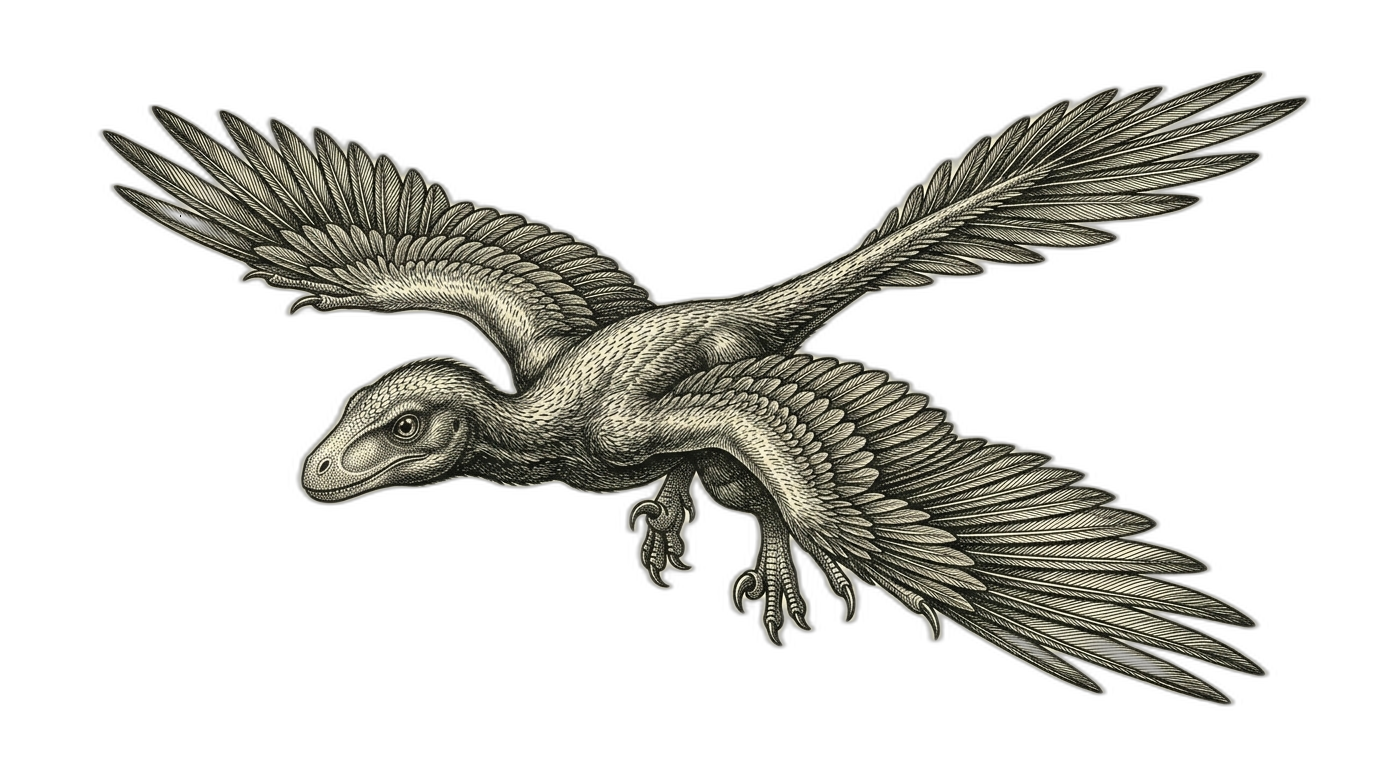
Microraptor is one of the most extraordinary animals ever discovered. About the size of a crow, it had large feathered wings on both its arms and its legs — four wings in total — making it the smallest known four-winged dinosaur.
For a long time, scientists debated whether Microraptor flapped or glided. The current consensus is that it was primarily a glider, spreading all four wings to soar between trees in the dense forests of Early Cretaceous China. Its feathers were iridescent — preserved show it likely shimmered with a blue-black sheen, like a modern starling.
Microraptor's diet was surprisingly varied. Fossilized stomach contents have revealed fish, lizards, and small birds — meaning this tiny animal was an active and versatile predator that hunted across multiple environments.
Microraptor belongs to the family — the same group as Velociraptor — but it represents a separate evolutionary experiment in flight. Birds didn't descend from Microraptor specifically, but it shows that winged, gliding dinosaurs evolved multiple times.
Quick Facts
- Scientific name
- Microraptor gui
- Group
- Theropod · Dromaeosauridae
- Lived
- Early Cretaceous, 121.4–113.2 million years ago
- Diet
- Carnivore
- Movement
- Walked on two legs
- Fossils found in
- Yixian Formation (Liaoning, China)
- Discovery credited to
- 2000, Xu Xing et al.
- Holotype
- IVPP V 13352 · Institute of Vertebrate Paleontology and Paleoanthropology, Beijing
- DinoVault record
- DVL-0089
Where fossils were found
Yixian Formation
Liaoning · China
121.4–113.2 million years ago(8.2m year span)
Where Microraptor Roamed
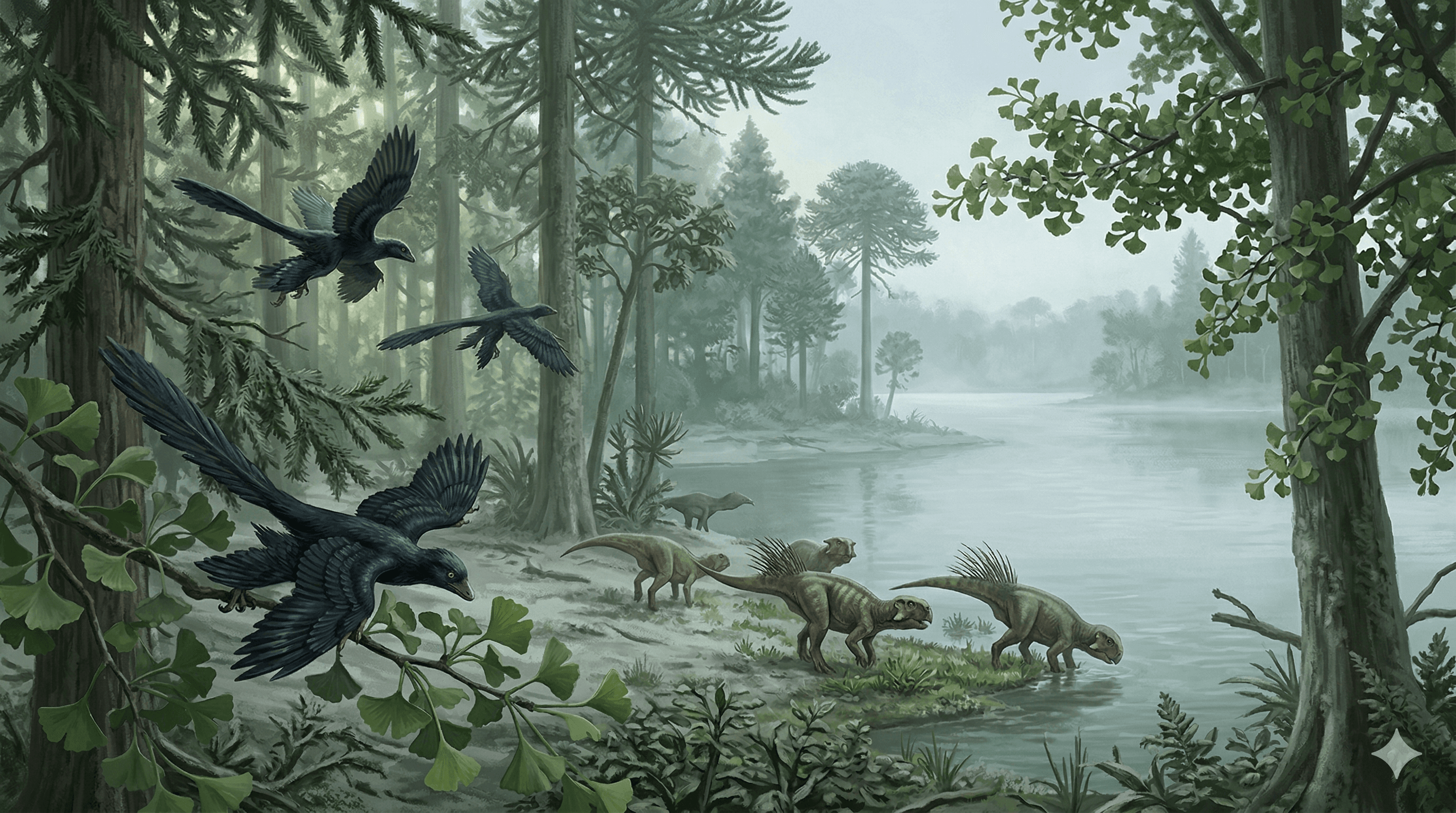
Microraptor gui inhabited the lush, temperate forests of the Jehol Biota in what is now northeastern China, a region characterized by ancient lakes, volcanic activity, and dense coniferous and ginkgo woodlands during the Early Cretaceous. This corner of the eastern Asian landmass supported an extraordinary diversity of feathered dinosaurs, early birds, and flowering plants beneath ash-laden skies that would ultimately preserve them in exceptional detail.
Keep exploring the vault
Dilong
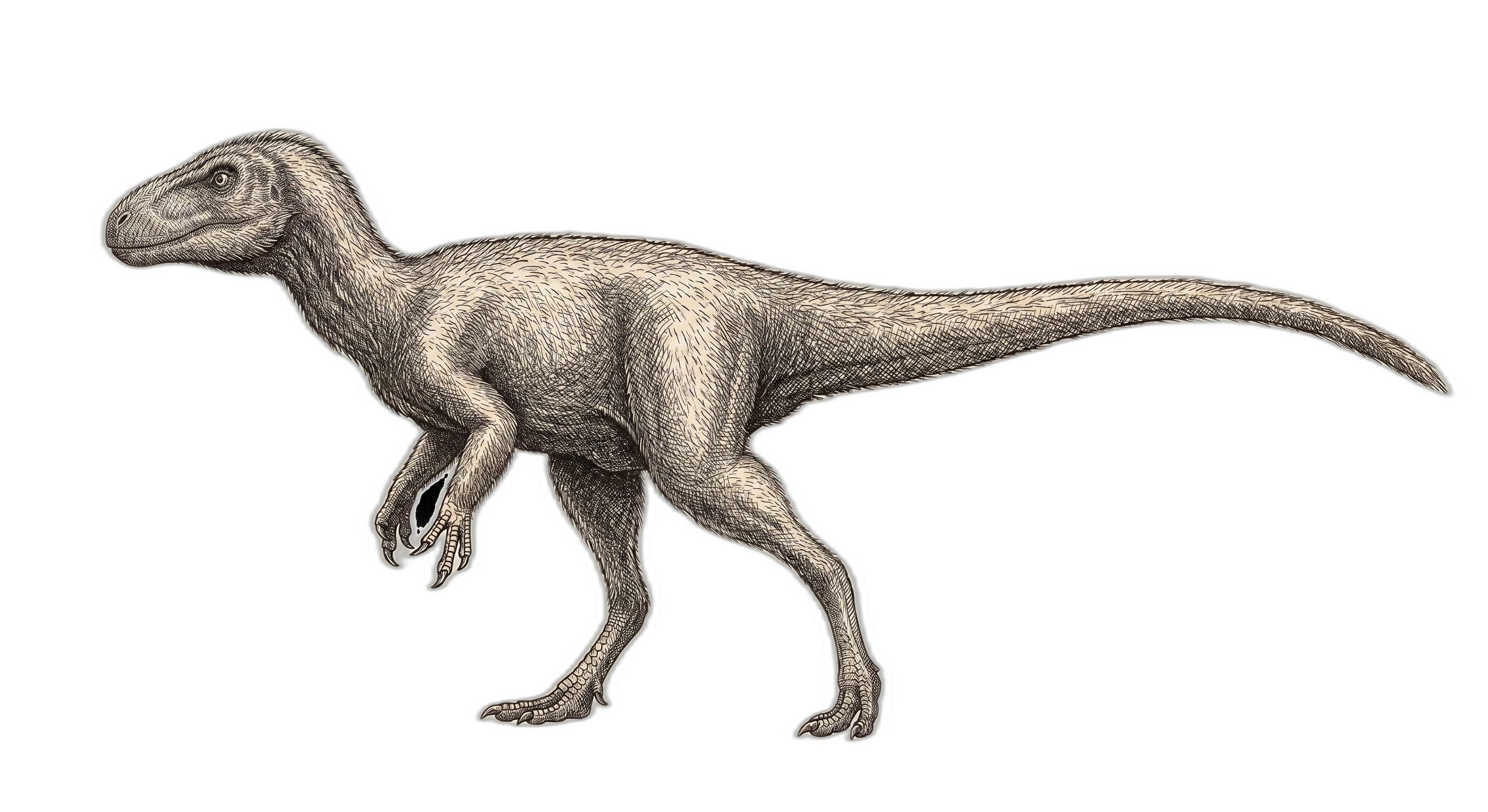
Microraptor at 0.65m and 0.6kg was much smaller than Dilong (1.6m, 11kg).
Sinosauropteryx
Sinosauropteryx prima
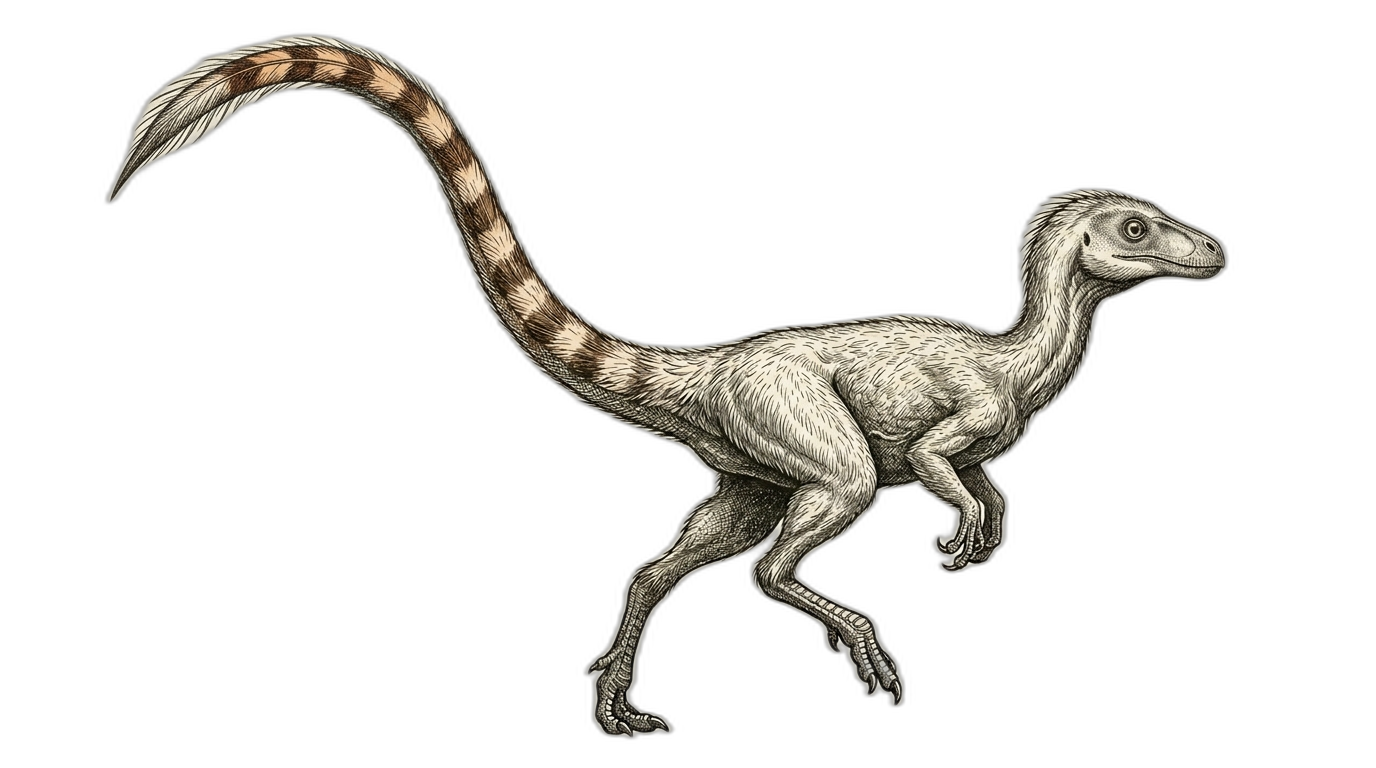
Both small feathered theropods from the Yixian Formation with carnivorous diets and similar body sizes (Microraptor 0.65m/0.6kg vs Sinosauropteryx 1.0m/1kg).
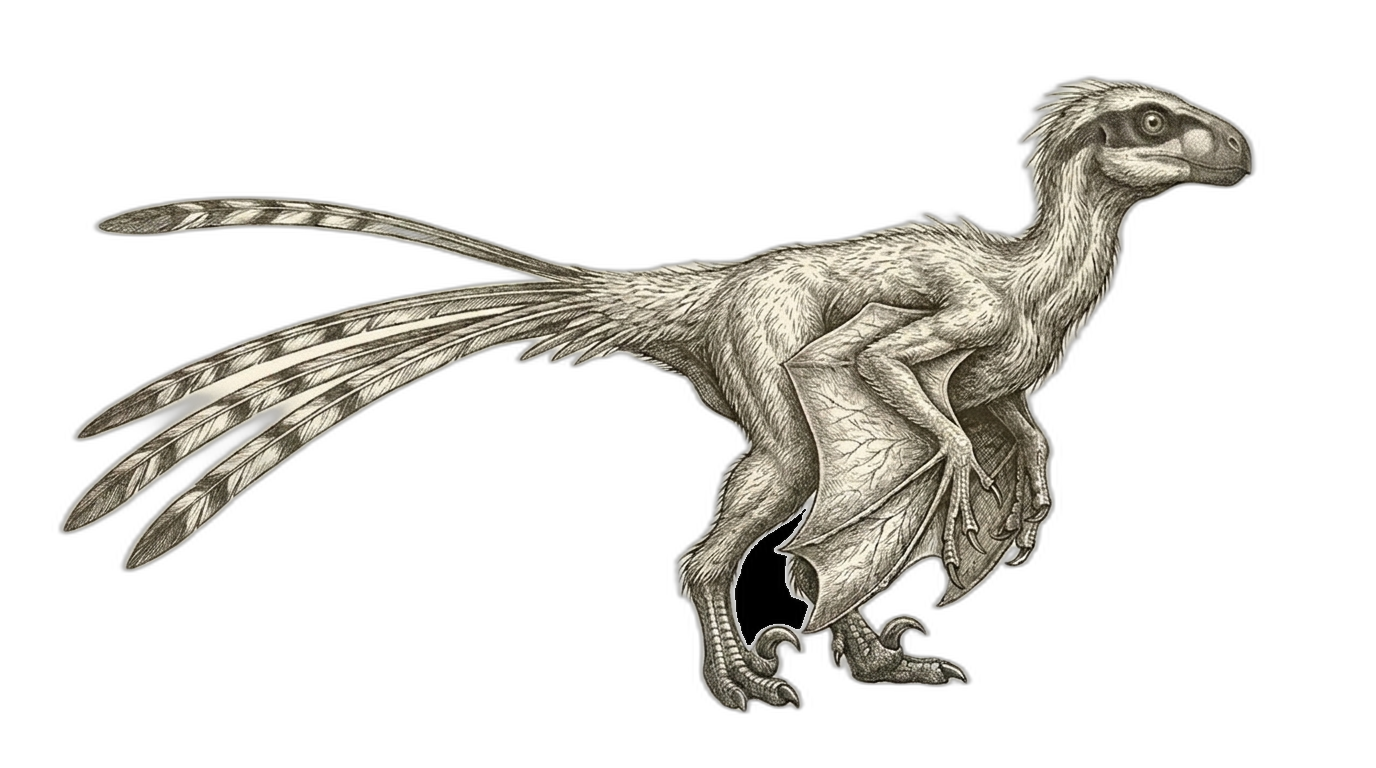
Yi
Both are small feathered theropods from the Middle-Late Jurassic to Early Cretaceous of China that independently evolved aerial locomotion capabilities.
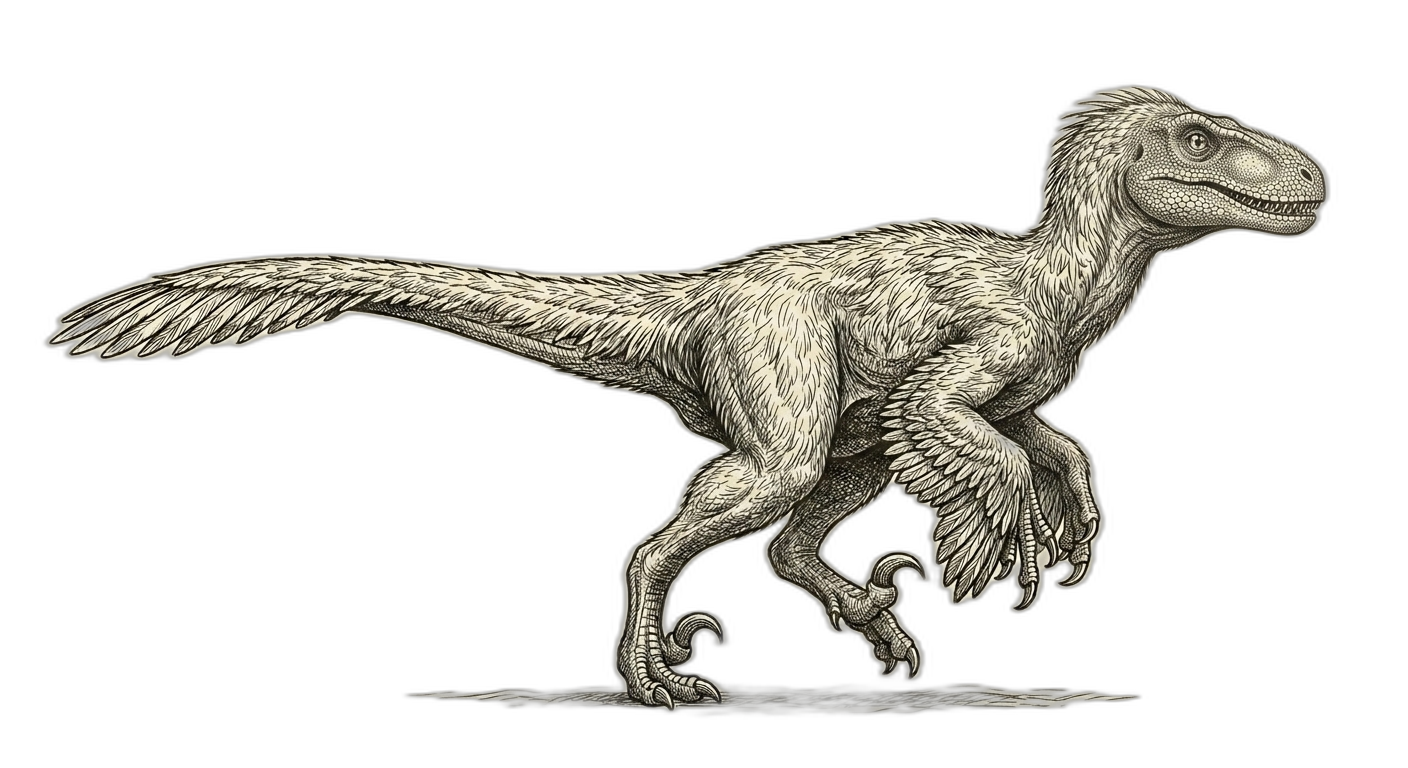
Deinonychus
Deinonychus antirrhopus
Same family: Dromaeosauridae
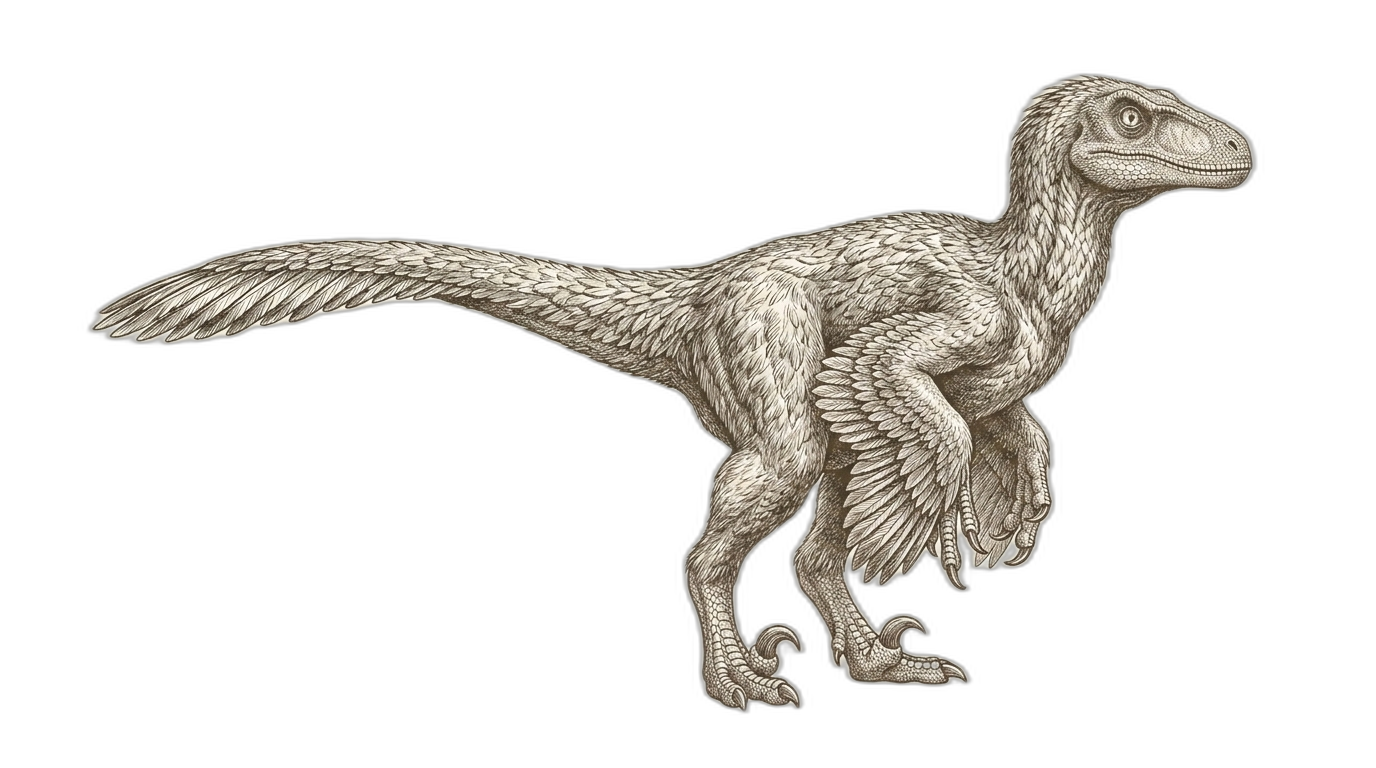
Velociraptor
Velociraptor mongoliensis
Same family: Dromaeosauridae
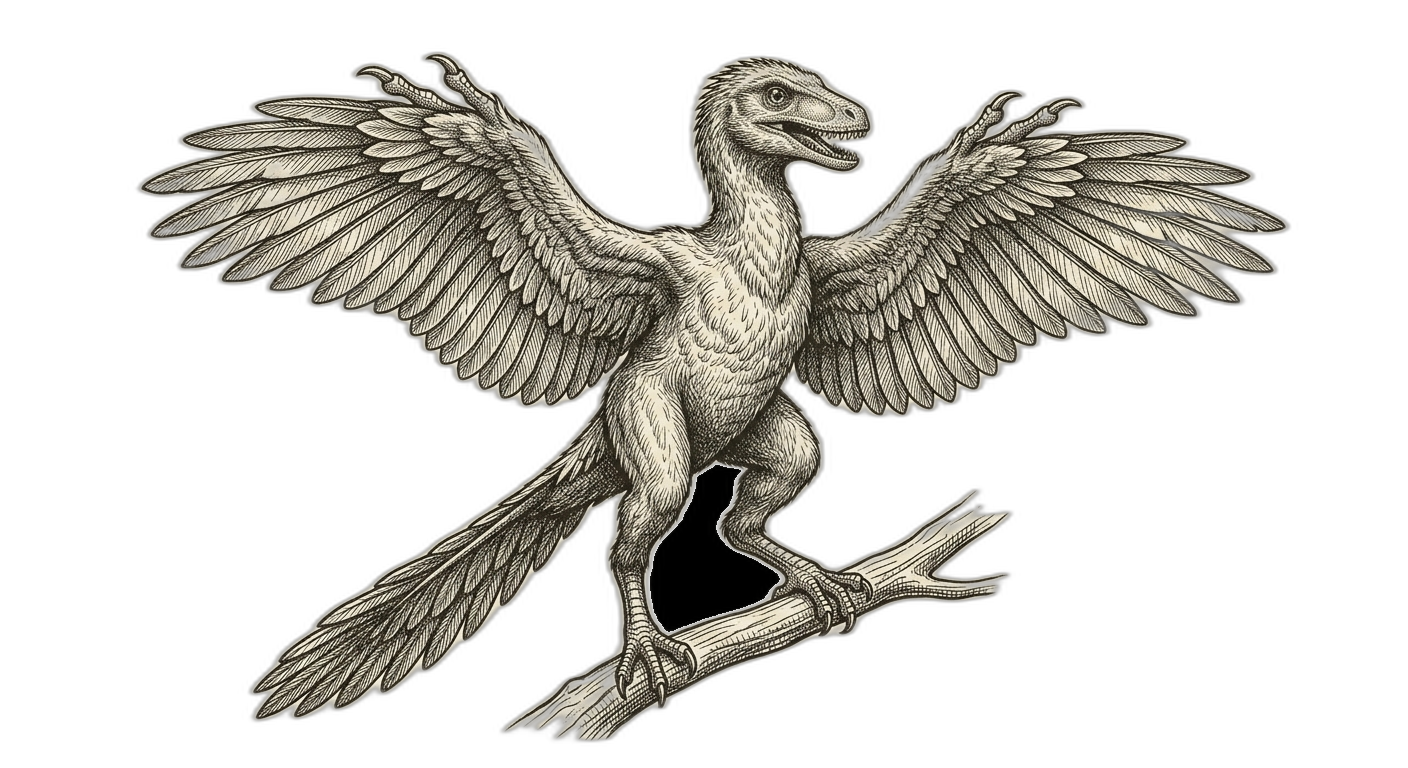
Archaeopteryx
Both small feathered paravian theropods that independently explored powered or gliding flight.
Sources & Citation
Original descriptiondoi:10.1038/421705a
- Length estimates
- Multiple Yixian Formation specimens
- Height estimates
- Estimated from skeletal reconstructions
- Weight estimates
- Estimated from skeletal proportions