About
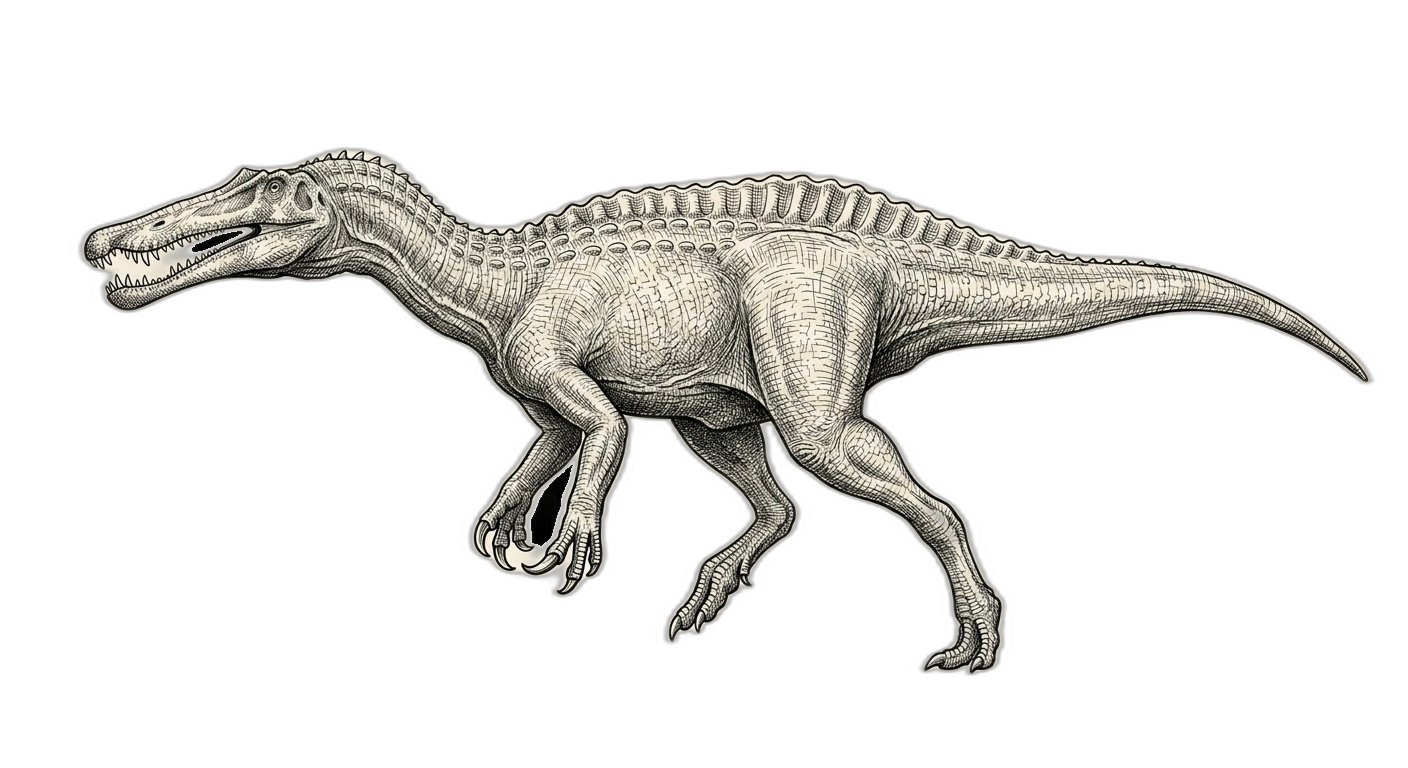
Suchomimus was a massive that prowled the riverbanks and waterways of what is now Niger during the Early Cretaceous. With its elongated, narrow snout filled with over 100 conical teeth and powerful hooked thumb claws, this dinosaur was superbly adapted for catching fish—though it likely opportunistically hunted other prey as well. Unlike its famous relative Spinosaurus, Suchomimus had a lower on its back formed by elongated , giving it a distinctive ridged profile.
The fossils of Suchomimus were discovered in 1997 in the Ténéré Desert of Niger by a team led by Paul Sereno, and the species was formally described in 1998. The discovery included substantial skeletal material from multiple individuals, making Suchomimus one of the best-known spinosaurids despite coming from a single expedition. The generic name means "crocodile mimic," a reference to its remarkably crocodilian skull shape—an example of between dinosaurs and reptiles that occupied similar ecological niches.
Suchomimus shared its environment with other large predators and giant sauropods in a lush, river-rich ecosystem quite different from today's Saharan landscape. Its semi-aquatic lifestyle, supported by evidence from bone density studies of related spinosaurids, suggests it spent significant time wading in shallow waters. The combination of its massive size, specialized fish-catching adaptations, and impressive claws made it one of the most formidable predators of its time.
Remarkably, despite its fearsome appearance, Suchomimus had relatively weak bite force compared to other large theropods—its jaw mechanics were designed for quick snapping motions to grab slippery prey rather than crushing bone.
Quick Facts
- Scientific name
- Suchomimus tenerensis
- Group
- Spinosaur · Spinosauridae
- Lived
- Early Cretaceous, 121–112 million years ago
- Diet
- Piscivore
- Movement
- Walked on two legs
- Fossils found in
- Elrhaz Formation, Agadez Region, Niger
- Discovery credited to
- 1997, Paul Sereno and team
- Holotype
- MNN GDF500 · Musée National du Niger, Niamey
- DinoVault record
- DVL-0133
Where Suchomimus Roamed
During the Early Cretaceous, Suchomimus inhabited the lush river systems and coastal floodplains of what is now Niger, then part of the fragmenting supercontinent Gondwana, where a warm, humid tropical climate supported dense vegetation along meandering waterways teeming with fish and crocodilians. This semi-aquatic predator prowled the margins of the ancient Trans-Saharan Seaway, a shallow marine corridor that periodically connected the Tethys Sea to the south Atlantic across northern Africa.
Keep exploring the vault
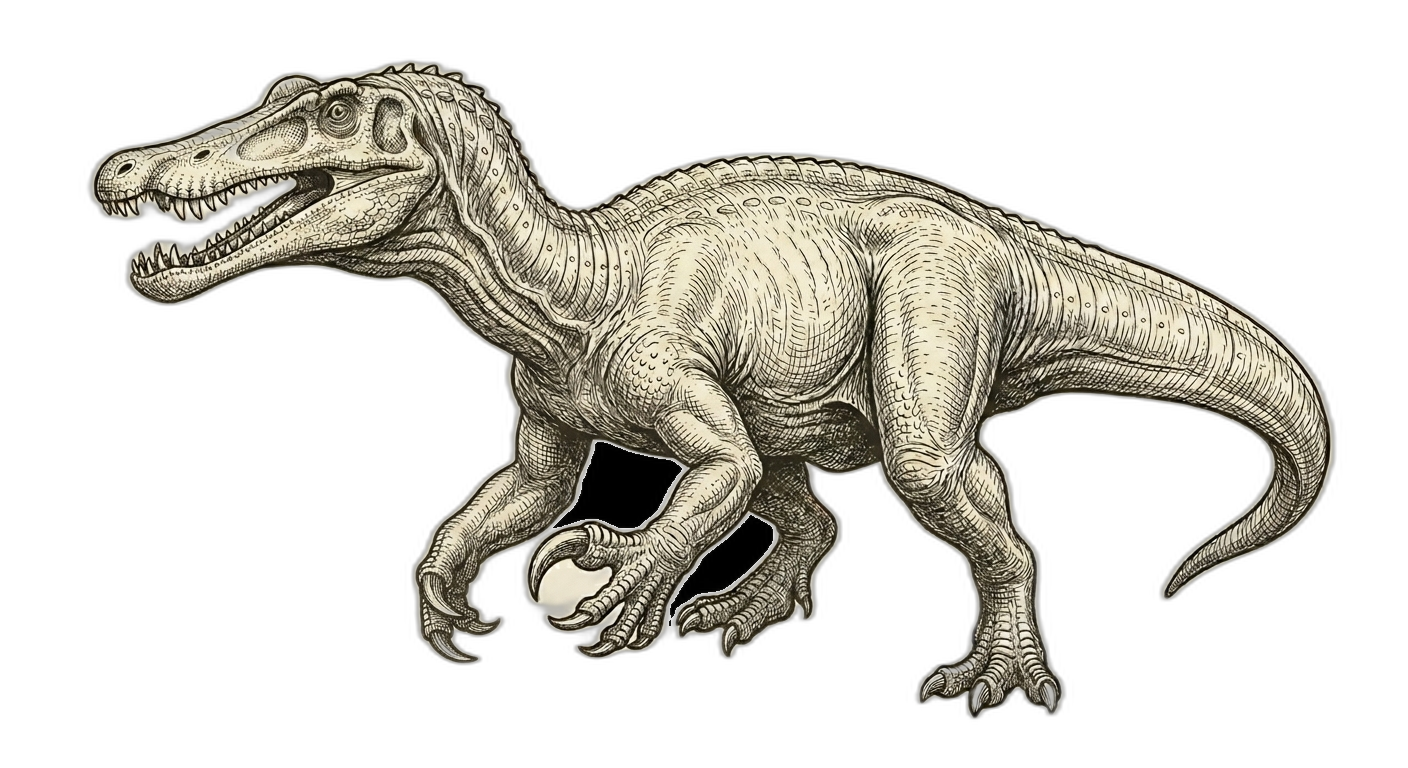
Baryonyx
Baryonyx walkeri
Both Suchomimus and Baryonyx are spinosaurid theropods with elongated crocodile-like snouts, conical teeth adapted for gripping fish, and enlarged thumb claws — representing the same evolutionary experiment in semi-aquatic piscivory among large theropods.
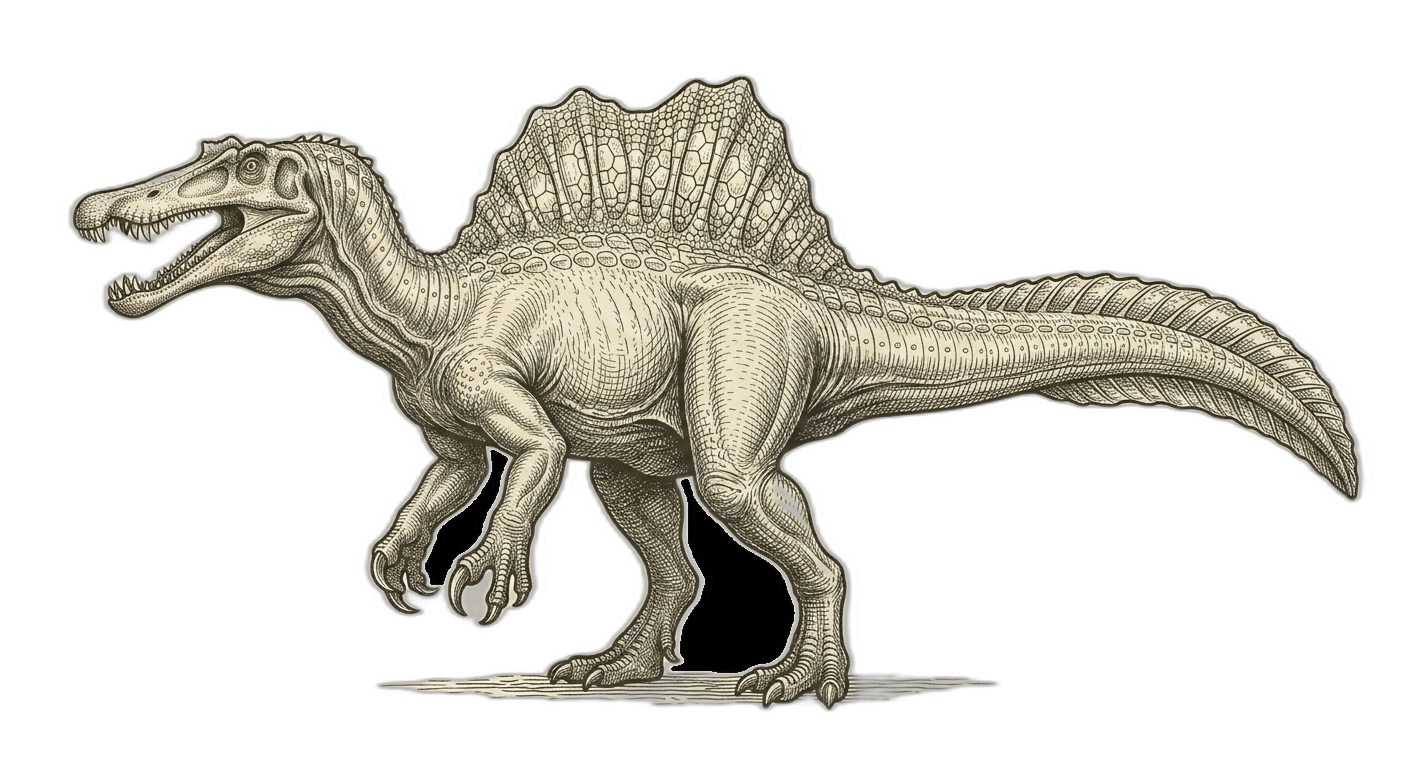
Spinosaurus
Spinosaurus aegyptiacus
Suchomimus and Spinosaurus represent the spinosaurid lineage's exploration of aquatic/semi-aquatic piscivory, with both developing elongated snouts with interlocking conical teeth.
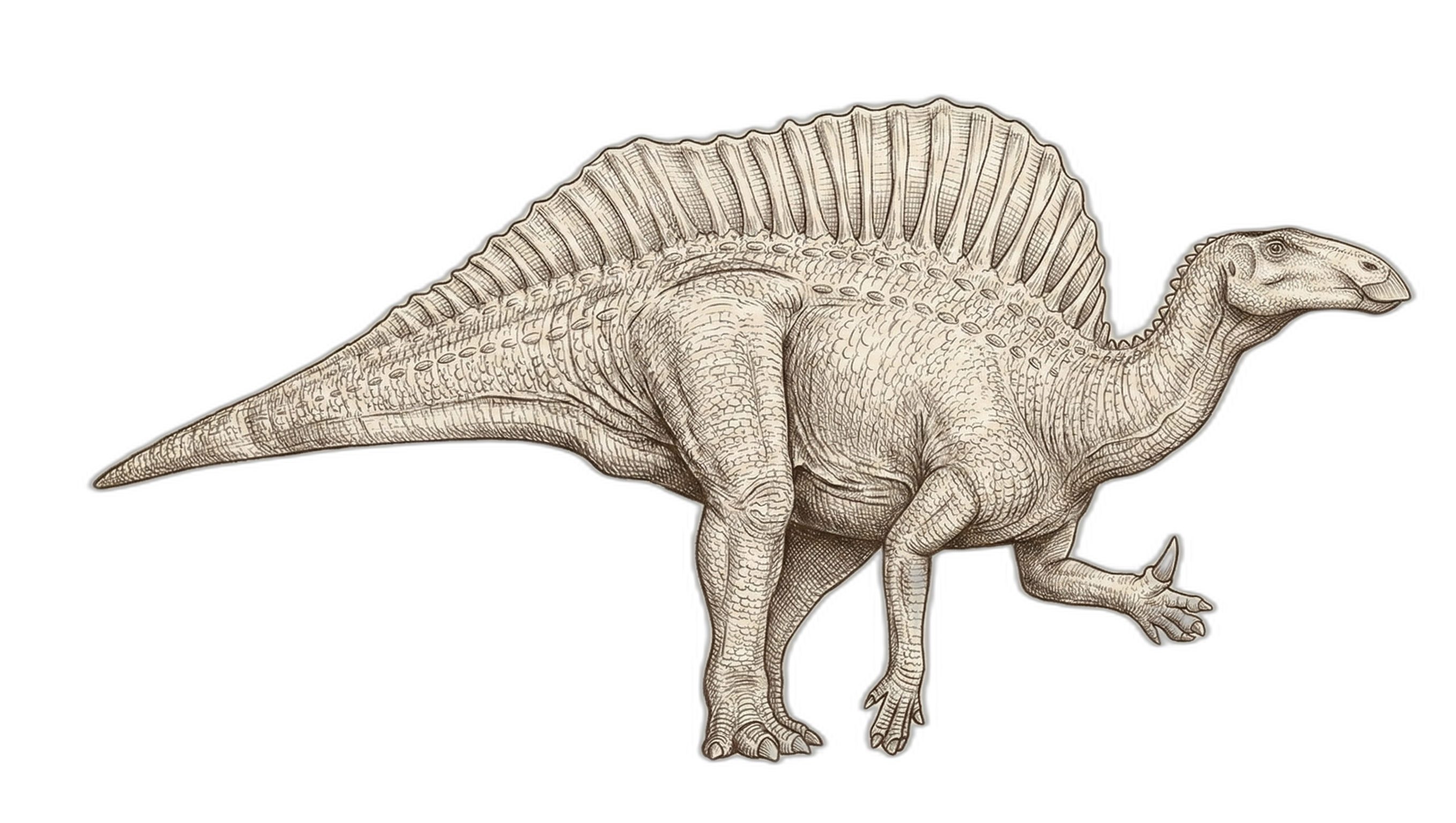
Ouranosaurus
Ouranosaurus nigeriensis
Ouranosaurus is known from the Elrhaz Formation of Niger, the same formation that yielded Suchomimus.
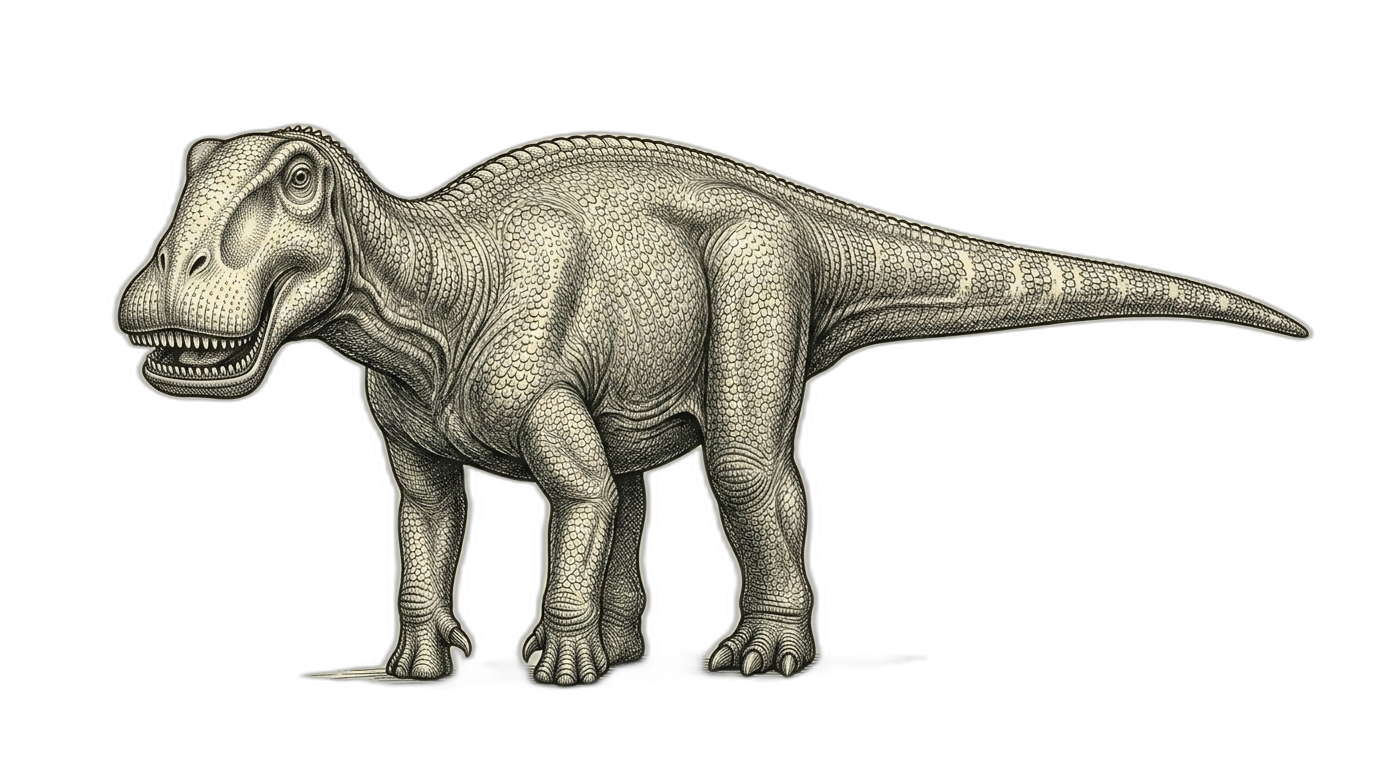
Nigersaurus
Nigersaurus taqueti
Nigersaurus is documented from the Elrhaz Formation of Niger alongside Suchomimus, representing a specialized low-browsing sauropod in the same Early Cretaceous ecosystem.
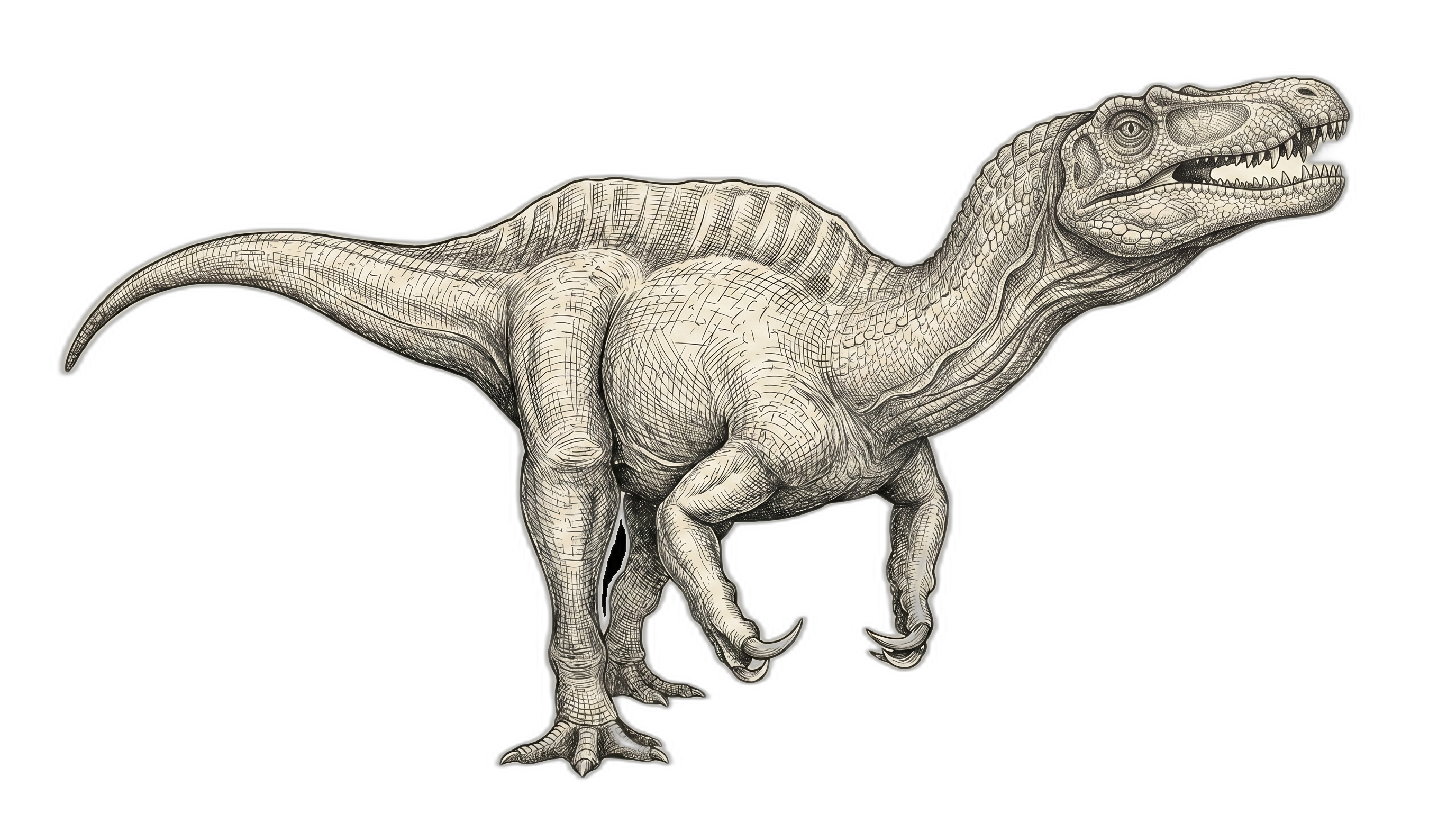
Irritator
Irritator challengeri
Irritator from Brazil and Suchomimus from Africa are both spinosaurids showing convergent adaptations for piscivory, demonstrating how this specialized fish-eating theropod lineage radiated across Gondwanan landmasses during the Early Cretaceous when South America and Africa were still connected or recently separated.
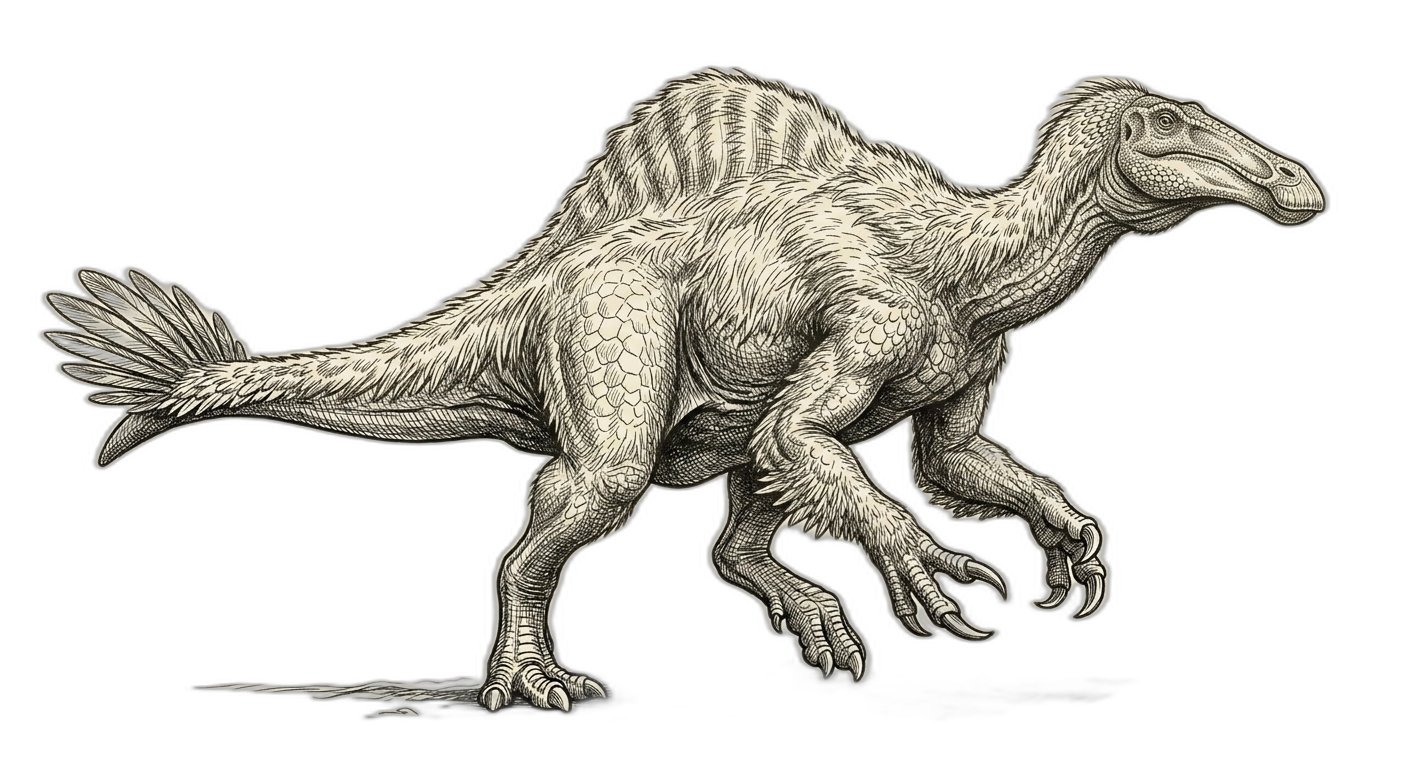
Deinocheirus
Deinocheirus mirificus
Both Suchomimus and Deinocheirus represent independent theropod lineages that evolved semi-aquatic, fish-eating lifestyles — Suchomimus as a spinosaurid with crocodilian adaptations, Deinocheirus as an ornithomimosaur with a duck-like bill and fish scales preserved as gut contents.
Sources & Citation
- Length estimates
- Sereno et al. 1998; holotype specimen represents subadult
- Height estimates
- Estimated hip height from limb proportions; Sereno et al. 1998
- Weight estimates
- Paul 2010; Therrien & Henderson 2007; based on subadult specimen
- Speed estimates
- Estimated from limb proportions; no direct locomotion studies