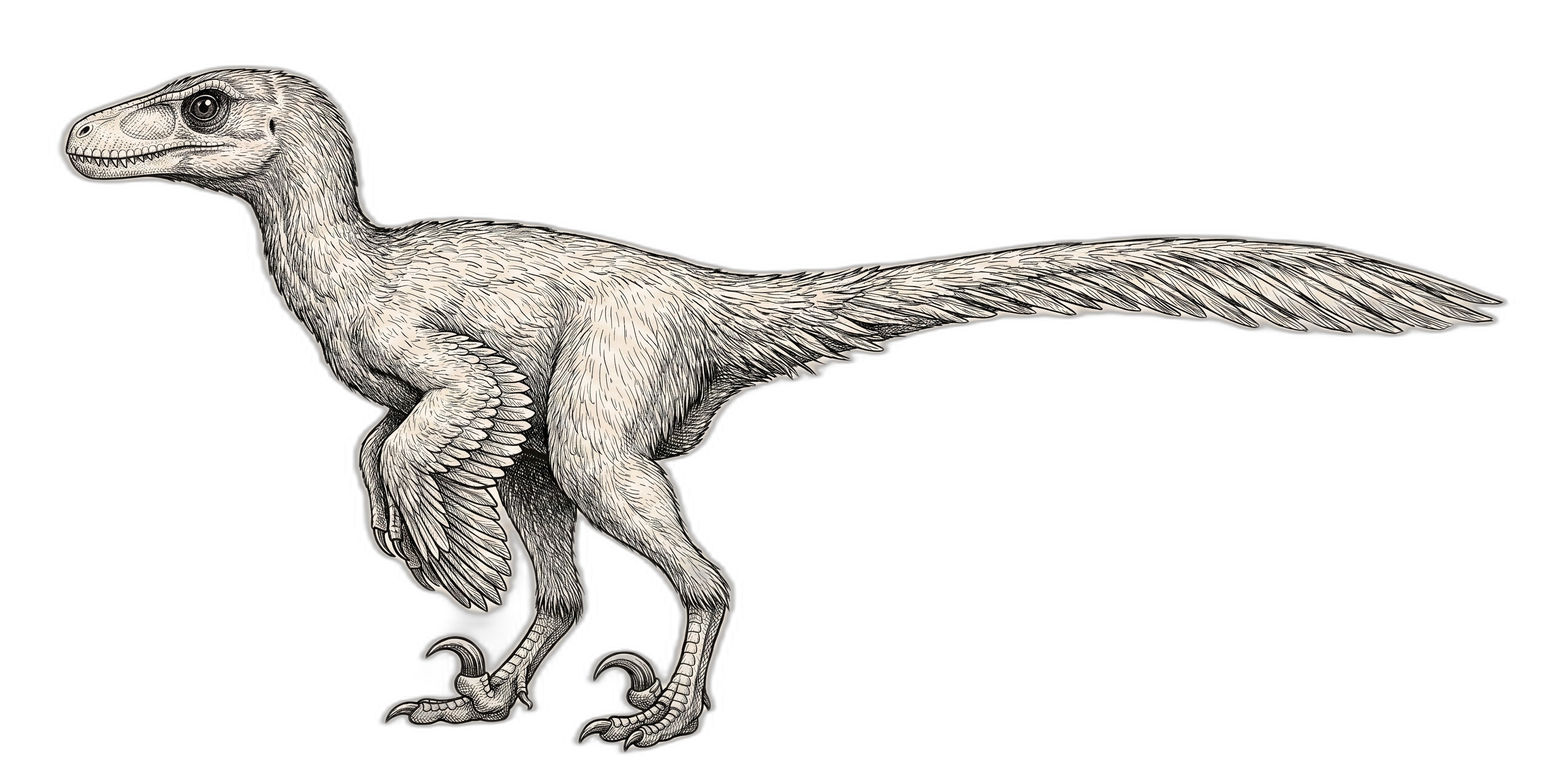
About
Bambiraptor was a small, agile that prowled the forests of Late Cretaceous Montana around 72 million years ago. Like its more famous relative Velociraptor, it possessed the signature sickle-shaped killing claw on each foot, sharp teeth, and a body built for speed and precision hunting. Its large brain relative to body size suggests it was among the more intelligent dinosaurs, likely capable of complex hunting behaviors.
The specimen represents a juvenile individual less than a meter long, making it one of the most complete small theropod skeletons ever found in North America. Its bird-like features are striking — long arms that could fold against its body like wings, a wishbone, and hollow bones hint at the close evolutionary relationship between dromaeosaurids and modern birds. Some paleontologists have suggested Bambiraptor may actually represent a juvenile of the related genus Saurornitholestes, though this remains debated.
Discovered in 1993 by 14-year-old Wes Linster on a family fossil hunt in Montana's Two Medicine Formation, the specimen was eventually purchased by the Feinberg family, who lent it to the Graves Museum of Natural History in Florida. The scientific description came in 2000 from researchers at the University of Kansas, Yale University, and the University of New Orleans. The genus name playfully references the Disney character Bambi due to the animal's small stature.
Controversy surrounds the holotype specimen, as some researchers have noted it may be a chimera — a composite of bones from multiple individuals. Specifically, elements from three different similarly-sized lower legs appear to be mixed together in what was presented as a single animal. This complicates efforts to understand the true anatomy and taxonomic status of Bambiraptor.
Quick Facts
- Scientific name
- Bambiraptor feinbergorum
- Group
- Theropod · Dromaeosauridae
- Lived
- Late Cretaceous, 74–72 million years ago
- Diet
- Carnivore
- Movement
- Walked on two legs
- Fossils found in
- Two Medicine Formation, Montana, USA
- Discovery credited to
- 1993, Wes Linster
- Holotype
- FIP 001
- DinoVault record
- DVL-0014
Where Bambiraptor Roamed
During the late Cretaceous, Bambiraptor feinbergorum inhabited the western shores of Laramidia, a narrow continent flanked by the warm, shallow waters of the Western Interior Seaway that divided North America. This lush, subtropical landscape featured dense forests and meandering river systems, providing rich hunting grounds for this small, agile predator.
Keep exploring the vault
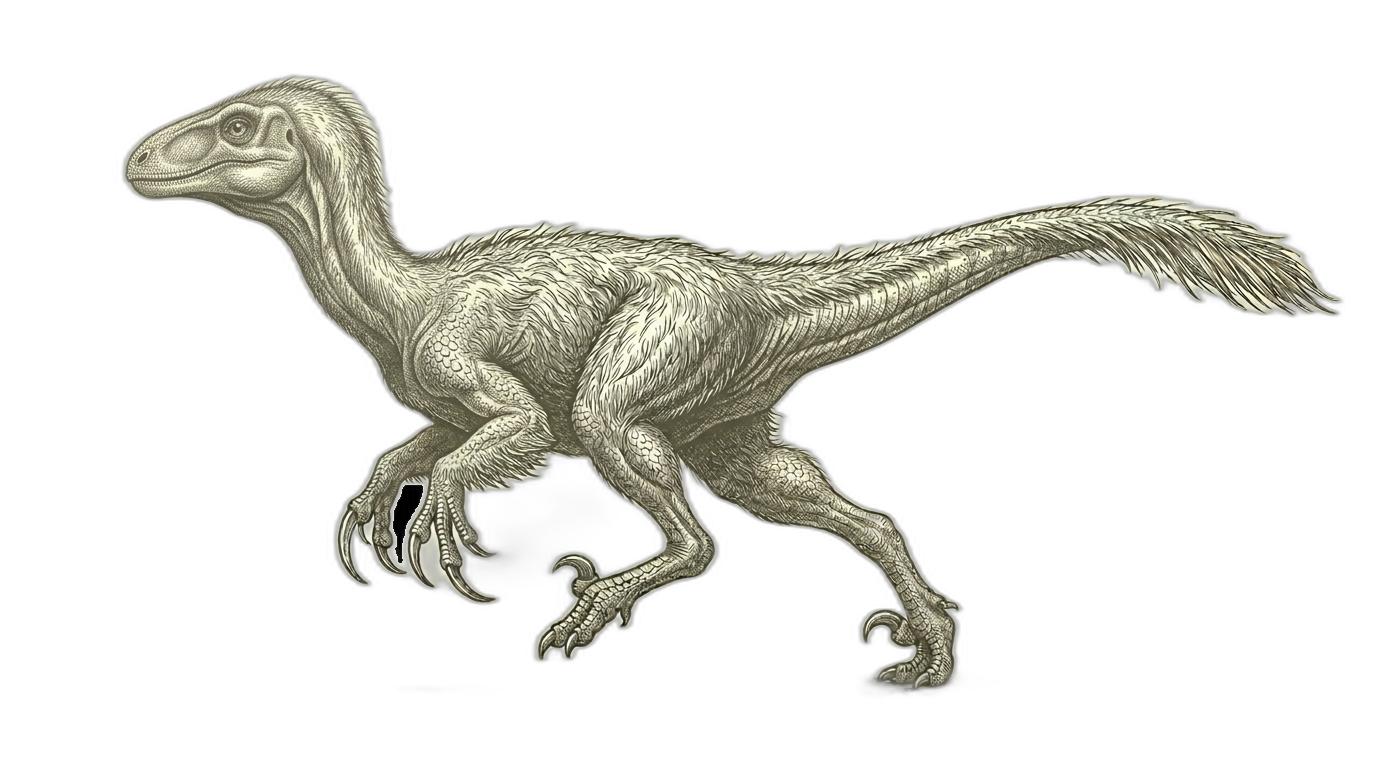
Troodon
Troodon formosus
Both Bambiraptor and Troodon were small, intelligent carnivorous theropods from Late Cretaceous North America with overlapping temporal ranges.
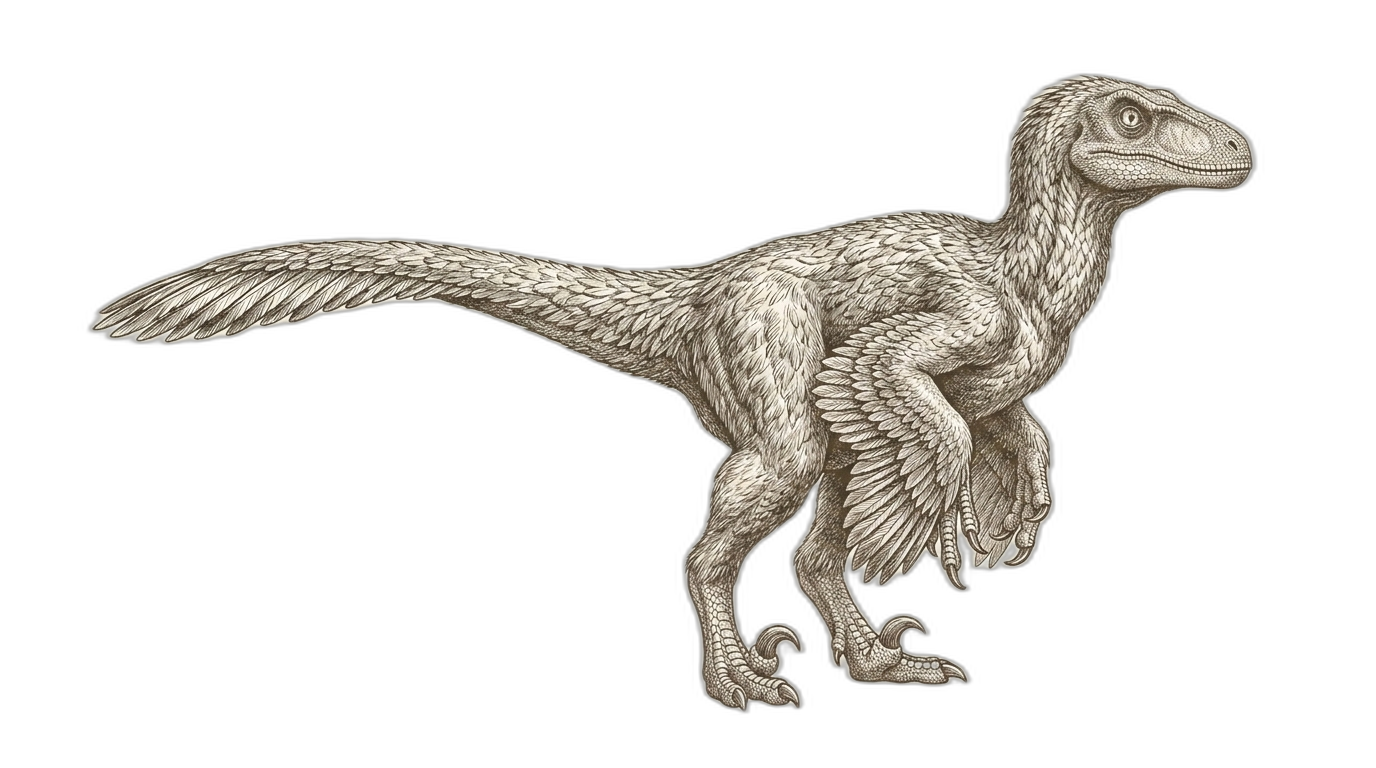
Velociraptor
Velociraptor mongoliensis
Both Bambiraptor and Velociraptor are small dromaeosaurid theropods that independently evolved similar body plans with enlarged sickle claws, lightweight builds, and likely feathered integuments for agile predatory hunting strategies.
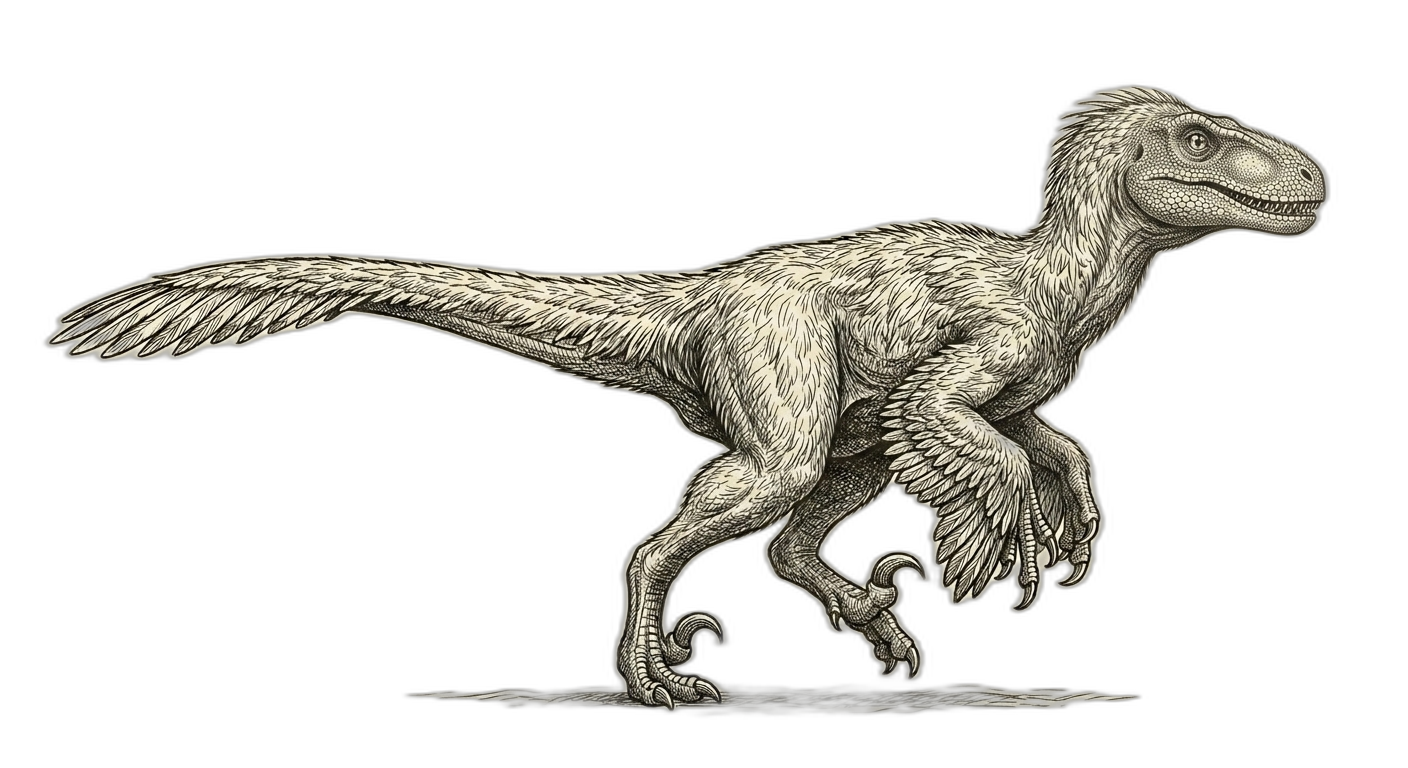
Deinonychus
Deinonychus antirrhopus
Bambiraptor and Deinonychus are both North American dromaeosaurids that evolved the characteristic sickle claw and highly derived avian-like skeletal features.
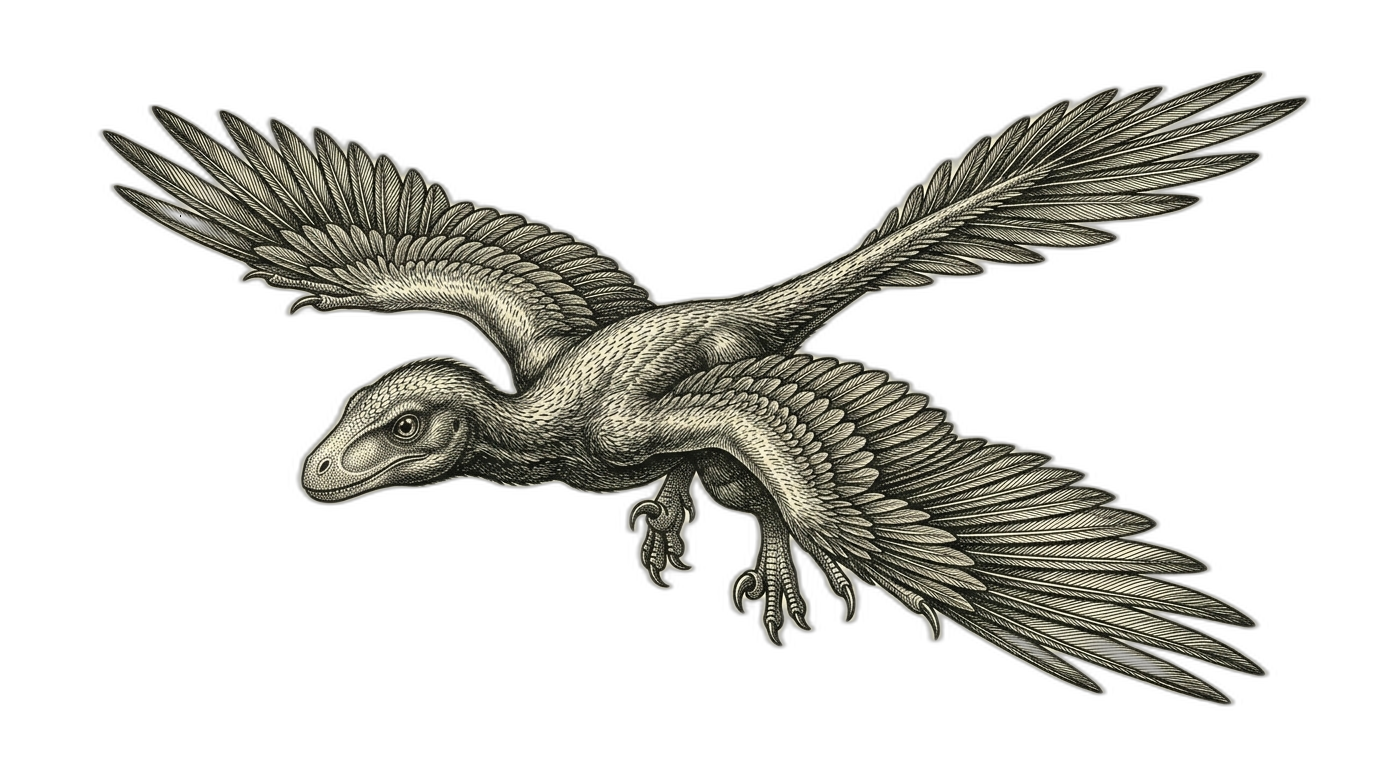
Microraptor
Microraptor gui
Both Bambiraptor and Microraptor represent small-bodied dromaeosaurids with highly derived avian features, exploring the evolutionary boundary between non-avian dinosaurs and birds.
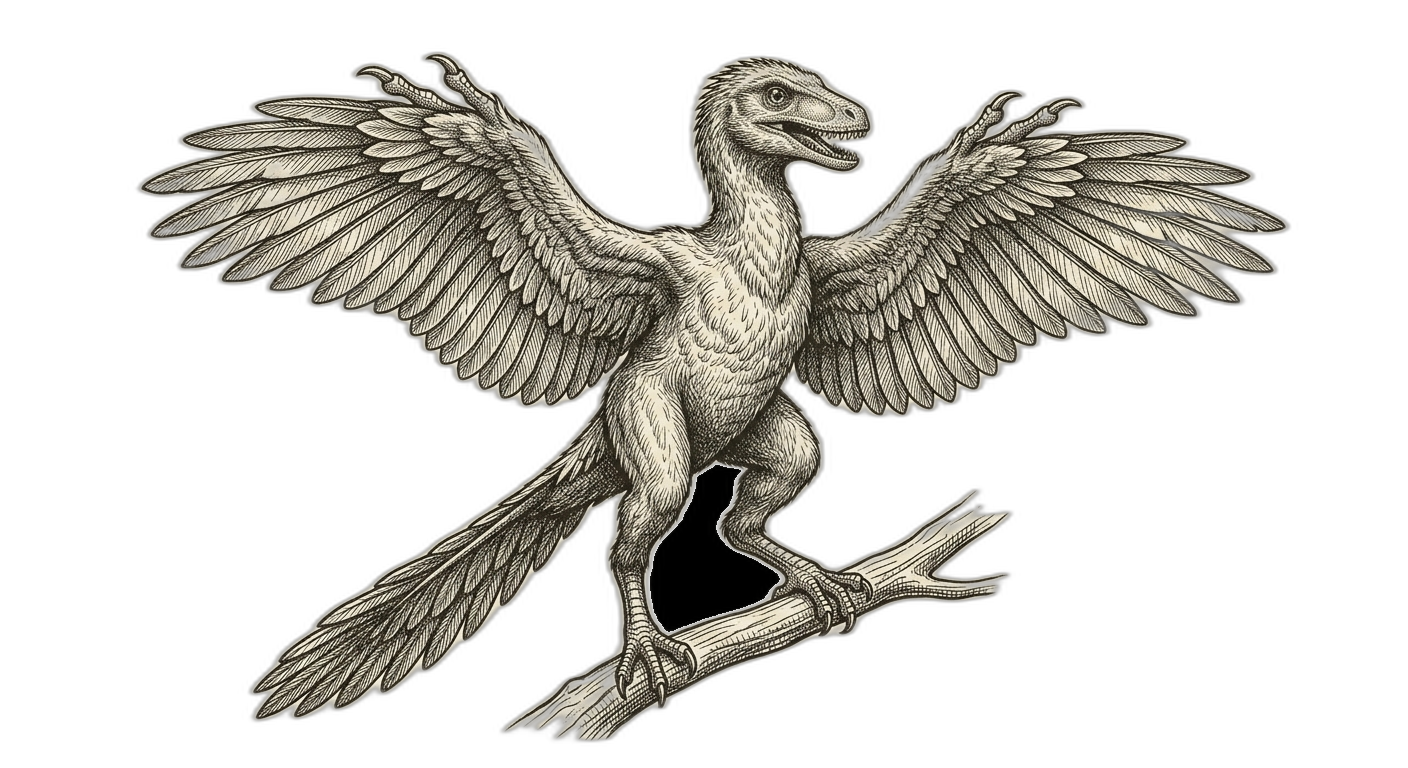
Archaeopteryx
Bambiraptor's remarkably bird-like skeletal proportions, including its large brain case and elongated forelimbs, represent a parallel evolutionary trajectory toward avian features seen earlier in Archaeopteryx.
Sources & Citation
- Length estimates
- Burnham et al. 2000; holotype is juvenile, adult size speculative
- Height estimates
- Estimated hip height from holotype; Burnham et al. 2000
- Weight estimates
- Burnham et al. 2000; juvenile specimen, adult mass uncertain
- Speed estimates
- Inferred from dromaeosaurid limb proportions; no direct evidence