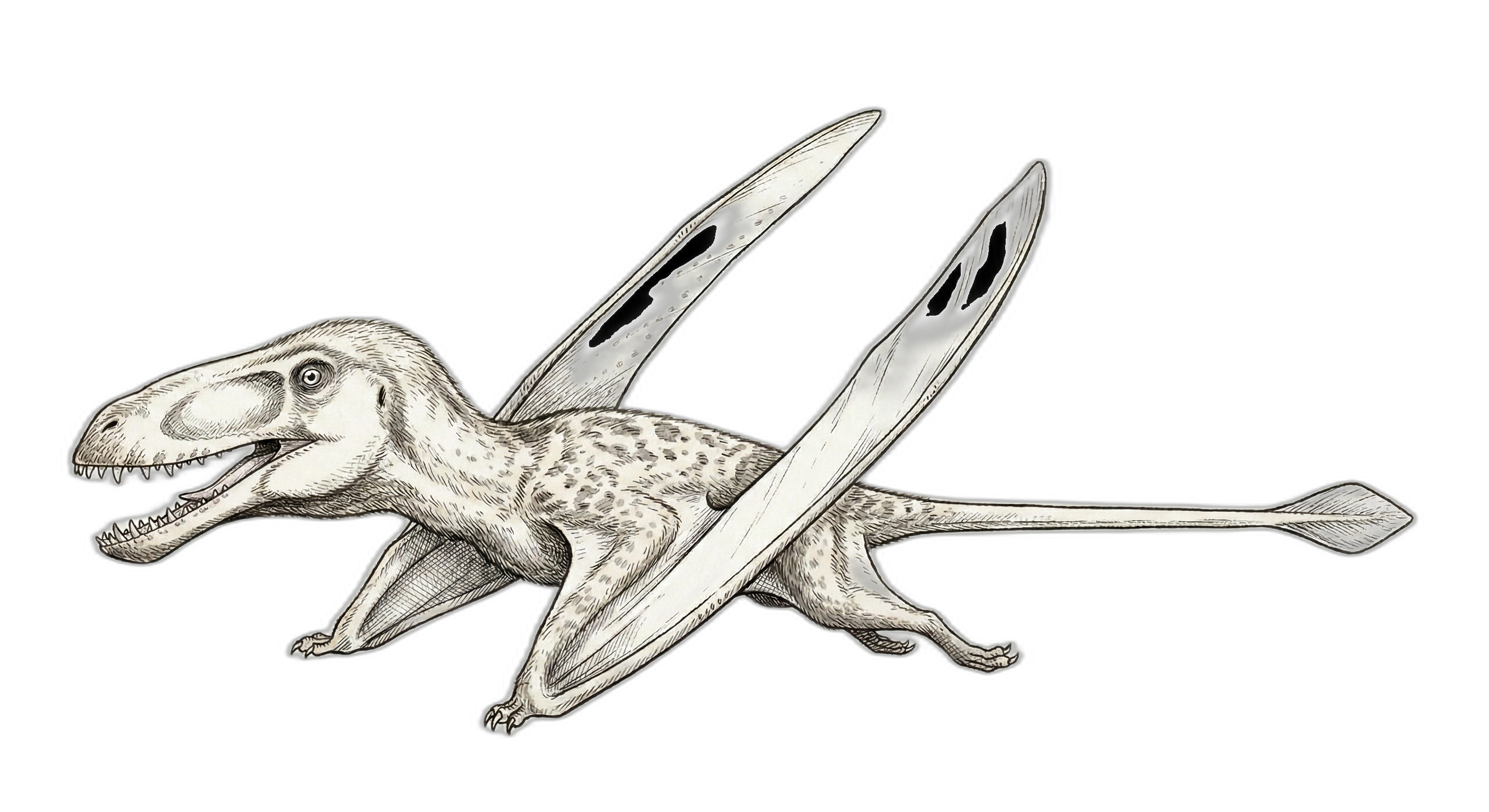
About
Caelistiventus hanseni stands as a groundbreaking discovery in pterosaur paleontology, revealing that these flying reptiles had already diversified into arid desert environments by the Late Triassic. This dimorphodontid pterosaur possessed a robust skull approximately 18 centimeters long, featuring a distinctive deep snout and large eye sockets typical of its family. The teeth were heterodont, with larger fangs at the front for grasping prey and smaller teeth behind for processing food, suggesting a diet of small and large insects.
What makes Caelistiventus truly exceptional is its preservation. Most Triassic pterosaur fossils are severely crushed flat, but this specimen's bones remained three-dimensional, encased in ancient sand dunes of what is now the Saints and Sinners Quarry in northeastern Utah. This remarkable preservation allowed researchers to CT scan the skull and create detailed digital reconstructions, revealing internal structures rarely seen in such ancient pterosaurs.
With an estimated wingspan of approximately 1.5 meters, Caelistiventus was among the larger pterosaurs of its time. It inhabited a harsh desert landscape alongside early dinosaurs and other reptiles during the twilight of the Triassic Period. The discovery proved that pterosaurs could thrive in arid environments long before they diversified in the Jurassic, challenging previous assumptions about their ecological preferences.
Quick Facts
- Scientific name
- Caelistiventus hanseni
- Group
- Pterosaur · Dimorphodontidae
- Lived
- Triassic, 210–201 million years ago
- Diet
- Carnivore
- Movement
- Walked on four legs
- Fossils found in
- Chinle Formation (United States)
- Discovery credited to
- 2014, Brooks Britt and colleagues
- Holotype
- BYU 20707, Brigham Young University Museum of Paleontology
- DinoVault record
- DVL-0022
Where fossils were found
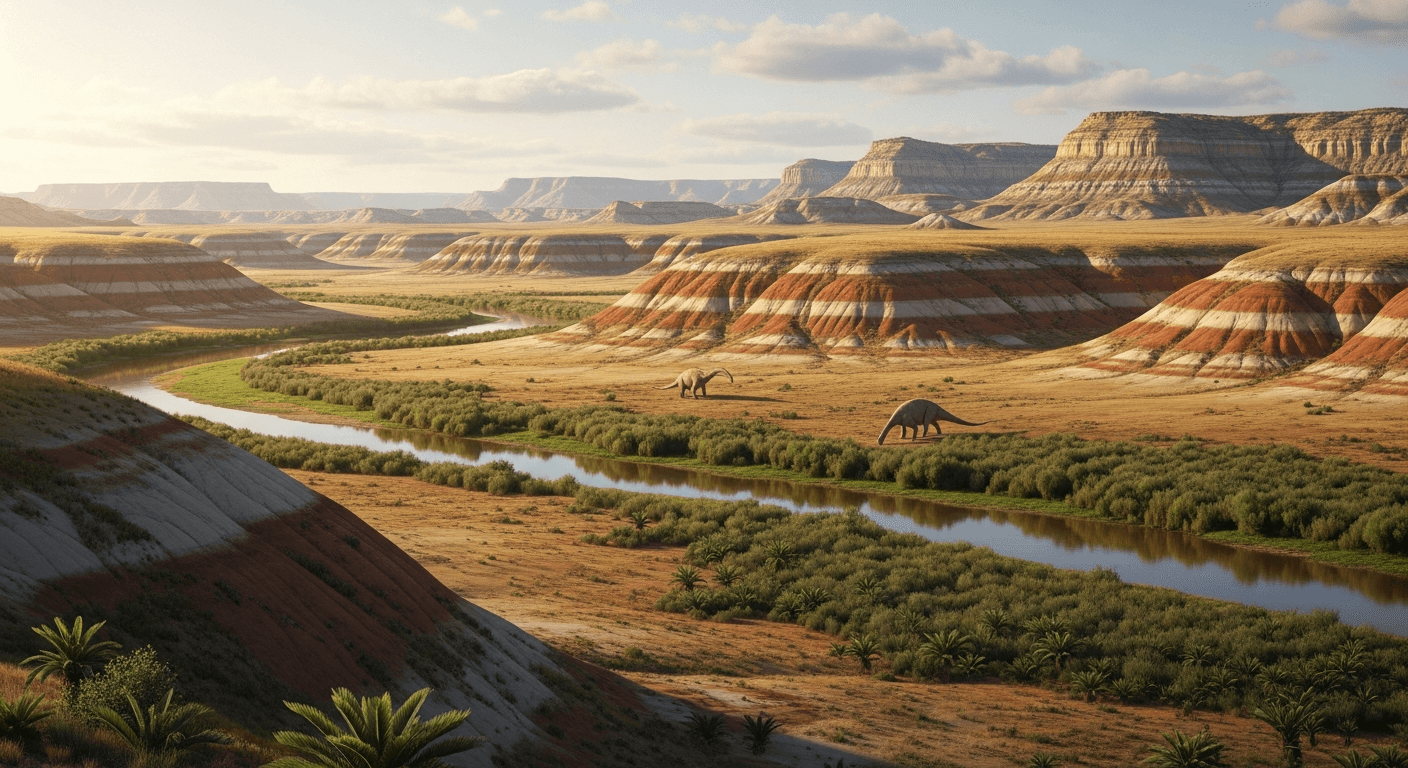
Chinle Formation
Arizona, New Mexico, Utah, Colorado +2 more · United States
210–201 million years ago(9m year span)
Where Caelistiventus hanseni Roamed
During the Late Triassic, approximately 206 million years ago, Caelistiventus hanseni inhabited the arid desert landscapes of western Pangaea, where vast dune fields and seasonal oases dotted the supercontinent's interior, creating an environment strikingly similar to the modern Sahara within what is now the American Southwest.
Keep exploring the vault
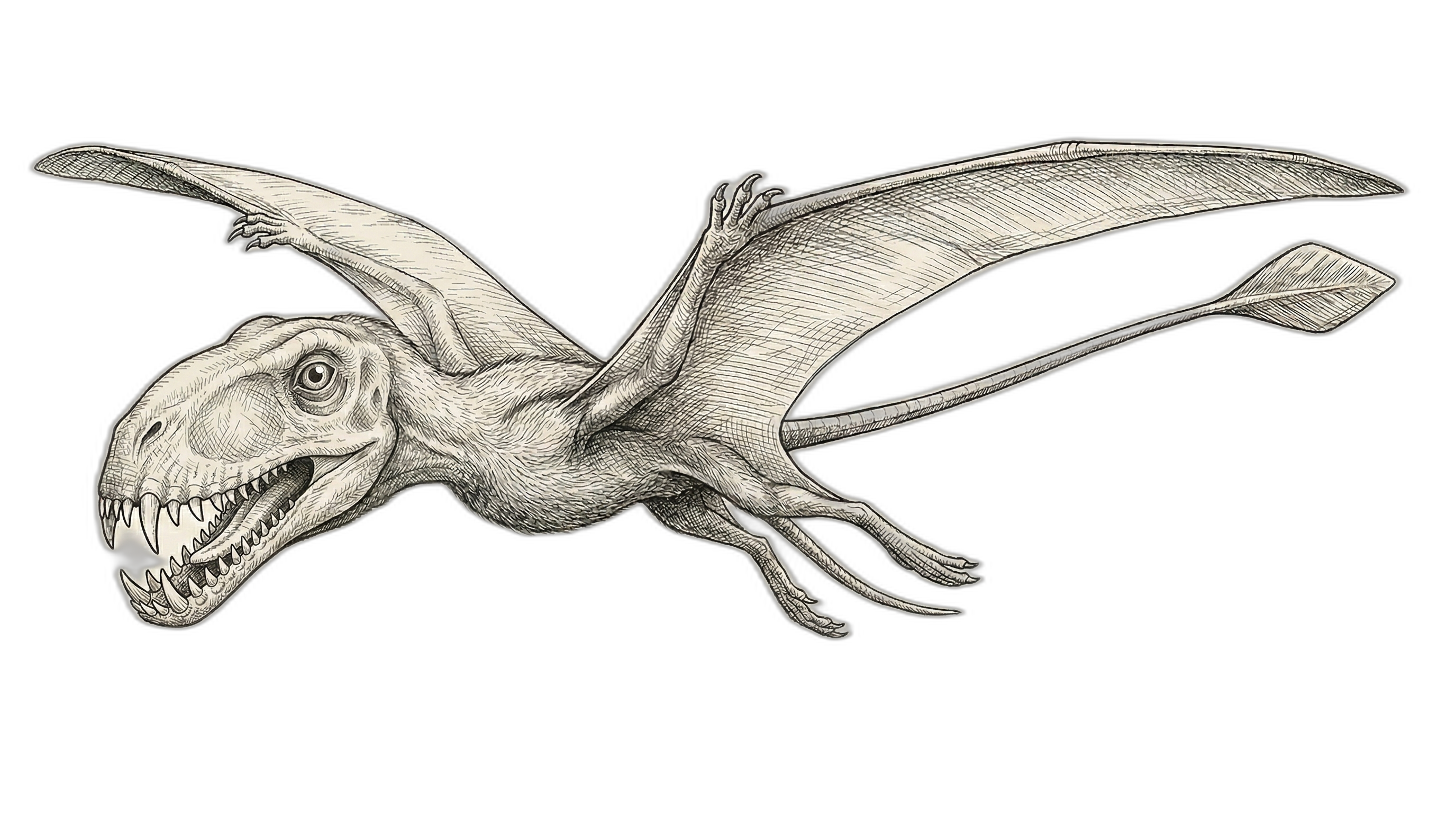
Dimorphodon
Dimorphodon macronyx
Both are dimorphodontid pterosaurs representing the early pterosaur body plan with large skulls, heterodont dentition, and relatively short wings.
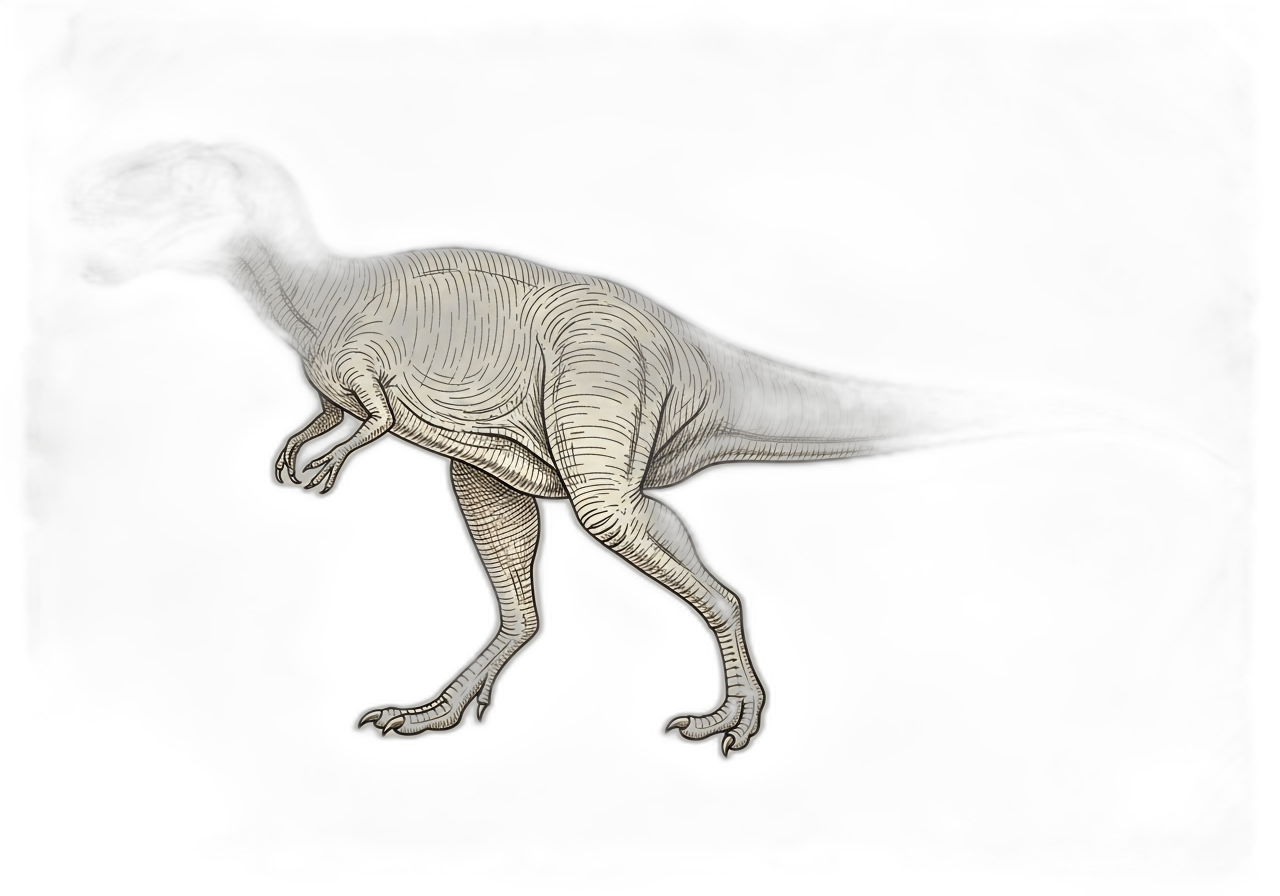
Coelophysis
Coelophysis bauri
Both species are known from the Chinle Formation of Late Triassic North America, representing two very different predatory strategies in the same ecosystem — an early pterosaur taking to the air while Coelophysis dominated as a swift ground-based hunter.
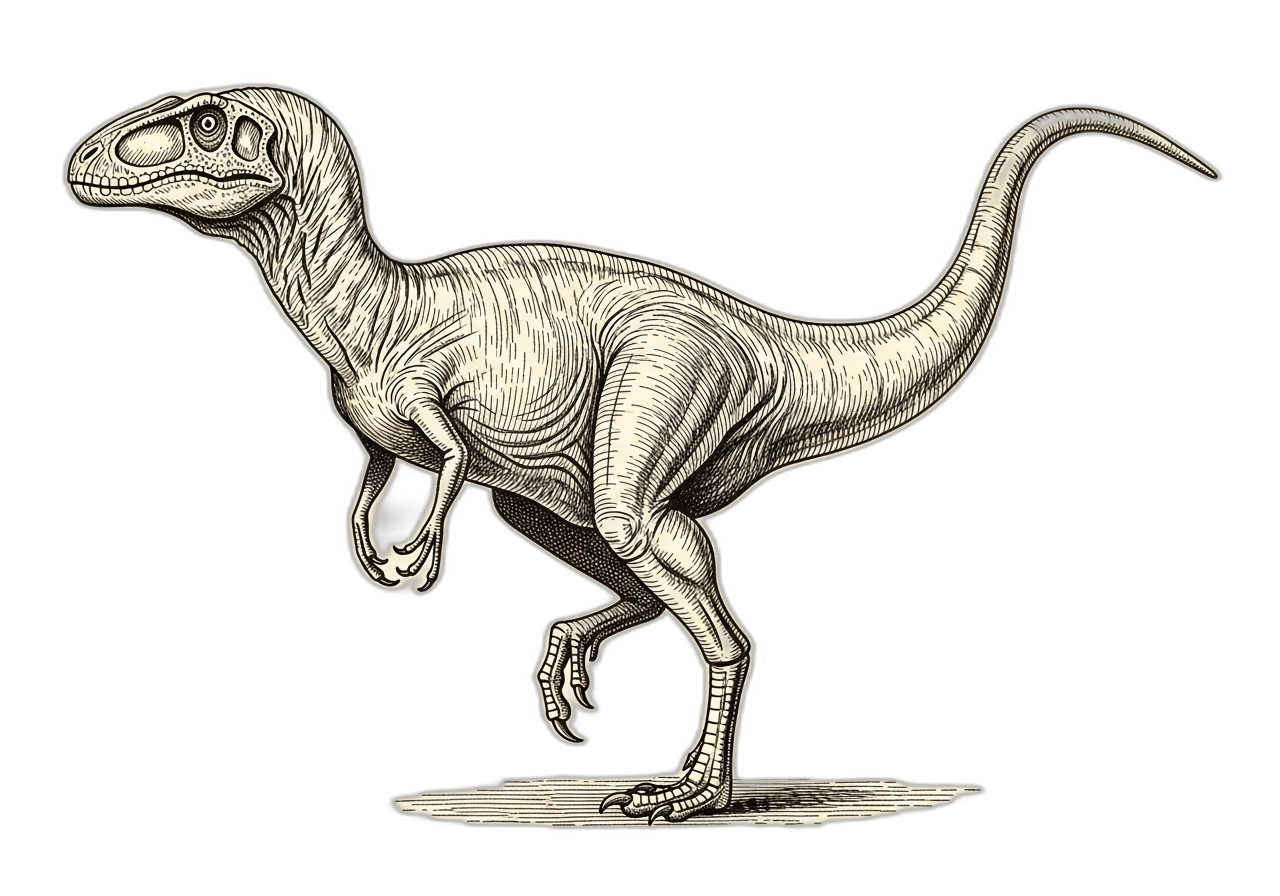
Eodromaeus
Eodromaeus murphi
Both represent early archosaur diversification in the Late Triassic, with Eodromaeus as a basal theropod and Caelistiventus as an early pterosaur — two lineages exploring very different locomotor strategies (cursorial vs powered flight) from the archosaur body plan during the initial dinosaur/pterosaur radiation.
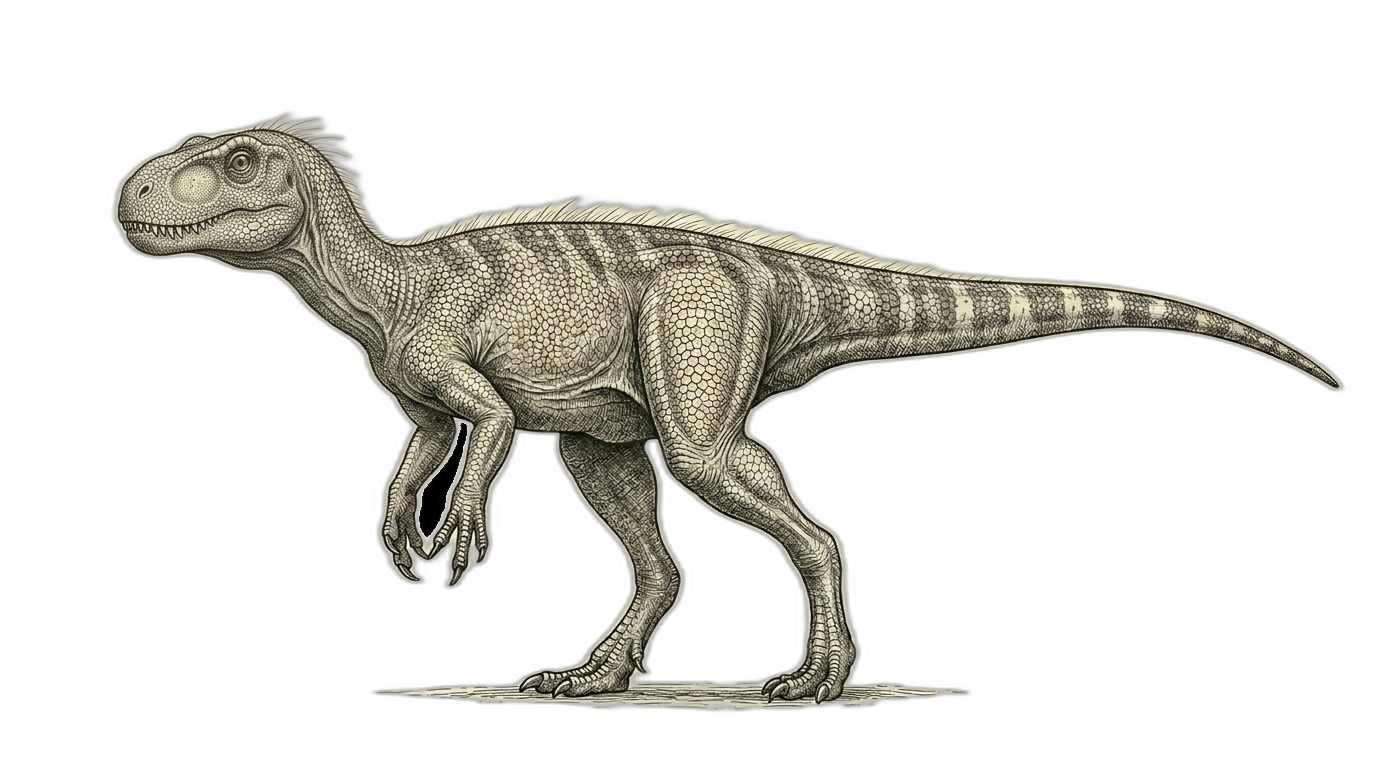
Herrerasaurus
Herrerasaurus ischigualastensis
Both are Late Triassic archosaurs representing the early diversification of their respective lineages.
Sources & Citation
- Length estimates
- Britt et al. 2018, Nature Ecology & Evolution
- Height estimates
- Estimated from skull and body proportions, Britt et al. 2018
- Weight estimates
- Estimated based on wingspan and pterosaur mass correlations
- Speed estimates
- Estimated flight speed based on pterosaur biomechanics