About
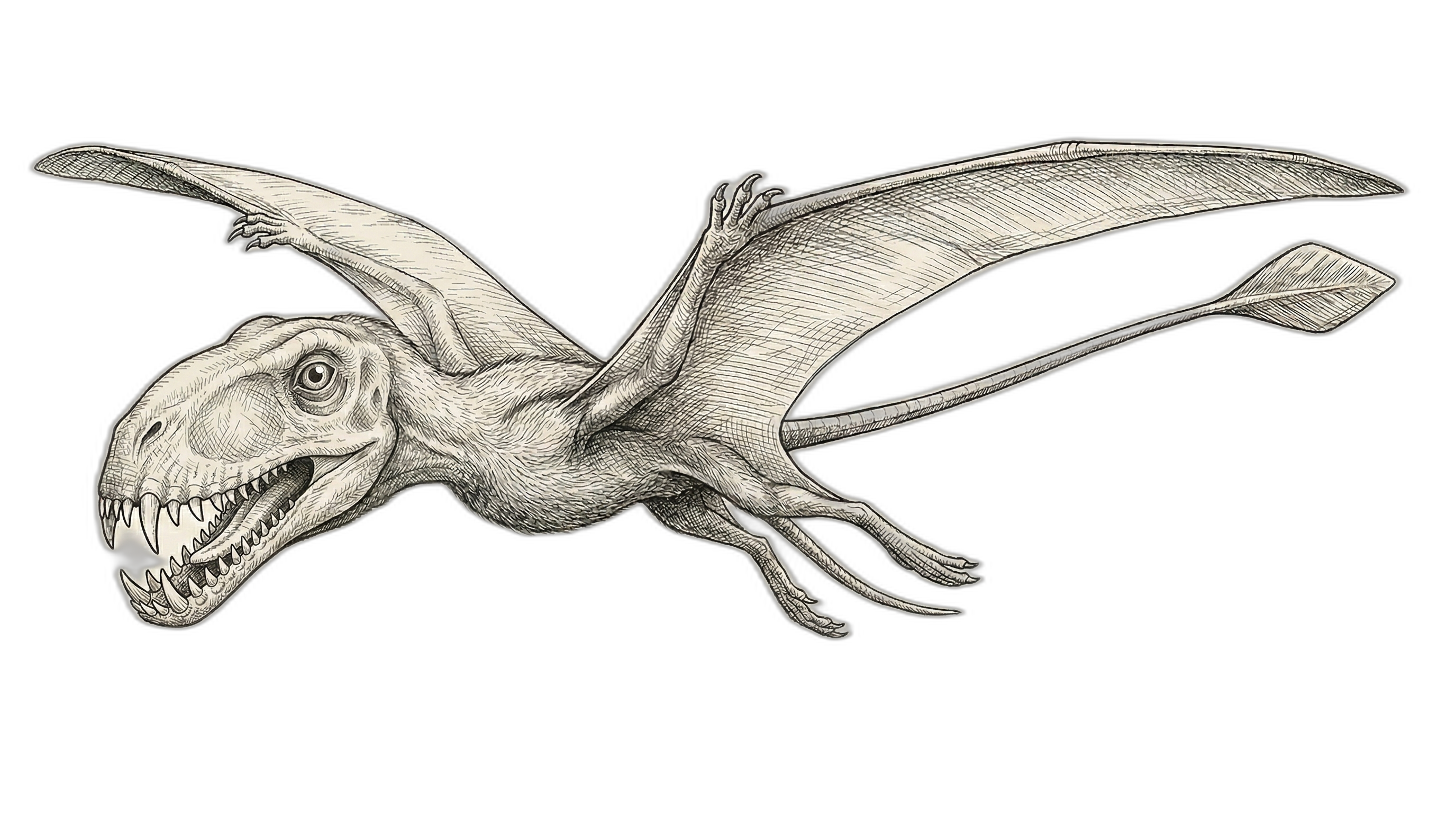
Dimorphodon macronyx was a small but striking pterosaur from the Early Jurassic coastal environments of what is now southern England. Its most distinctive feature was its disproportionately large, deep skull, which superficially resembled a puffin's head, though the two are not related. The skull contained two distinct tooth types: large fangs at the front for grasping prey and smaller teeth behind for processing food—an unusual arrangement among pterosaurs that inspired its scientific name.
With a wingspan of approximately 1.4 meters, Dimorphodon was a capable flier, though its large head and relatively short wings suggest it may have been less maneuverable than later pterosaurs. Its long tail, tipped with a diamond-shaped vane, likely provided stability during flight. On the ground, Dimorphodon walked on all fours, with its wings folded and its strong hindlimbs supporting an upright posture. Analysis of its limb proportions indicates it was an agile walker, possibly foraging on shorelines and rocky outcrops.
The first fossils were discovered by Mary Anning in 1828 along the Dorset coast at Lyme Regis, making Dimorphodon one of the earliest pterosaurs known to science. Richard Owen formally named it in 1859. Multiple specimens have since been recovered from the Blue Lias Formation, providing excellent insight into early pterosaur anatomy and diversity. This creature helps paleontologists understand the evolutionary radiation of pterosaurs during the Jurassic Period.
Quick Facts
- Scientific name
- Dimorphodon macronyx
- Group
- Pterosaur · Dimorphodontidae
- Lived
- Early Jurassic, 200–190 million years ago
- Diet
- Carnivore
- Movement
- Walked on four legs
- Fossils found in
- Charmouth Mudstone Formation (Lower Lias), Dorset, England
- Discovery credited to
- 1828, Mary Anning
- Holotype
- NHMUK PV R 1034, Natural History Museum, London
- DinoVault record
- DVL-0042
Where Dimorphodon Roamed
During the Early Jurassic, Dimorphodon macronyx inhabited the coastal cliffs and marine shorelines of what is now southwestern England, where warm, shallow seas lapped against the fractured margins of Pangaea as the supercontinent began its slow dissolution. This tropical to subtropical environment featured limestone-rich waters teeming with fish and marine reptiles, with the emerging Atlantic rift system gradually reshaping the ancient landscape.
Keep exploring the vault
Caelistiventus
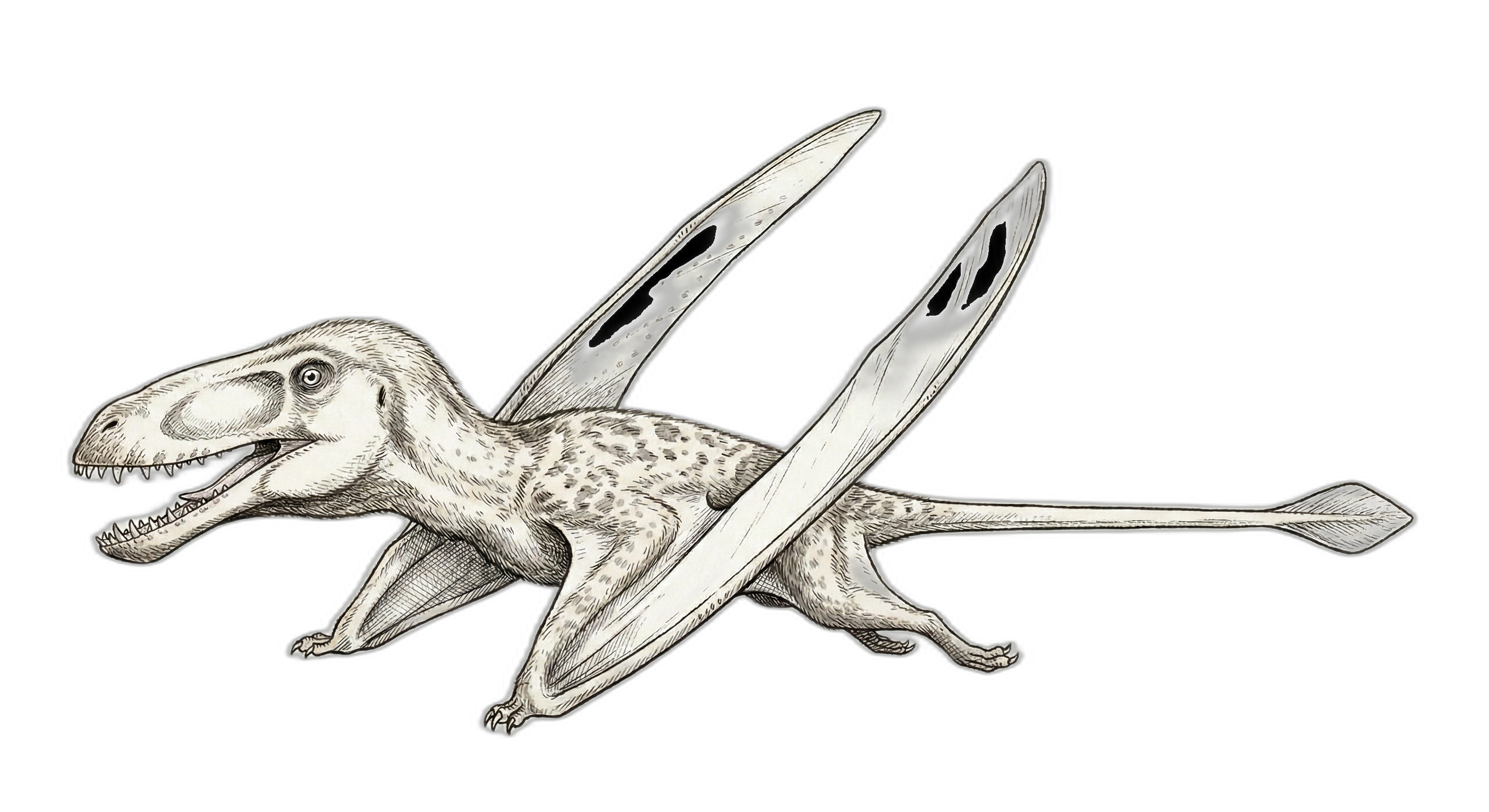
As fellow dimorphodontids, Caelistiventus and Dimorphodon share the distinctive heterodont dentition and robust skull architecture unique to this family.
Rhamphorhynchus
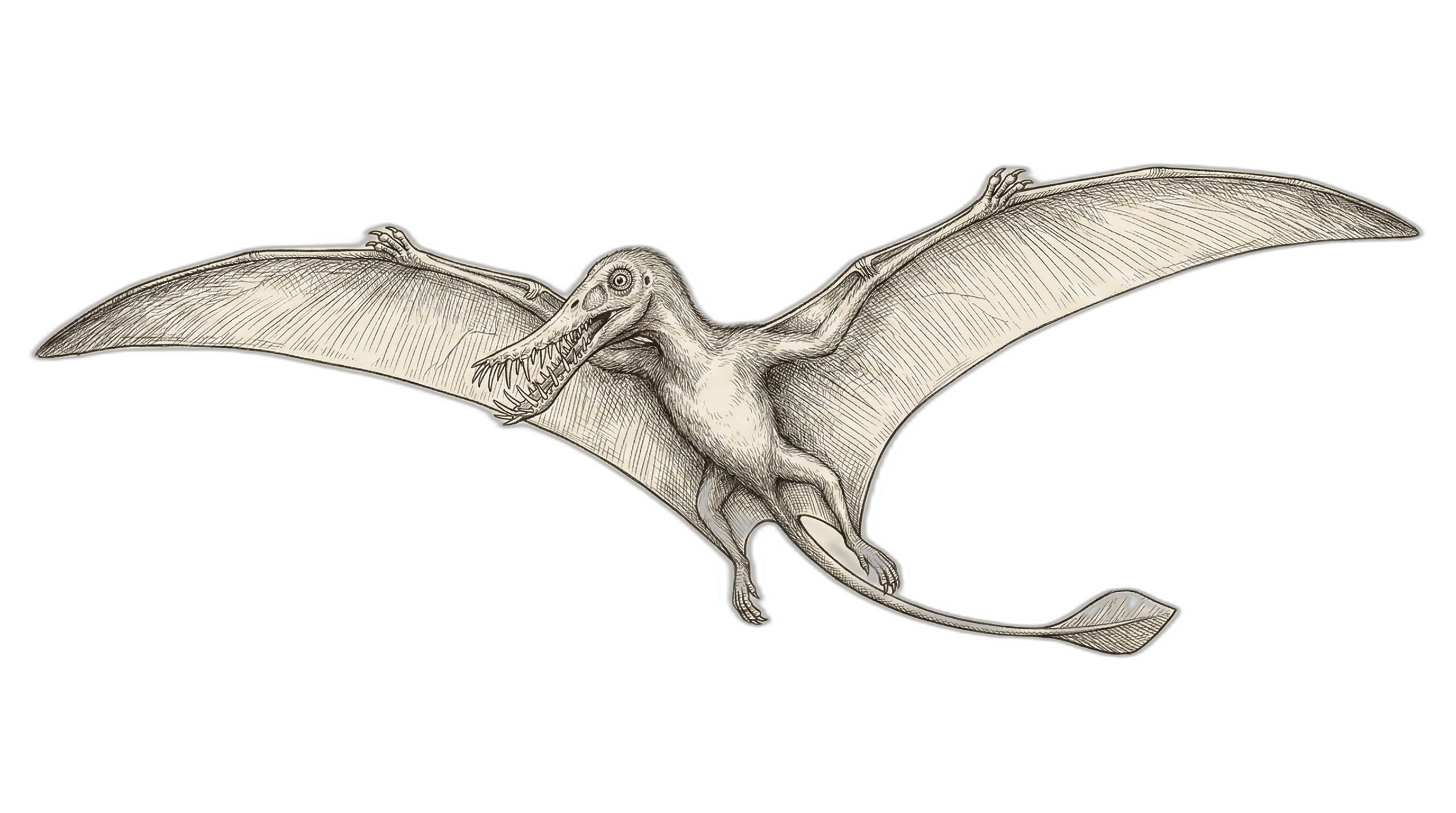
Rhamphorhynchus muensteri
Both are basal rhamphorhynchoid pterosaurs with long tails and similar body plans.
Dilophosaurus
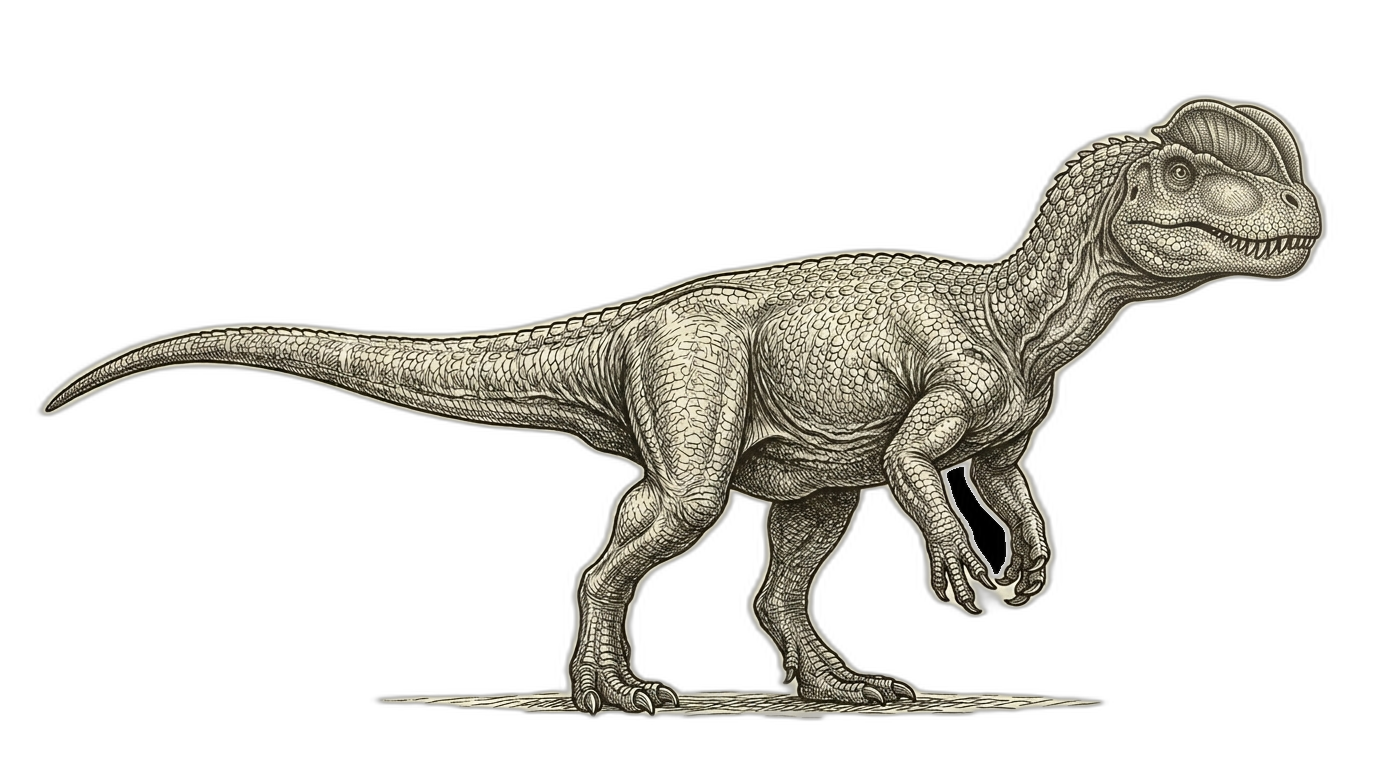
Dilophosaurus wetherilli
Both Dimorphodon and Dilophosaurus lived during the Early Jurassic period (approximately 193-200 mya), representing aerial and terrestrial carnivores sharing overlapping temporal ranges in similar paleoecological contexts.
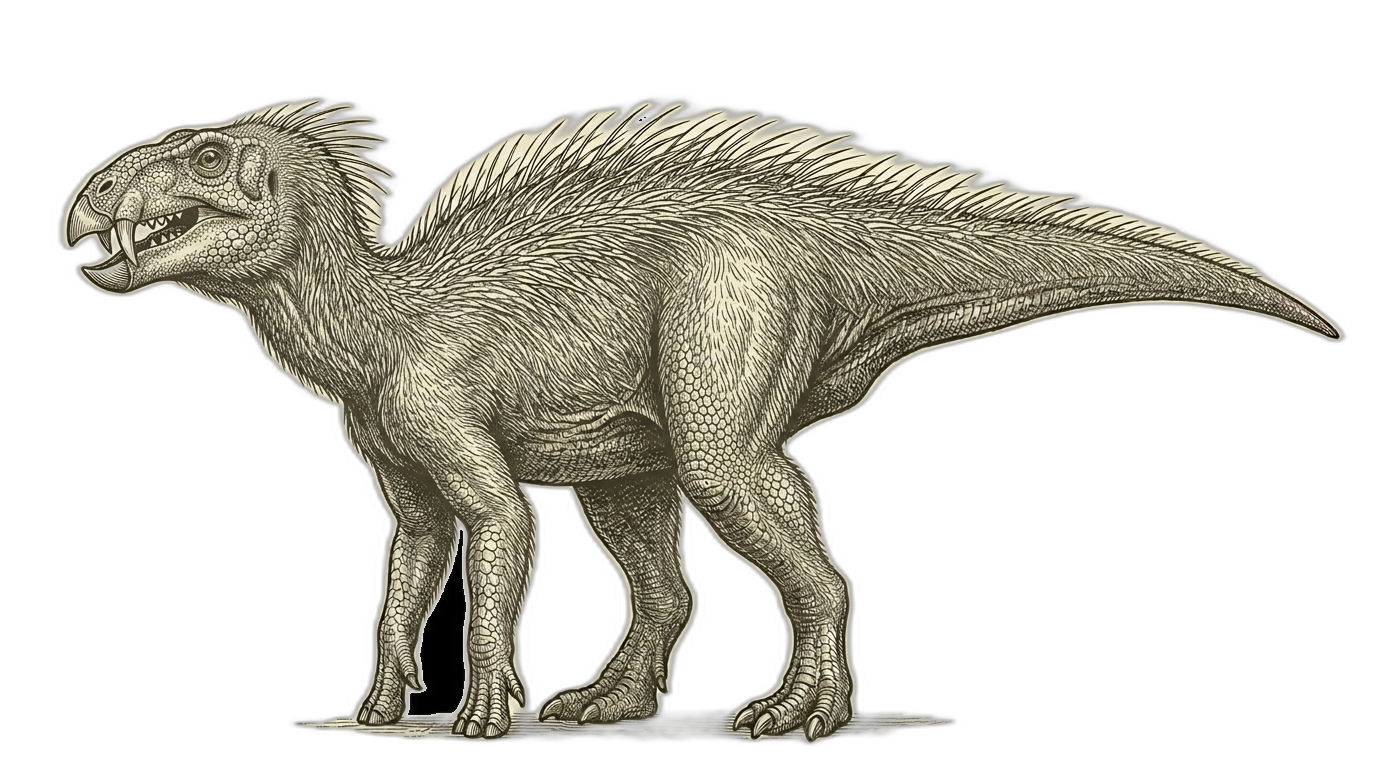
Heterodontosaurus
Heterodontosaurus tucki
Heterodontosaurus lived in the Early Jurassic (approximately 200-190 mya), overlapping temporally with Dimorphodon and representing the small herbivore fauna that would have shared Early Jurassic ecosystems.
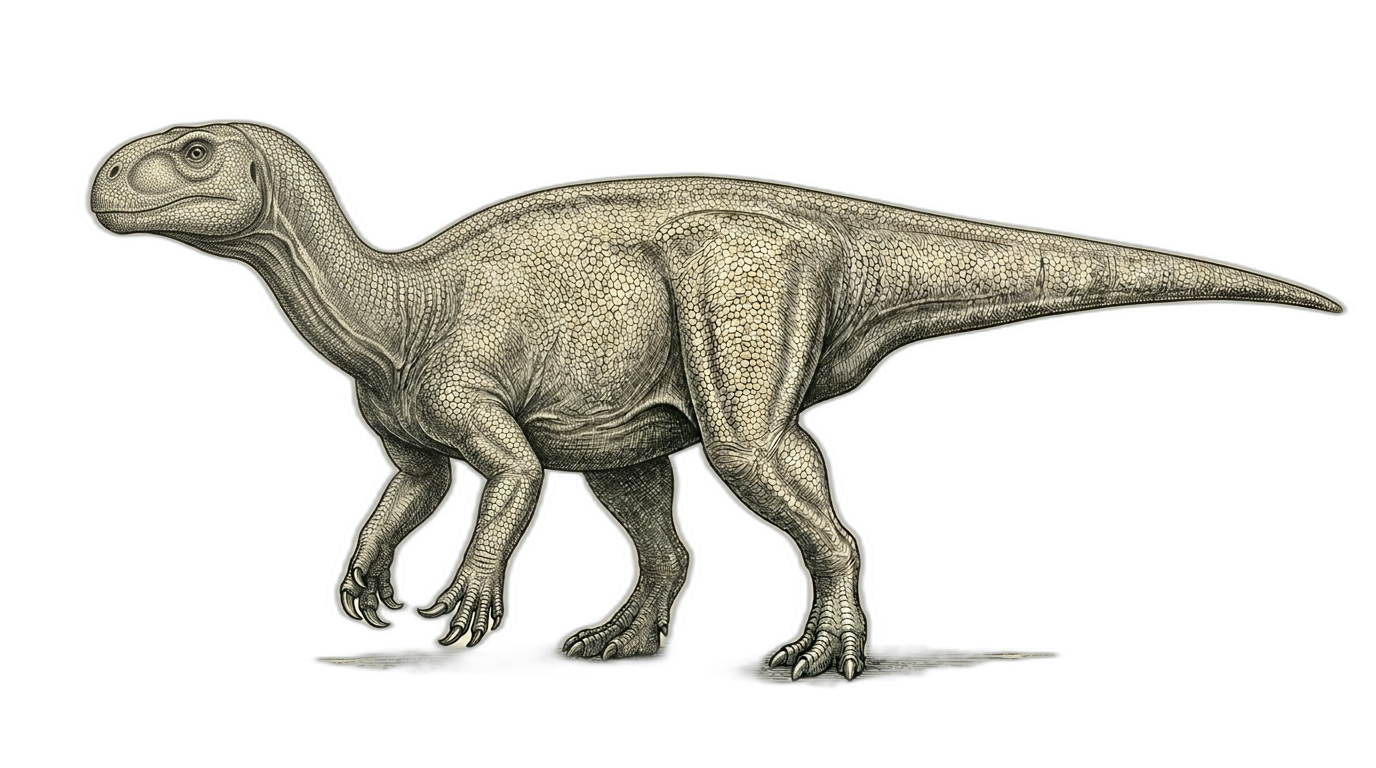
Massospondylus
Massospondylus carinatus
Massospondylus was an Early Jurassic prosauropod (approximately 200-183 mya) that would have been part of the same general temporal fauna as Dimorphodon in Gondwanan and Laurasian ecosystems.
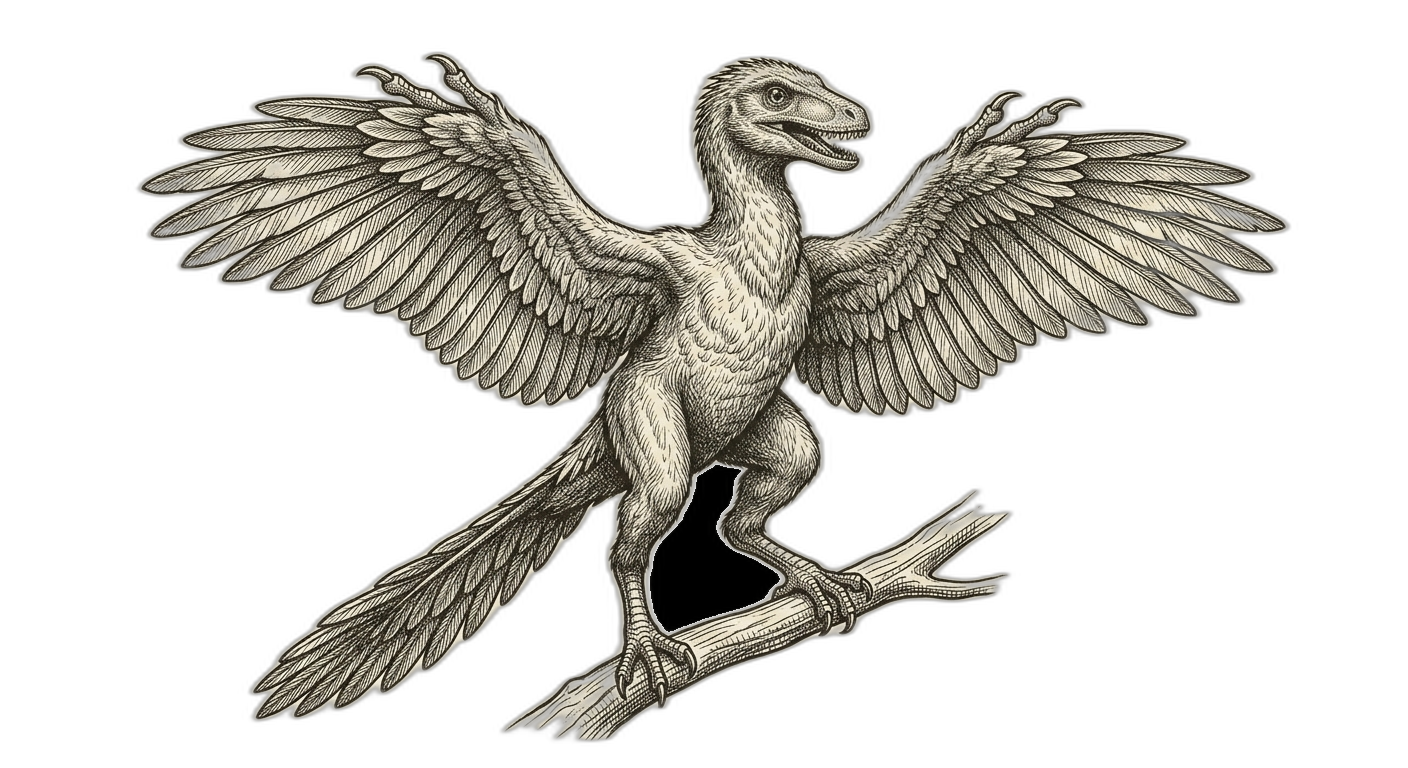
Archaeopteryx
Both represent early experiments in vertebrate powered flight from different archosaur lineages.
Sources & Citation
- Length estimates
- Unwin (2006), The Pterosaurs: From Deep Time
- Height estimates
- Estimated standing height based on limb proportions; Padian (1983)
- Weight estimates
- Witton (2013), Pterosaurs: Natural History, Evolution, Anatomy
- Speed estimates
- Estimated flight speed based on wingspan and body mass; biomechanical inference