About
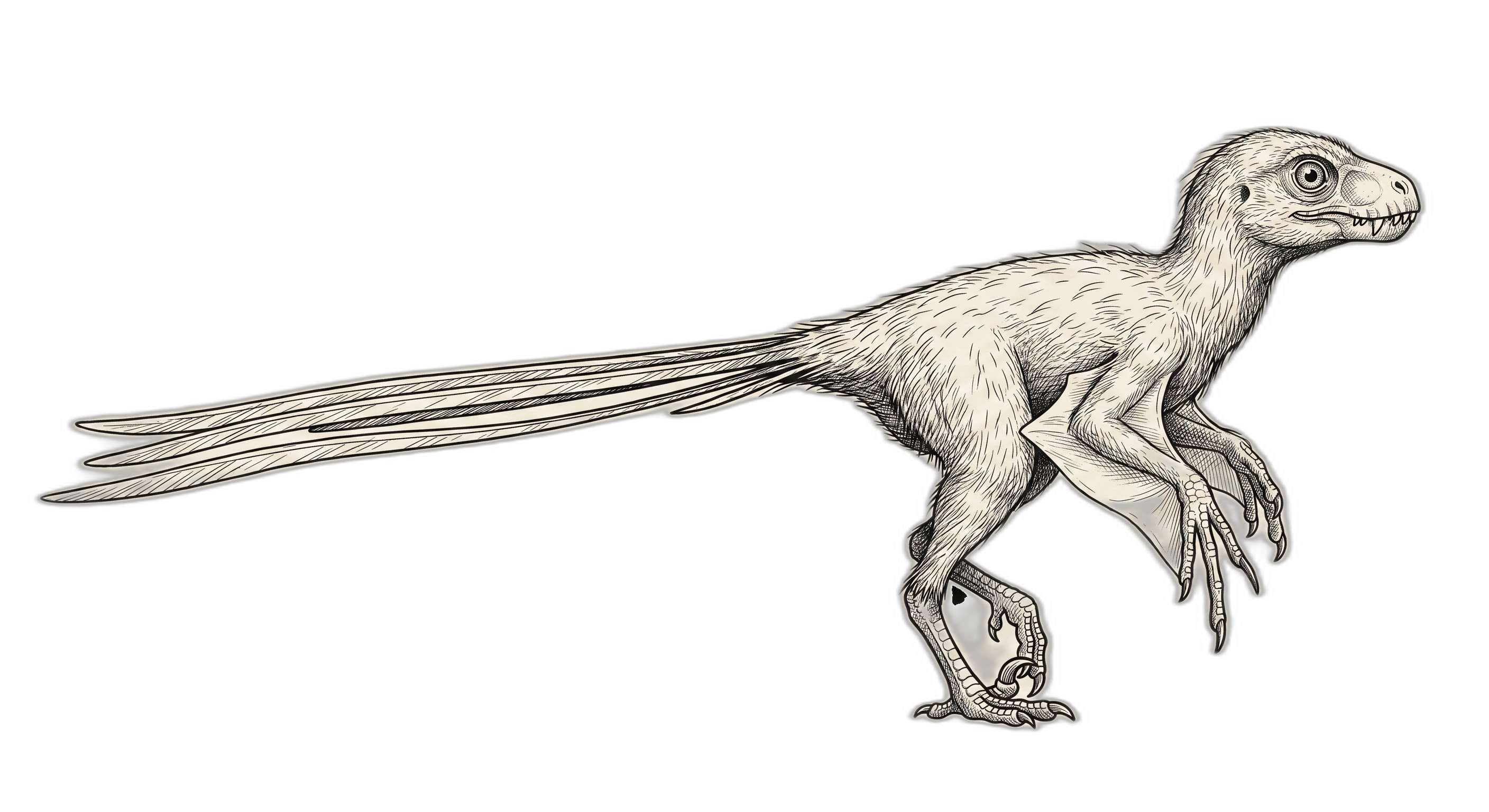
Epidexipteryx hui was a remarkable small maniraptoran dinosaur that lived during the Middle to Late Jurassic of what is now Inner Mongolia, China. About the size of a pigeon, this diminutive creature is famous for possessing four extraordinarily long, ribbon-like tail feathers that appear to have served no aerodynamic purpose whatsoever — they were purely for .
What makes Epidexipteryx particularly significant to paleontology is that it represents the earliest known evidence of ornamental feathers in the fossil record. While its body was covered in simpler, downy feathers, those dramatic tail streamers suggest that even small non-avian dinosaurs were using elaborate plumage to attract mates or intimidate rivals millions of years before birds took to the skies.
The single known specimen was described in 2008 by a team led by Zhang Fucheng and colleagues from the Institute of Vertebrate Paleontology and Paleoanthropathy in Beijing. The dinosaur's name reflects its distinctive feature: Epidexipteryx means "display feather," while the species name honors paleomammologist Hu Yaoming.
Intriguingly, Epidexipteryx possessed unusual forward-projecting front teeth, suggesting it may have used them to pry insects or grubs from tree bark — somewhat like a modern aye-aye lemur. Its short, robust arms with three-fingered hands were not wing-like, indicating this lineage may have evolved display feathers before flight feathers appeared in their relatives.
Quick Facts
- Scientific name
- Epidexipteryx hui
- Group
- Theropod · Scansoriopterygidae
- Lived
- Middle Jurassic, 165–160 million years ago
- Diet
- Insectivore
- Movement
- Walked on two legs
- Fossils found in
- Daohugou Formation, Inner Mongolia, China
- Discovery credited to
- 2008, Zhang Fucheng, Zhou Zhonghe, Xu Xing, Wang Xiaolin, and Sullivan Corwin
- Holotype
- IVPP V15471 · Institute of Vertebrate Paleontology and Paleoanthropology, Beijing
- DinoVault record
- DVL-0052
Where Epidexipteryx Roamed
Epidexipteryx hui inhabited the lush, subtropical forests of the Daohugou region in what is now northeastern China, part of the ancient Asian landmass during the Middle to Late Jurassic period. This environment featured volcanic lakes, dense coniferous and ginkgo woodlands, and a warm, humid climate that supported a remarkable diversity of feathered dinosaurs, early mammals, and primitive insects.
Keep exploring the vault
Yi
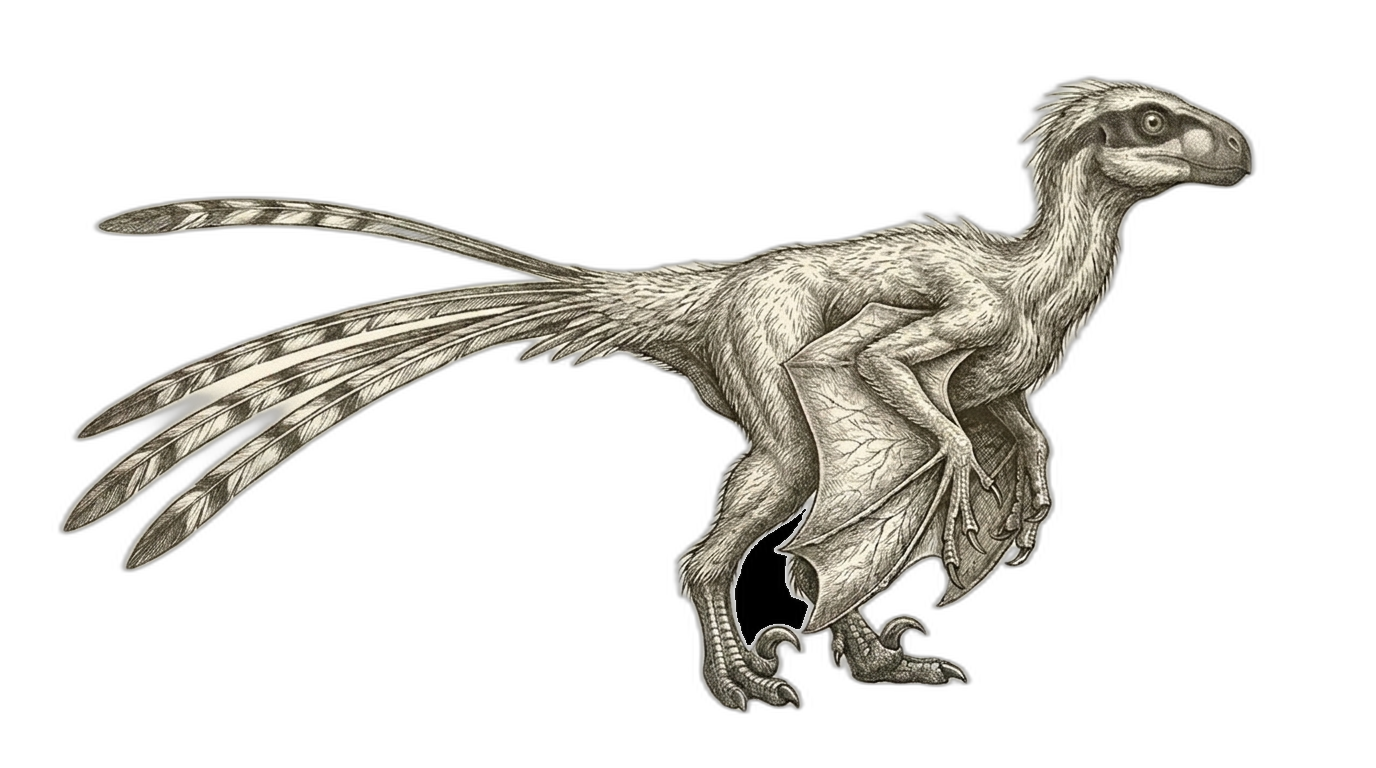
Both Epidexipteryx and Yi qi are scansoriopterygid theropods from the Middle-Late Jurassic of China, representing parallel experiments in arboreal locomotion and display structures.
Archaeopteryx
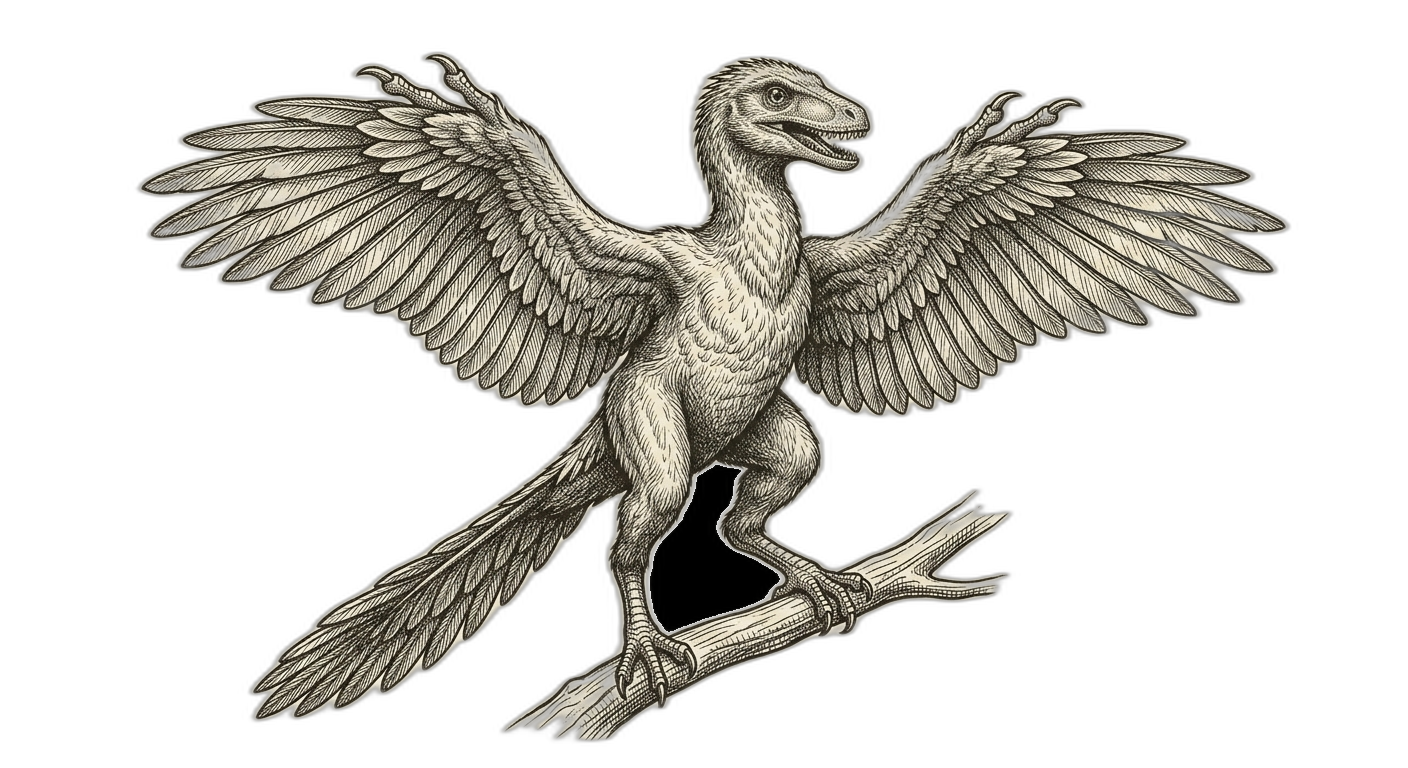
Both represent early paravian theropods independently exploring feather evolution and potential flight-related adaptations in the Late Jurassic.
Microraptor
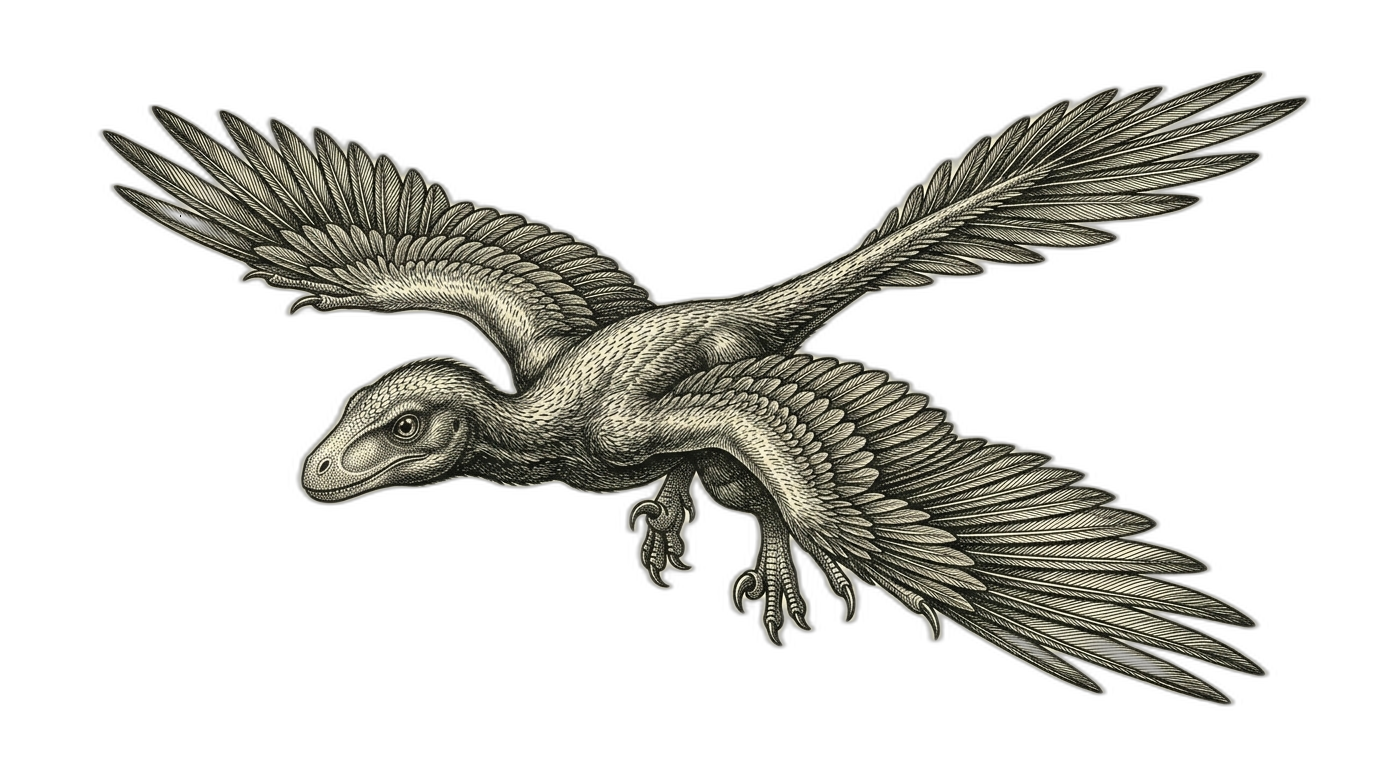
Microraptor gui
Both are small, feathered paravian theropods representing the evolutionary experimentation with feathers and arboreal lifestyles in different time periods.
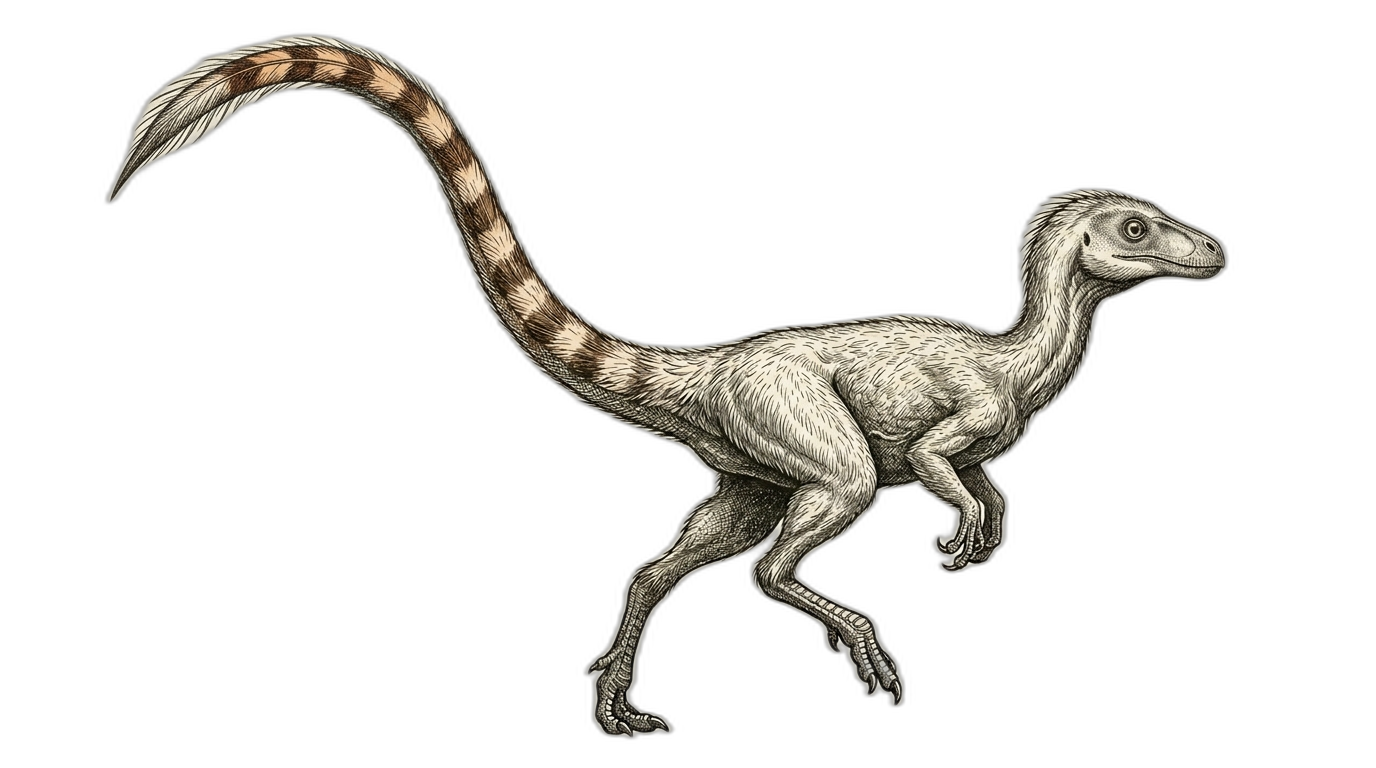
Sinosauropteryx
Sinosauropteryx prima
Both are small feathered theropods from Chinese Lagerstätten deposits, representing the broader evolutionary narrative of feather development in coelurosaurian theropods.
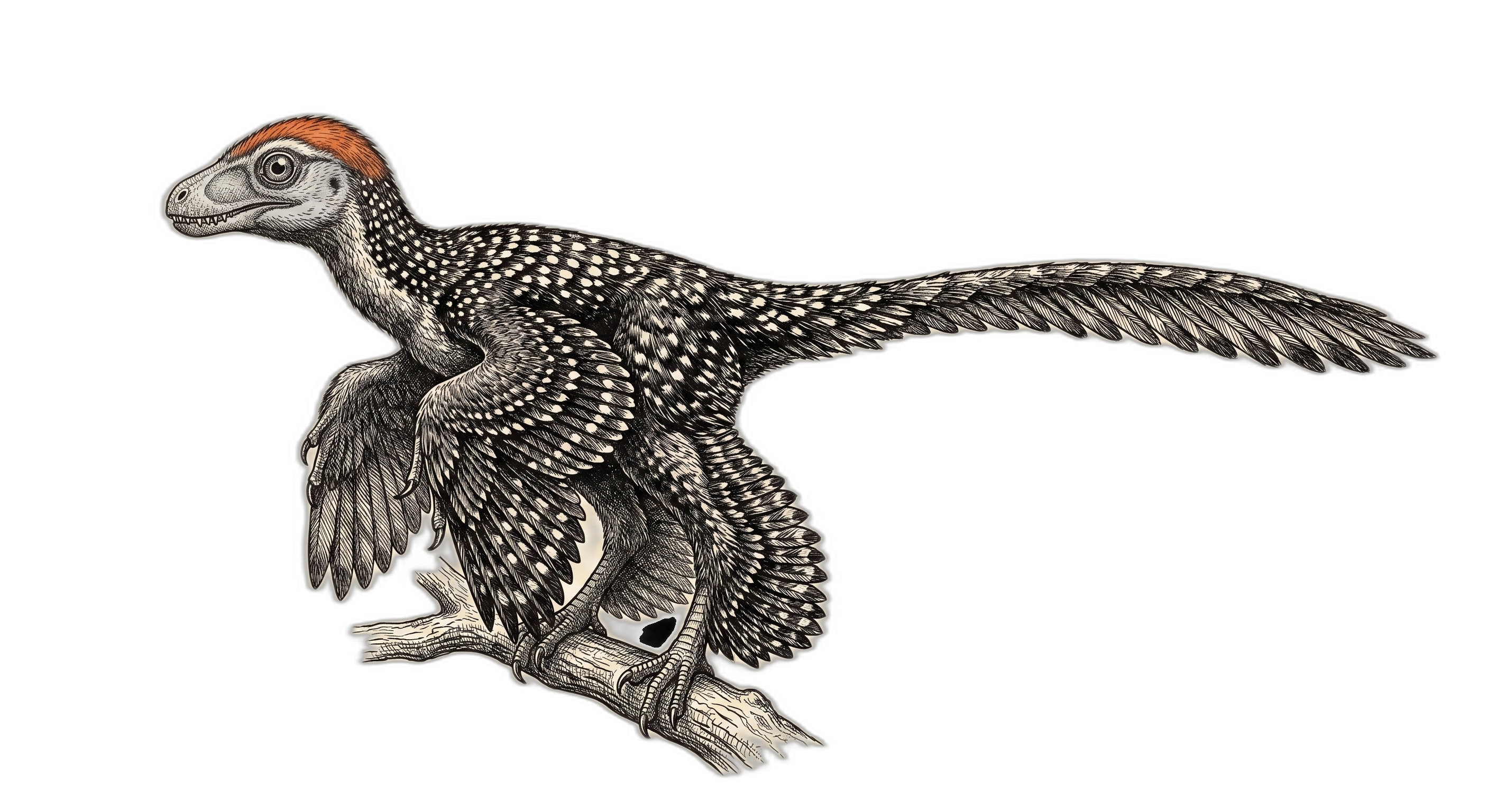
Anchiornis
Both are small Jurassic Chinese maniraptorans that evolved elaborate feather structures.
Sources & Citation
- Length estimates
- Zhang et al. 2008; body length excluding tail feathers
- Height estimates
- Zhang et al. 2008; estimated hip height
- Weight estimates
- Zhang et al. 2008; ~164 grams estimated