About
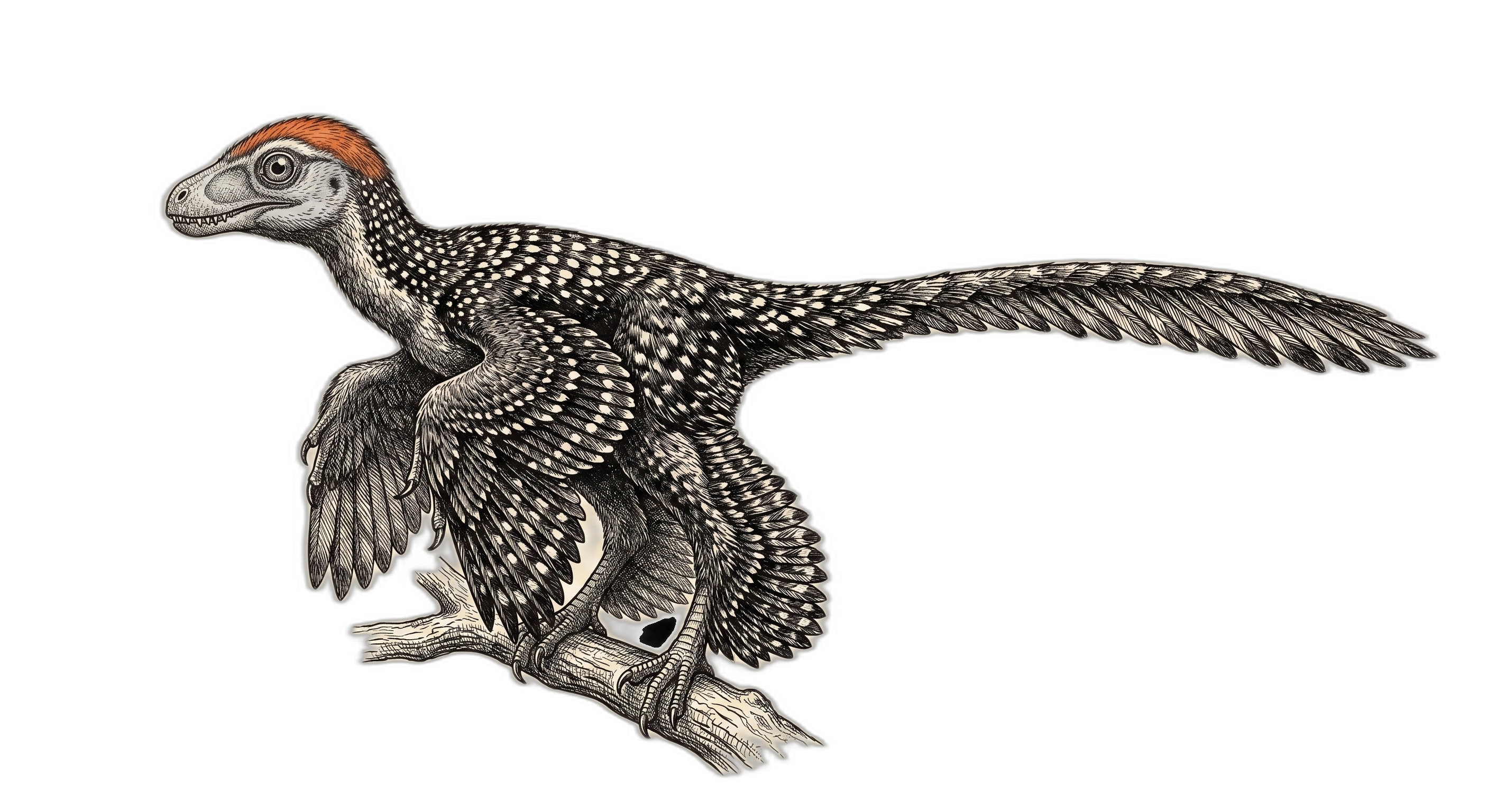
Anchiornis huxleyi represents one of the most remarkable windows into the Mesozoic world we have ever discovered. This tiny, four-winged lived approximately 160 million years ago during the Late Jurassic, predating Archaeopteryx and challenging our understanding of when bird-like features first evolved. About the size of a modern crow, Anchiornis possessed long feathers on all four limbs, creating a configuration that has fascinated scientists studying the origins of flight.
The genus name means "near bird" in Greek, while the species name honors Thomas Henry Huxley, the Victorian naturalist who championed Darwin's theory of evolution and was among the first to propose that birds descended from dinosaurs. This naming proved remarkably fitting, as Anchiornis sits tantalizingly close to the boundary between non-avian dinosaurs and true birds on the evolutionary tree.
Discovered in the Tiaojishan Formation of Liaoning Province, China, Anchiornis is known from hundreds of specimens — an extraordinary sample size for any dinosaur. The exceptional preservation of these fossils, including detailed feather impressions, enabled a groundbreaking 2010 study that reconstructed the animal's coloration from preserved . The results revealed a striking appearance: a gray body, black-and-white spangled wings, and a rufous atop its head.
This color reconstruction made Anchiornis the first Mesozoic dinosaur for which we could determine nearly its complete life appearance — not through artistic interpretation, but through direct fossil evidence. Living in ancient forests, this small predator likely hunted insects and small , using its four wings perhaps for gliding or controlled descent rather than powered flight.
Quick Facts
- Scientific name
- Anchiornis huxleyi
- Group
- Theropod · Troodontidae
- Lived
- Late Jurassic, 163–145 million years ago
- Diet
- Carnivore
- Movement
- Walked on two legs
- Discovery credited to
- 2009, Xu Xing and colleagues
- Holotype
- IVPP V14378 · Institute of Vertebrate Paleontology and Paleoanthropology, Beijing
- DinoVault record
- DVL-0006
Where Anchiornis huxleyi Roamed
During the Late Jurassic, approximately 154 million years ago, Anchiornis huxleyi inhabited the ancient forests of what is now northeastern China, a region characterized by volcanic highlands, freshwater lakes, and dense coniferous woodlands along the eastern margin of the Asian landmass. This temperate, seasonally humid environment—part of the famous Yanliao Biota—supported a remarkable diversity of feathered dinosaurs, early mammals, and primitive birds beneath ash-laden skies punctuated by periodic volcanic eruptions.
Keep exploring the vault
Troodon
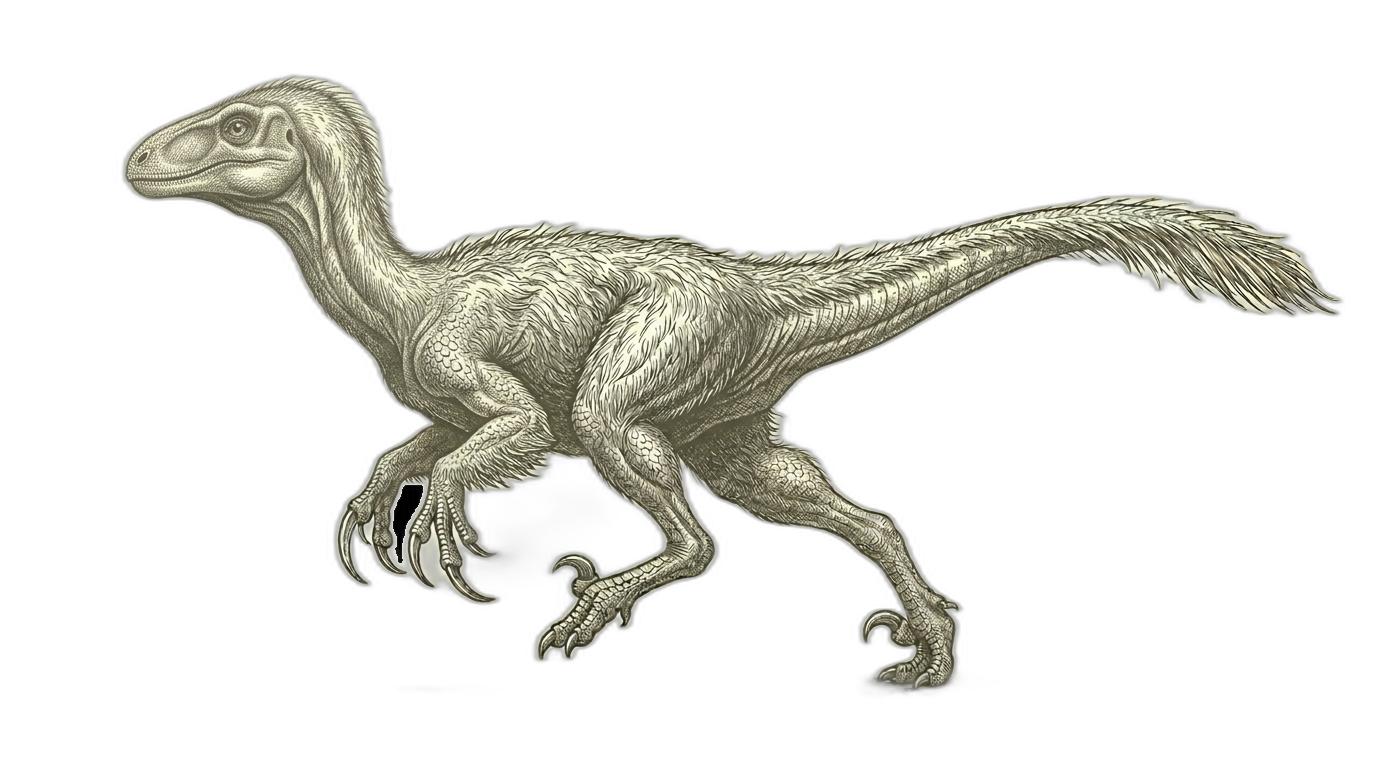
Troodon formosus
Anchiornis is classified within Troodontidae and represents one of the earliest known members of this family from the Late Jurassic.
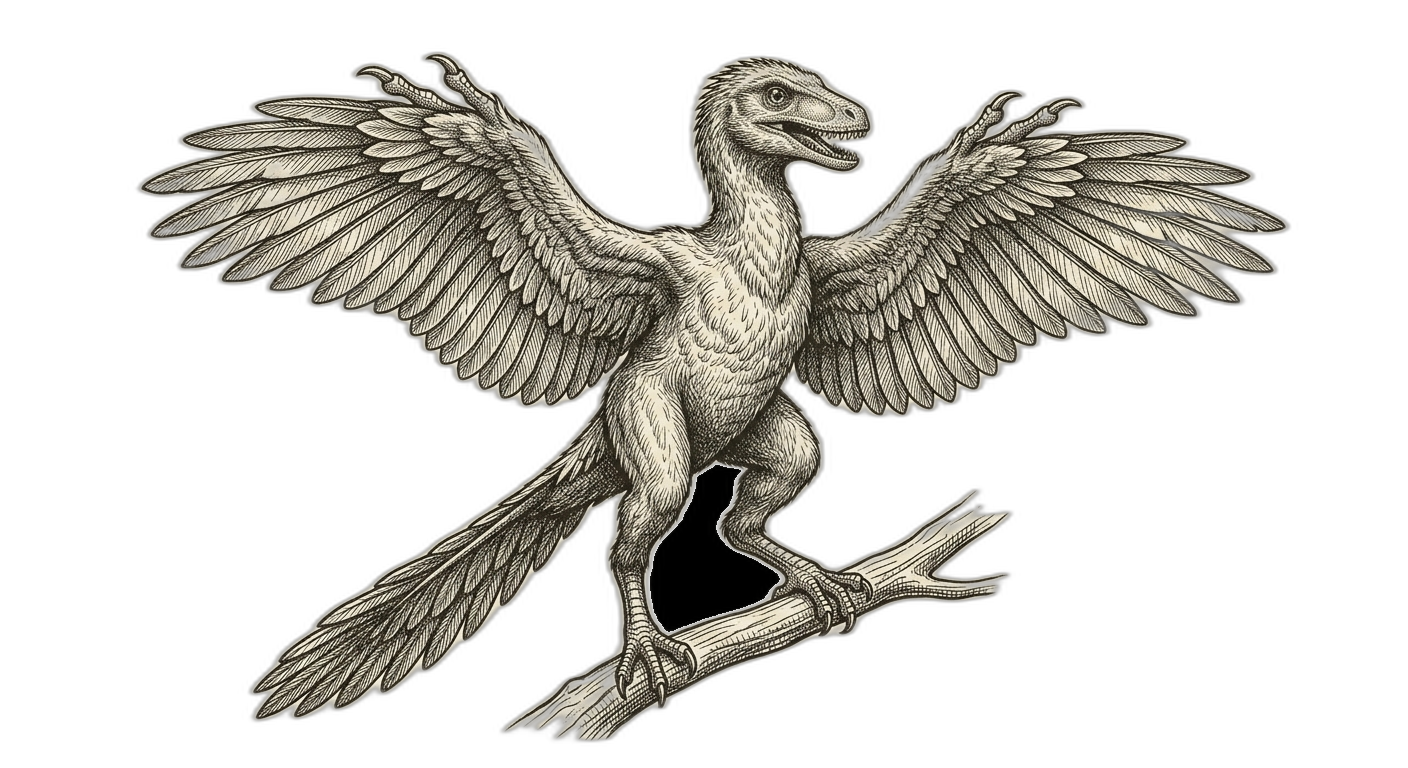
Archaeopteryx
Both Anchiornis and Archaeopteryx represent early experiments in feathered flight among paravian theropods.
Microraptor
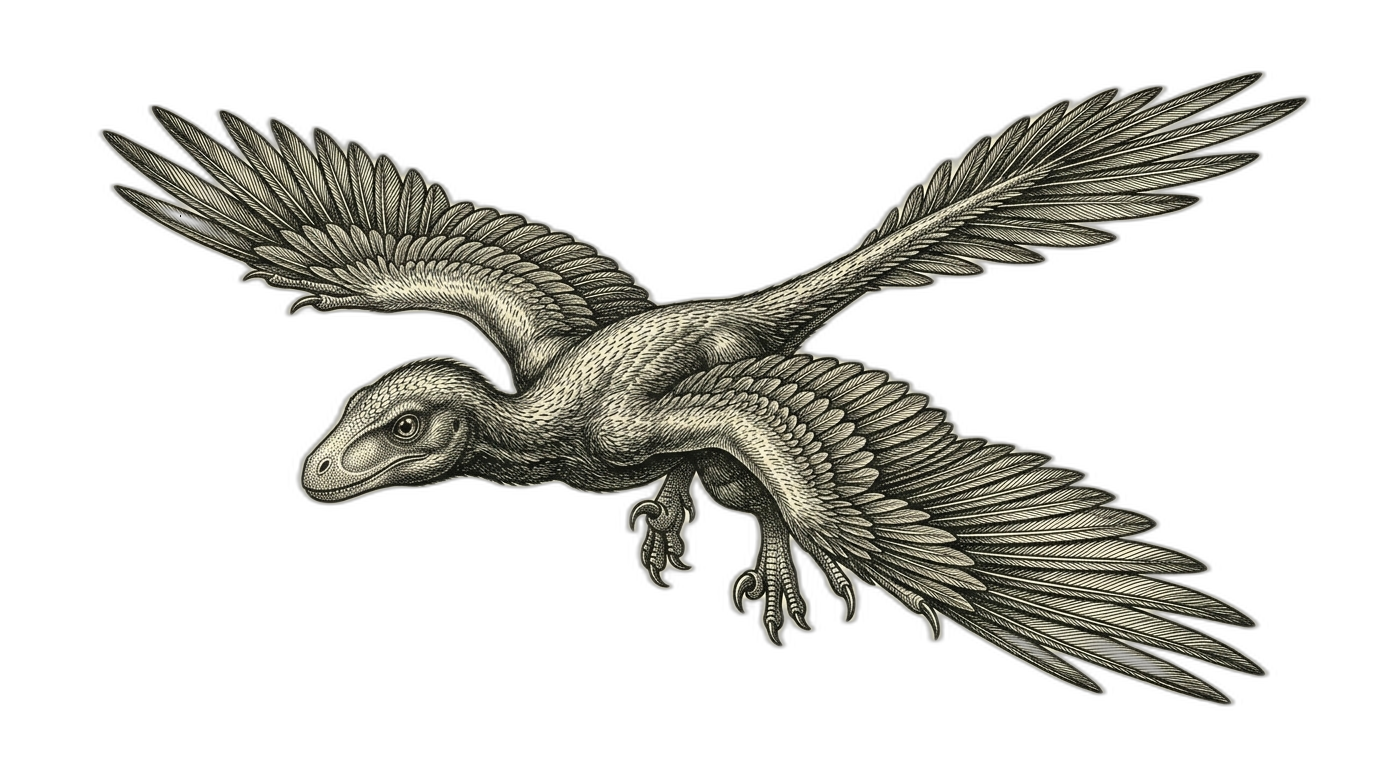
Microraptor gui
Anchiornis and Microraptor both independently evolved four-winged body plans with extensive leg feathering suitable for gliding or parachuting.
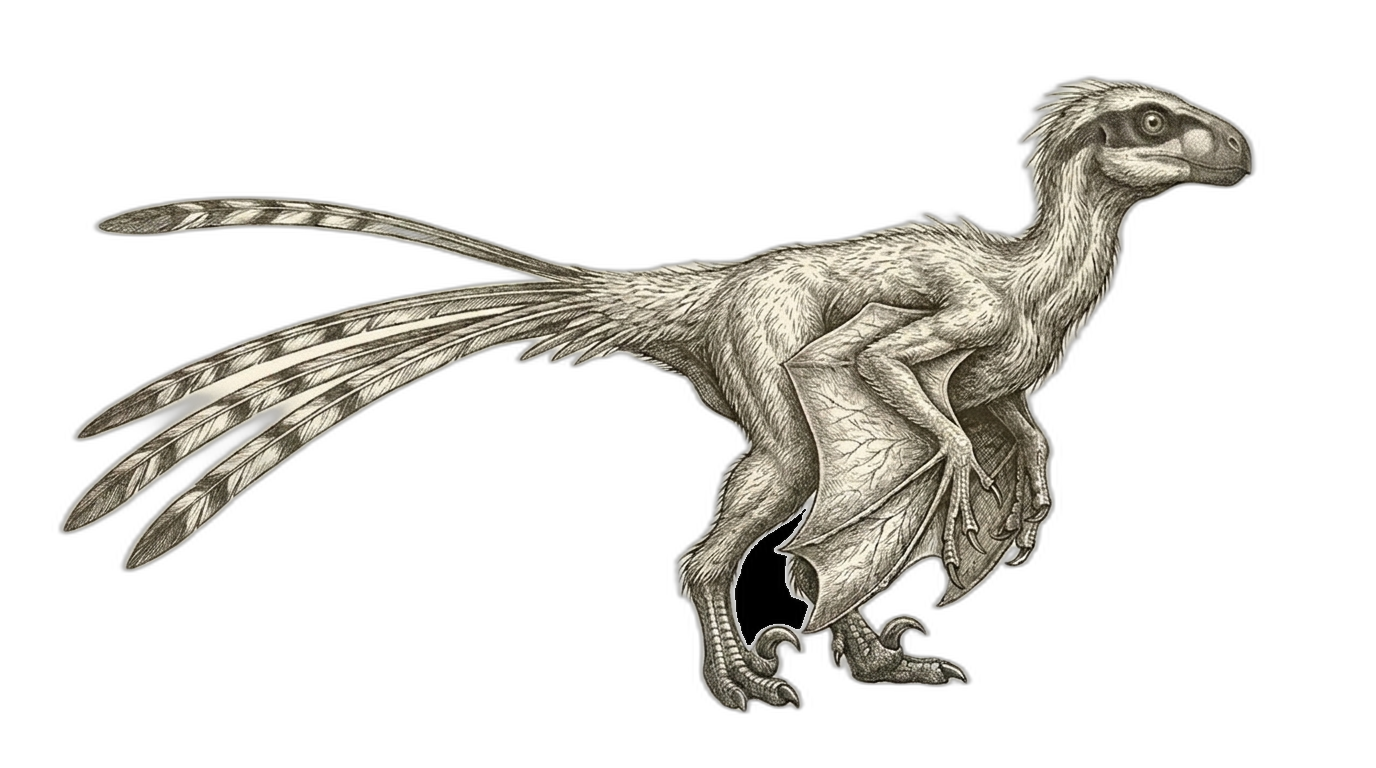
Yi
Both are small, feathered paravians from Middle-Late Jurassic China that explored aerial locomotion through radically different means — Anchiornis with four feathered wings, Yi qi with bat-like membranous wings.
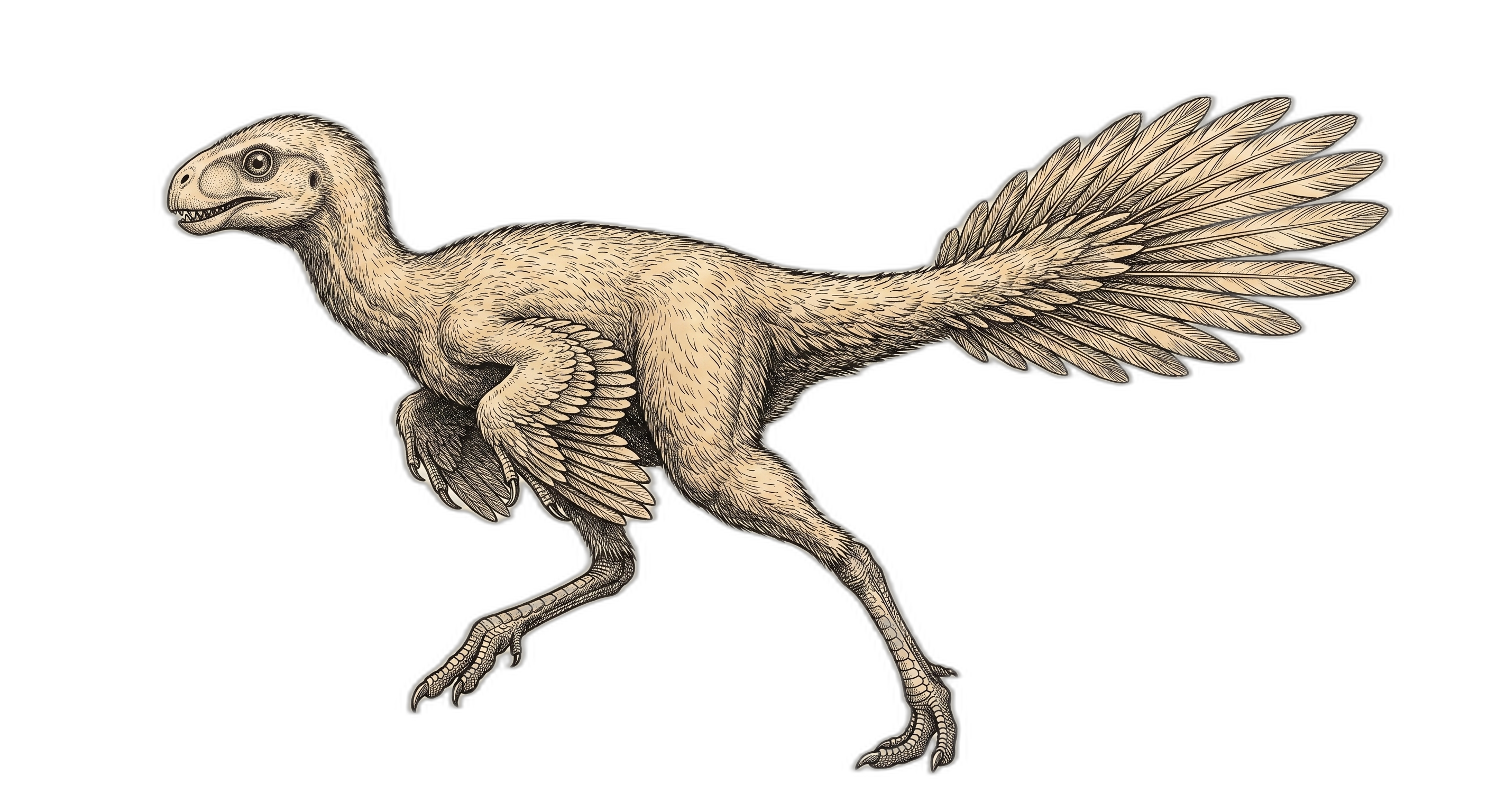
Caudipteryx
Both small feathered paravians exploring the transition between ground-dwelling and aerial lifestyles.
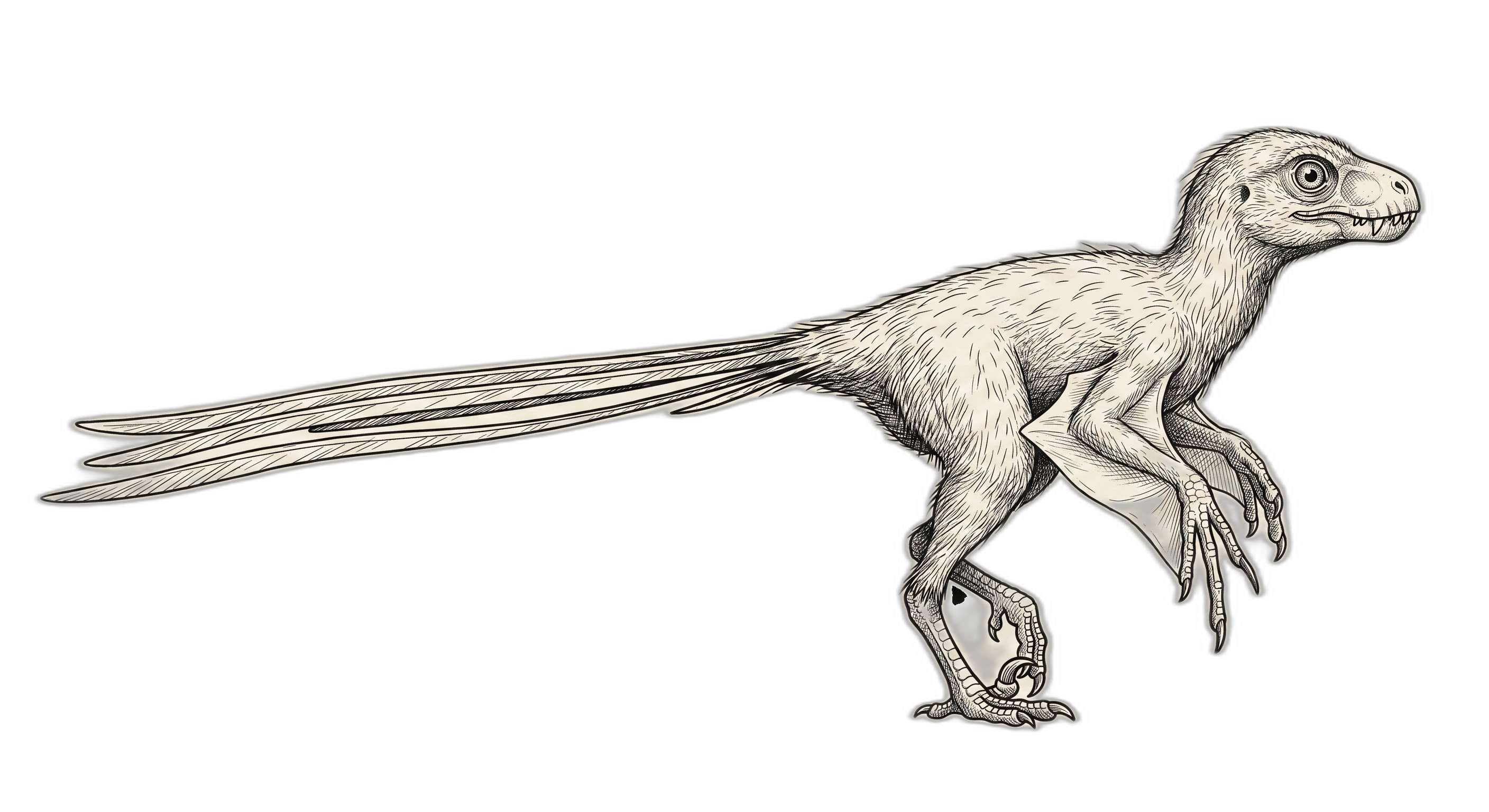
Epidexipteryx
Epidexipteryx hui
Both are small Jurassic Chinese maniraptorans that evolved elaborate feather structures.
Sources & Citation
- Length estimates
- Hu et al. 2009; multiple complete specimens
- Height estimates
- Estimated hip height from skeletal proportions; Hu et al. 2009
- Weight estimates
- Dececchi et al. 2016; mass estimates from multiple specimens
- Speed estimates
- Estimated based on leg proportions and body size; no direct evidence