About
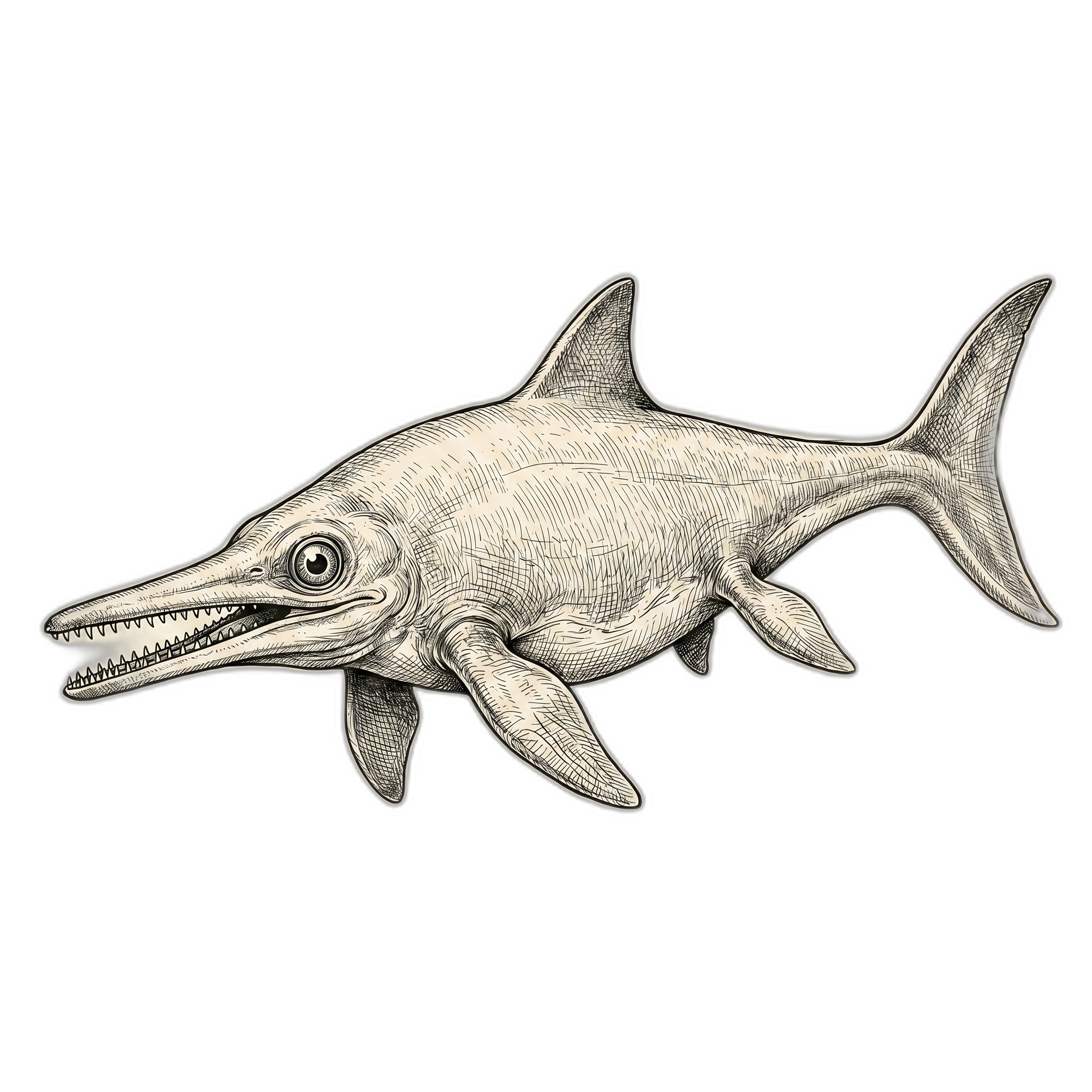
Ichthyosaurus was not a dinosaur, but a highly successful marine reptile that evolved a body plan strikingly similar to modern dolphins — a classic example of . With its streamlined torpedo-shaped body, large eyes for hunting in murky or deep waters, and powerful crescent-shaped tail, it was superbly adapted for life in Early Jurassic seas. Its four flippers were used for steering rather than propulsion, and its long, tooth-filled snout was perfect for snatching fish and squid.
As the type genus of the entire order Ichthyosauria, Ichthyosaurus holds a special place in paleontological history. The first specimens were discovered in the early 1800s along the Jurassic Coast of England, with pioneering fossil hunter Mary Anning finding some of the most complete skeletons. These discoveries helped establish the revolutionary idea that entire groups of animals had gone extinct — a concept that challenged scientific thinking of the time.
Ichthyosaurus communis is known from numerous well-preserved specimens, including some remarkable fossils showing embryos inside adult females. This direct evidence proves these animals gave birth to live young tail-first in the water, just as whales and dolphins do today. They could not return to land to lay eggs and were fully committed to a marine lifestyle.
The large eyes of Ichthyosaurus — proportionally among the largest of any vertebrate — were reinforced by a ring of bony plates called sclerotic rings. This suggests they were visual hunters, possibly diving to considerable depths or hunting at dawn and dusk when light levels were low.
Quick Facts
- Scientific name
- Ichthyosaurus communis
- Group
- Marine reptile · Ichthyosauridae
- Lived
- Early Jurassic, 201.3–182.7 million years ago
- Diet
- Piscivore
- Movement
- Walked on four legs
- Fossils found in
- Blue Lias Formation, Somerset, England
- Discovery credited to
- 1821, Mary Anning (specimen); formally named by William Conybeare & Henry De la Beche
- Holotype
- NHMUK PV R1162 · Natural History Museum, London
- DinoVault record
- DVL-0068
Where Ichthyosaurus Roamed
During the Early Jurassic, *Ichthyosaurus communis* inhabited the warm, shallow epicontinental seas that covered much of what is now Western Europe, as the supercontinent Pangaea began to fragment and the proto-Atlantic Ocean slowly widened. These tropical to subtropical waters teemed with marine life, including abundant ammonites, belemnites, and fish that sustained these streamlined marine reptiles.
Keep exploring the vault
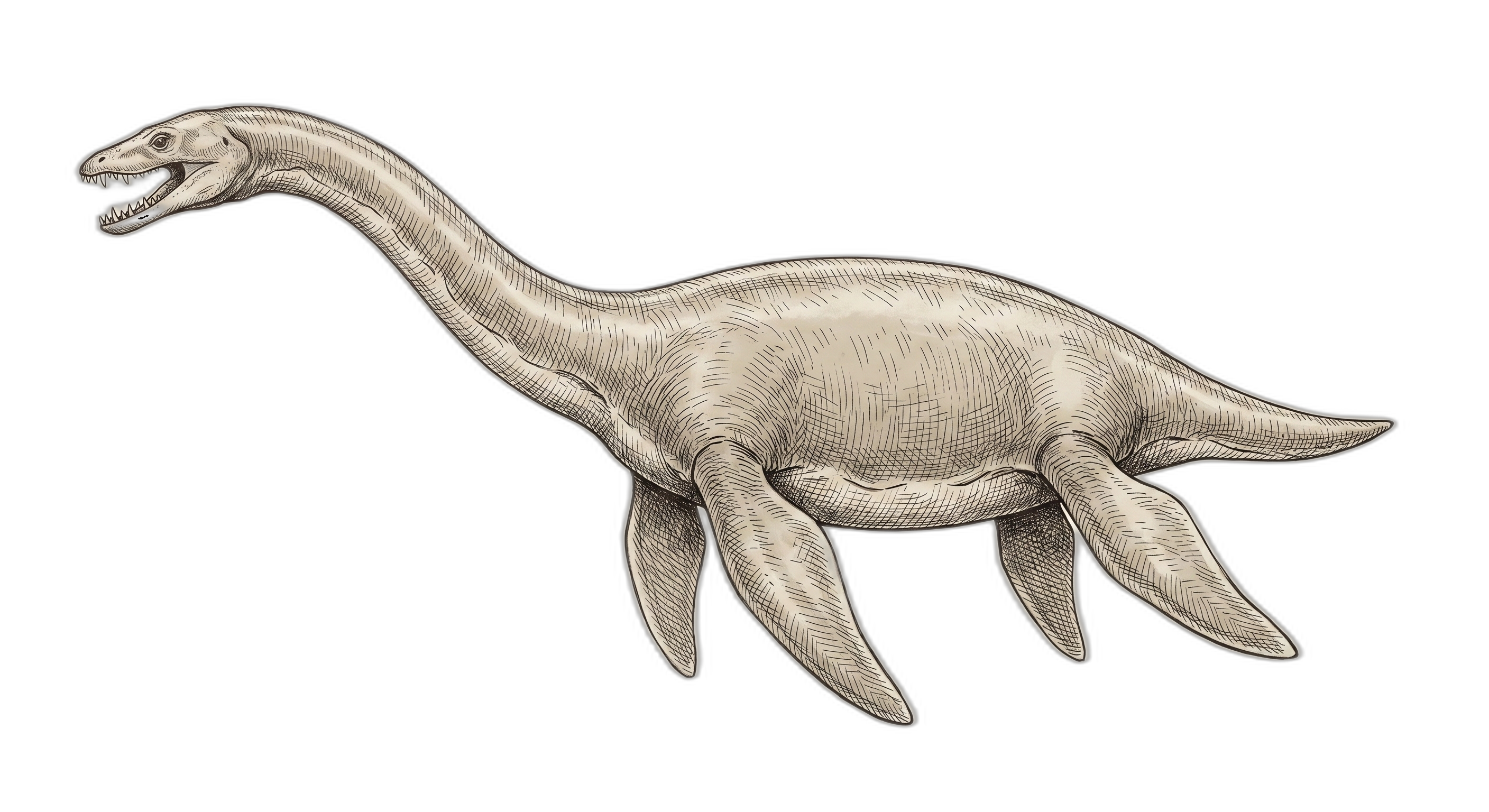
Plesiosaurus
Plesiosaurus dolichodeirus
Both Ichthyosaurus and Plesiosaurus inhabited Early Jurassic marine environments of Europe, particularly the Lias Group deposits of England.
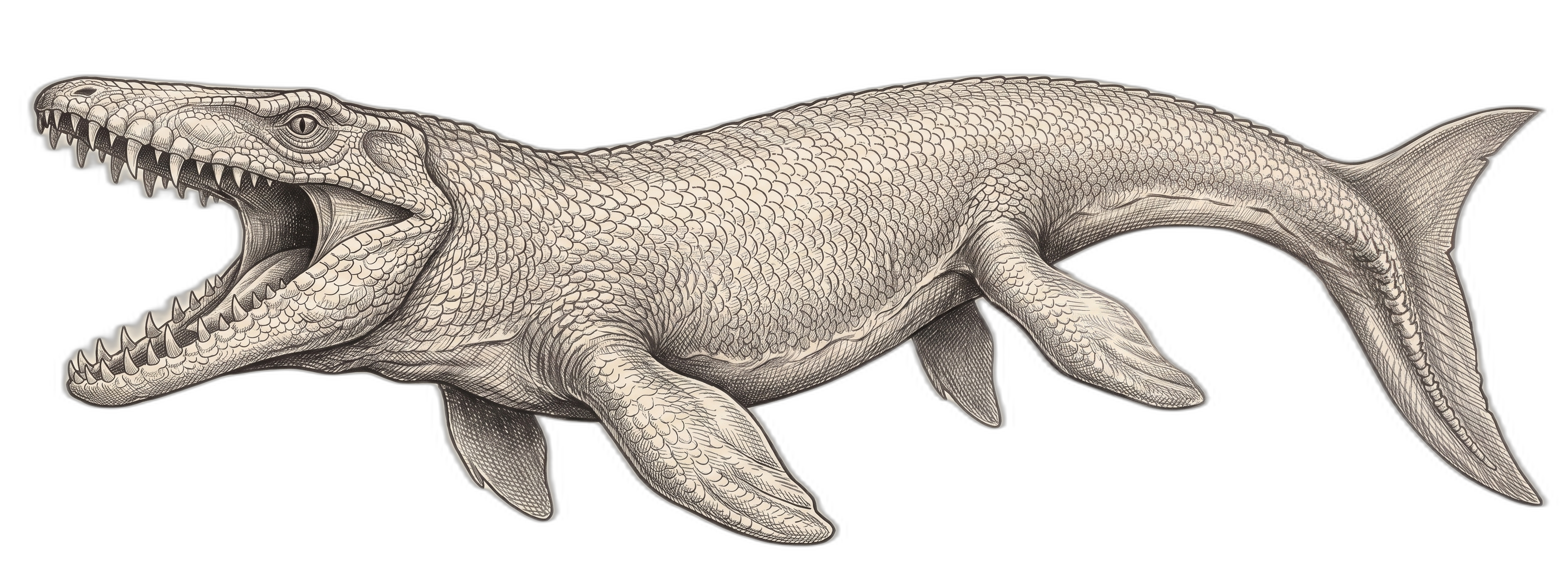
Mosasaurus
Mosasaurus hoffmannii
Both ichthyosaurs and mosasaurs represent convergent evolution toward dolphin-like body plans in marine reptiles, though from completely different lineages (Ichthyopterygia vs.
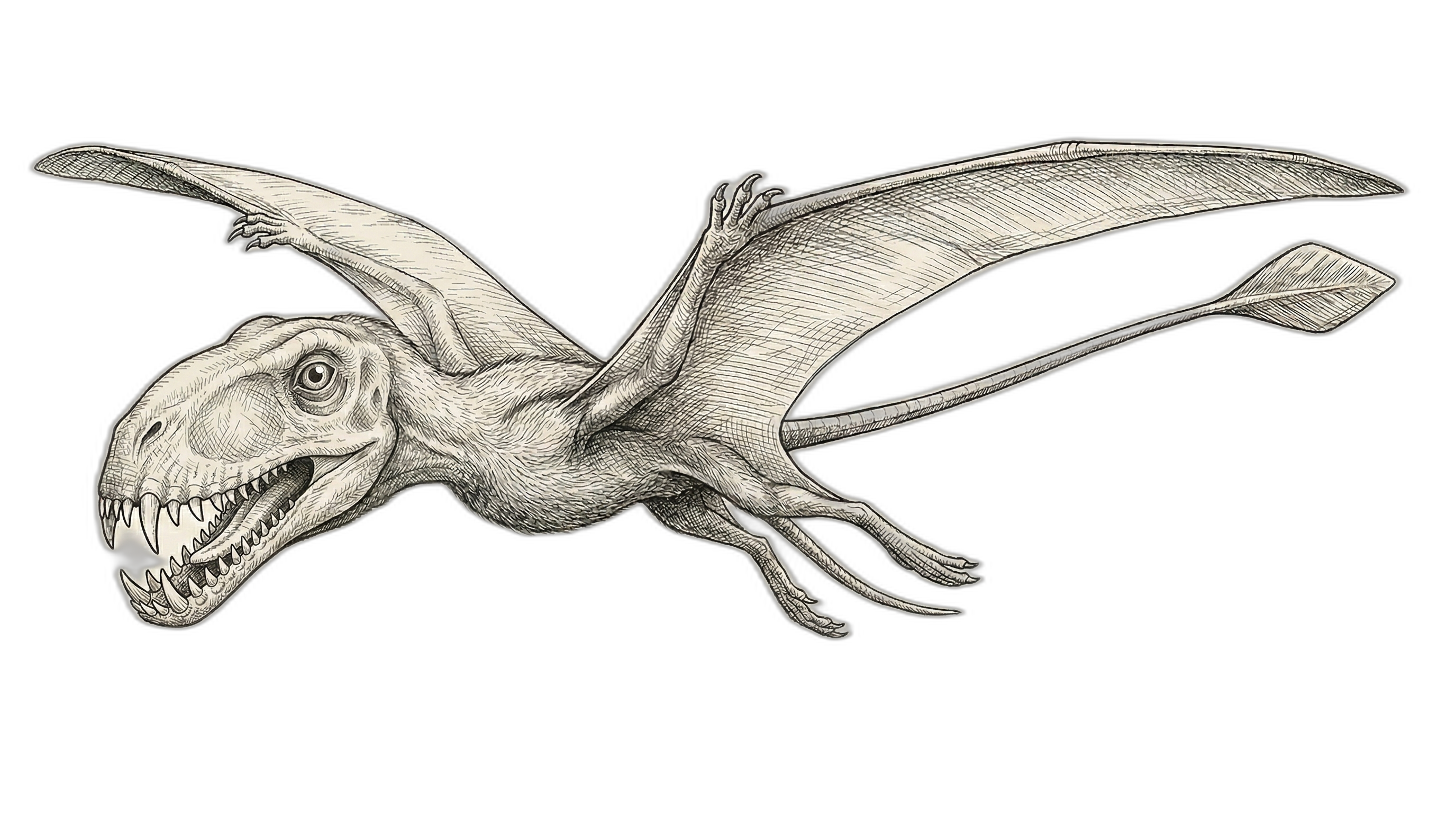
Dimorphodon
Dimorphodon macronyx
Dimorphodon fossils are known from the Early Jurassic Lias Group of England (Blue Lias Formation), the same deposits that yield abundant Ichthyosaurus specimens.
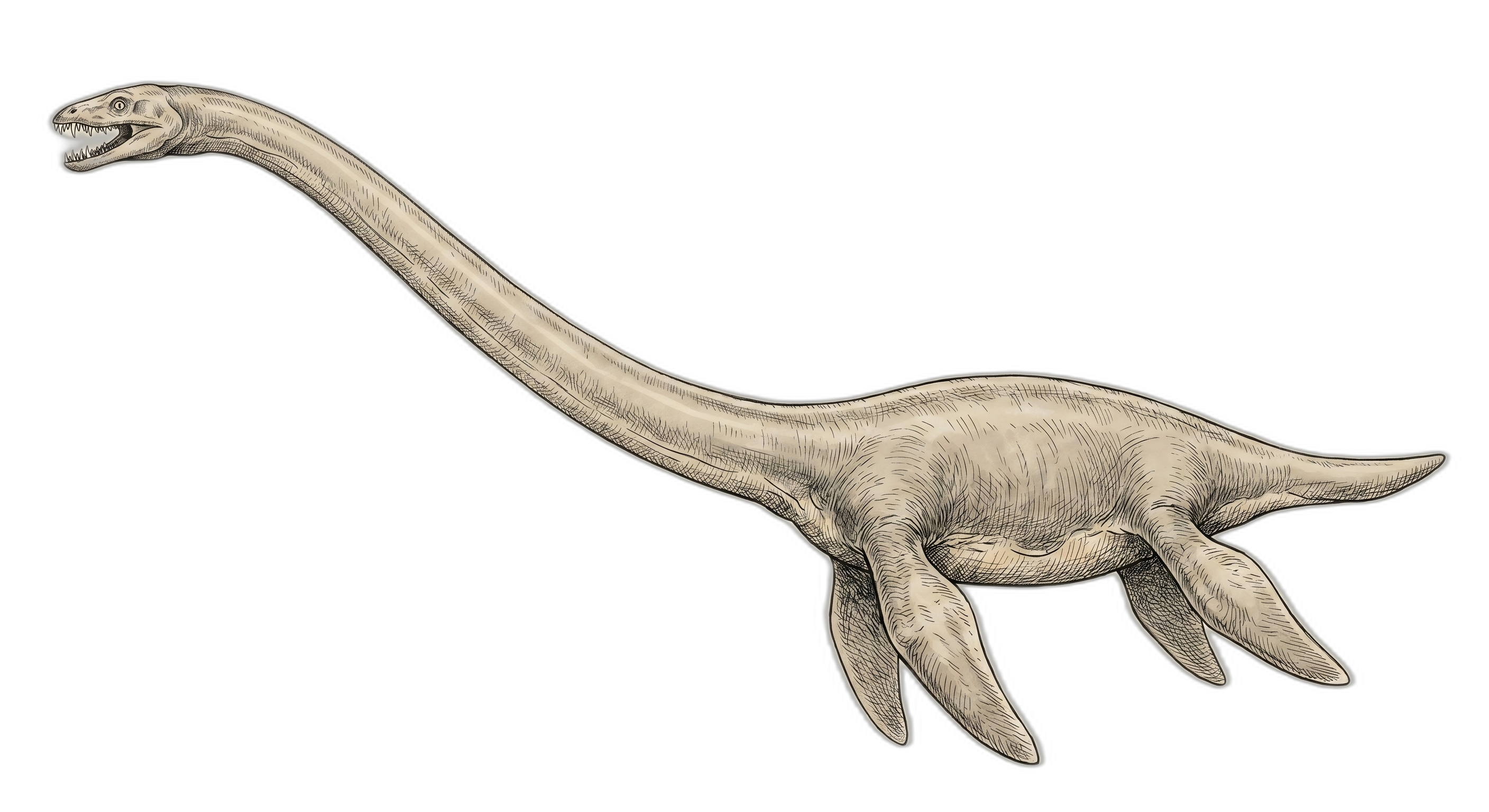
Elasmosaurus
Elasmosaurus platyurus
Both represent marine reptile lineages that independently evolved from terrestrial ancestors to become fully aquatic predators.
Sources & Citation
- Length estimates
- McGowan & Motani 2003; numerous complete specimens
- Height estimates
- Body depth estimates from complete specimens; McGowan 1979
- Weight estimates
- Mass estimates based on body volume reconstructions; Motani 2005
- Speed estimates
- Biomechanical modeling; Motani 2002 — estimates vary considerably