About
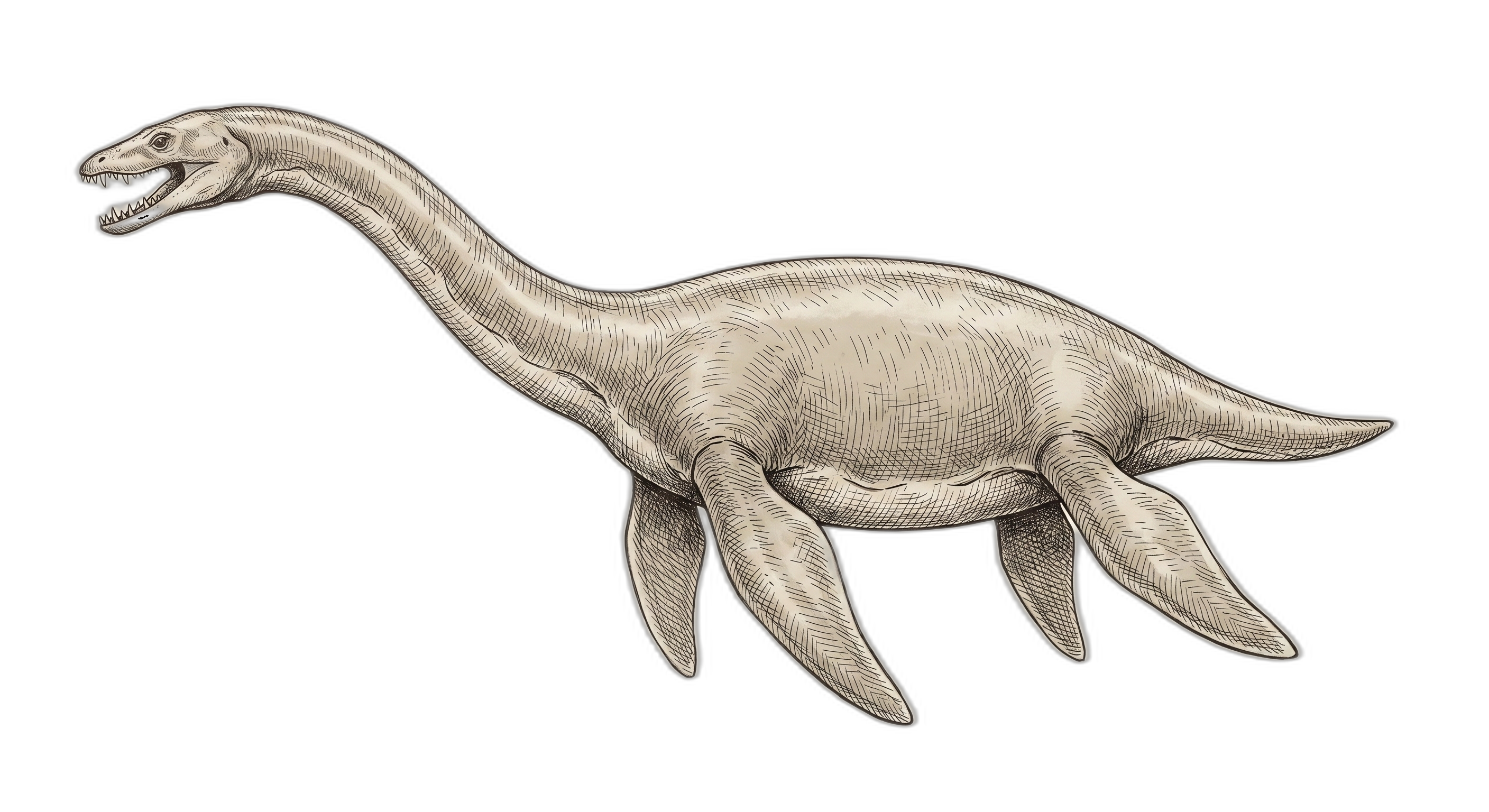
Plesiosaurus dolichodeirus was a marine reptile that prowled the shallow seas of Early Jurassic England approximately 200-190 million years ago. Despite often being confused with dinosaurs, Plesiosaurus belonged to an entirely separate group of reptiles called sauropterygians that returned to the ocean and evolved flippers from their ancestors' legs. Its body plan was so distinctive — small head, impossibly long neck, broad turtle-like torso, and four powerful paddle-shaped limbs — that it became the archetype for an entire order of marine reptiles that dominated the Mesozoic seas.
Discovered in 1821 by the legendary fossil hunter Mary Anning along the Jurassic Coast of Lyme Regis, England, Plesiosaurus caused a sensation in the scientific world. The specimen was so bizarre that some initially suspected it was a forgery — the famous French anatomist Georges Cuvier examined drawings and questioned whether such a creature could have actually existed. The long neck, comprising roughly 35-40 cervical , seemed impossibly serpentine. William Conybeare formally described and named the genus, with the species name "dolichodeirus" meaning "long neck" in Greek.
Plesiosaurus was a piscivore, using its elongated neck and small head armed with interlocking teeth to snatch fish and squid-like cephalopods. Rather than undulating like a snake, it likely held its neck relatively stiff while hunting, using its four flippers in a unique "underwater flight" motion. Studies suggest these animals may have used their front and rear paddles in alternating strokes for efficient cruising. The broad ribcage housed powerful muscles to drive those flippers, and large gastroliths (stomach stones) found with specimens suggest they swallowed rocks to aid digestion or control buoyancy.
The nearly complete skeletons from the Lias Formation give paleontologists an unusually detailed picture of this animal's anatomy. Plesiosaurus remains the namesake and defining member of Plesiosauria, a group that would diversify into giants like Elasmosaurus and short-necked hunters like Kronosaurus. Though only one valid species exists today — all others having been reassigned to new genera — Plesiosaurus dolichodeirus remains one of the most important fossil discoveries in history, forever changing our understanding of prehistoric marine life.
Quick Facts
- Scientific name
- Plesiosaurus dolichodeirus
- Group
- Marine reptile · NO_FAMILY_SPECIFIED
- Lived
- Early Jurassic, 201.3–190.8 million years ago
- Diet
- Piscivore
- Movement
- Walked on four legs
- Fossils found in
- Blue Lias Formation, Somerset, England
- Discovery credited to
- 1821, Mary Anning
- Holotype
- NHMUK PV R1336 · Natural History Museum, London
- DinoVault record
- DVL-0111
Where Plesiosaurus Roamed
During the Early Jurassic period, *Plesiosaurus dolichodeirus* inhabited the warm, shallow seas that covered much of what is now southern England, part of a vast epicontinental shelf bordering the ancient supercontinent of Pangaea. These tropical to subtropical waters teemed with marine life, as the early Atlantic Ocean began its slow formation and the Tethys Sea dominated global marine circulation.
Keep exploring the vault
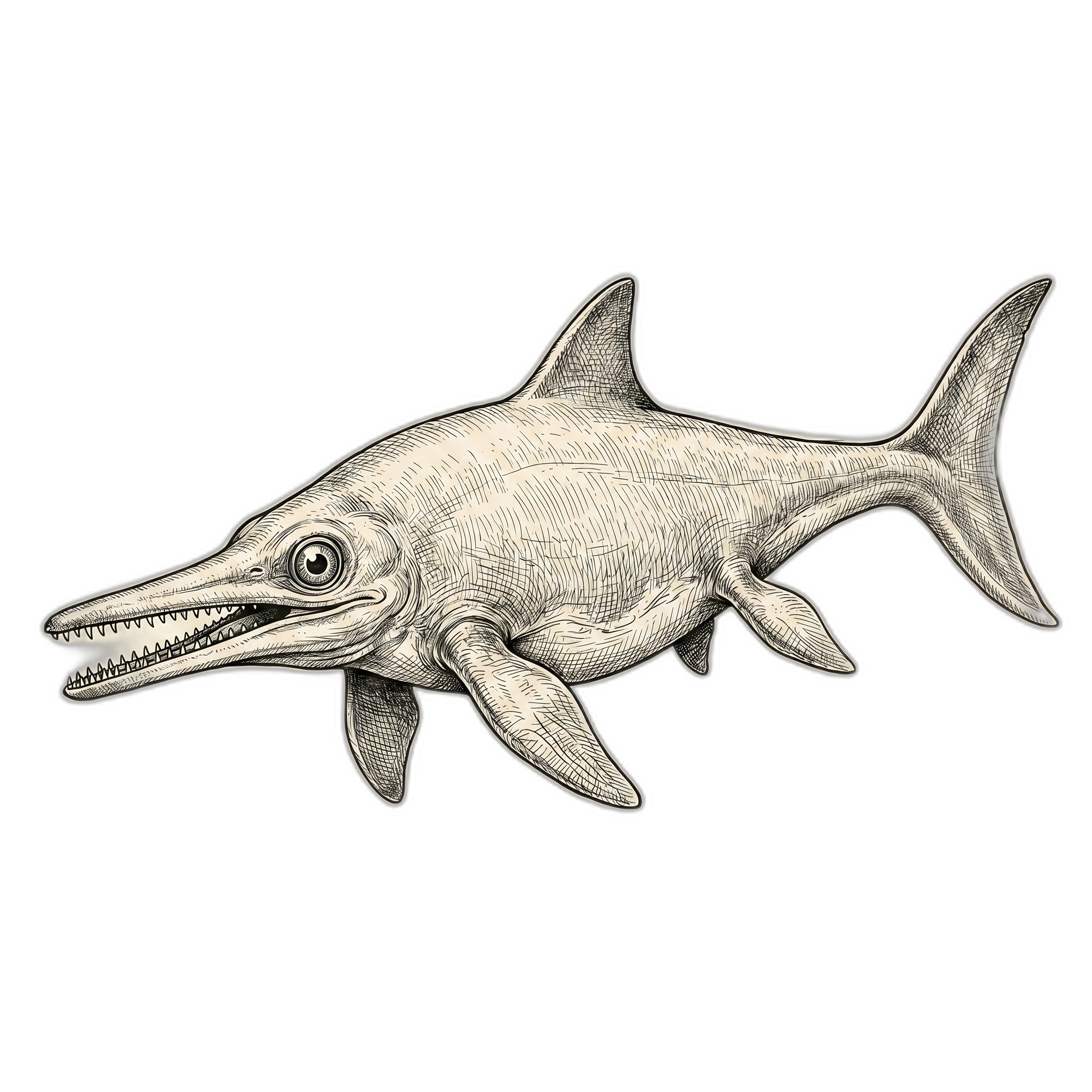
Ichthyosaurus
Ichthyosaurus communis
Both Plesiosaurus and Ichthyosaurus were marine reptiles in Early Jurassic seas of Europe, particularly well-documented from the Blue Lias Formation of England.
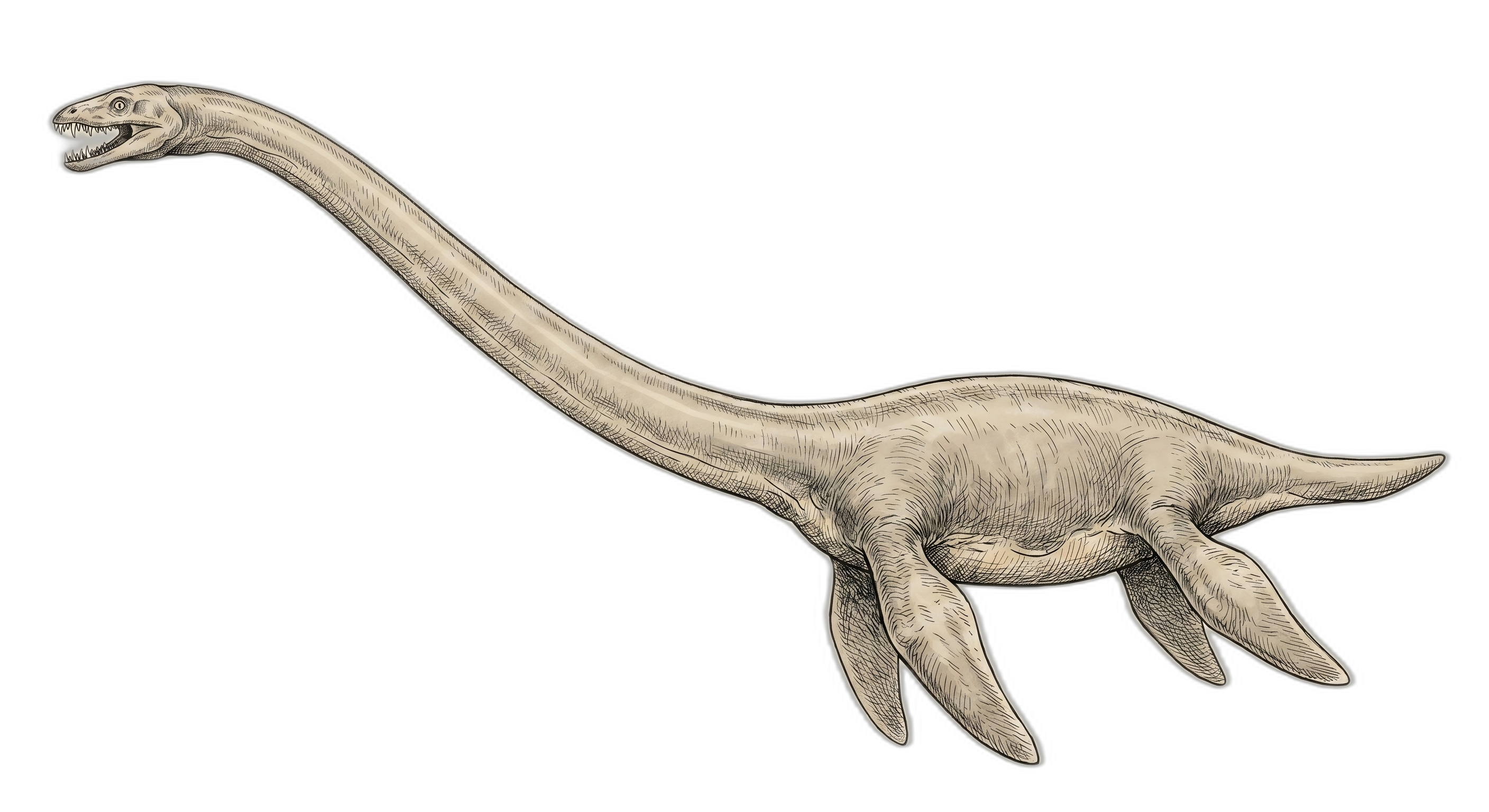
Elasmosaurus
Elasmosaurus platyurus
Plesiosaurus is the type genus of Plesiosauria, representing an early form of the long-necked plesiosaurian body plan.
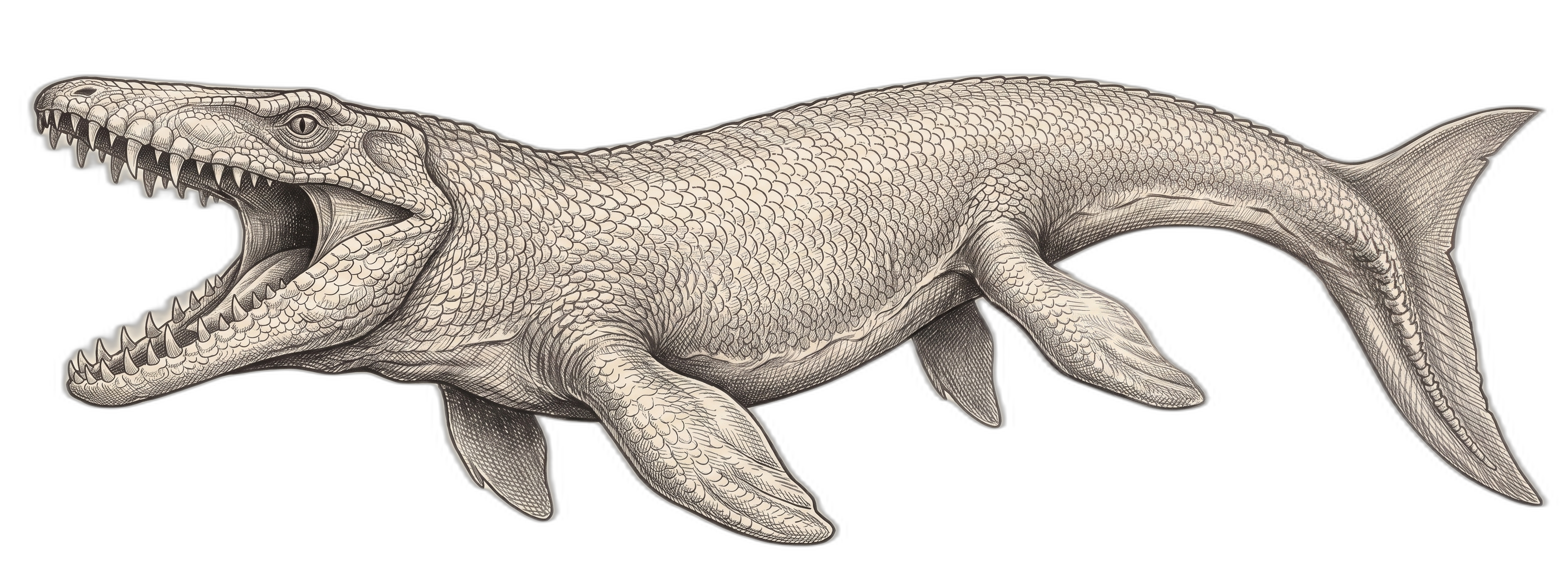
Mosasaurus
Mosasaurus hoffmannii
Both represent independent lineages of large marine reptiles that evolved from terrestrial ancestors to become apex marine predators.
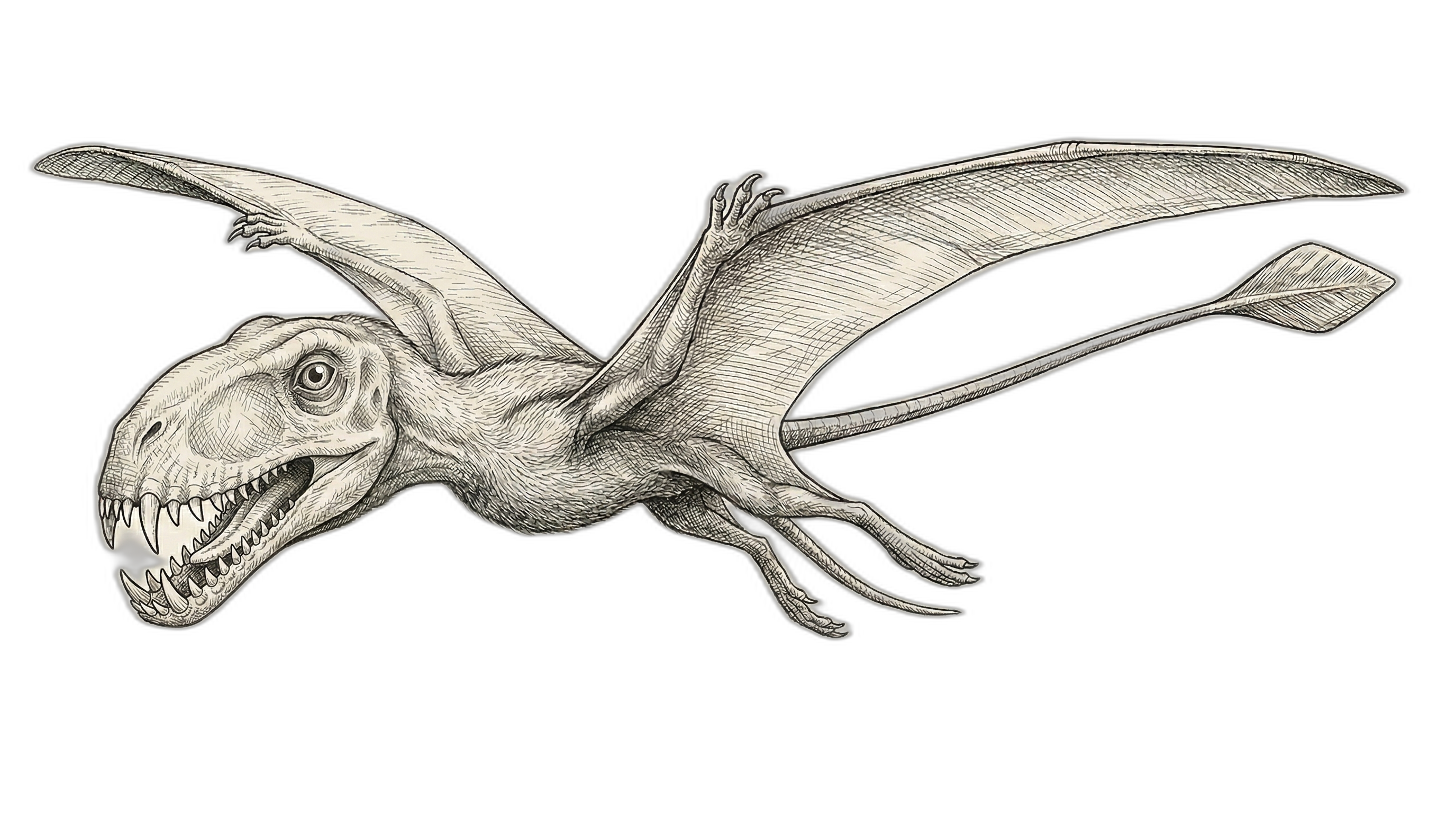
Dimorphodon
Dimorphodon macronyx
Dimorphodon is known from the same Blue Lias Formation (Sinemurian) of Dorset, England where Plesiosaurus specimens were discovered, representing the aerial fauna above the seas Plesiosaurus inhabited.
Sources & Citation
- Length estimates
- Conybeare 1824; complete specimens from Lias Formation
- Height estimates
- Body depth estimate from trunk dimensions; O'Keefe 2001
- Weight estimates
- Mass estimates based on body proportions; Motani 2002 methodology
- Speed estimates
- Biomechanical estimates from flipper morphology; Long et al. 2006