About
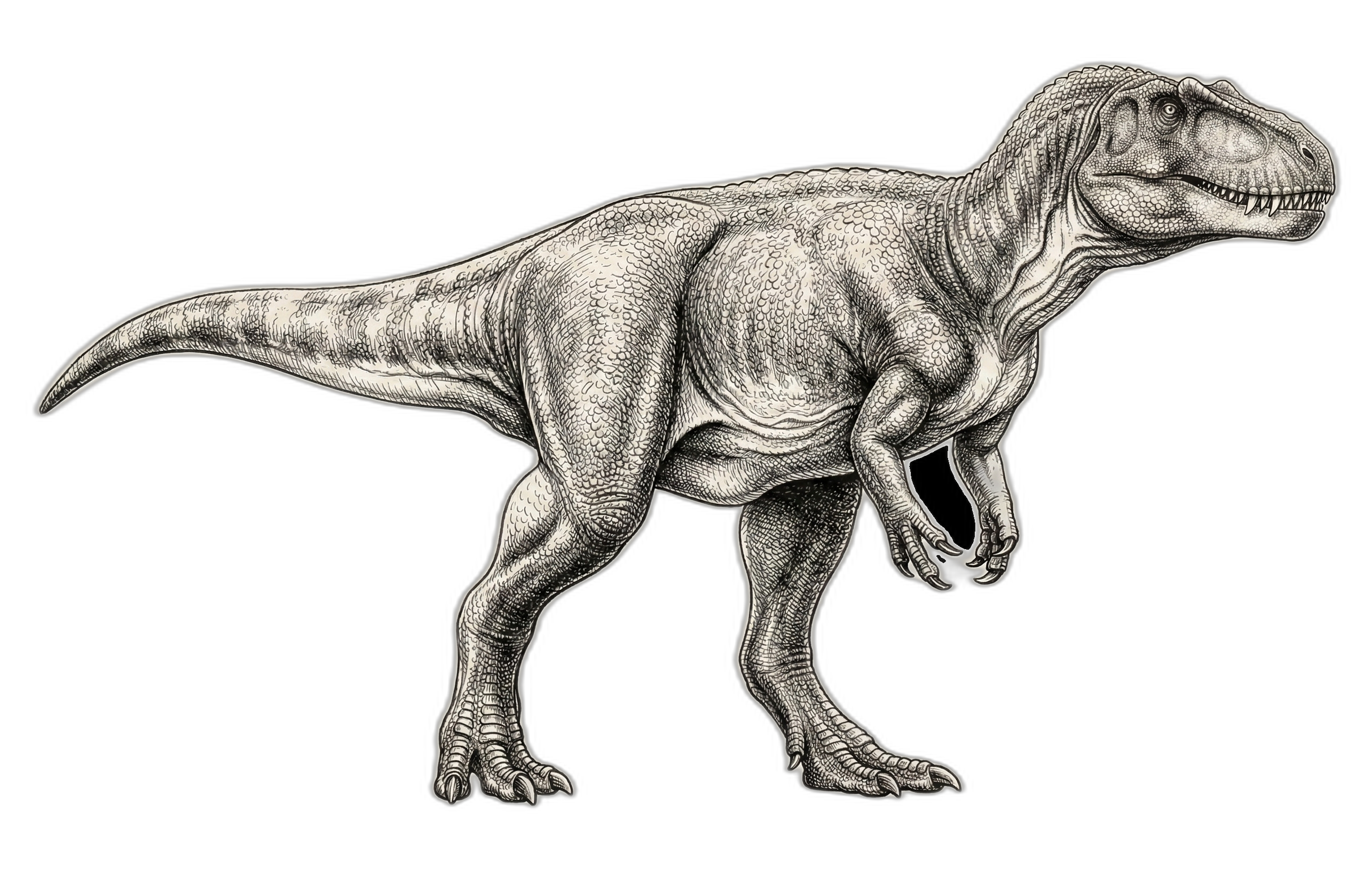
Megalosaurus holds an extraordinary place in scientific history as the very first dinosaur to receive a formal scientific name, described by William Buckland in 1824. This large prowled the subtropical forests and floodplains of what is now Oxfordshire, England, during the Middle Jurassic period, around 166 million years ago. As a powerful , it likely hunted the sauropods and ornithopods that shared its environment.
This carnivore was built for predation, with robust jaws lined with , blade-like teeth designed for slicing through flesh. Its strong hindlimbs supported a muscular body, while relatively short but powerful forelimbs ended in sharp claws. Though not as large as later giants like Allosaurus or Tyrannosaurus, Megalosaurus was still a formidable hunter of its time, capable of taking down substantial prey.
The discovery history of Megalosaurus is a fascinating chapter in paleontology. Fossils were actually found decades before Buckland's description—a partial was illustrated as early as 1676 and was initially interpreted as belonging to a giant human or biblical giant. Buckland recognized these bones as reptilian and coined the name meaning 'great lizard.' Ironically, for over a century afterward, Megalosaurus became a taxonomic 'wastebasket,' with theropod remains from around the world incorrectly assigned to it.
Today, only material from the Taynton Limestone Formation of Oxfordshire is considered true Megalosaurus bucklandii. The incomplete nature of the known fossils—primarily jaw fragments, , and limb bones—means that many aspects of its appearance remain uncertain, and the famous Victorian reconstructions showing it as a dragon-like beast were dramatically wrong.
Quick Facts
- Scientific name
- Megalosaurus bucklandii
- Group
- Theropod · Megalosauridae
- Lived
- Middle Jurassic, 168.3–166.1 million years ago
- Diet
- Carnivore
- Movement
- Walked on two legs
- Fossils found in
- Stonefield Slate / Taynton Limestone Formation, Oxfordshire, England
- Discovery credited to
- 1824, William Buckland
- Holotype
- OUM J13505 · Oxford University Museum of Natural History
- DinoVault record
- DVL-0086
Where Megalosaurus Roamed
During the Middle Jurassic, Megalosaurus bucklandii roamed the warm, subtropical islands of what is now southern England, part of a scattered archipelago positioned along the margins of the shallow Tethys Sea that divided the fragmenting supercontinent of Pangaea, where lush fern-covered floodplains and coastal lagoons provided rich hunting grounds for this apex predator.
Keep exploring the vault
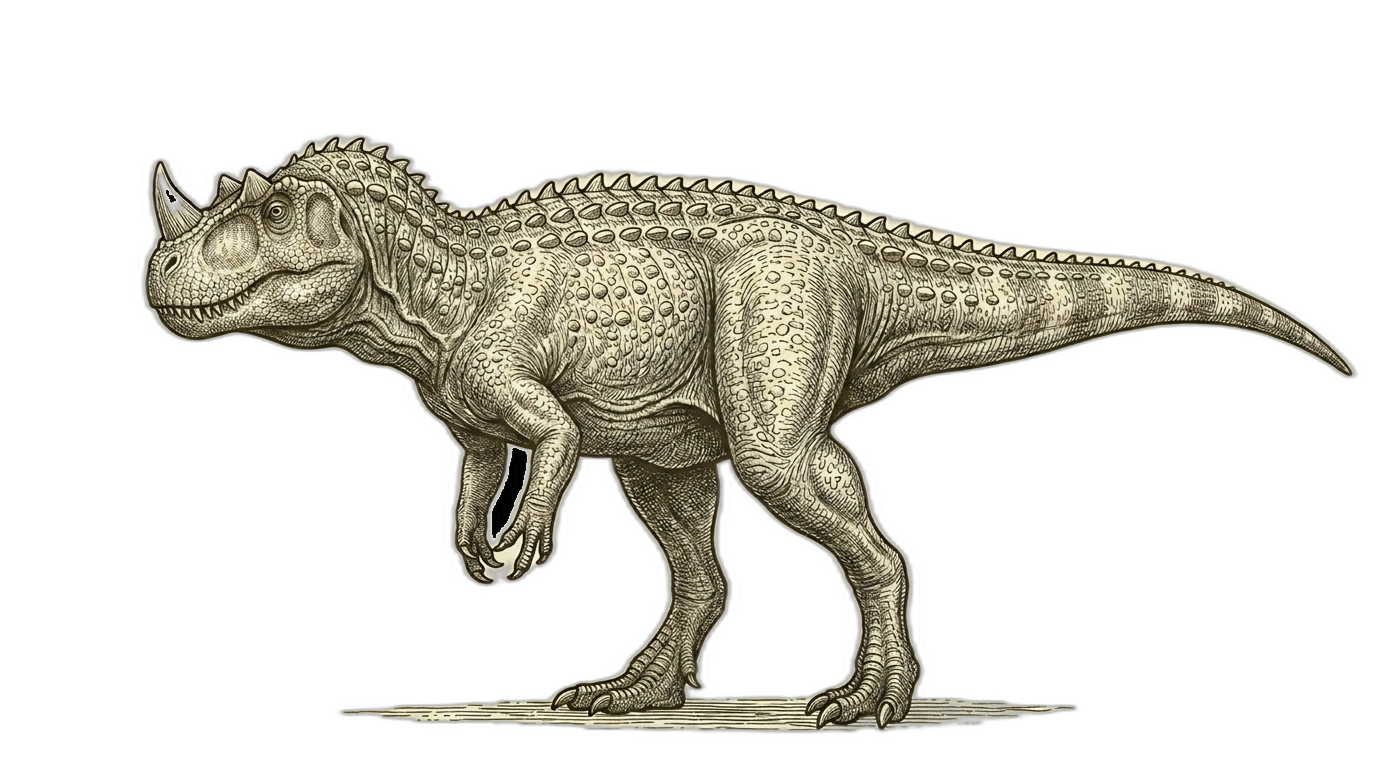
Ceratosaurus
Ceratosaurus nasicornis
Both are medium-sized theropod carnivores from the Jurassic period.
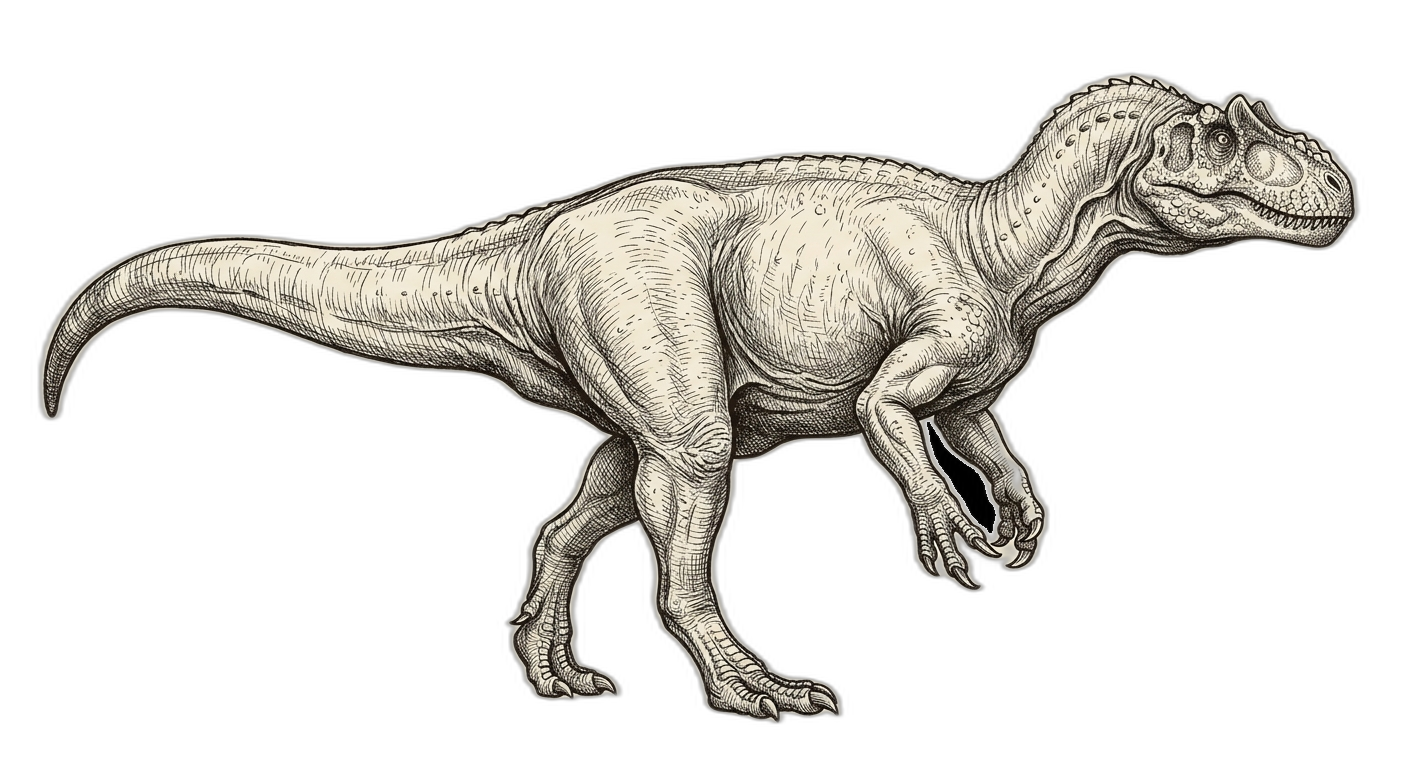
Allosaurus
Allosaurus fragilis
Both Megalosaurus and Allosaurus represent parallel evolution of large tetanuran theropod body plans in the Jurassic.
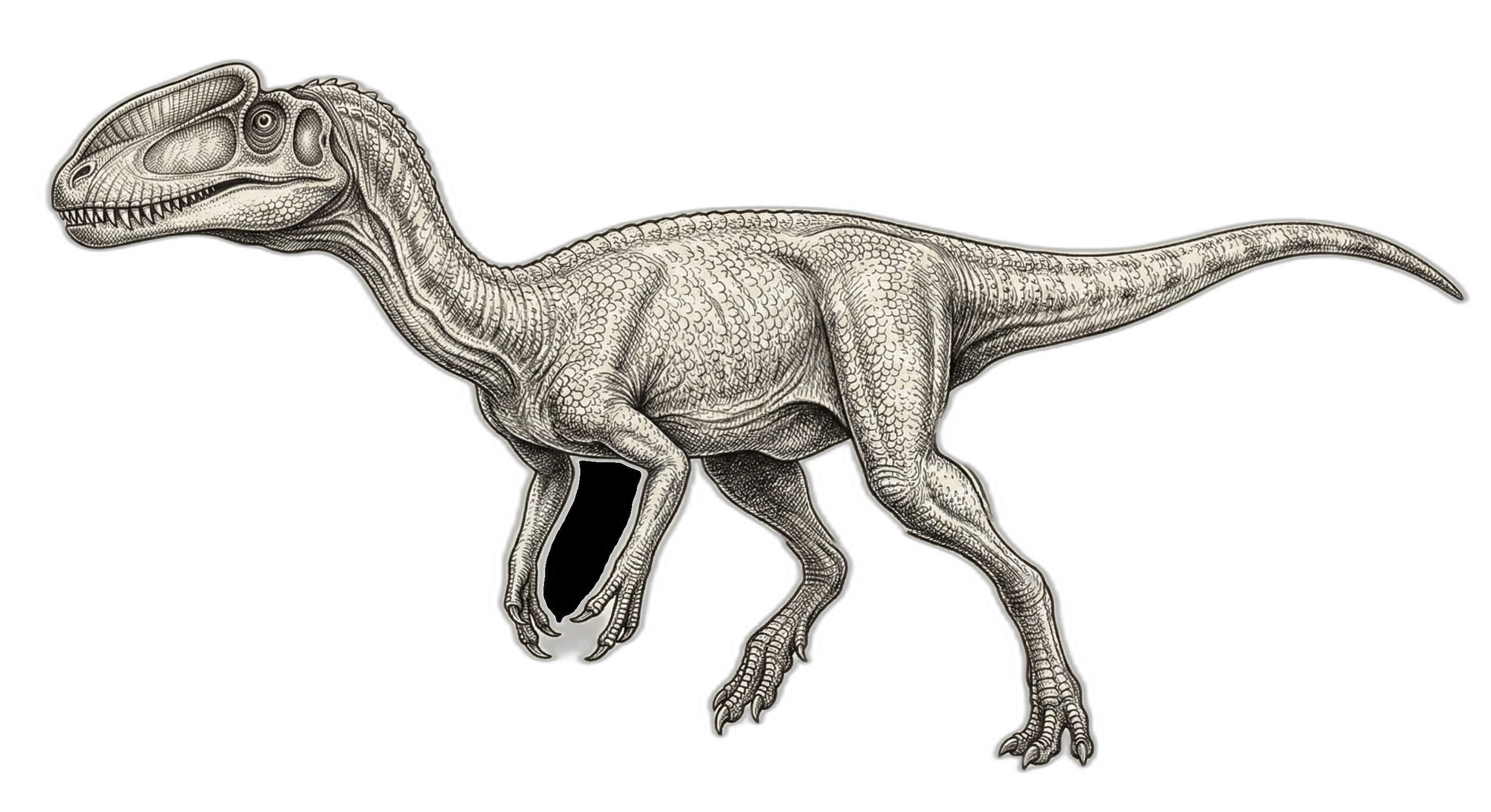
Monolophosaurus
Monolophosaurus jiangi
Both are Middle Jurassic tetanuran theropods that evolved cranial ornamentation and medium-to-large body sizes independently.
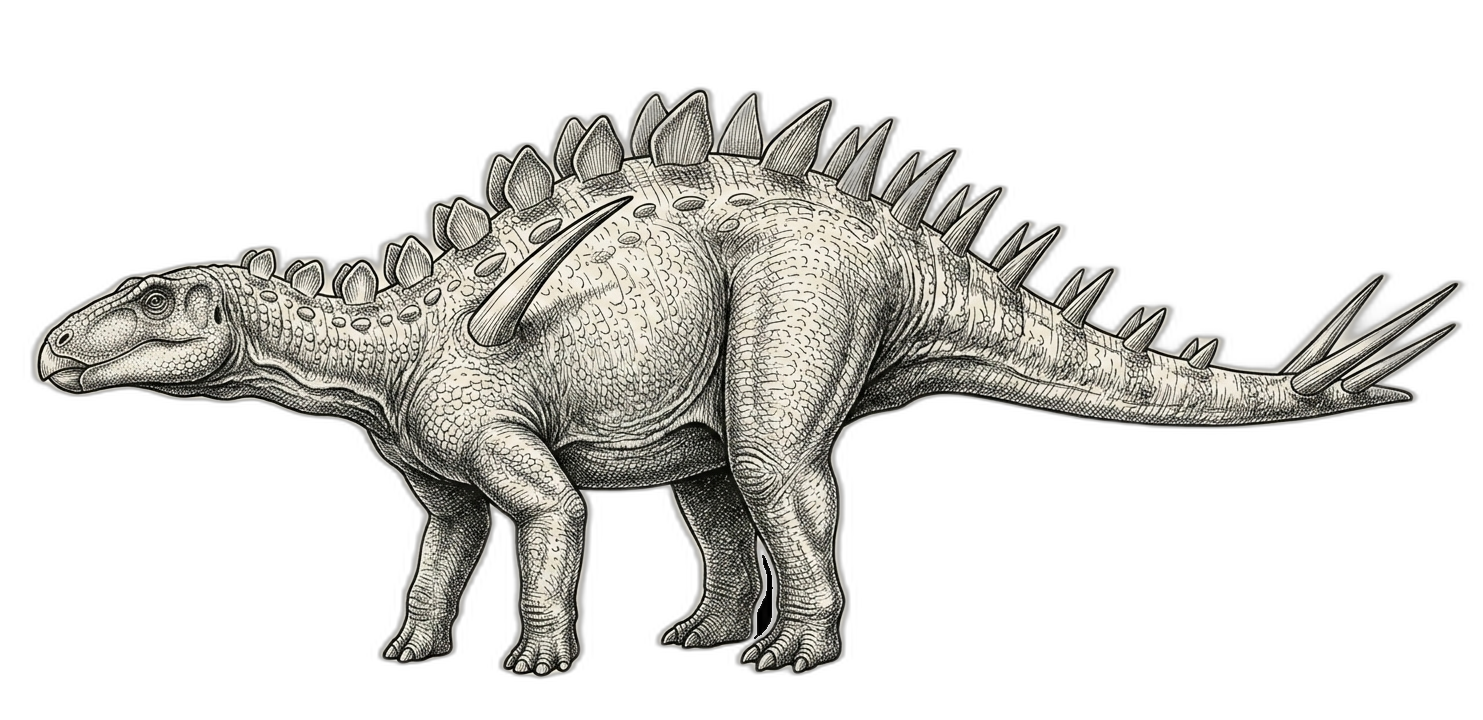
Huayangosaurus
Huayangosaurus taibaii
Huayangosaurus is a Middle Jurassic stegosaur, contemporary with Megalosaurus.
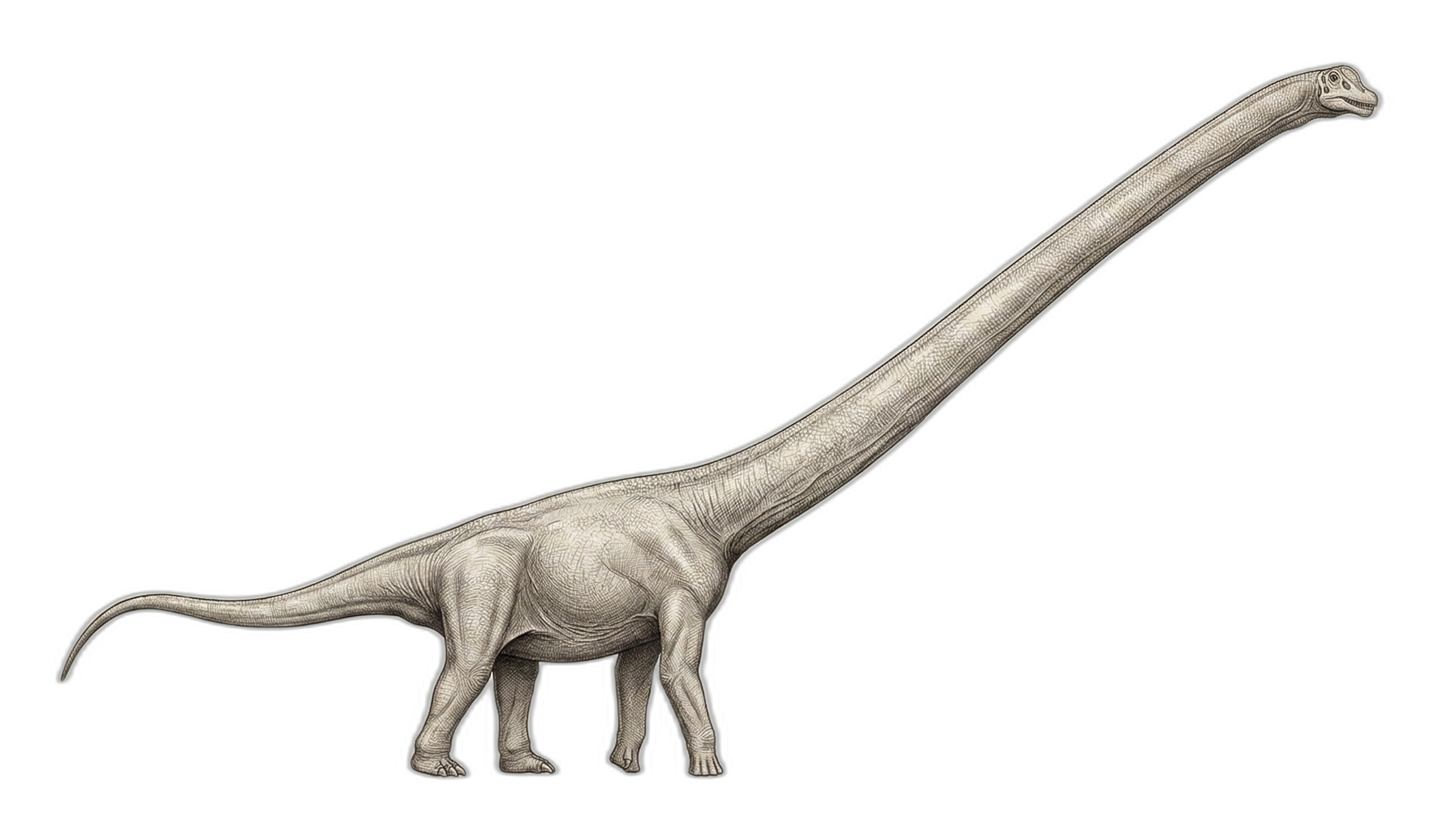
Mamenchisaurus
Mamenchisaurus sinocanadorum
Mamenchisaurus is a Middle-to-Late Jurassic sauropod that represents the type of large herbivore fauna that coexisted with megalosaurid predators during this period, illustrating the ecological context of Megalosaurus as a predator of large prey.
Sources & Citation
- Length estimates
- Benson 2010; fragmentary material limits precision
- Height estimates
- Estimated from limb proportions; Benson 2010
- Weight estimates
- Benson et al. 2014; estimates vary due to incomplete skeleton
- Speed estimates
- Inferred from megalosaurid limb proportions; no direct evidence