About
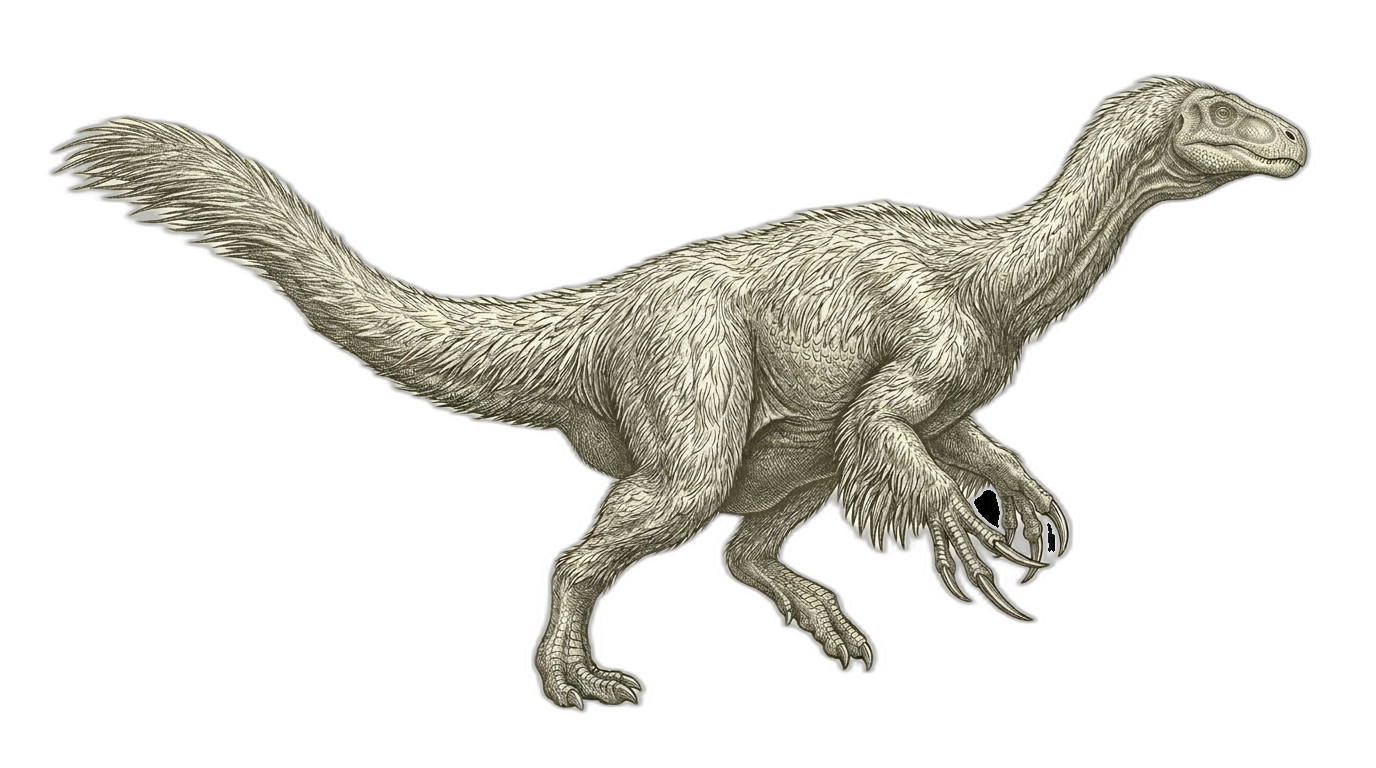
Therizinosaurus is one of the strangest dinosaurs ever discovered, a towering creature that looked like something assembled from spare parts. Despite its fearsome appearance and massive claws, this Late Cretaceous giant was almost certainly a herbivore, using those extraordinary appendages to pull down tree branches rather than to attack prey. It belonged to the therizinosaur family, a peculiar group of theropods that abandoned the carnivorous lifestyle of their ancestors.
The first fossils were discovered in 1948 by a Soviet-Mongolian expedition in the Gobi Desert of Mongolia. When paleontologist Evgeny Maleev described them in 1954, he initially thought the enormous claws belonged to a giant turtle-like reptile — hence the species name 'cheloniformis,' meaning 'turtle-formed.' It wasn't until additional limb bones were found in the 1960s through 1980s that scientists realized they were dealing with a dinosaur.
Therizinosaurus remains frustratingly incomplete. No skull has ever been found, and most of what we know about its full body plan comes from better-preserved relatives like Nothronychus and Erlikosaurus. Based on these relatives, Therizinosaurus likely had a small head, long neck, pot-bellied body for digesting plant material, and stood upright on powerful hind legs.
The sheer size of this animal is remarkable — estimates suggest it could reach 9 to 10 meters in length, making it one of the largest theropods and certainly the largest of its bizarre family. Those iconic claws, measuring up to 70-100 centimeters along the outer curve, may have served multiple purposes: defense against predators like Tarbosaurus, competing for mates, or stripping vegetation from trees much like a giant ground sloth.
Quick Facts
- Scientific name
- Therizinosaurus cheloniformis
- Group
- Theropod · Therizinosauridae
- Lived
- Late Cretaceous, 72.2–66 million years ago
- Diet
- Herbivore
- Movement
- Walked on two legs
- Fossils found in
- Nemegt Formation (Ömnögovi Province, Mongolia)
- Discovery credited to
- 1948, Soviet-Mongolian Paleontological Expedition
- Holotype
- PIN 551-483 · Paleontological Institute, Russian Academy of Sciences, Moscow
- DinoVault record
- DVL-0136
Where fossils were found
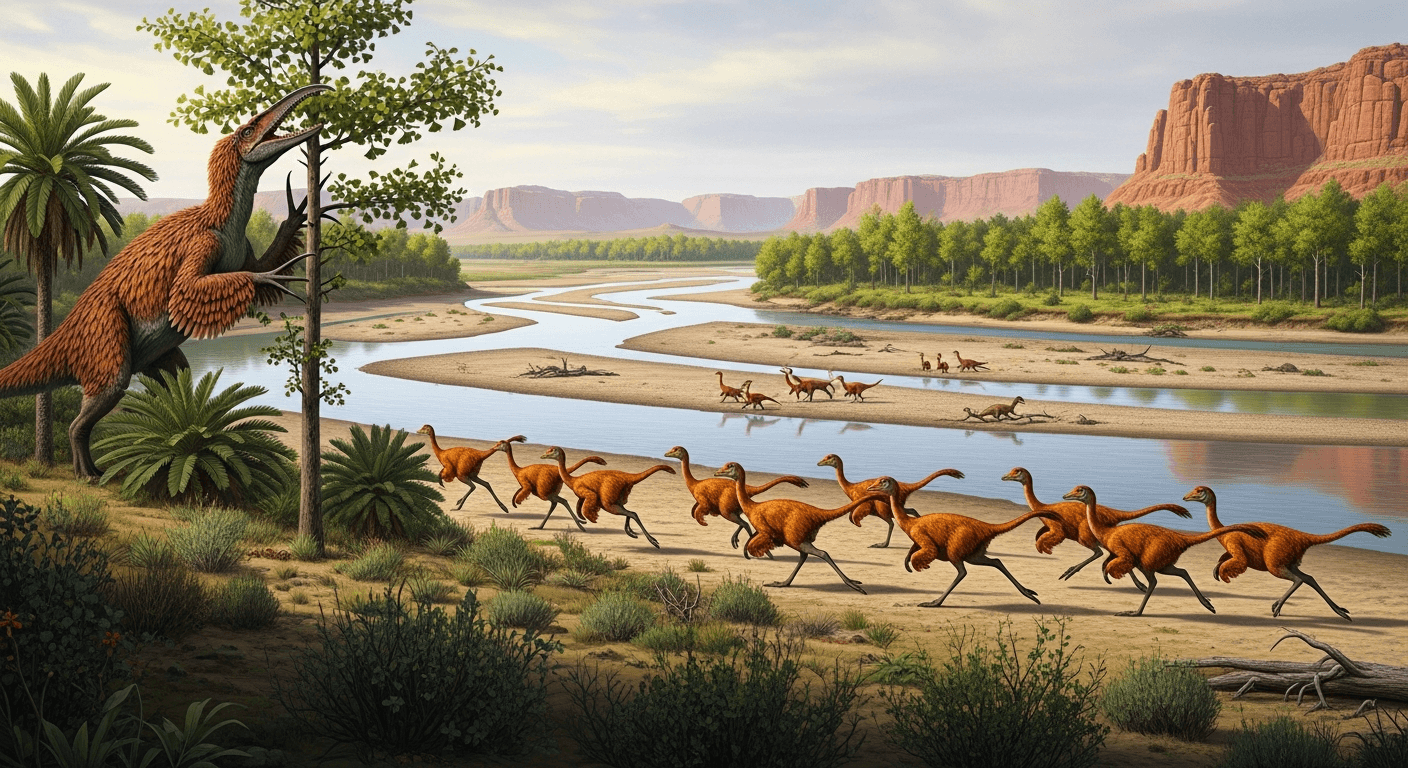
Nemegt Formation
Ömnögovi Province · Mongolia
72.2–66 million years ago(6.2m year span)
Where Therizinosaurus Roamed
During the late Cretaceous period, *Therizinosaurus cheloniformis* inhabited the ancient landmass of Laurasia in what is now the Nemegt Formation of Mongolia, a semi-arid floodplain environment characterized by meandering rivers, seasonal wetlands, and sparse vegetation that bordered the shrinking remnants of the great Tethys Sea to the south.
Keep exploring the vault
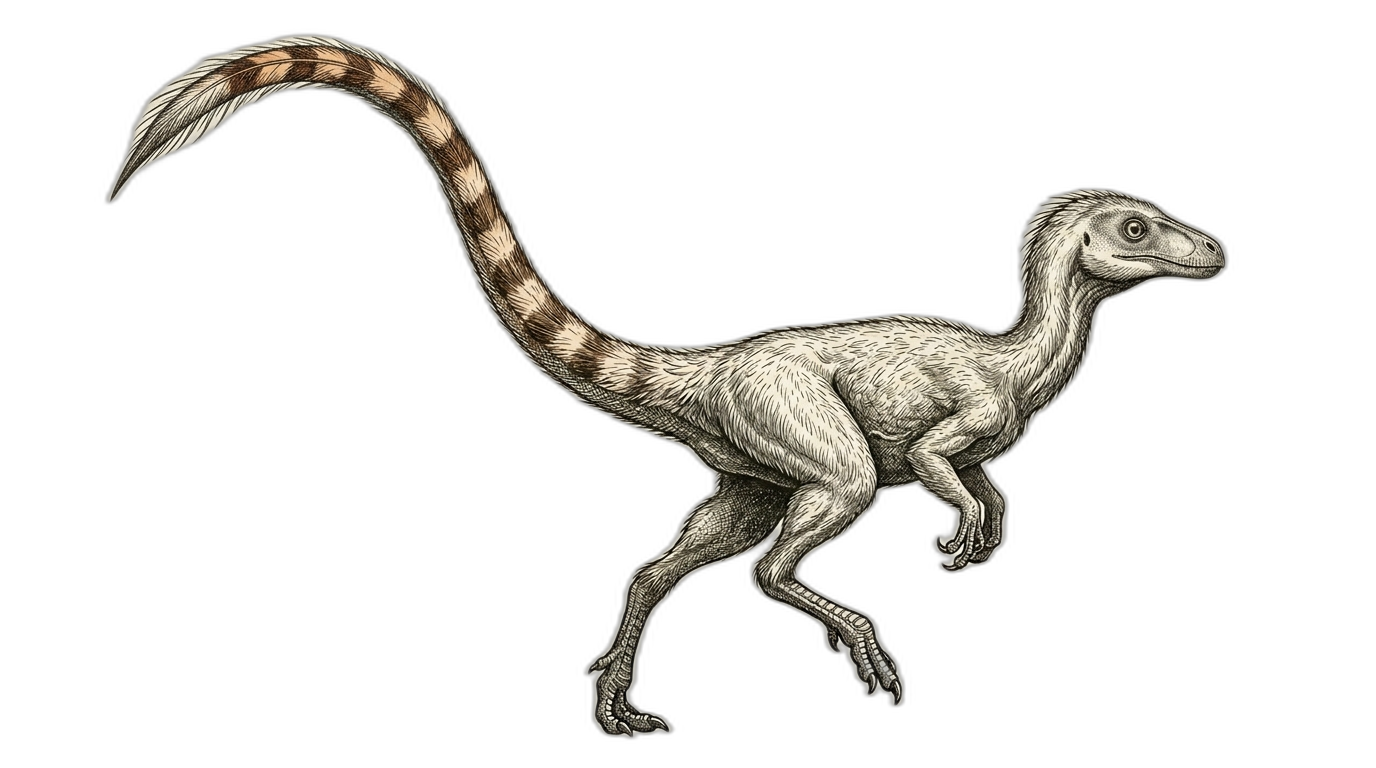
Sinosauropteryx
Sinosauropteryx prima
Both represent feathered theropods from Asia exploring non-predatory or alternative ecological niches.
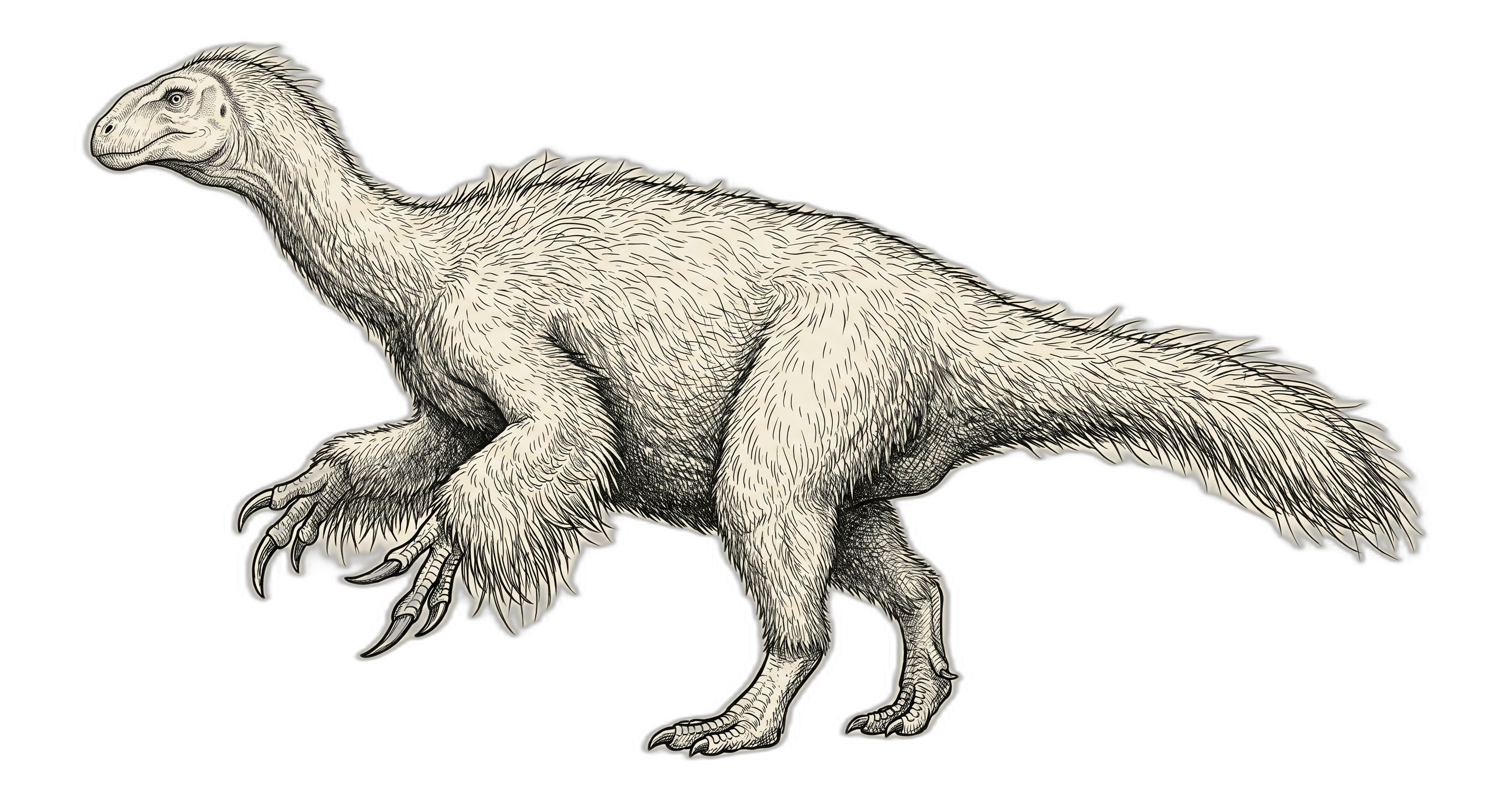
Beipiao Lizard
Beipiaosaurus inexpectus
Same family: Therizinosauridae
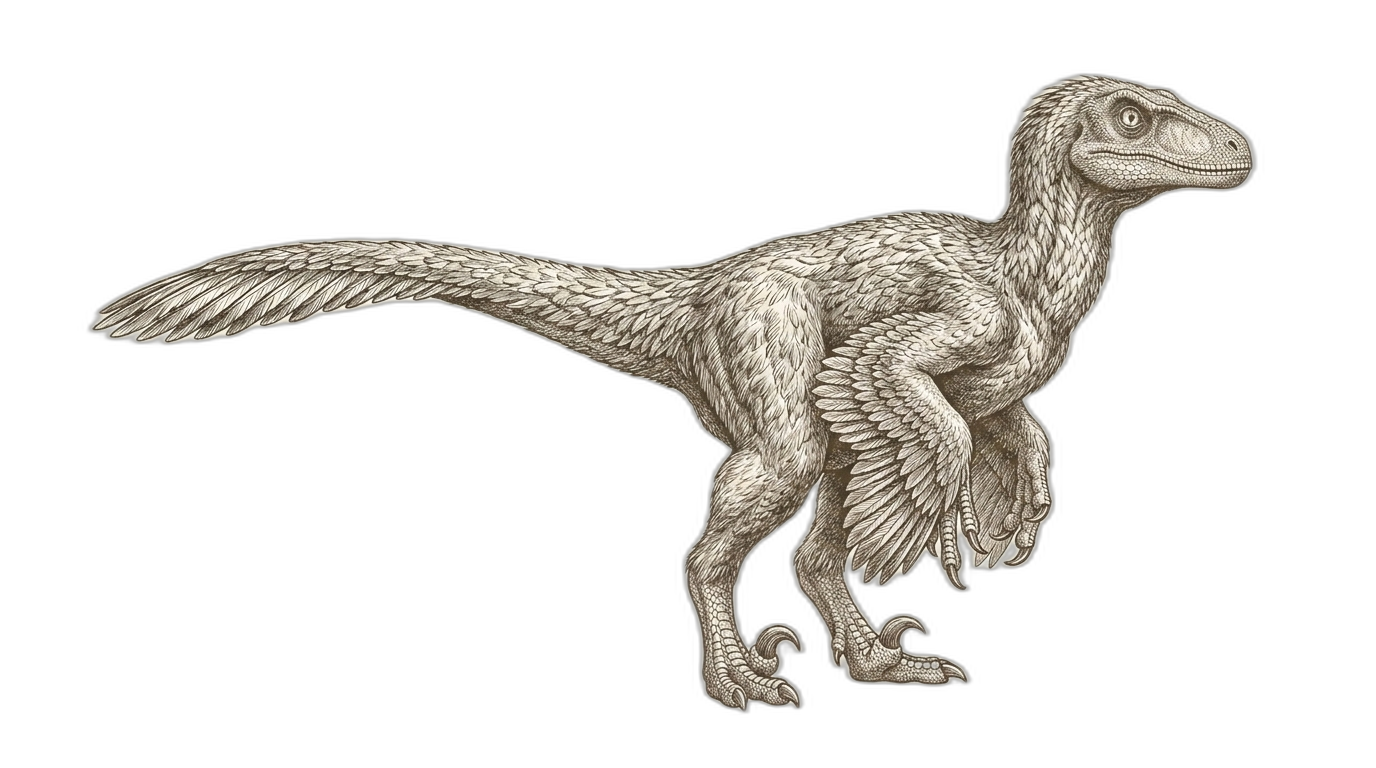
Velociraptor
Velociraptor mongoliensis
Both Therizinosaurus and Velociraptor are known from the Nemegt Formation of Mongolia, representing the same Late Cretaceous ecosystem approximately 70 million years ago.
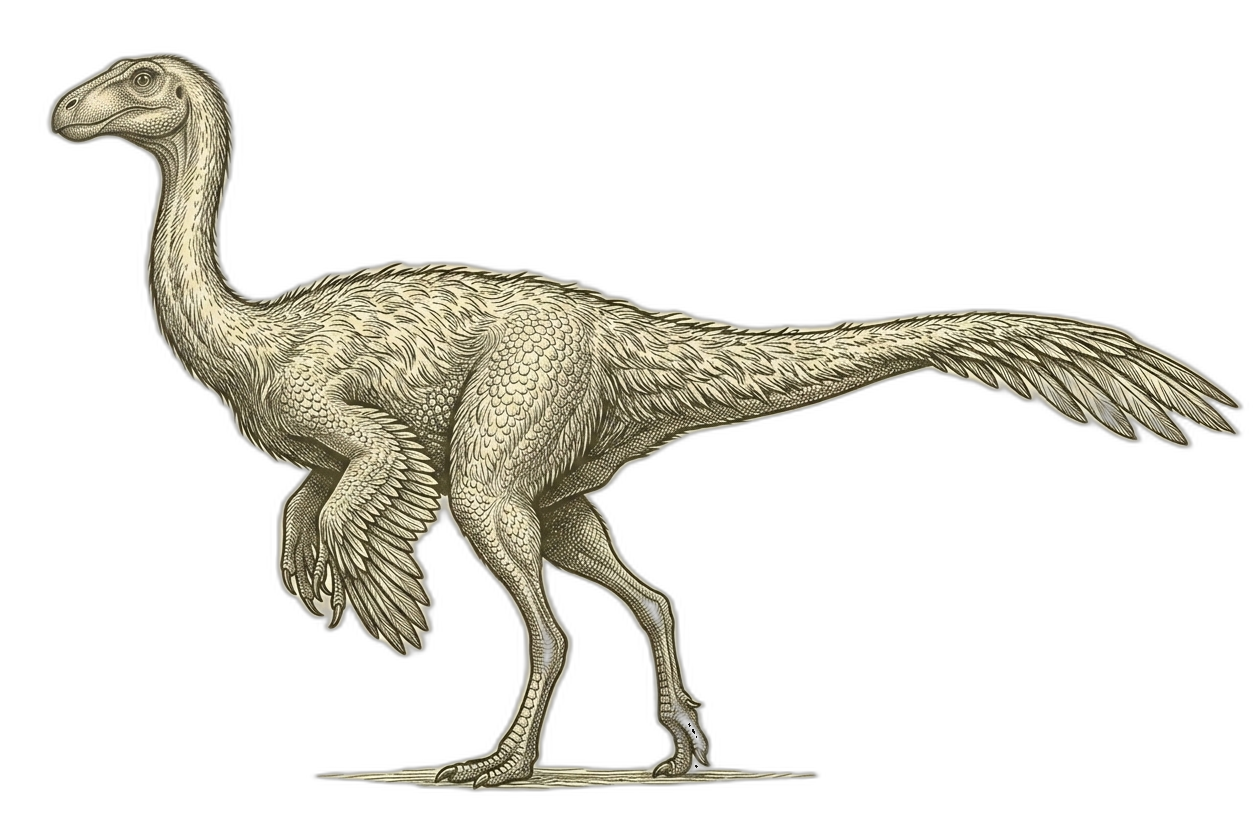
Gallimimus
Gallimimus bullatus
Gallimimus and Therizinosaurus both inhabited the Nemegt Formation of Mongolia during the Late Cretaceous, sharing the same paleoenvironment.
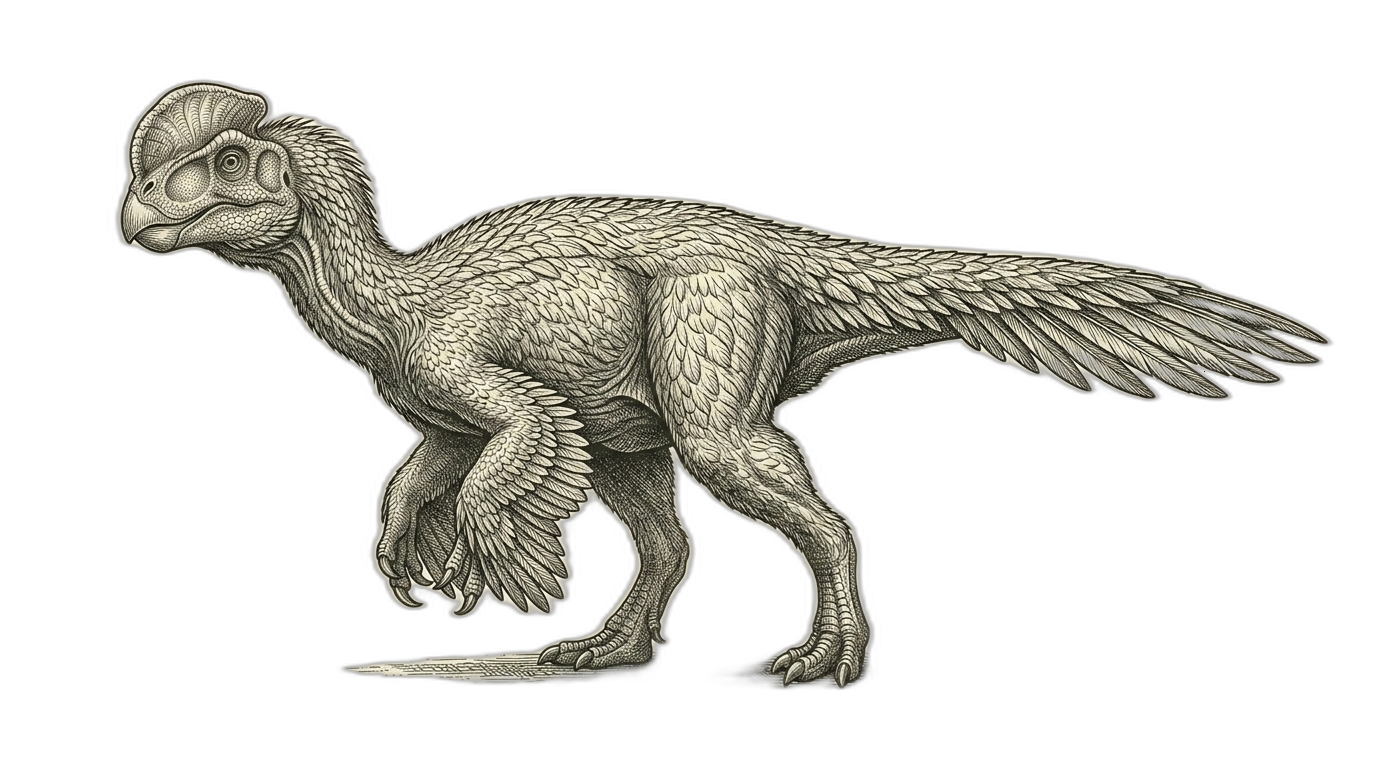
Oviraptor
Oviraptor philoceratops
Oviraptor and Therizinosaurus co-occurred in the Nemegt Formation ecosystem of Late Cretaceous Mongolia.
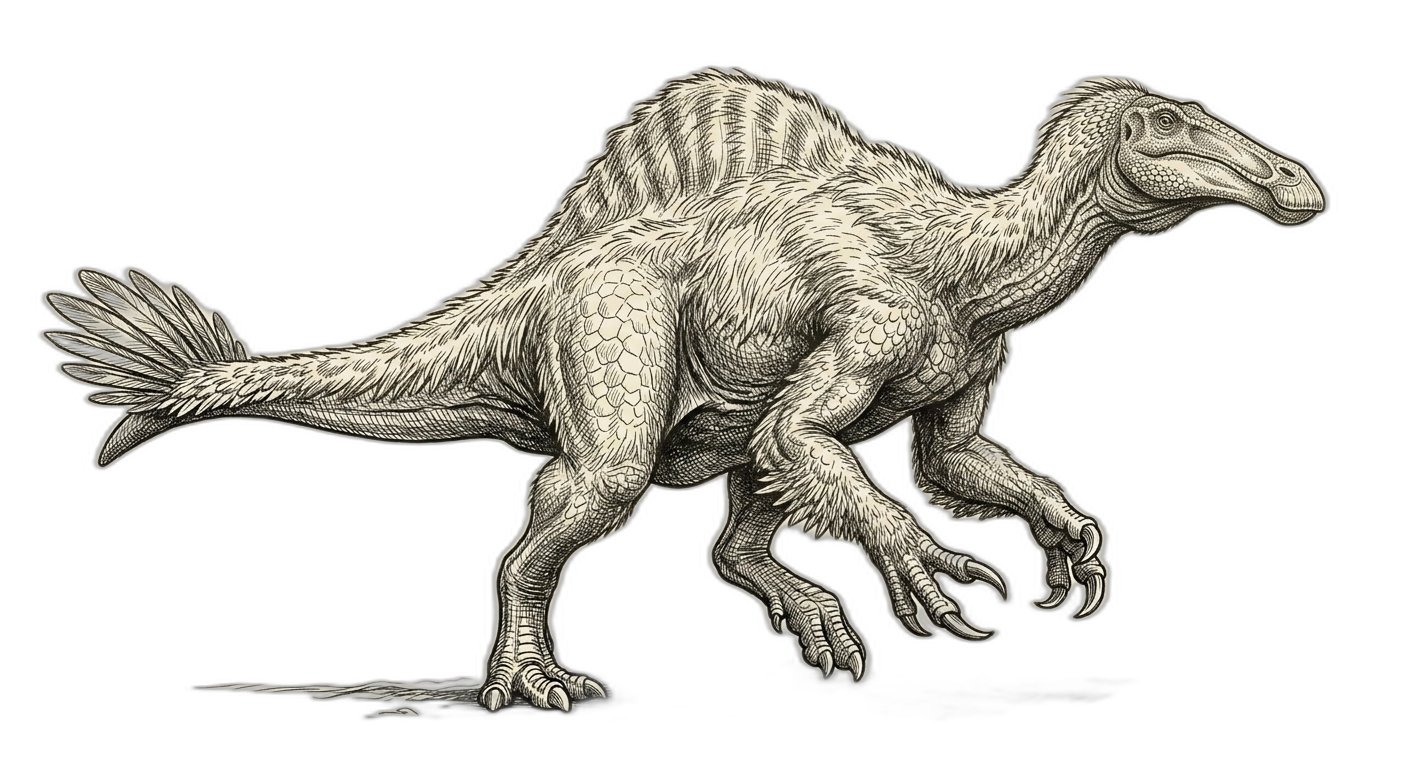
Deinocheirus
Deinocheirus mirificus
Both giant theropods coexisted in the Nemegt Formation.
Sources & Citation
- Length estimates
- Lautenschlager 2014; scaled from related therizinosaurids
- Height estimates
- Estimated from body proportions of related taxa; Zanno 2010
- Weight estimates
- Paul 2010; estimates vary widely due to incomplete remains
- Speed estimates
- Inferred from body proportions; no direct evidence