Saurischia — Theropoda — Coelurosauria
Tyrannosaurs
83–66 Ma
6
vault species
17
million years
What is a Tyrannosaurid?
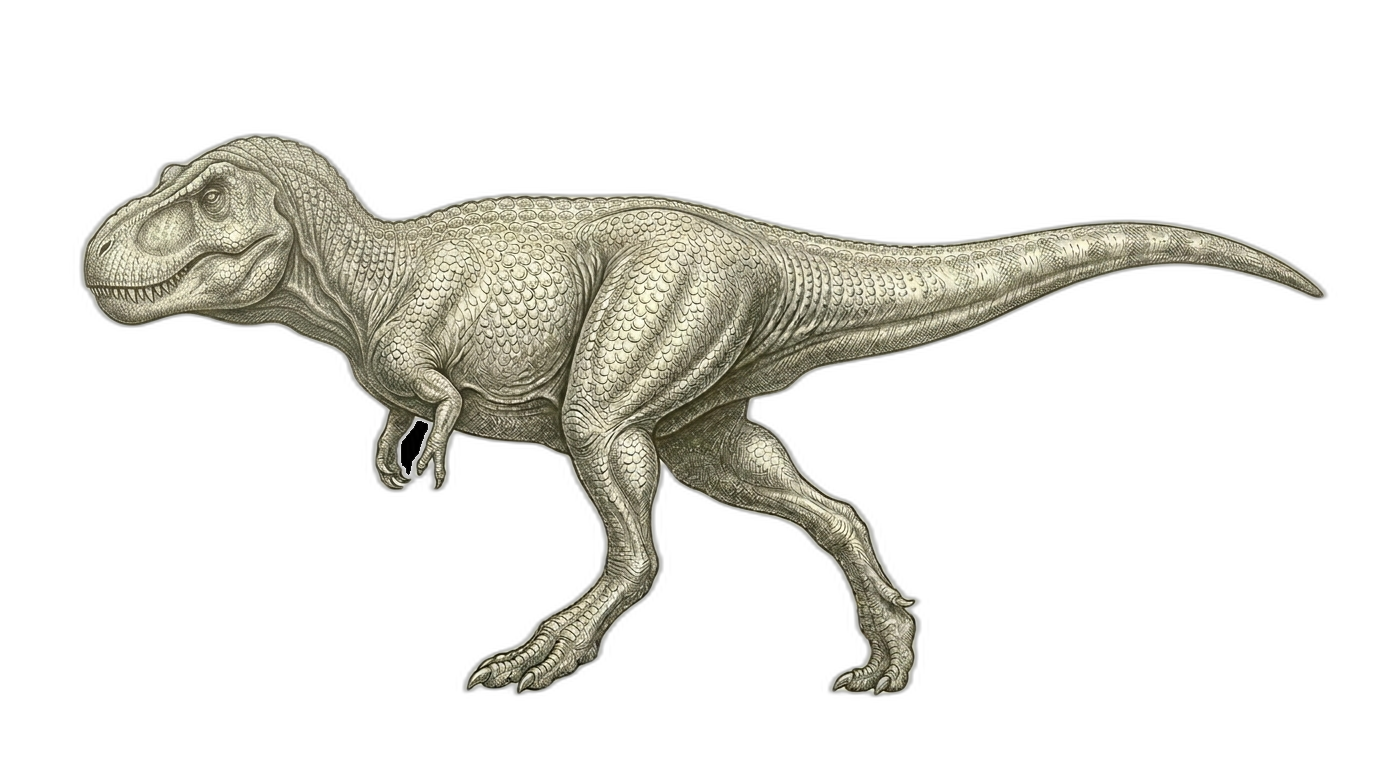
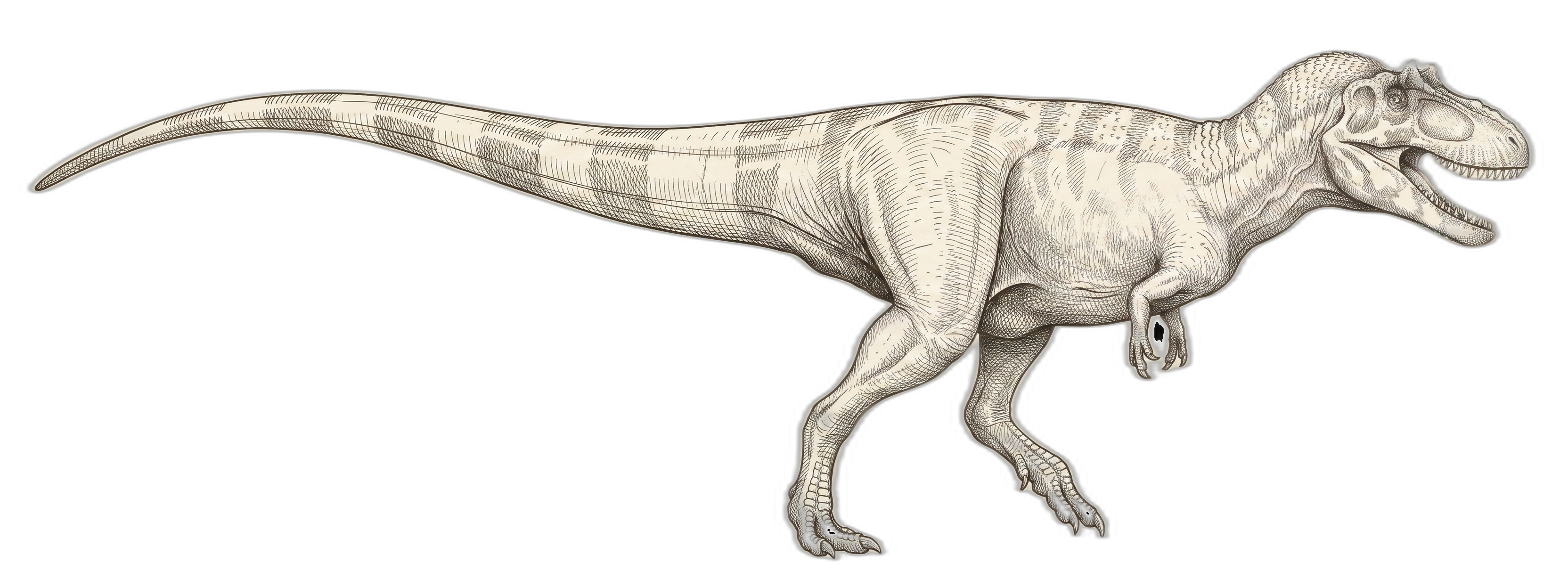
Tyrannosauridae is the terminal family of the tyrannosaur lineage — large-bodied, short-armed apex predators of the Late Cretaceous of Laurasia. Defined by massive skulls with bone-crushing teeth, binocular vision, and highly reduced forelimbs, they are the most biomechanically studied large predators in the fossil record.
Family duration
~83–66 Ma (17 million years)
Largest known
T. rex — up to ~9 m, ~9 tonnes
Bite force
~35,000 N — strongest of any land animal
Arm reduction
Forelimbs ~1 m long, non-functional for prey capture
Ancestry
Descended from feathered coelurosaurs, ~165 Ma
Evolution & History
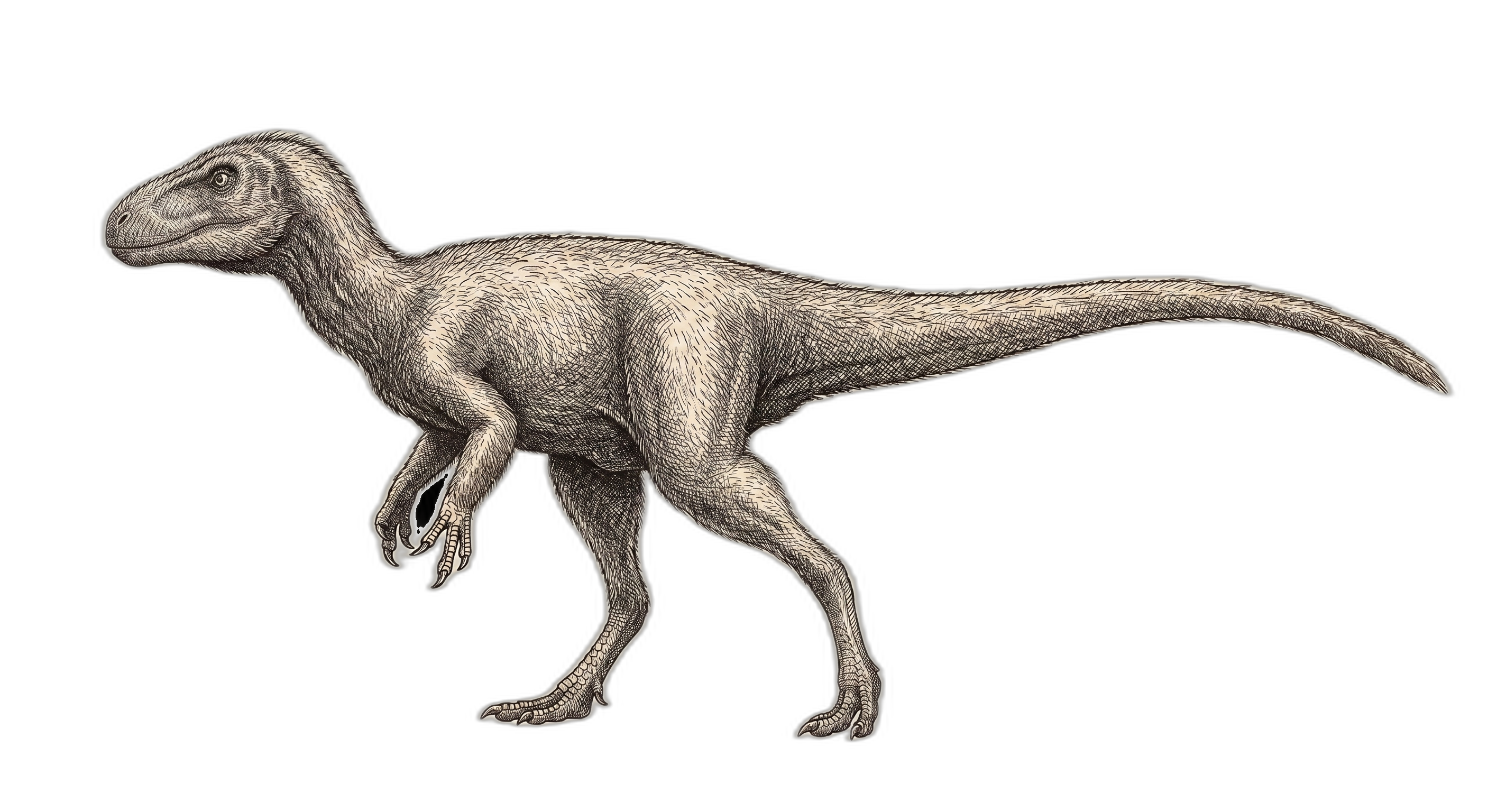
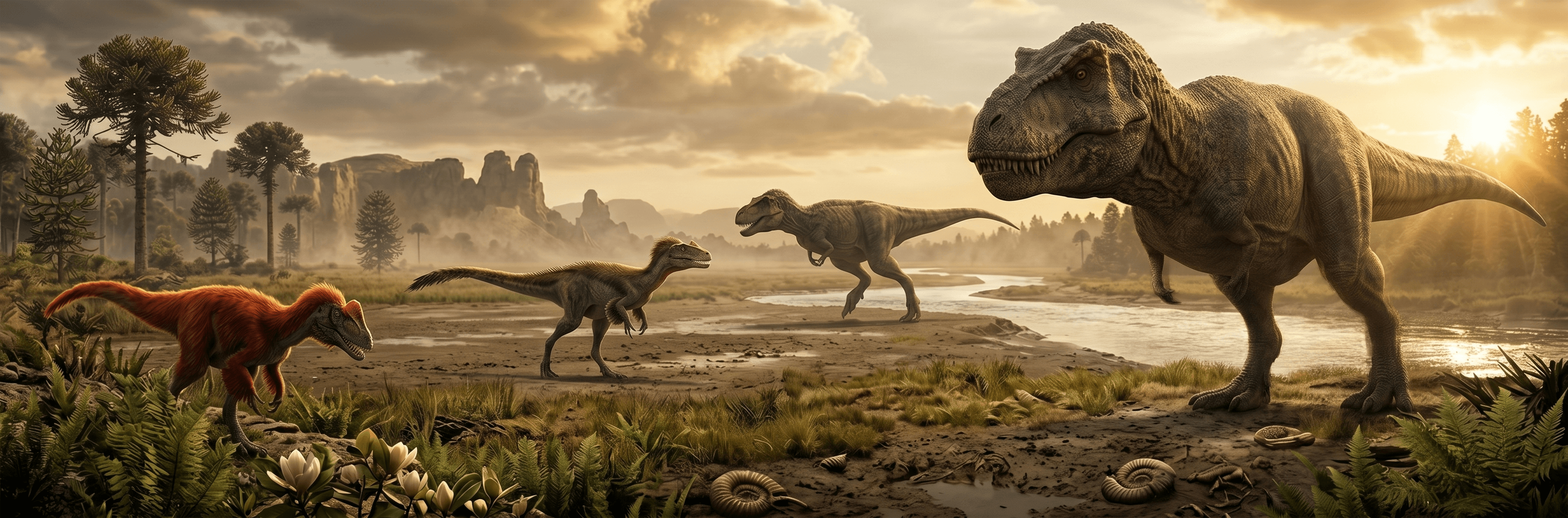
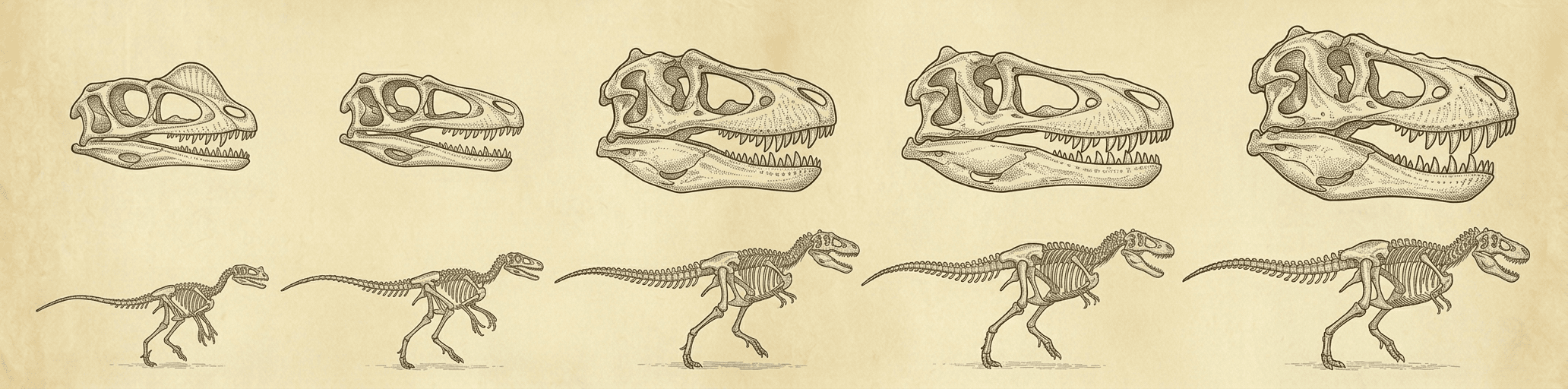
The tyrannosaurid family represents the culmination of 100 million years of tyrannosaur evolution. Their ancestors began small and feathered in the Early Cretaceous — Dilong and Yutyrannus in China show the group starting as modestly sized predators with insulating plumage. The transition to giant body size happened rapidly in the latest Cretaceous, likely after the extinction of the carcharodontosaurs that had previously dominated large-predator niches in the northern hemisphere.
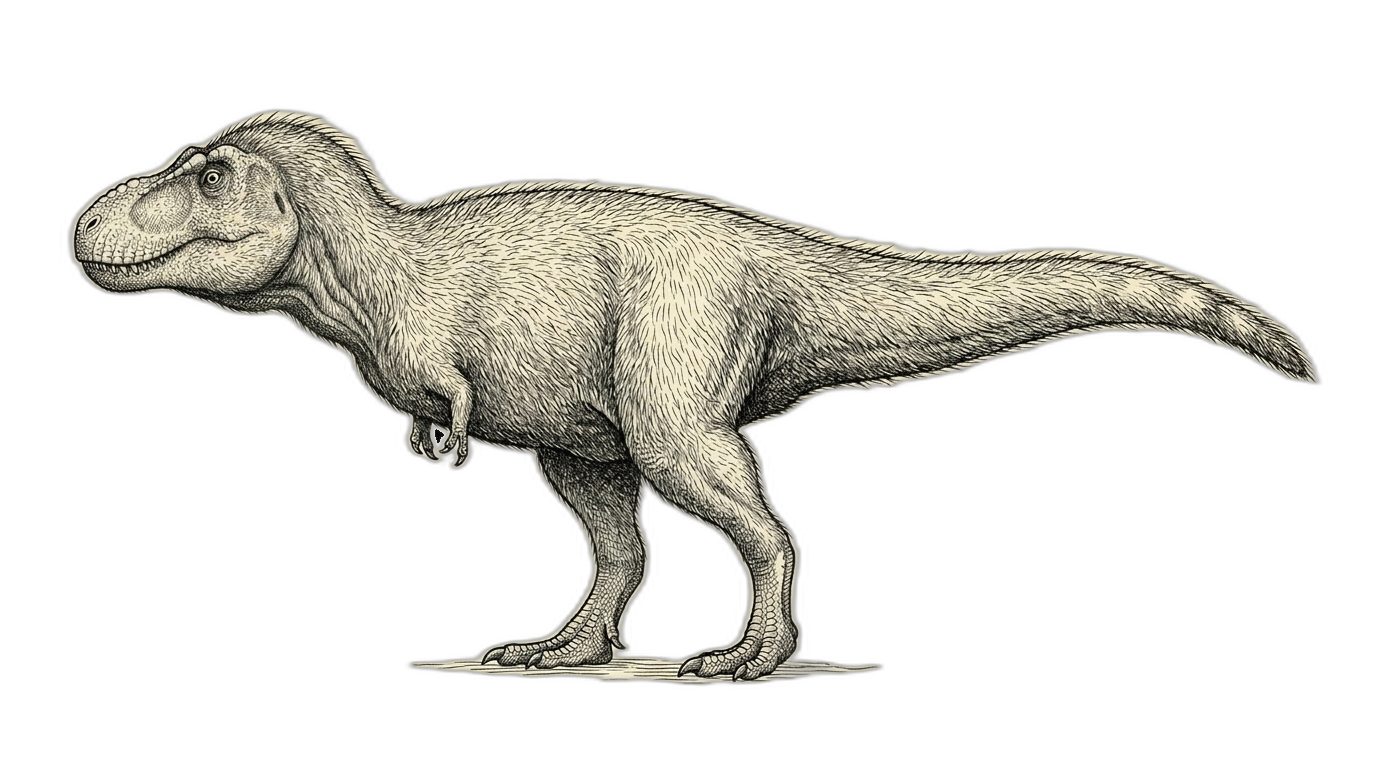
True tyrannosaurids are defined by extreme cranial specialization. The skull of Tyrannosaurus rex was not just large — it was built to generate and withstand bite forces exceeding 35,000 newtons, enough to crush bone. CT scans reveal an olfactory bulb proportionally larger than any other theropod, suggesting tyrannosaurs tracked prey primarily by scent. The famous tiny arms remain biomechanically puzzling: they were too short for prey capture but heavily muscled, possibly used for gripping during mating.
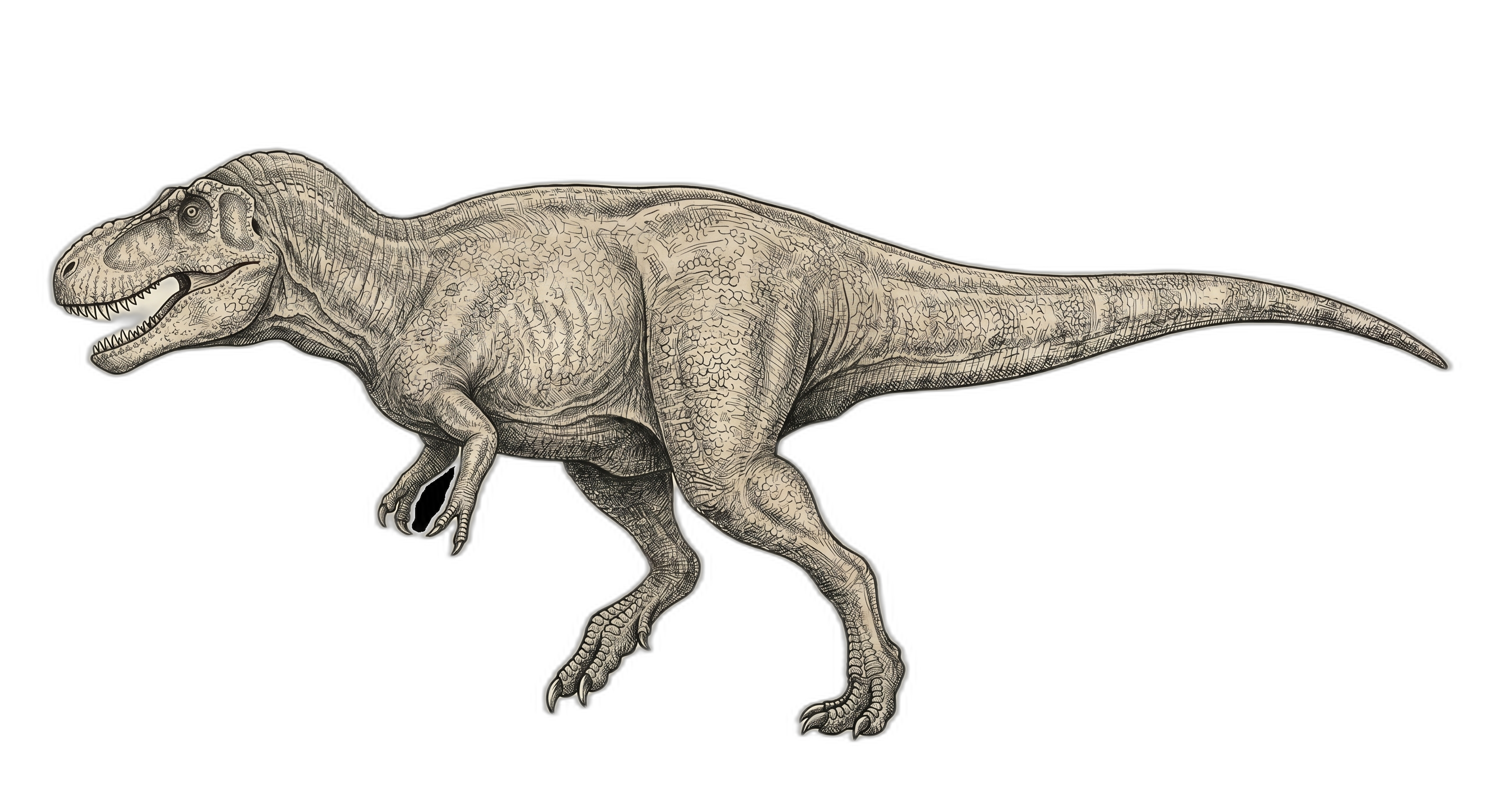
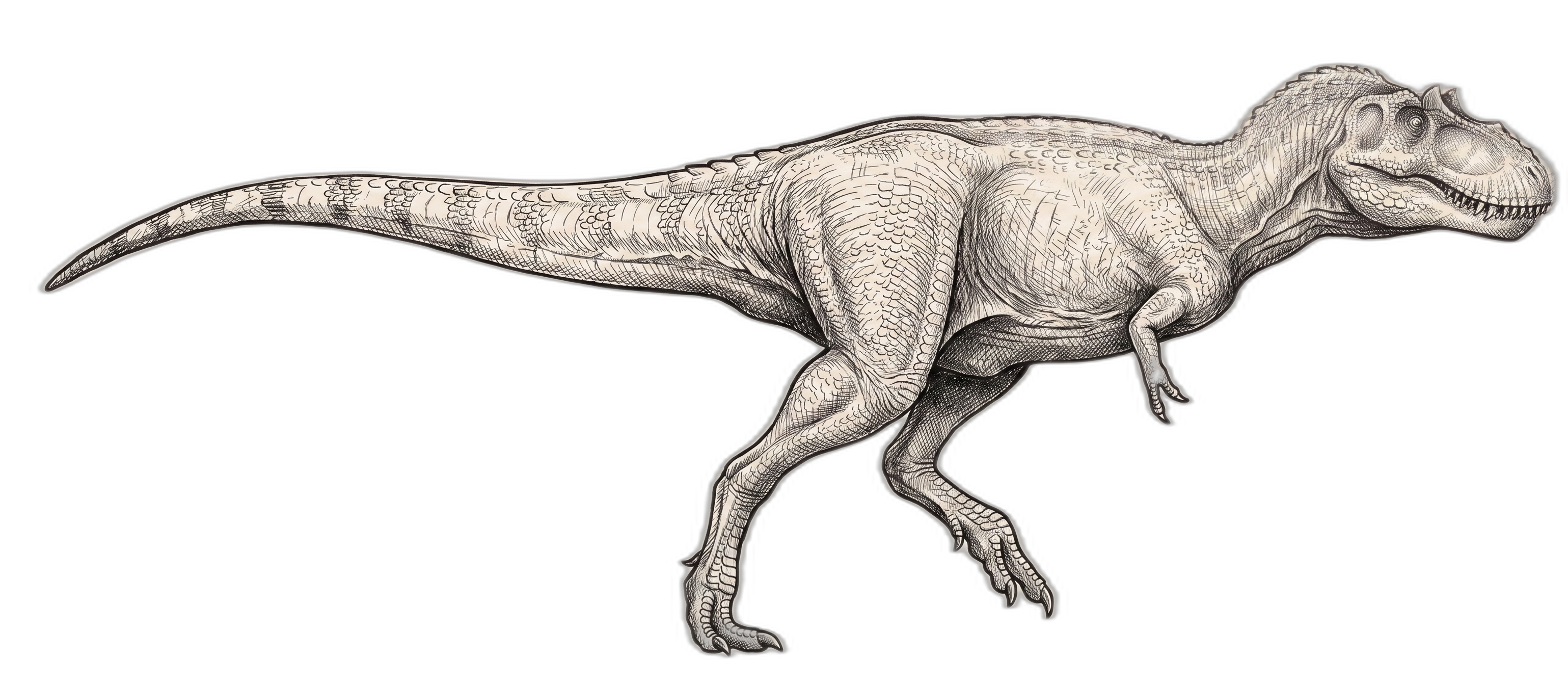
The family diversified across the Late Cretaceous of North America and Asia, with distinct northern and southern faunas. Albertosaurus and Gorgosaurus formed pack-hunting assemblages in Alberta; Tarbosaurus ruled the Nemegt basin of Mongolia; Nanuqsaurus survived in the Alaskan high Arctic. Tyrannosaurus rex, the last and largest, patrolled the Hell Creek Formation until the asteroid ended the Mesozoic 66 million years ago.
The Rise of the Tyrant
160 Ma → 68 Ma
Key Species in the Record
Guanlong
Early feathered tyrannosaur ancestor, ~160 Ma China
Dilong
In vault →Small feathered tyrannosaur — direct evidence the lineage began with integument
Albertosaurus
In vault →Smaller, pack-hunting tyrannosaurid, Alberta 72 Ma
Tarbosaurus
In vault →Dominant predator of the Nemegt Formation — the T. rex of Asia
Tyrannosaurus
In vault →Last and largest, survived to 66 Ma — most studied dinosaur
Stratigraphic Range
Click any row to expand family-level detail. Amber dots are DinoVault species.