About
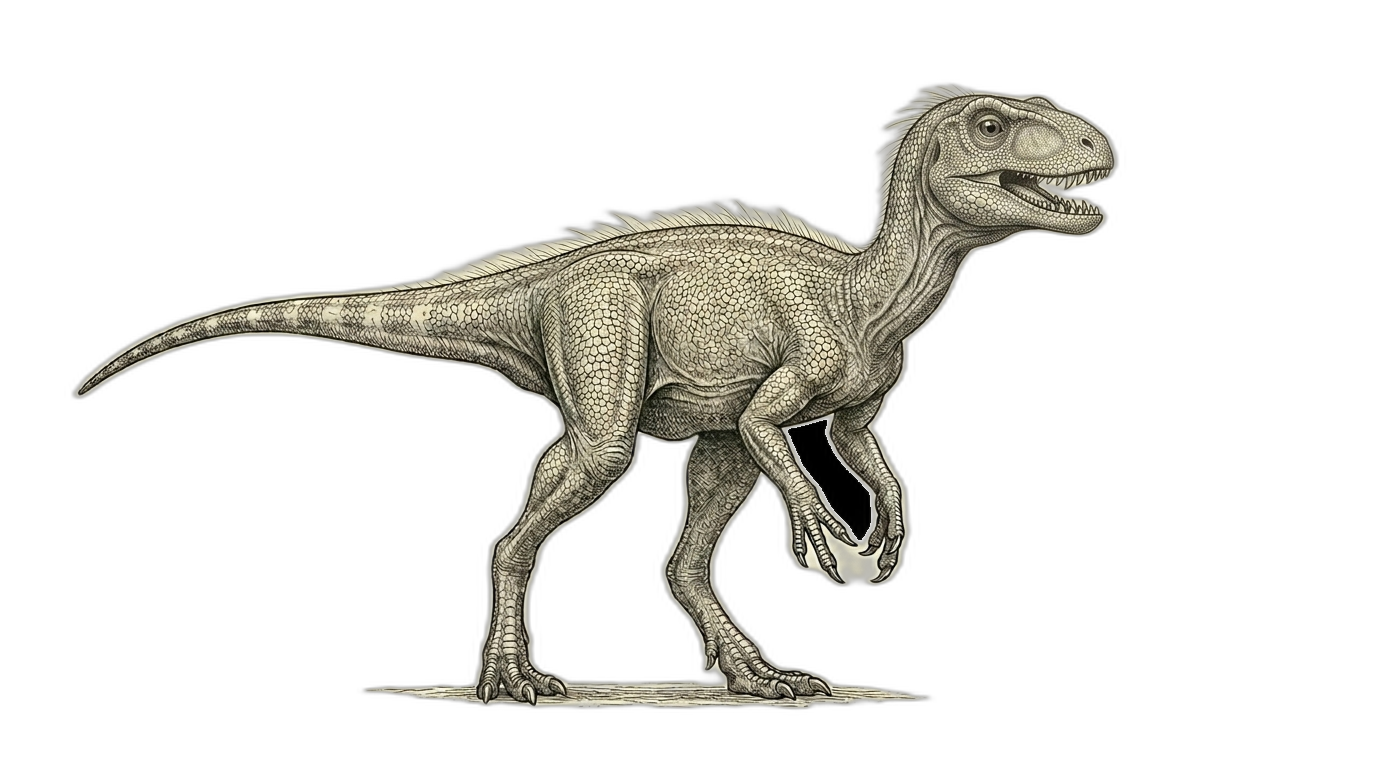
Eoraptor lunensis stands as one of the most significant dinosaurs ever discovered, not for its size or ferocity, but for what it reveals about the dawn of the dinosaur age. This small, agile creature roamed the ancient floodplains of what is now northwestern Argentina approximately 231 million years ago, during the Late Triassic period, when dinosaurs were just beginning their remarkable evolutionary journey.
Roughly the size of a modern fox, Eoraptor measured only about one meter in length and weighed perhaps ten kilograms. Its slender, lightweight frame was built for speed and agility, with long hind limbs that allowed it to sprint bipedally across the landscape. The forelimbs, though shorter, featured five-fingered hands equipped with curved claws suitable for grasping prey or manipulating food. Its skull, elongated and narrow, housed a curious mixture of teeth—some leaf-shaped for processing plants, others sharp and recurved for tearing flesh—suggesting an omnivorous diet that gave this opportunistic hunter flexibility in an unpredictable world.
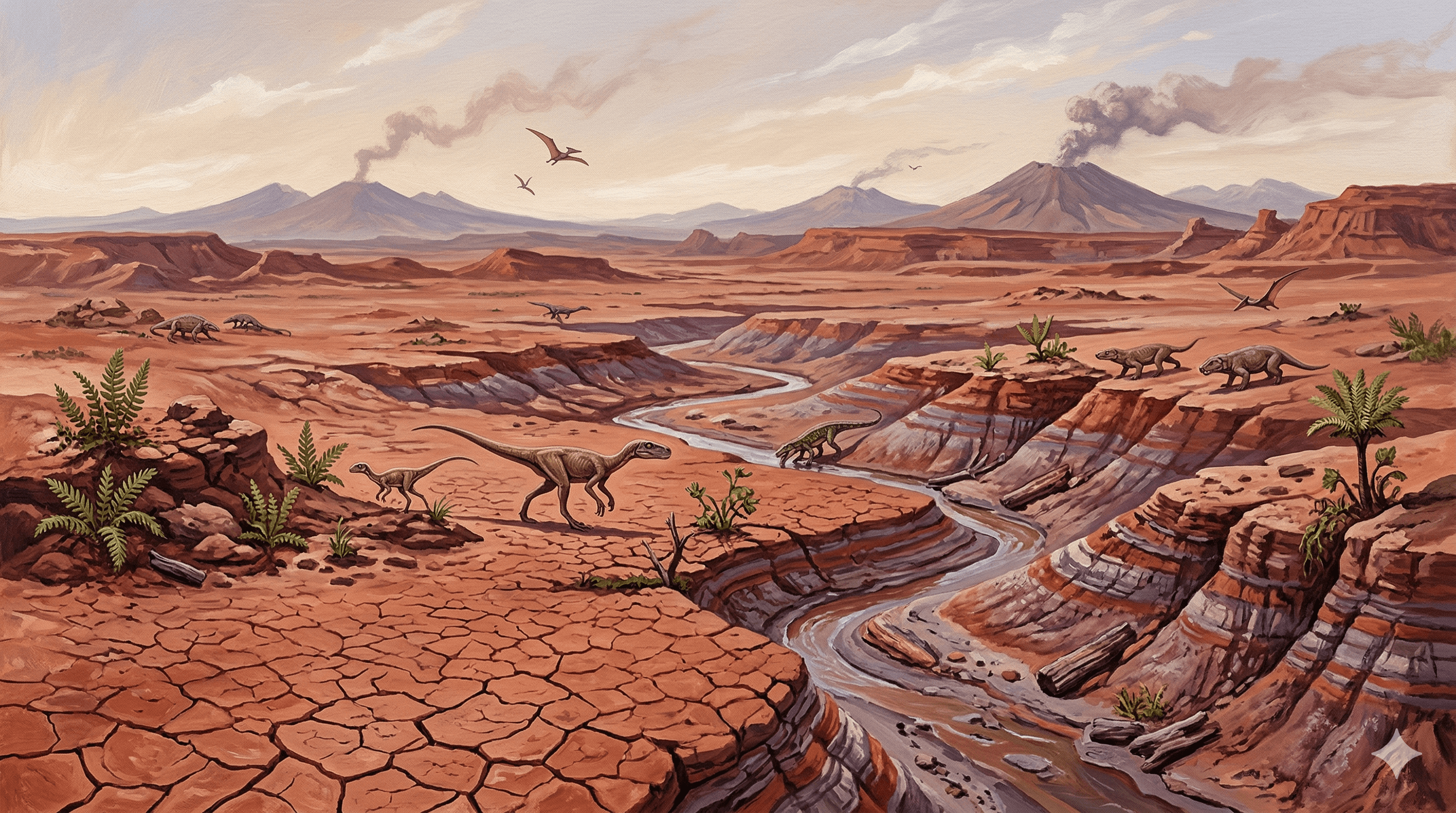
The Valley of the Moon in Argentina's Ischigualasto Formation yielded Eoraptor's remarkably complete skeleton in 1991, discovered by paleontologist Ricardo Martínez during an expedition led by Paul Sereno. This lunar-like badlands landscape, now a UNESCO World Heritage Site, preserves an extraordinary window into Triassic ecosystems where early dinosaurs competed alongside crocodile-like rauisuchians, mammal ancestors, and bizarre beaked rhynchosaurs.
What makes Eoraptor truly remarkable is its primitive anatomy, representing dinosaurs near the very base of their evolutionary tree. Studying this unassuming creature helps scientists understand how the great dinosaur dynasties—the thundering sauropods, the fierce theropods—emerged from such humble, generalized beginnings. In Eoraptor, we glimpse the prototype of a lineage destined to dominate Earth for over 160 million years.
Quick Facts
- Scientific name
- Eoraptor lunensis
- Group
- Sauropodomorph · Incertae sedis
- Lived
- Triassic, 231–228 million years ago
- Diet
- Omnivore
- Movement
- Walked on two legs
- Fossils found in
- Ischigualasto Formation (San Juan, Argentina)
- Discovery credited to
- 1991, Ricardo Martínez
- Holotype
- PVSJ 512, Museo de Ciencias Naturales, Universidad Nacional de San Juan, Argentina
- DinoVault record
- DVL-0051
Where fossils were found
Ischigualasto Formation
San Juan · Argentina
231–228 million years ago(3m year span)
Where Eoraptor lunensis Roamed
During the Late Triassic, Eoraptor lunensis roamed the volcanic river valleys of what is now northwestern Argentina, then part of the southwestern margin of Gondwana. This region featured a warm, semi-arid climate with seasonal monsoons, where meandering rivers cut through floodplains dotted with ferns, horsetails, and early conifers beneath ash-laden skies.
Keep exploring the vault
Herrerasaurus
Herrerasaurus ischigualastensis
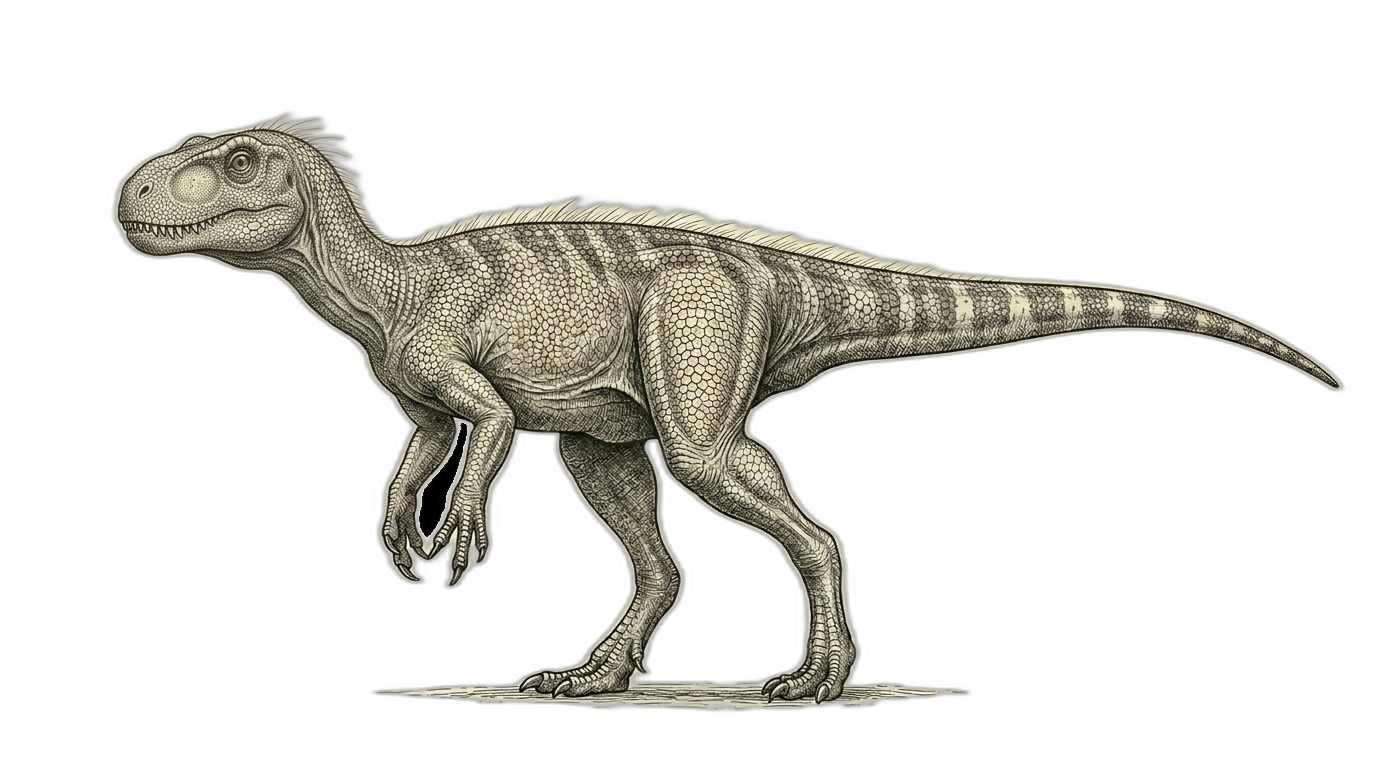
Herrerasaurus was a 5m, 250kg carnivore sharing the Ischigualasto Formation with the much smaller 1m, 10kg Eoraptor.
Eodromaeus
Eodromaeus murphi
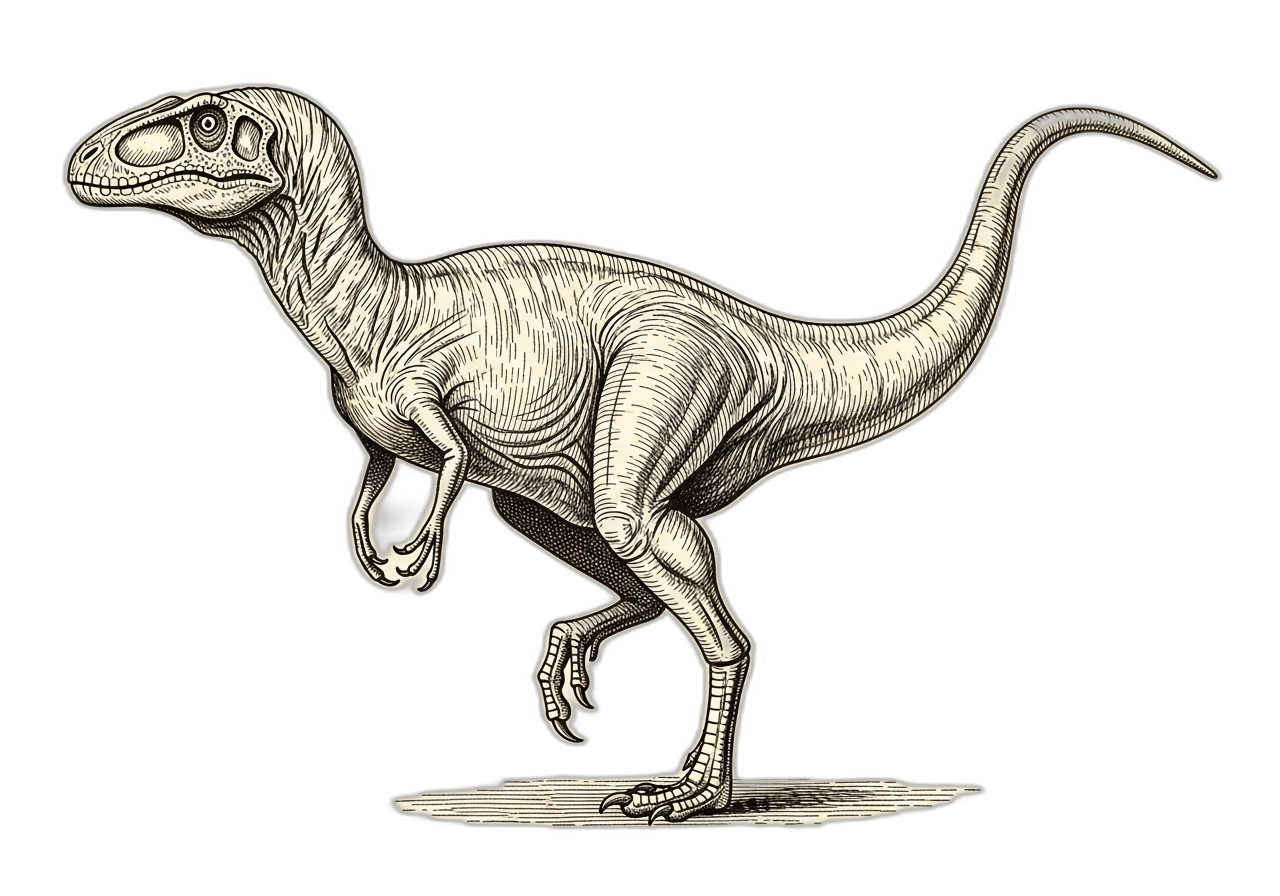
Both species occupied the Ischigualasto Formation at nearly identical body sizes (1-1.2m, 5-10kg) as small, agile hunters.
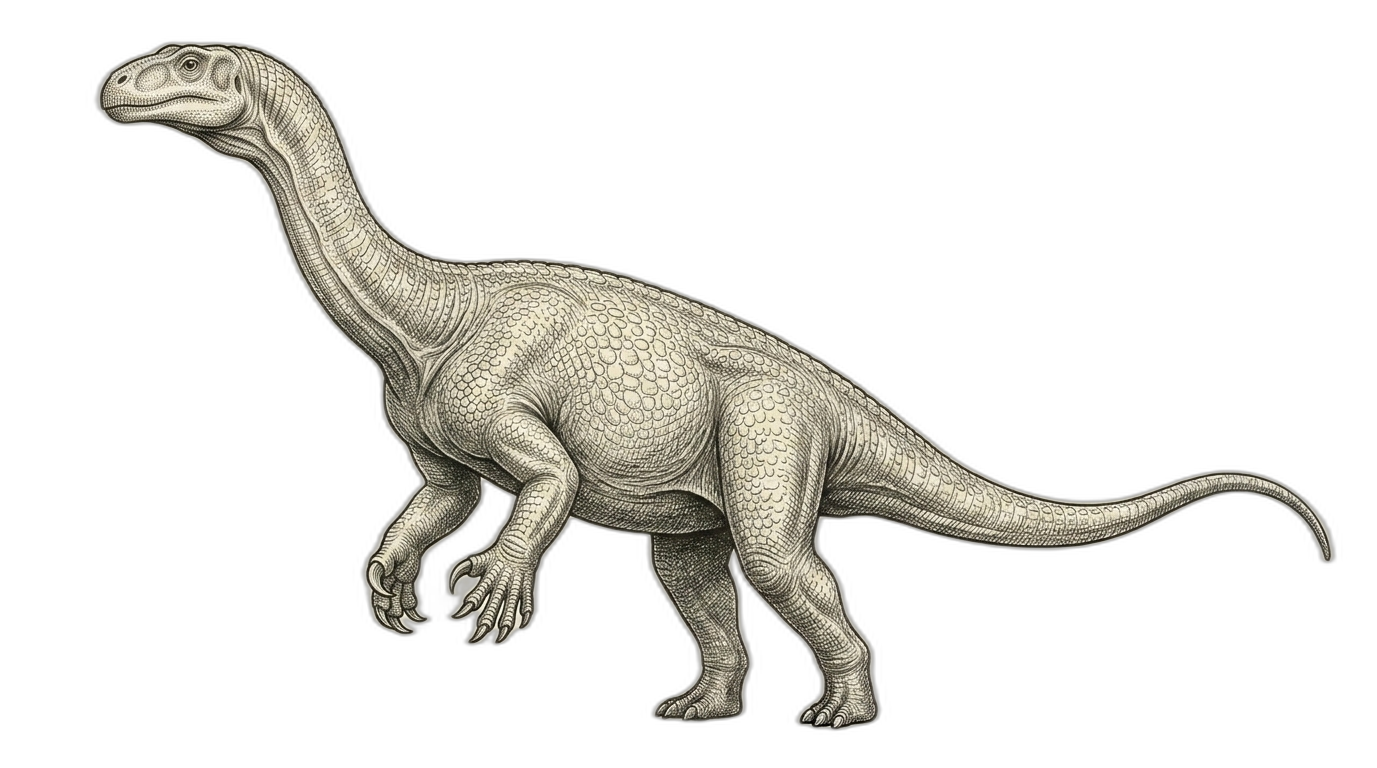
Plateosaurus
Plateosaurus engelhardti
Eoraptor is considered one of the most basal sauropodomorphs, representing the ancestral body plan from which later prosauropods like Plateosaurus evolved.
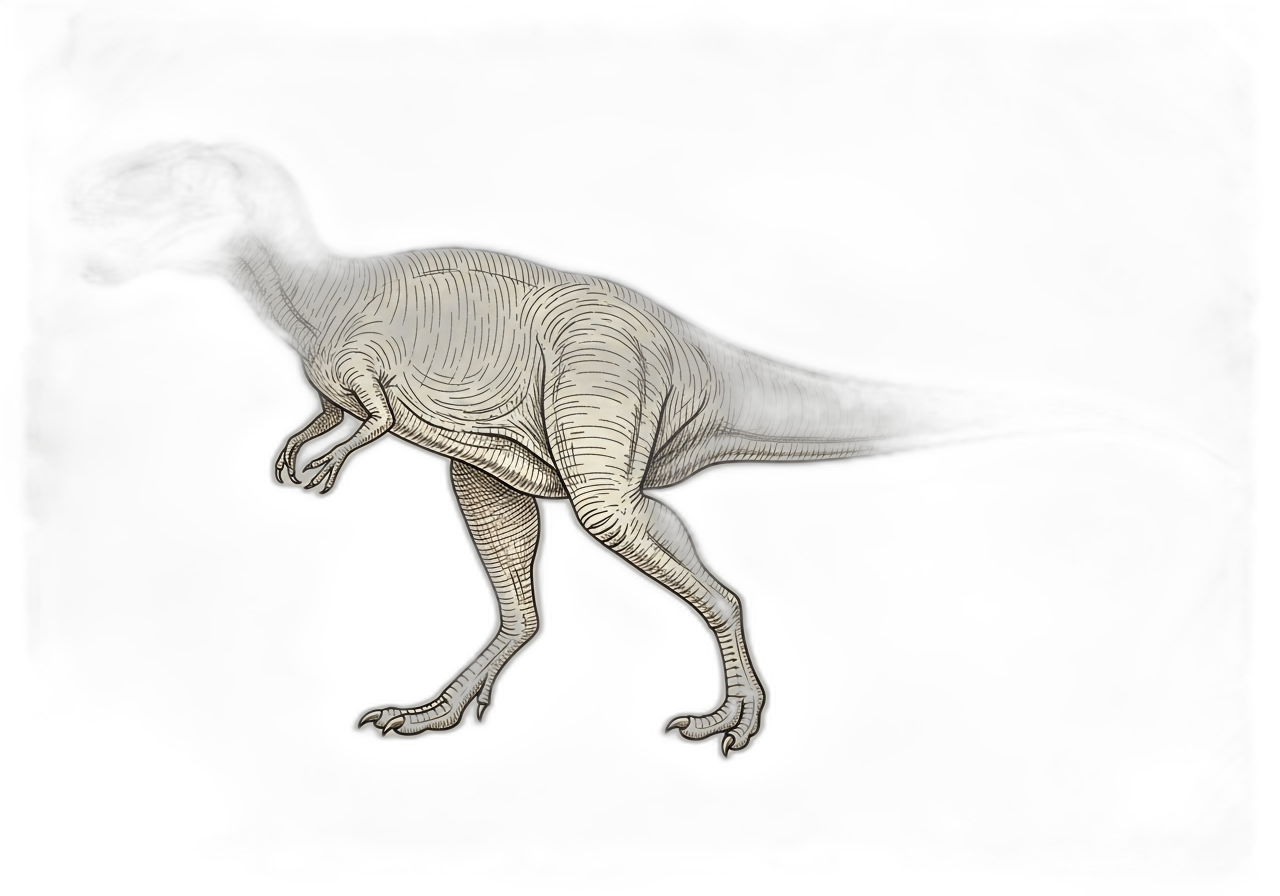
Coelophysis
Coelophysis bauri
Both are small-bodied, lightly-built early dinosaurs from the Late Triassic representing parallel experiments in the small, agile predator/omnivore niche.
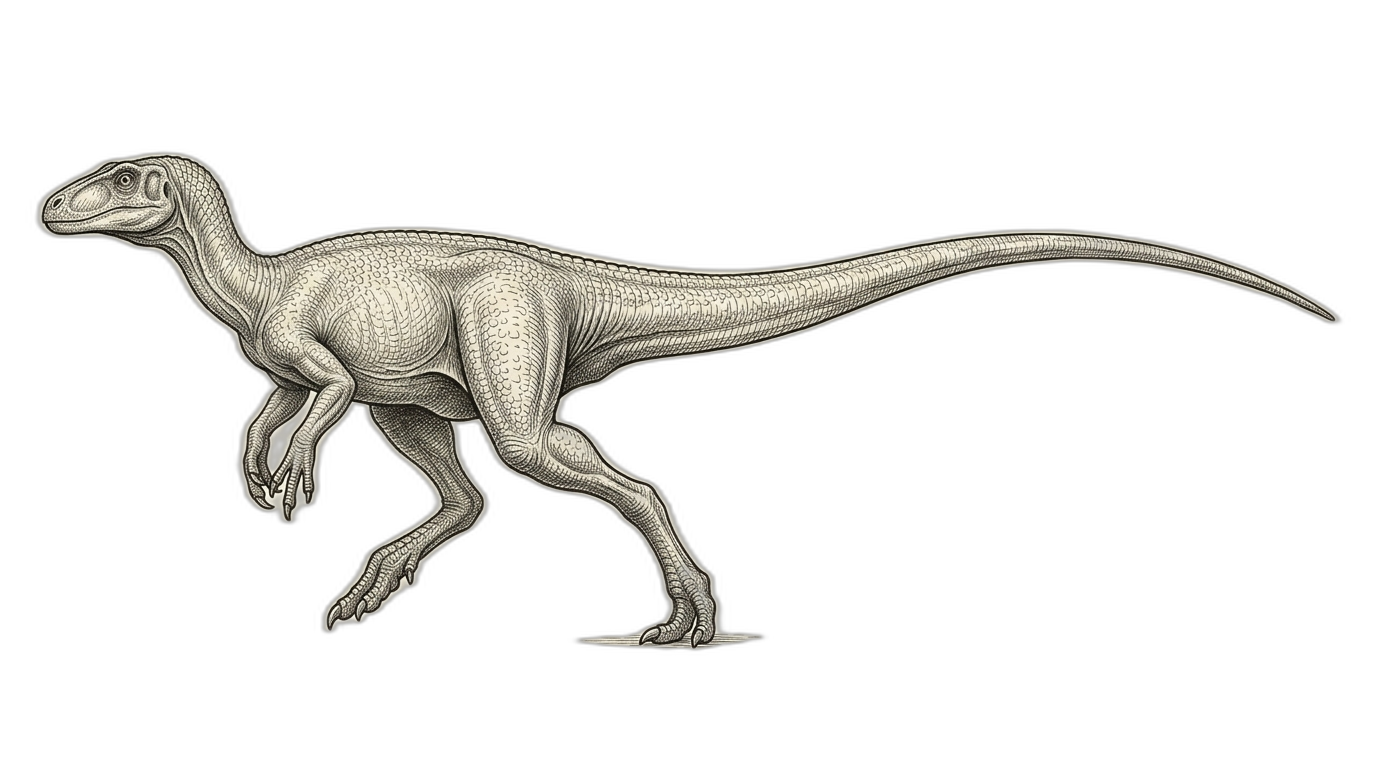
Pisanosaurus
Both species are from the Ischigualasto Formation and represent some of the earliest known dinosaurs.
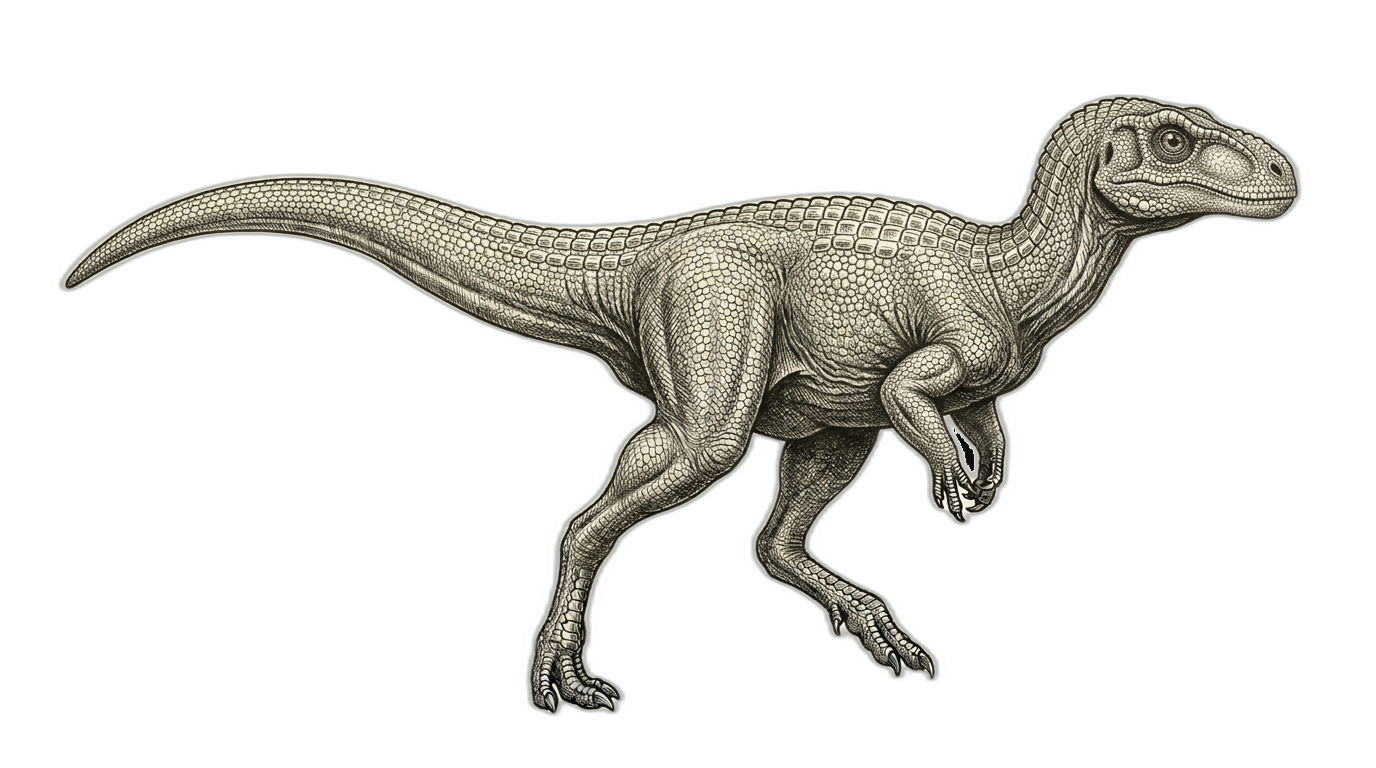
Staurikosaurus
Both Staurikosaurus and Eoraptor are early saurischian dinosaurs from the Late Triassic of South America (Ischigualasto Formation region), with similar small body sizes (~1-2m) and likely overlapping diets as opportunistic predators of small vertebrates and insects.
Sources & Citation
- Length estimates
- Sereno et al. 1993; Martinez et al. 2011
- Height estimates
- Estimated from skeletal proportions, Sereno et al. 1993
- Weight estimates
- Sereno et al. 1993; body mass estimates based on skeletal dimensions
- Speed estimates
- Biomechanical estimate based on limb proportions