About
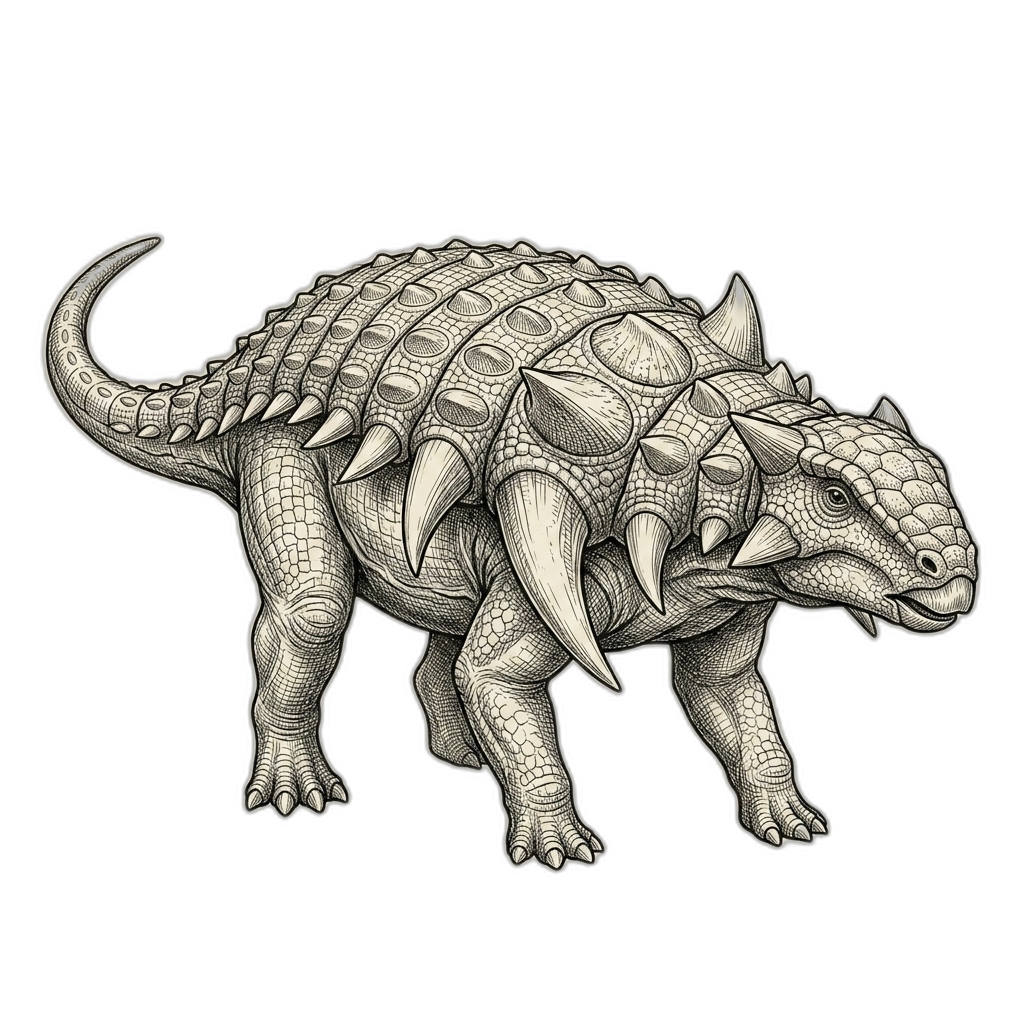
Edmontonia rugosidens was a formidable nodosaurid that roamed the coastal plains and river valleys of western North America during the Late Cretaceous, approximately 76 to 73 million years ago. This heavily built herbivore reached lengths of nearly 7 meters and weighed around 3 tonnes, making it one of the largest nodosaurids known to science.
The animal's body plan was quintessentially defensive. Its back and flanks were covered in a mosaic of bony embedded in the skin, ranging from small rounded nodules to larger keeled plates. Most dramatically, Edmontonia bore massive forward-projecting shoulder spines—the largest of which could exceed 50 centimeters in length. These formidable weapons likely served both as deterrents to predators like Gorgosaurus and potentially in intraspecific combat between rivals.
Unlike its ankylosaurid cousins, Edmontonia lacked a , instead relying entirely on its passive armor and shoulder weaponry for defense. Its skull was relatively narrow with a beak suited for selective low browsing on ferns, cycads, and other ground-level vegetation. The species name 'rugosidens' refers to its distinctive wrinkled or ridged teeth, adapted for processing tough plant material.
Fossils of Edmontonia have been recovered from multiple formations across Alberta and Montana, providing excellent understanding of nodosaurid anatomy and contributing significantly to our knowledge of Cretaceous armored dinosaur diversity.
Quick Facts
- Scientific name
- Edmontonia rugosidens
- Group
- Ankylosaur · Nodosauridae
- Lived
- Late Cretaceous, 76.5–73 million years ago
- Diet
- Herbivore
- Movement
- Walked on four legs
- Fossils found in
- Dinosaur Park Formation, Horseshoe Canyon Formation and Two Medicine Formation (Alberta, Montana, Canada, United States)
- Discovery credited to
- 1928, Charles M. Sternberg
- Holotype
- NMC 8531, Canadian Museum of Nature, Ottawa
- DinoVault record
- DVL-0047
Where fossils were found
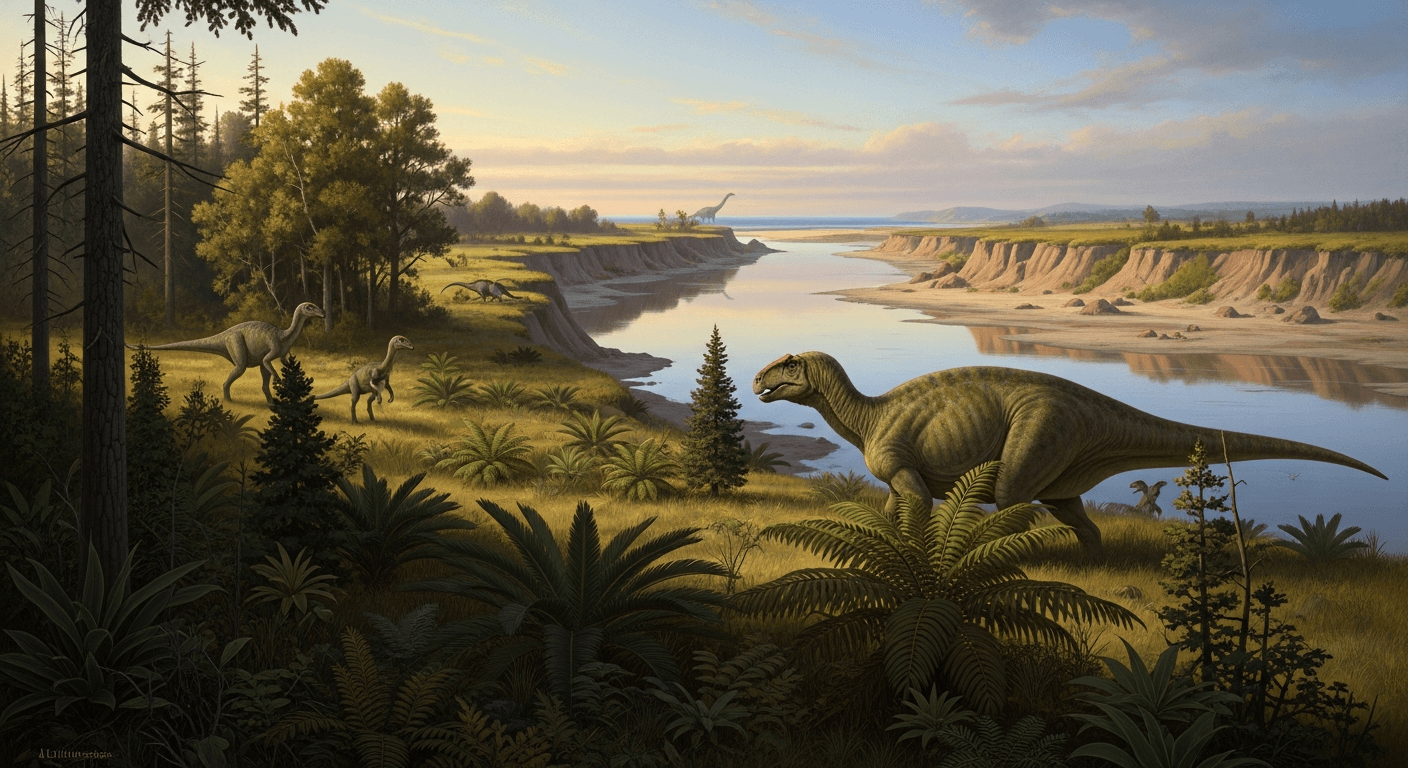
Dinosaur Park Formation
+2 more formations
Alberta, Montana · Canada, United States
76.5–73 million years ago(3.5m year span)
Where Edmontonia Roamed
During the Late Cretaceous, *Edmontonia rugosidens* inhabited the lush coastal plains and river deltas along the western shores of the Western Interior Seaway, a vast inland sea that divided North America into two landmasses—Laramidia to the west and Appalachia to the east. This warm, humid environment supported dense forests of conifers, ferns, and early flowering plants, providing ample forage for this heavily armored herbivore.
Keep exploring the vault
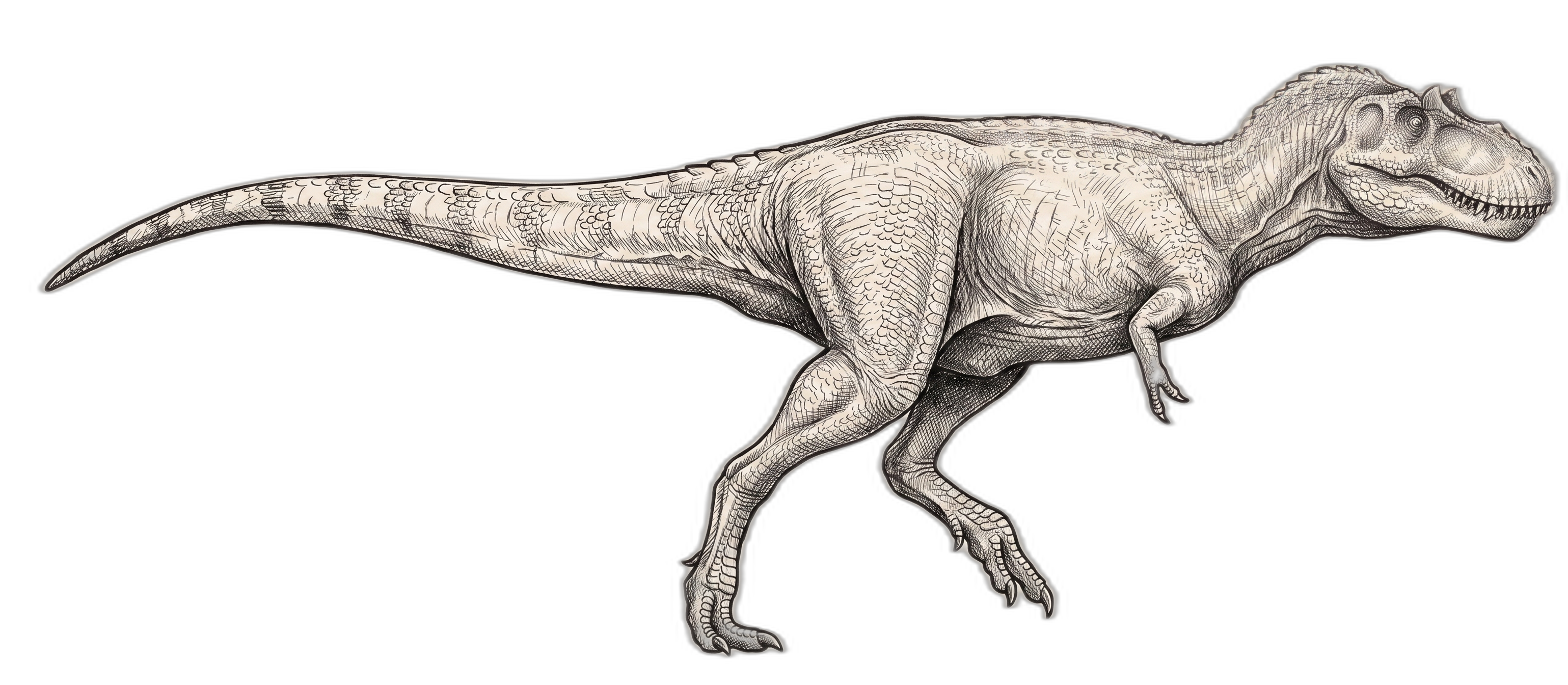
Gorgosaurus
Gorgosaurus libratus
Gorgosaurus was the apex predator of the Dinosaur Park Formation where Edmontonia lived.
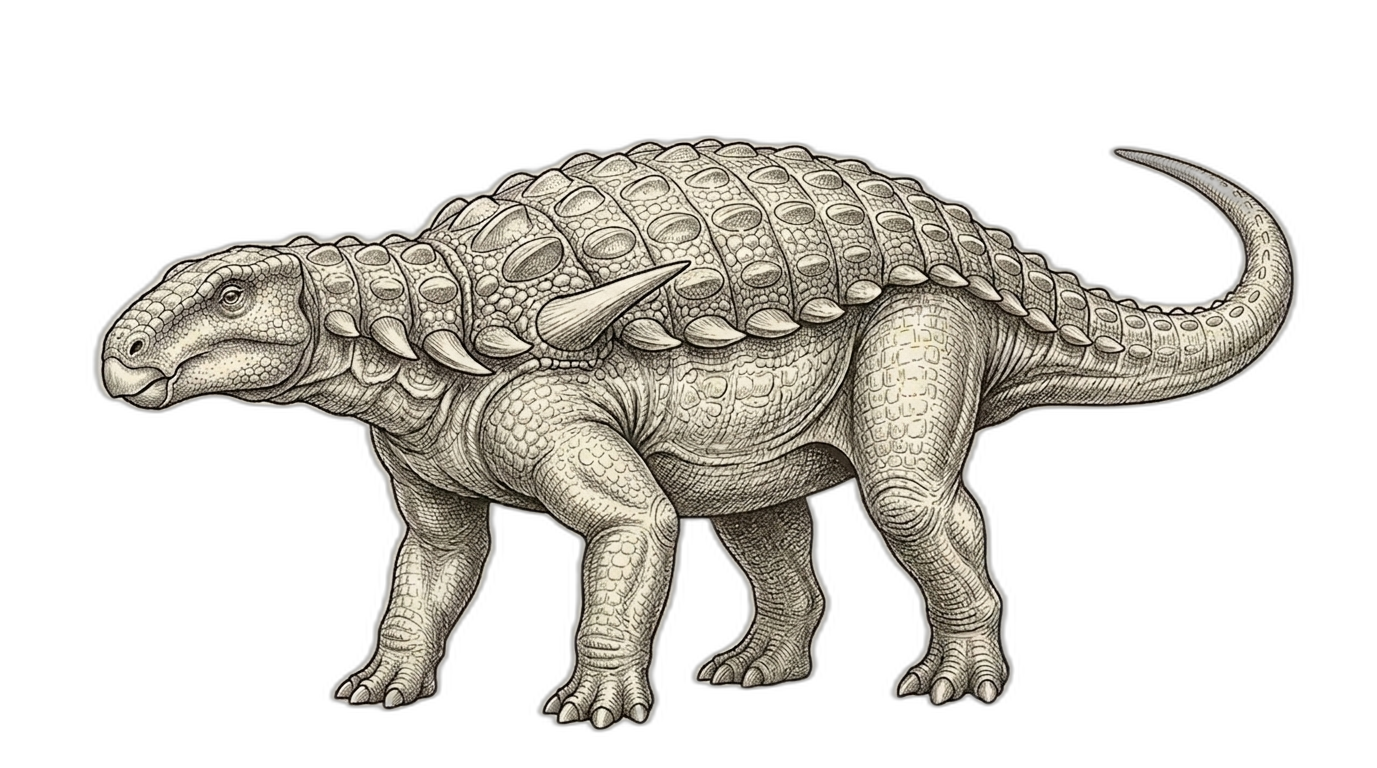
Panoplosaurus
Panoplosaurus mirus
Both are nodosaurid ankylosaurs from the Dinosaur Park Formation with similar body plans, armor configurations, and low-browsing herbivorous diets.
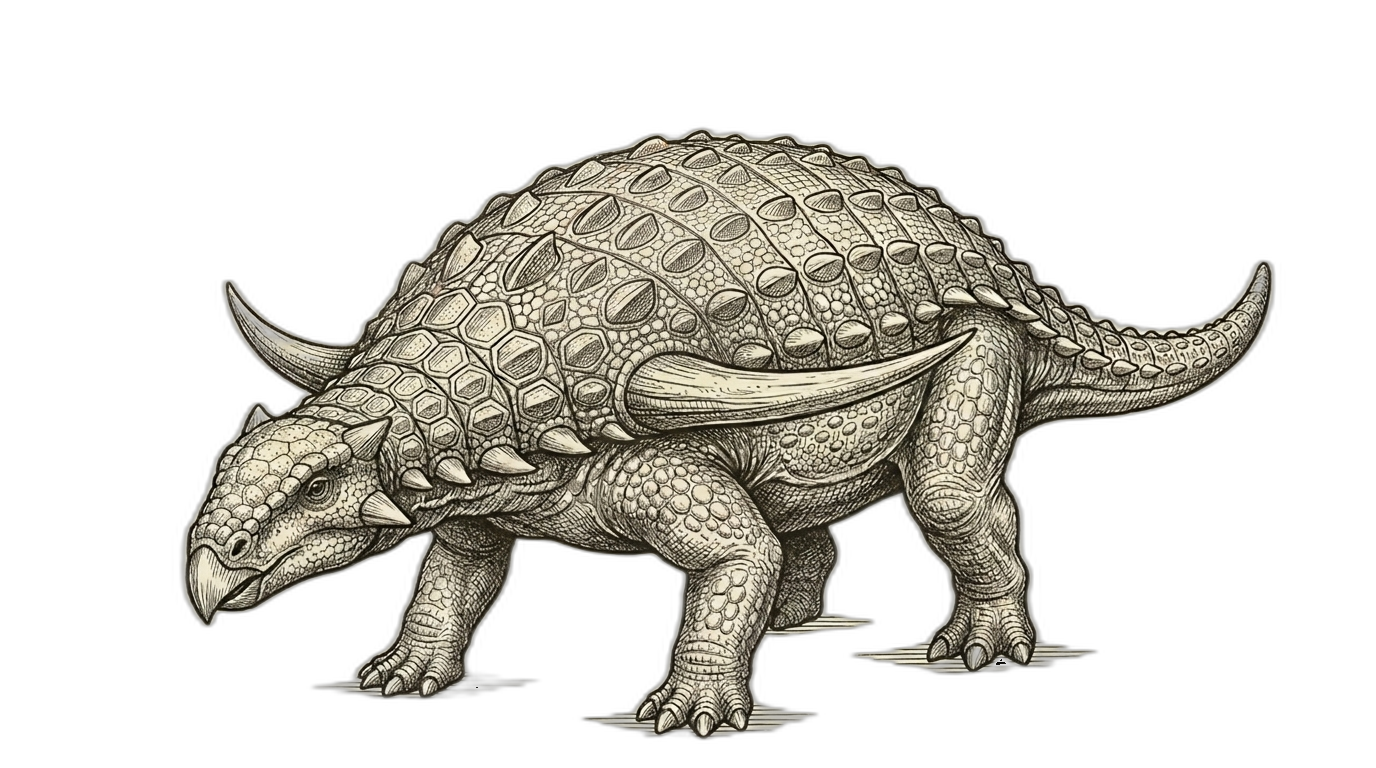
Borealopelta
Borealopelta markmitchelli
Both are nodosaurid ankylosaurs that evolved extensive body armor with prominent shoulder spines.
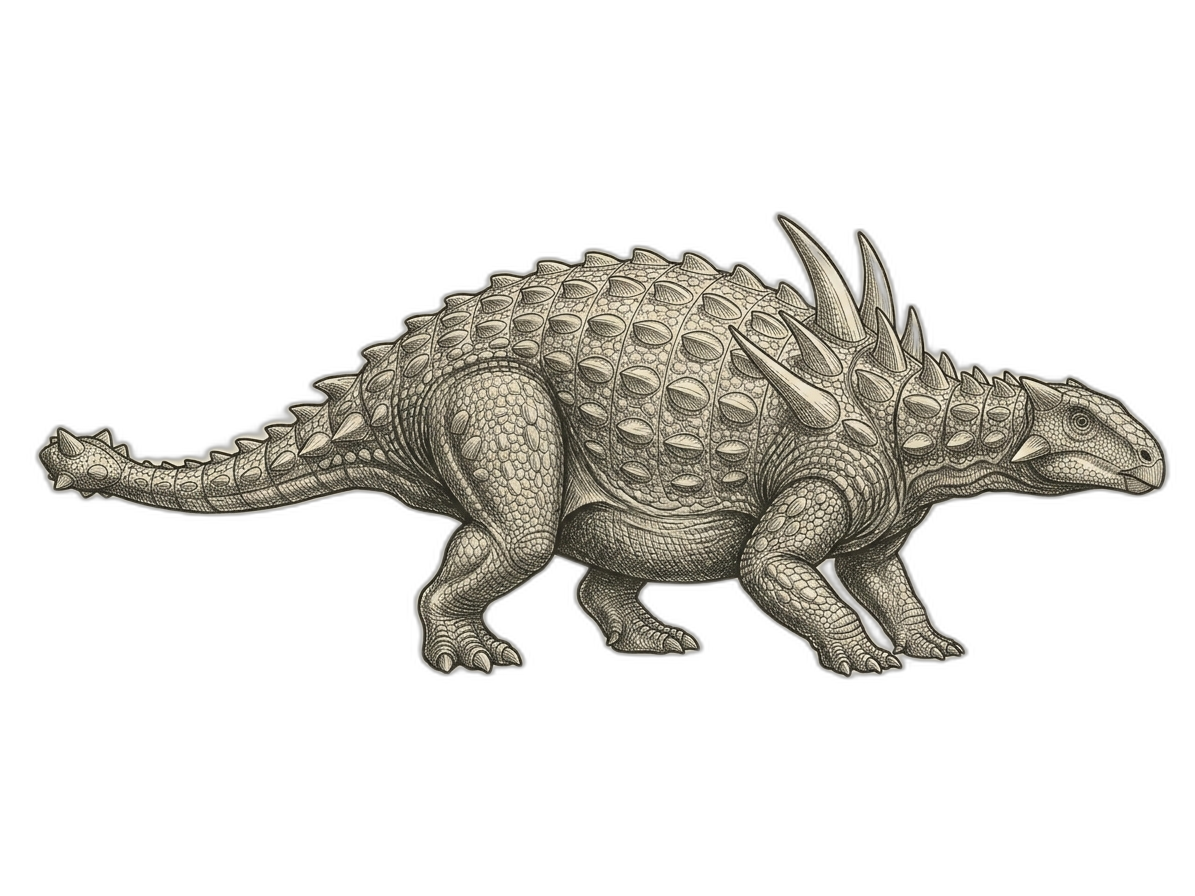
Gastonia
Gastonia burgei
Same family: Nodosauridae
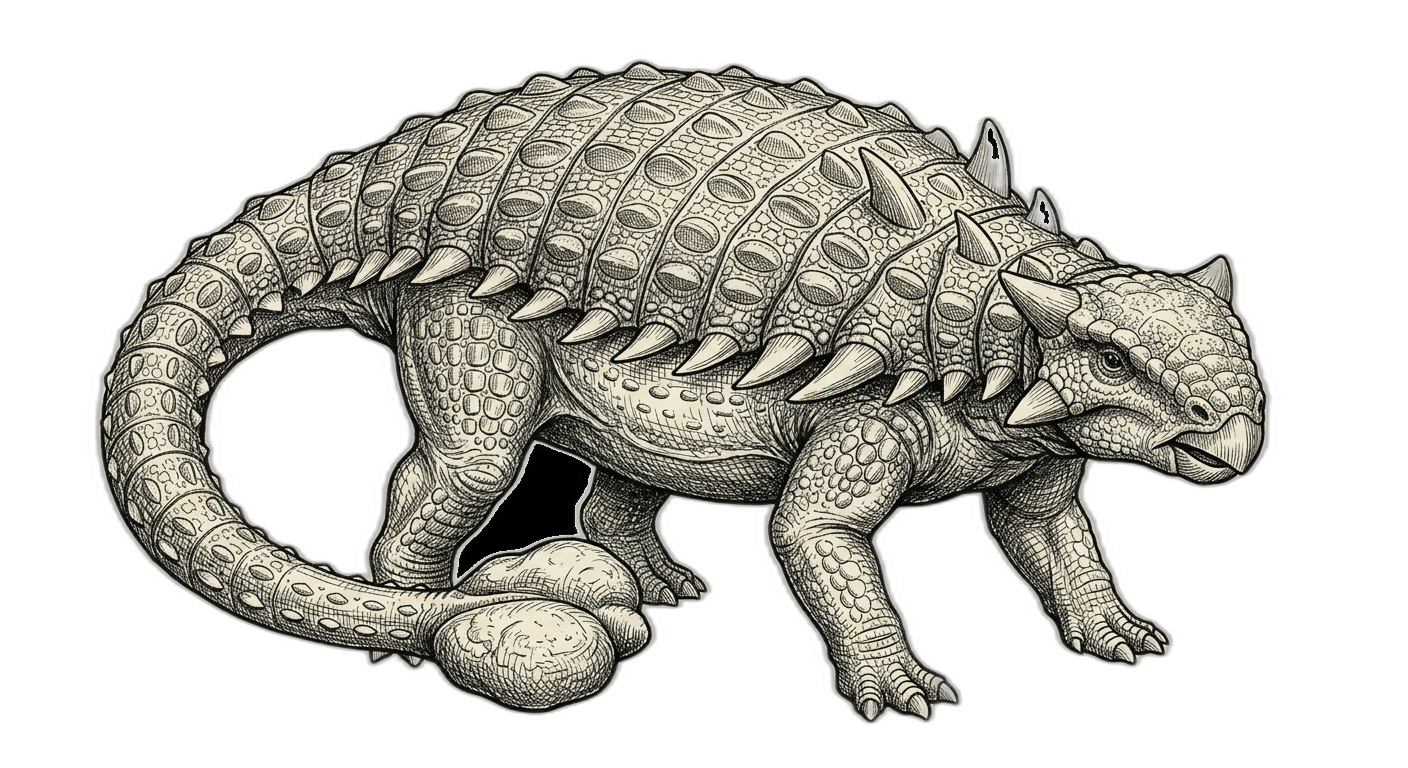
Ankylosaurus
Ankylosaurus magniventris
Edmontonia and Ankylosaurus represent parallel evolutionary experiments in dinosaurian body armor.
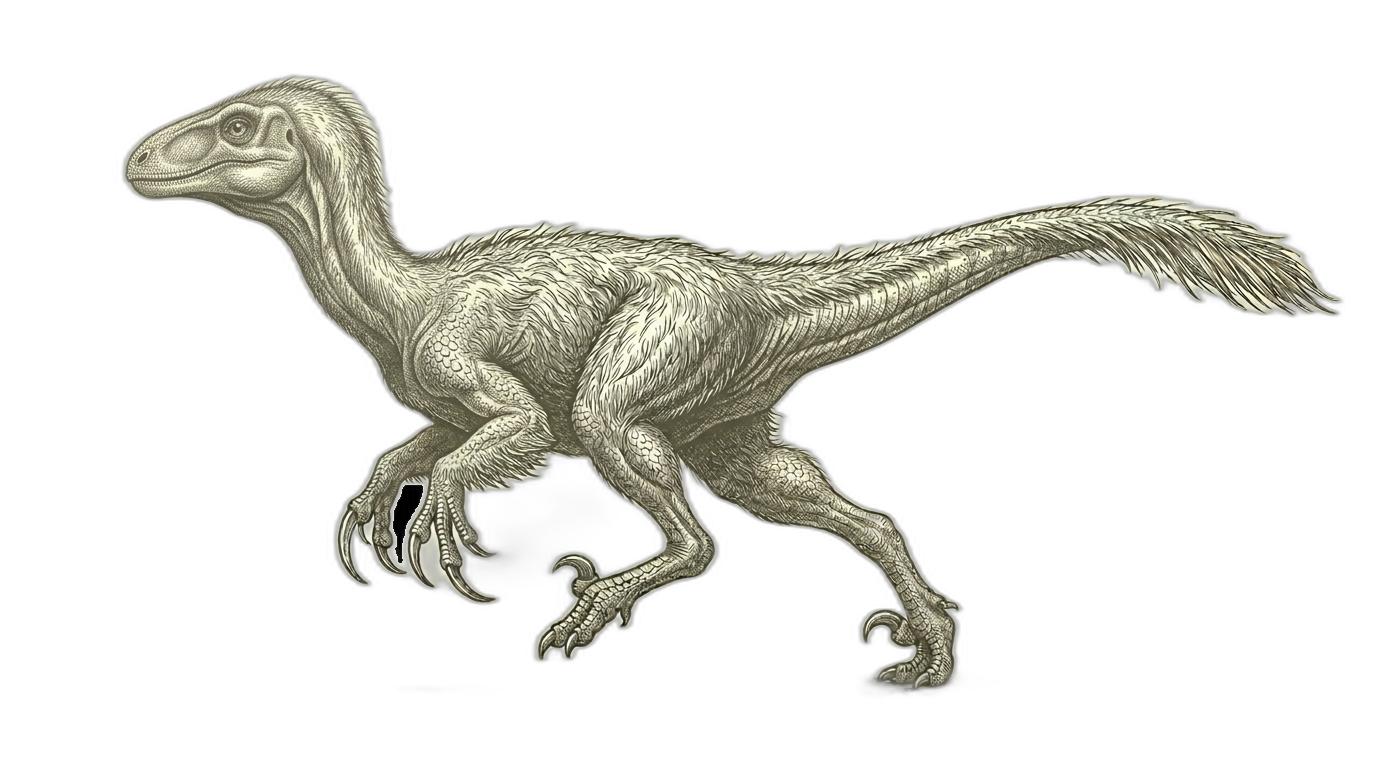
Troodon
Troodon formosus
Both occur in the Dinosaur Park, Horseshoe Canyon, and Two Medicine formations, sharing three formation co-occurrences.
Sources & Citation
- Length, Weight estimates
- Carpenter, K. (2001). The Armored Dinosaurs. Indiana University Press
- Height estimates
- Estimated from skeletal reconstructions; Vickaryous et al. (2004)
- Speed estimates
- Biomechanical estimate based on quadrupedal ankylosaur locomotion