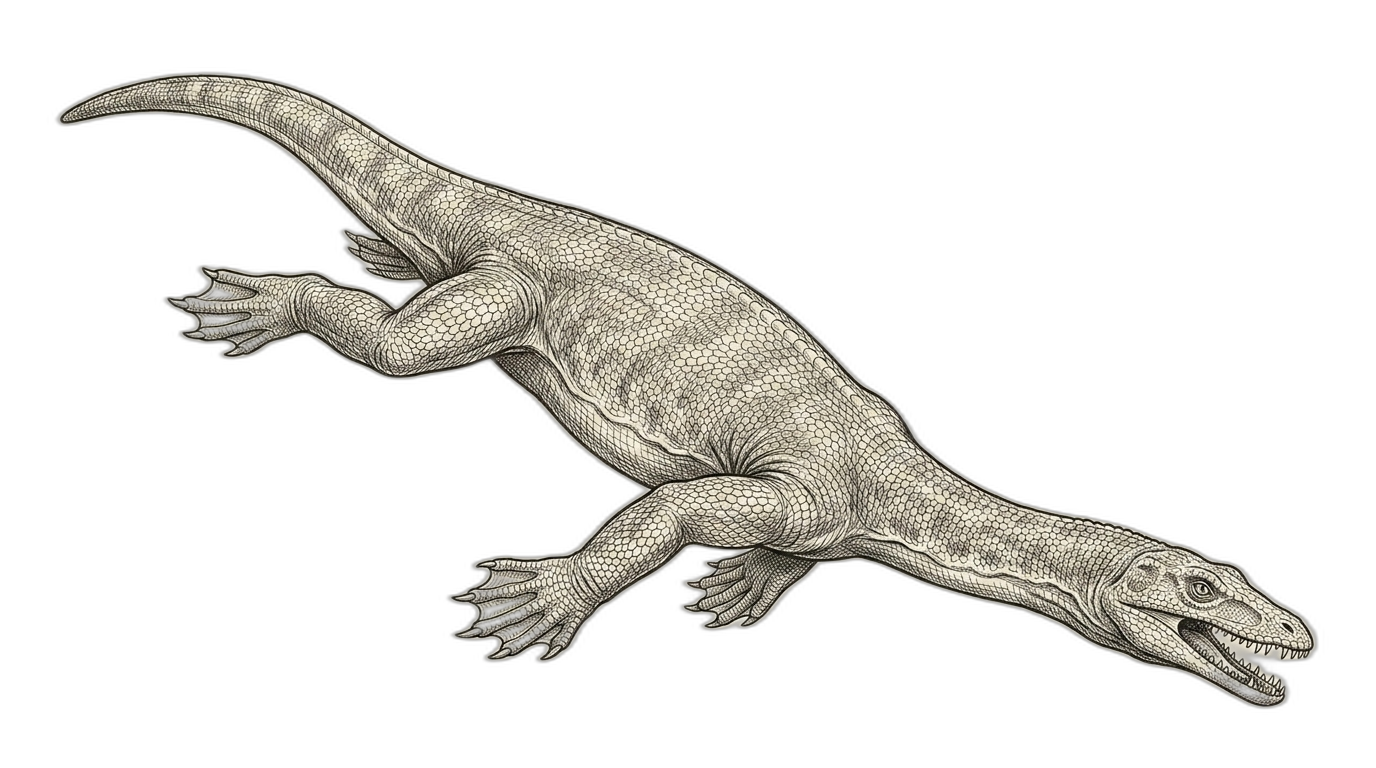
About
Nothosaurus mirabilis was a remarkable sauropterygian reptile that inhabited the warm, shallow seas of Europe during the Middle Triassic, approximately 240 million years ago. This elegant predator possessed a streamlined body perfectly adapted for an amphibious lifestyle, spending time both in water and on land much like modern seals. Its most striking features included an elongated skull filled with interlocking, needle-sharp teeth ideally suited for grasping slippery fish and cephalopods. The neck was notably long and flexible, allowing for rapid lateral strikes to capture prey.
The limbs of Nothosaurus show fascinating transitional adaptations between and fully aquatic forms. While not yet transformed into the flippers seen in later plesiosaurs, the feet were webbed and the limb bones flattened, indicating powerful swimming capabilities. Locomotion combined lateral undulation of the body and tail with paddling strokes of the limbs.
Nothosaurus occupied a crucial position in Triassic marine ecosystems alongside other marine reptiles, fish, and . Its fossils, first described from the Germanic Basin deposits, have since been found across Europe, the Middle East, and China, demonstrating a widespread distribution. As one of the best-known Triassic marine reptiles, Nothosaurus provides invaluable insights into the early evolution of marine reptile body plans and the conquest of ocean habitats following the Permian extinction.
Quick Facts
- Scientific name
- Nothosaurus mirabilis
- Group
- Marine reptile · Nothosauridae
- Lived
- Triassic, 247–228 million years ago
- Diet
- Piscivore
- Movement
- Walked on four legs
- Discovery credited to
- 1834, Georg Graf zu Münster
- Holotype
- Original material described by Münster (1834); various specimens in Bayerische Staatssammlung für Paläontologie und Geologie, Munich
- DinoVault record
- DVL-0096
Where Nothosaurus Roamed
During the Middle Triassic, *Nothosaurus mirabilis* inhabited the warm, shallow margins of the Tethys Sea, a vast tropical ocean that separated the ancient supercontinents of Laurasia and Gondwana. These coastal waters, situated near the equator along the northwestern edge of the Tethys, teemed with marine life and provided ideal hunting grounds for this agile, semi-aquatic predator.
Keep exploring the vault
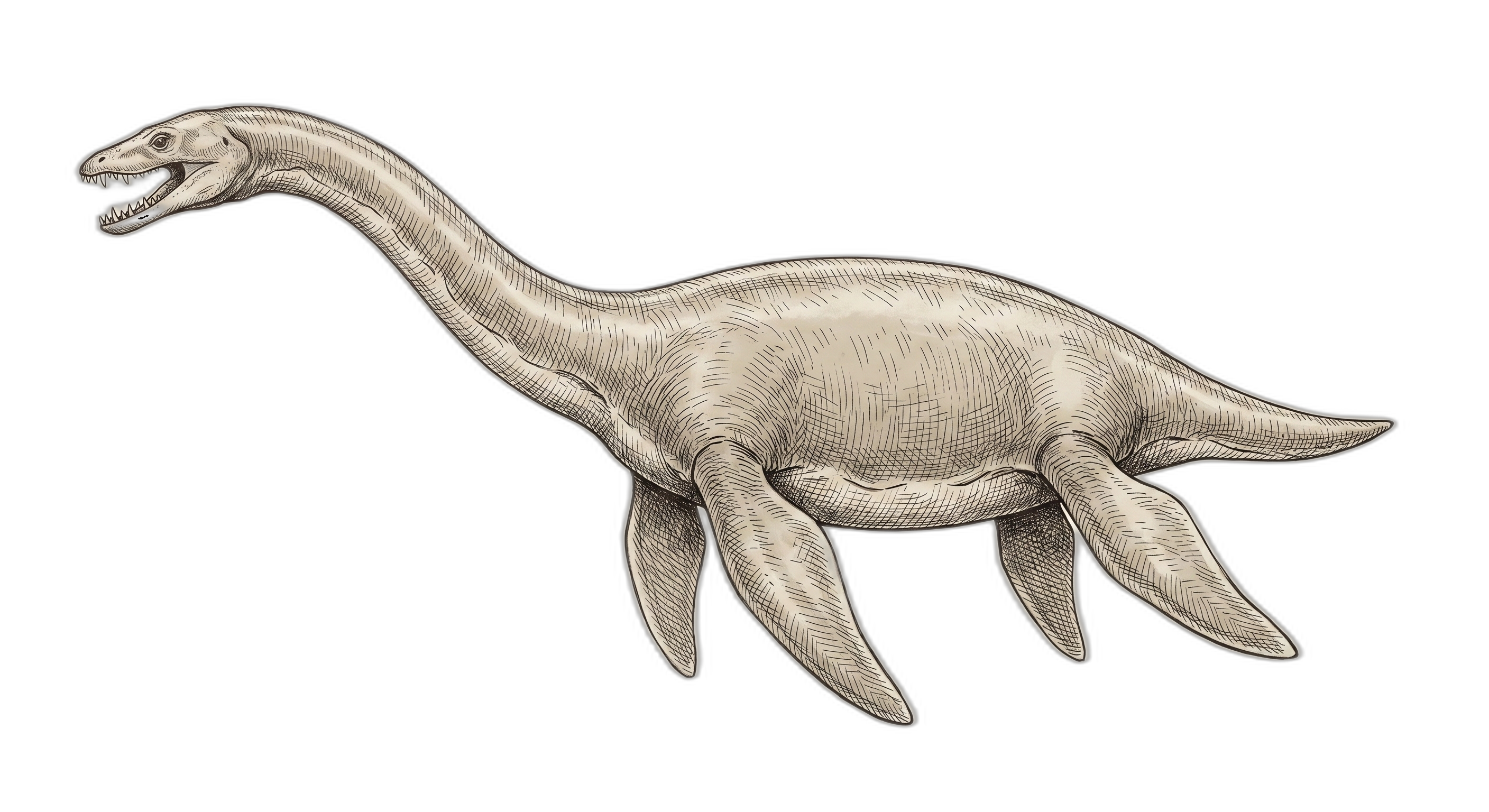
Plesiosaurus
Plesiosaurus dolichodeirus
Plesiosaurs are widely accepted to have evolved from nothosaurian ancestors.
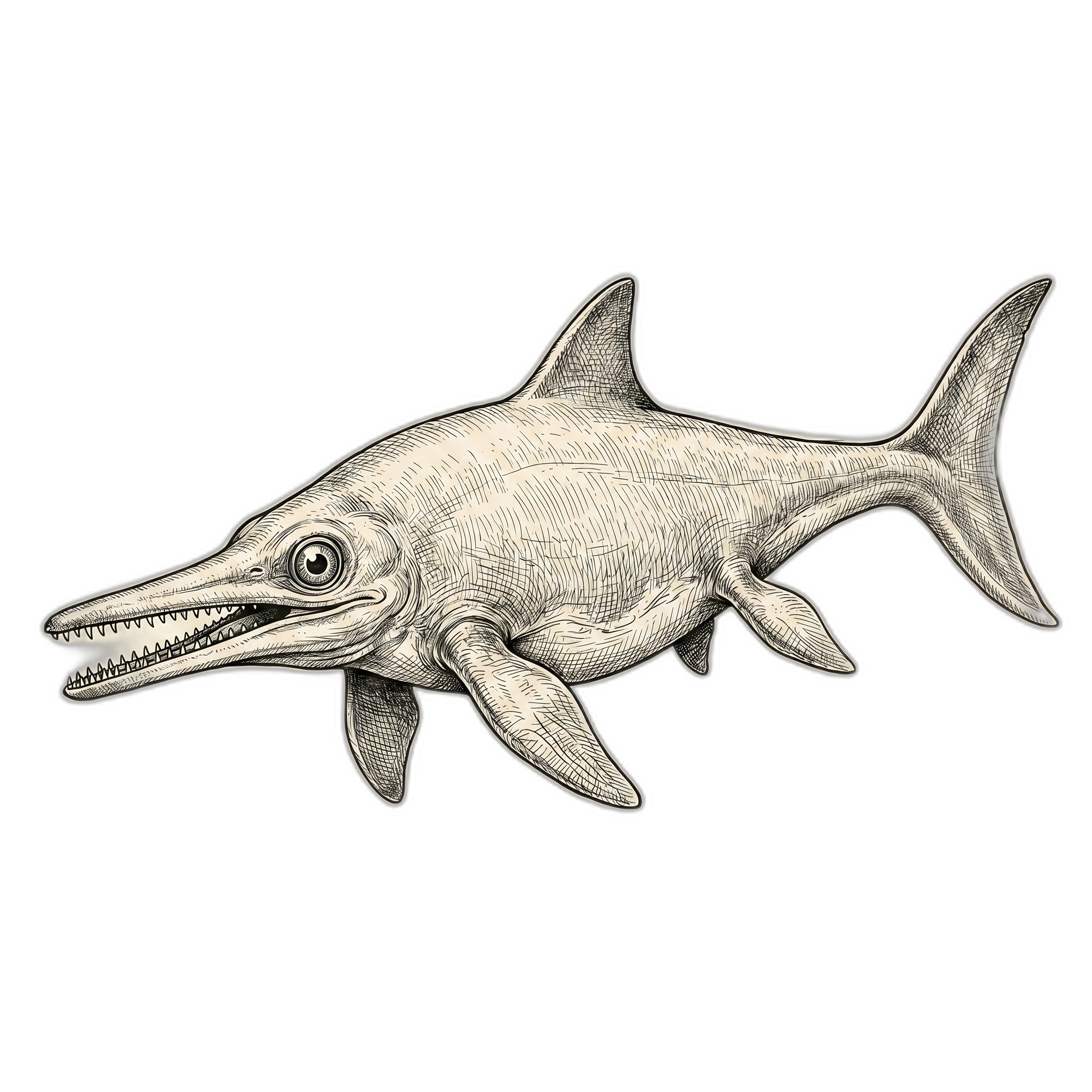
Ichthyosaurus
Ichthyosaurus communis
Nothosaurus and ichthyosaurs represent parallel Triassic experiments in marine reptile evolution.
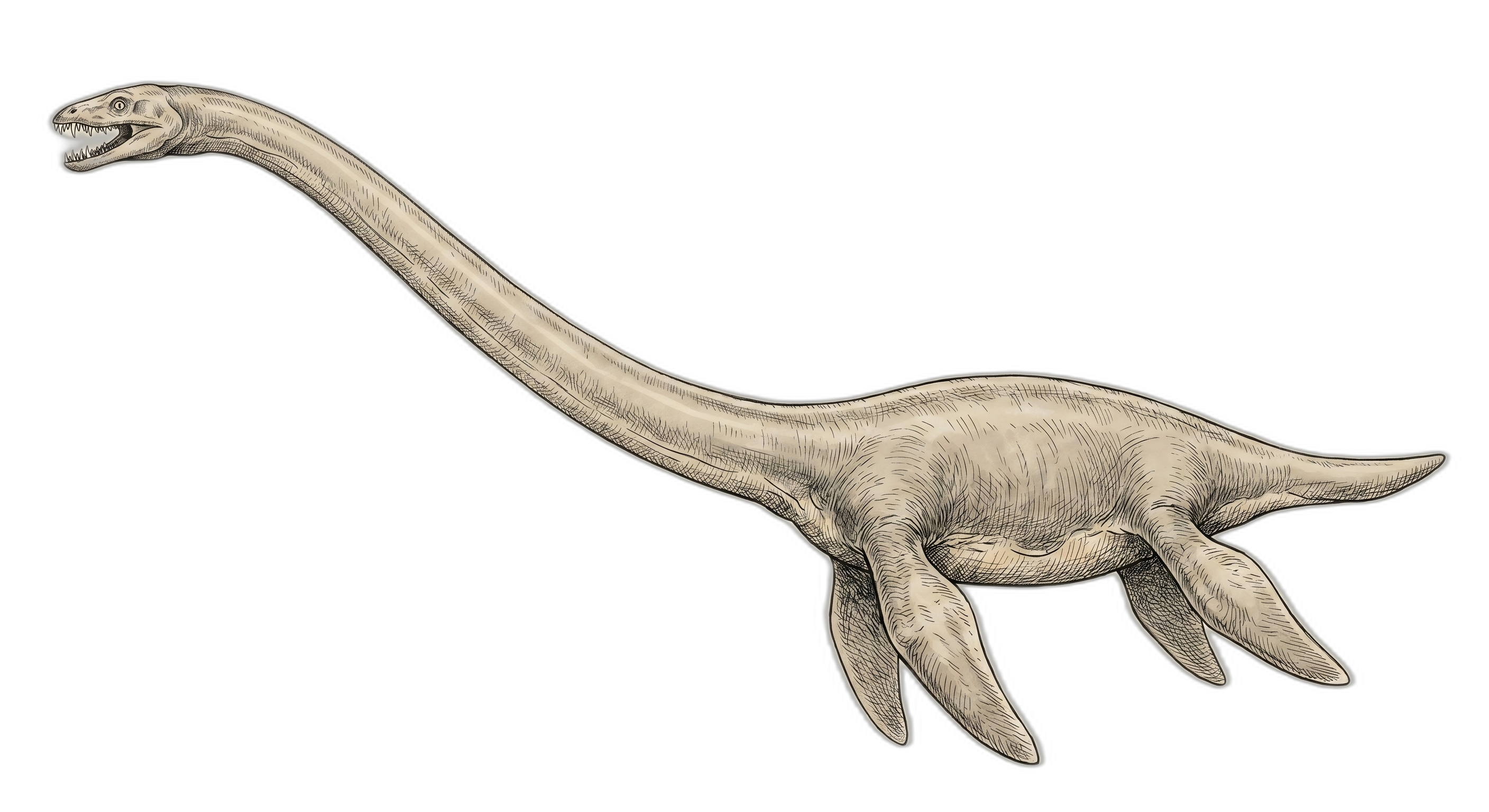
Elasmosaurus
Elasmosaurus platyurus
Both Nothosaurus and Elasmosaurus represent sauropterygian marine reptiles that convergently evolved elongated necks and fish-catching adaptations for aquatic piscivory, though separated by over 150 million years.
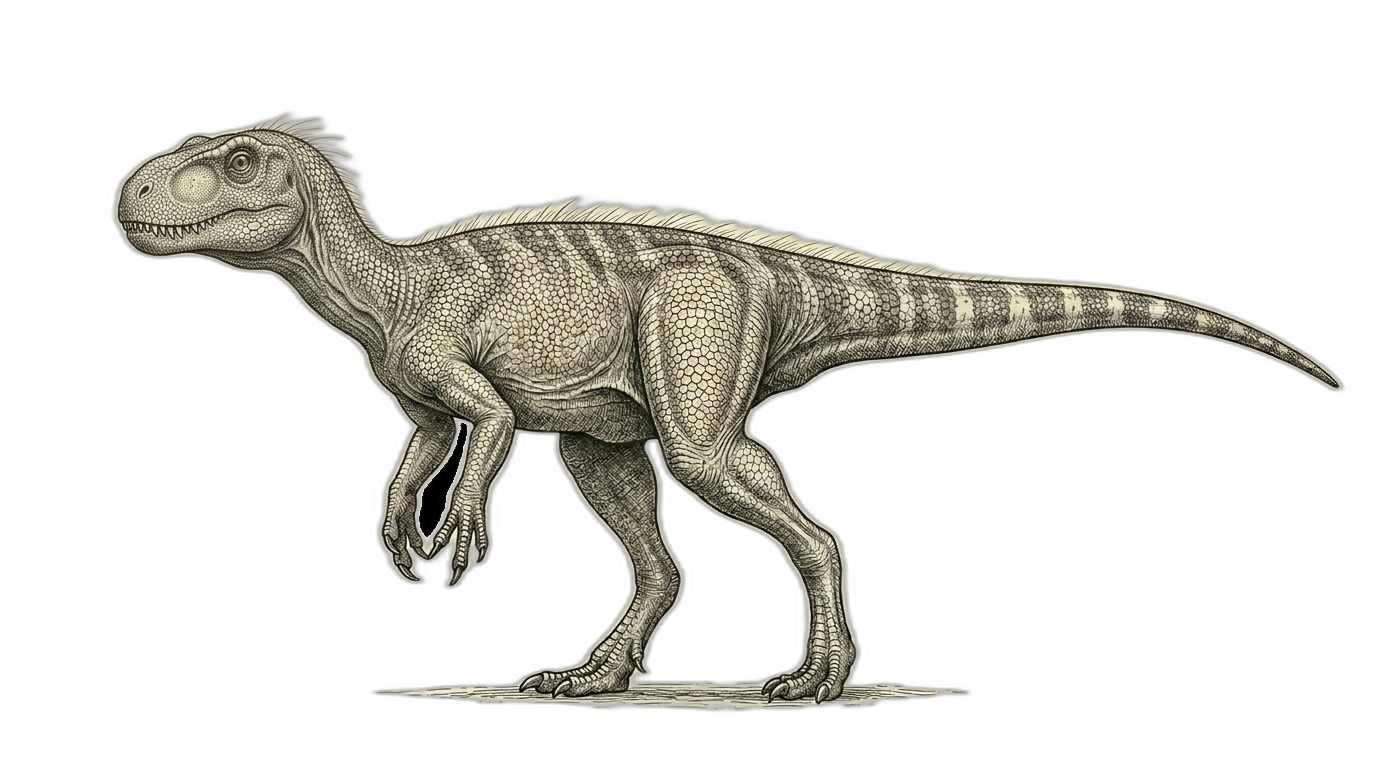
Herrerasaurus
Herrerasaurus ischigualastensis
Both lived during the Middle-Late Triassic period, representing the dramatic ecological diversity of Triassic vertebrate faunas.
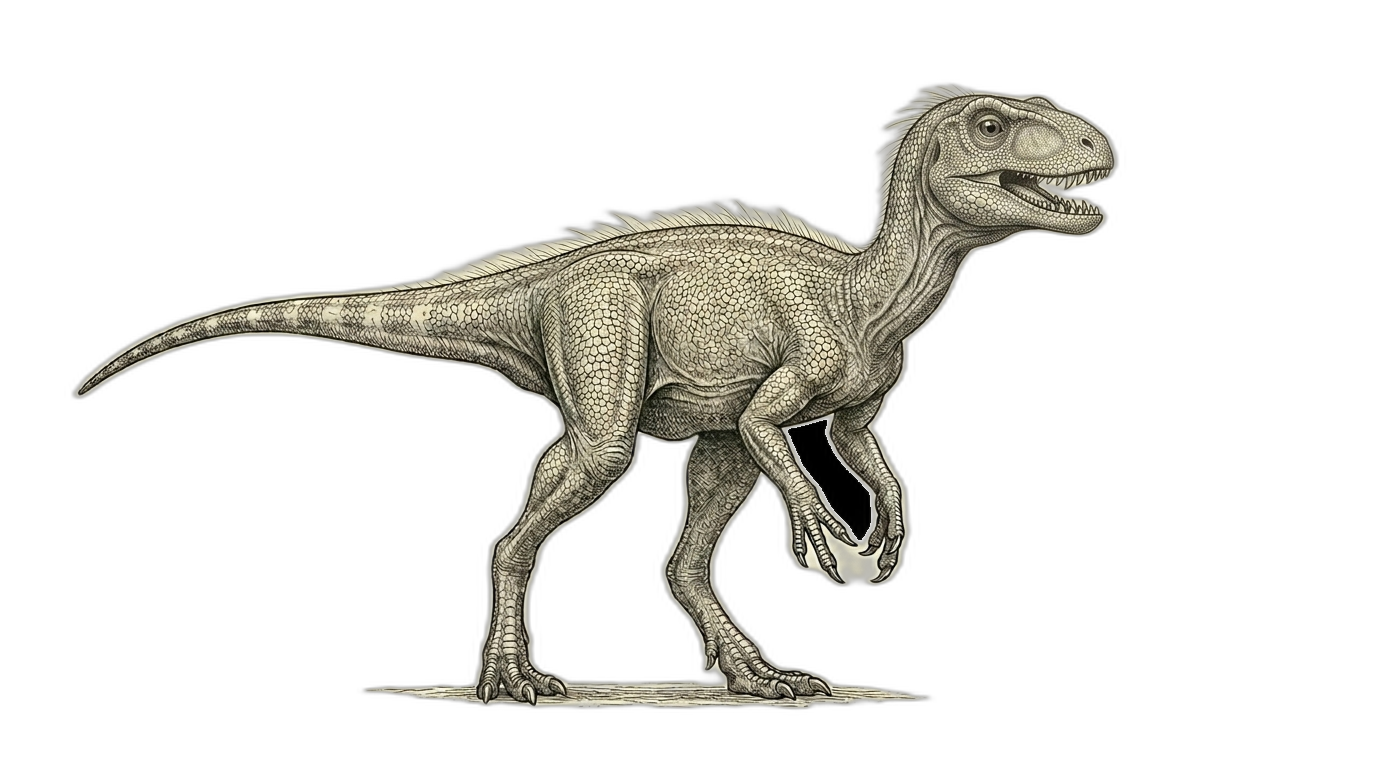
Eoraptor
Both are Triassic taxa representing major evolutionary radiations.
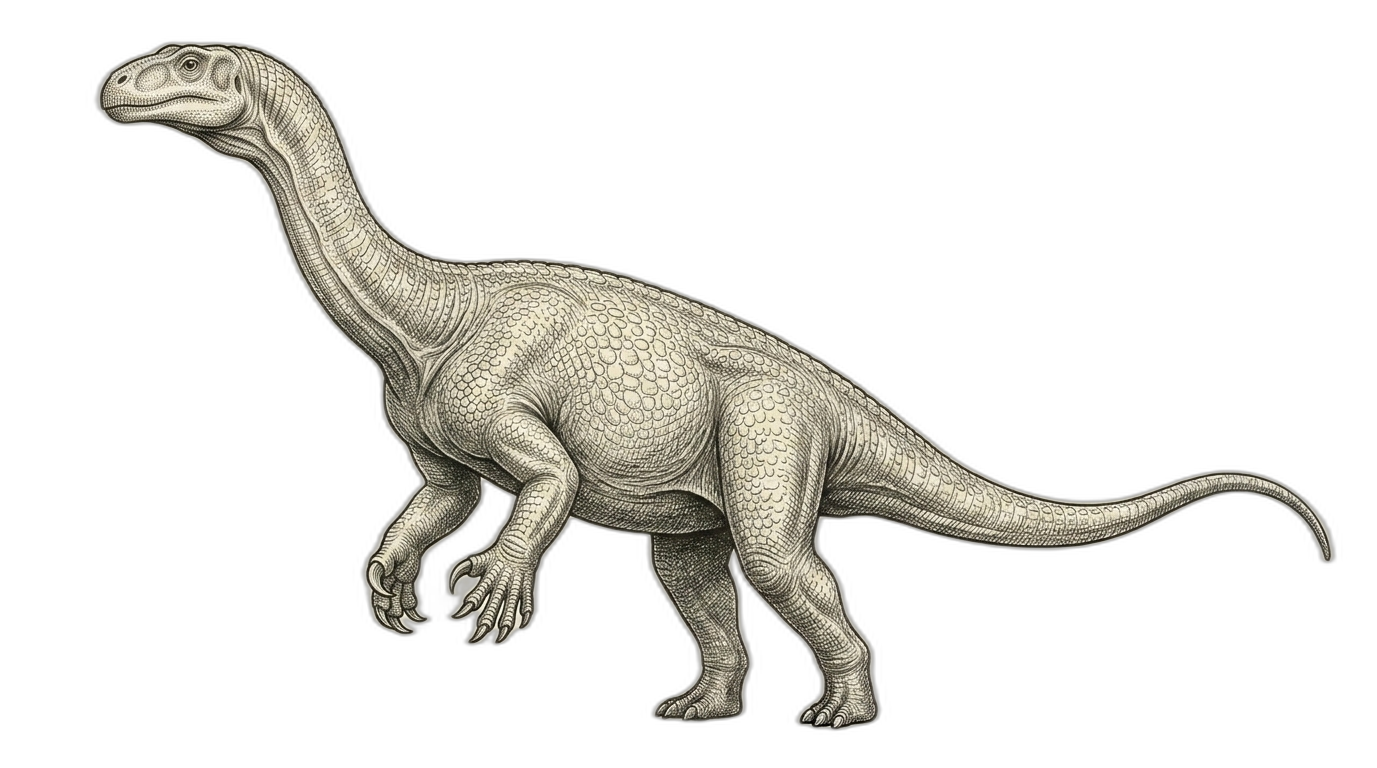
Plateosaurus
Plateosaurus engelhardti
Both existed in the Late Triassic of Europe (Nothosaurus extending into this period).
Sources & Citation
- Length estimates
- Rieppel, O. (2000). Sauropterygia I. Handbuch der Paläoherpetologie, Teil 12A
- Height estimates
- Estimated based on body proportions; Rieppel (2000)
- Weight estimates
- Mass estimate based on skeletal dimensions; Klein (2010)
- Speed estimates
- Biomechanical estimate based on limb morphology for aquatic locomotion