Ornithischia — Marginocephalia
Ceratopsians
160–66 Ma
12
vault species
94
million years
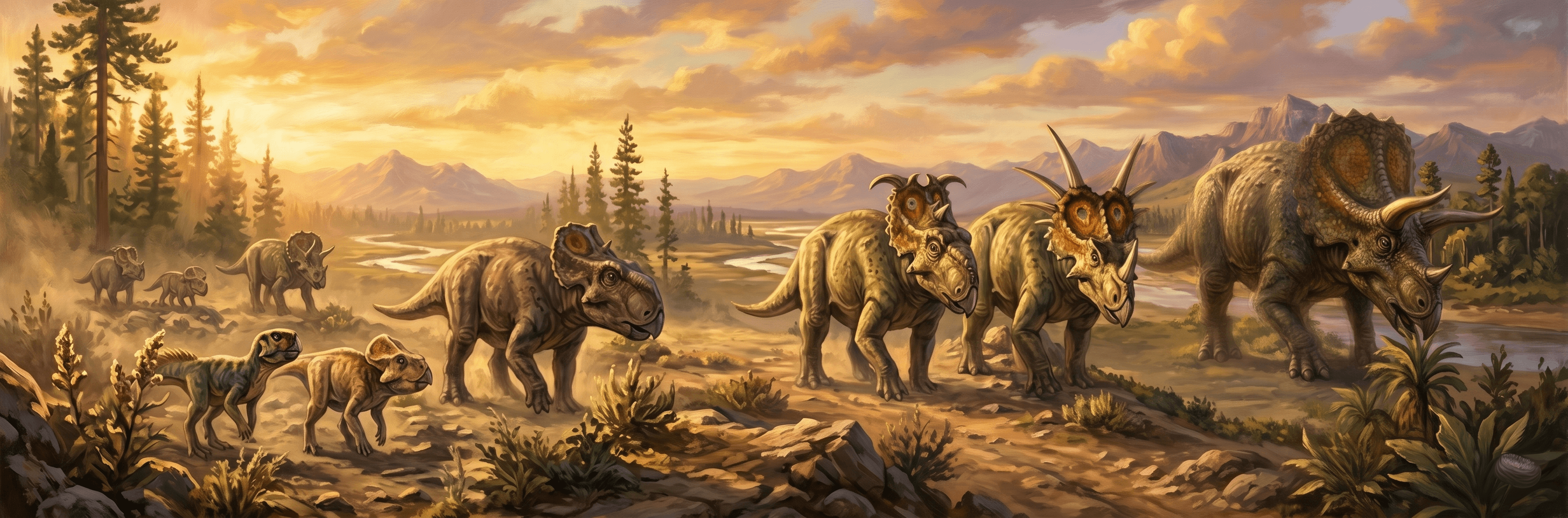
What is a Ceratopsi?
Ceratopsians are ornithischian dinosaurs defined by a rostral bone at the tip of the upper jaw — a unique structure forming a beak — and, in most species, elaborate horns and a bony neck frill. The group ranges from crow-sized Triassic ancestors to the 9-meter, multi-horned giants of the Late Cretaceous.
First appearance
~160 Ma (Late Jurassic)
Largest known
Triceratops (~9 m, ~12 tonnes)
Smallest known
Aquilops (~60 cm)
North American peak
83–66 Ma — dozens of species
Key feature
Rostral bone + frill (unique to group)
Evolution & History
Ceratopsians began small and unassuming. The earliest members — Yinlong and its relatives in Late Jurassic Asia — were bipedal, frill-less animals roughly the size of a turkey. For over 60 million years the group remained modest, diversifying quietly across Asia into the small-frilled protoceratopsids like Protoceratops and Psittacosaurus.
The real explosion came in the Late Cretaceous of North America, when ceratopsians grew into some of the most visually spectacular animals in dinosaur history. Triceratops, Styracosaurus, Pachyrhinosaurus, and dozens of relatives competed to evolve ever-more-elaborate frills and horn configurations — a 15-million-year arms race driven by sexual selection, species recognition, and possibly predator defense. The Horseshoe Canyon and Judith River formations preserve a parade of different species, sometimes with subtle frill differences being the only distinguishing feature.
Ceratopsids were the last major dinosaur group to arise before the extinction — the earliest large-horned ceratopsids appear only around 83 Ma — yet they became among the most successful and diverse herbivores of the final chapter of the Mesozoic.
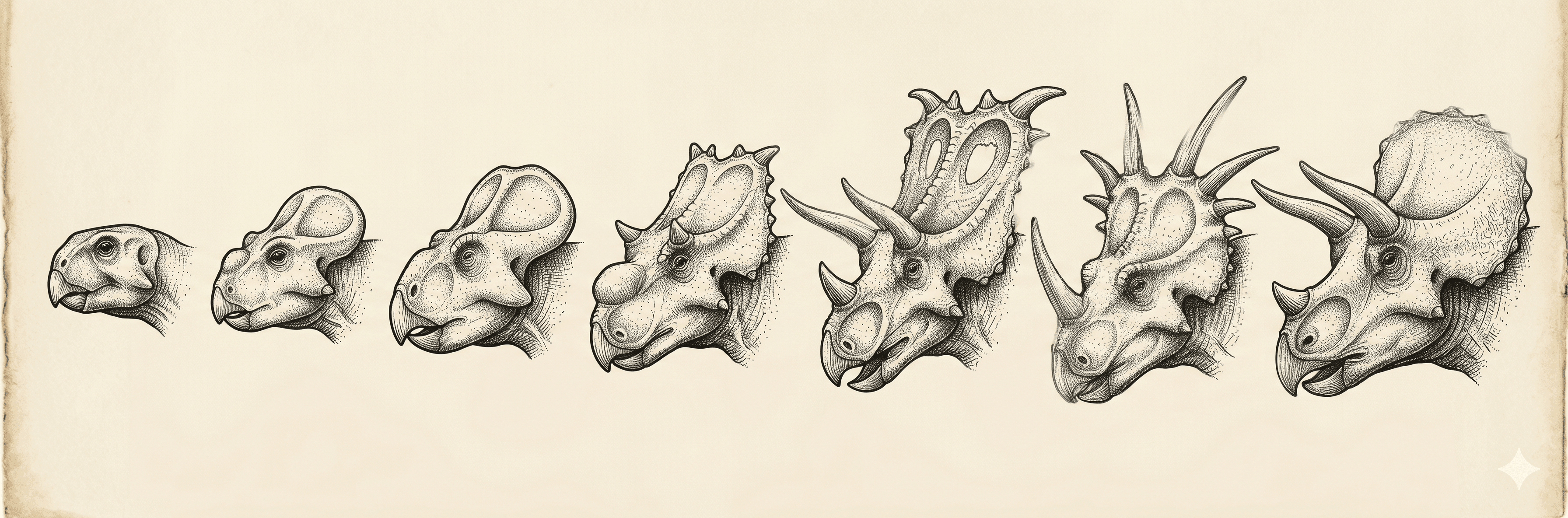
The Elaboration of the Frill
120 Ma → 68 Ma
Key Species in the Record
Yinlong
In vault →Earliest ceratopsian, Late Jurassic China
Psittacosaurus
In vault →Most species-rich dinosaur genus (~15 species)
Centrosaurus
In vault →Bone beds of thousands of individuals — best evidence for large-scale ceratopsian herding
Kosmoceratops
In vault →Most elaborately ornamented ceratopsian — 15 distinct horn-like projections
Triceratops
In vault →Last ceratopsian, survived to the final day of the Mesozoic
Stratigraphic Range
Click any row to expand family-level detail. Amber dots are DinoVault species.
In the Vault
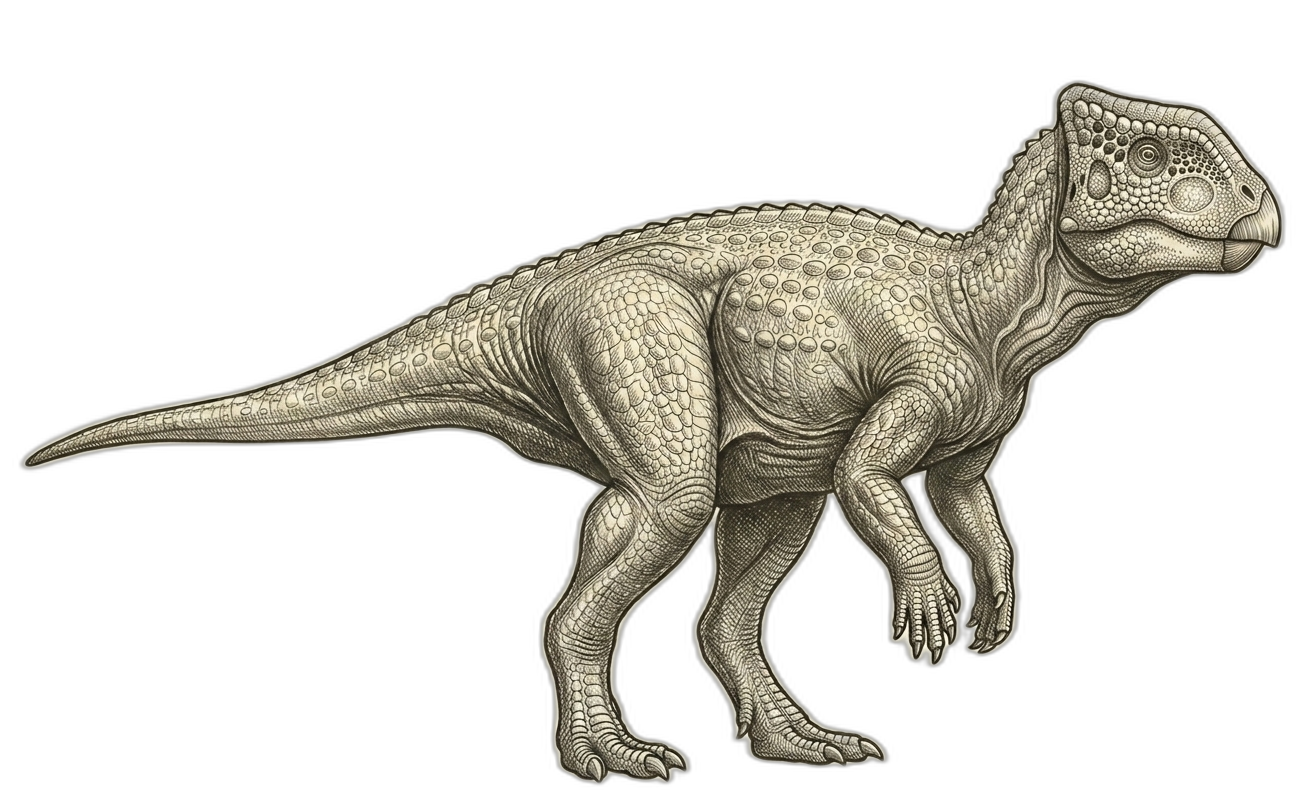
Hidden Dragon
Yinlong downsi
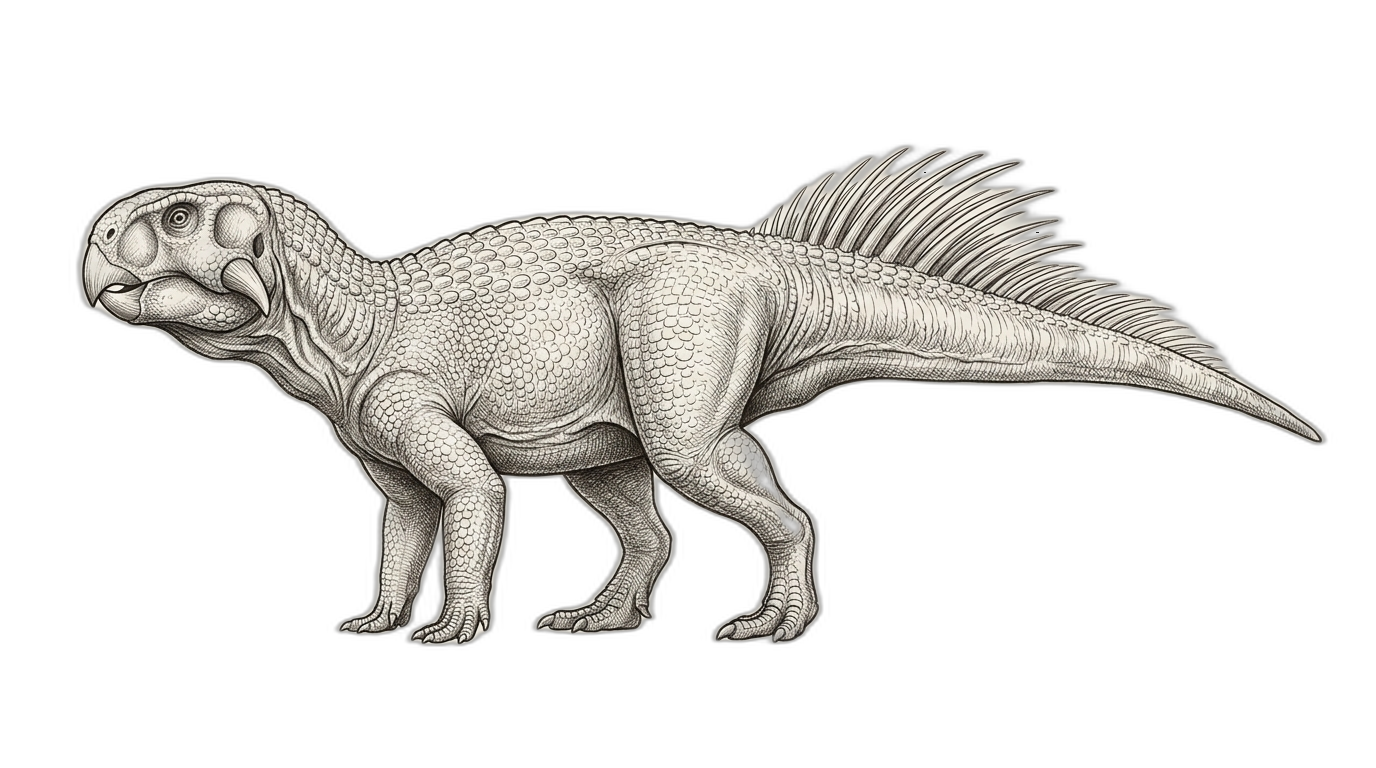
Psittacosaurus
Psittacosaurus mongoliensis
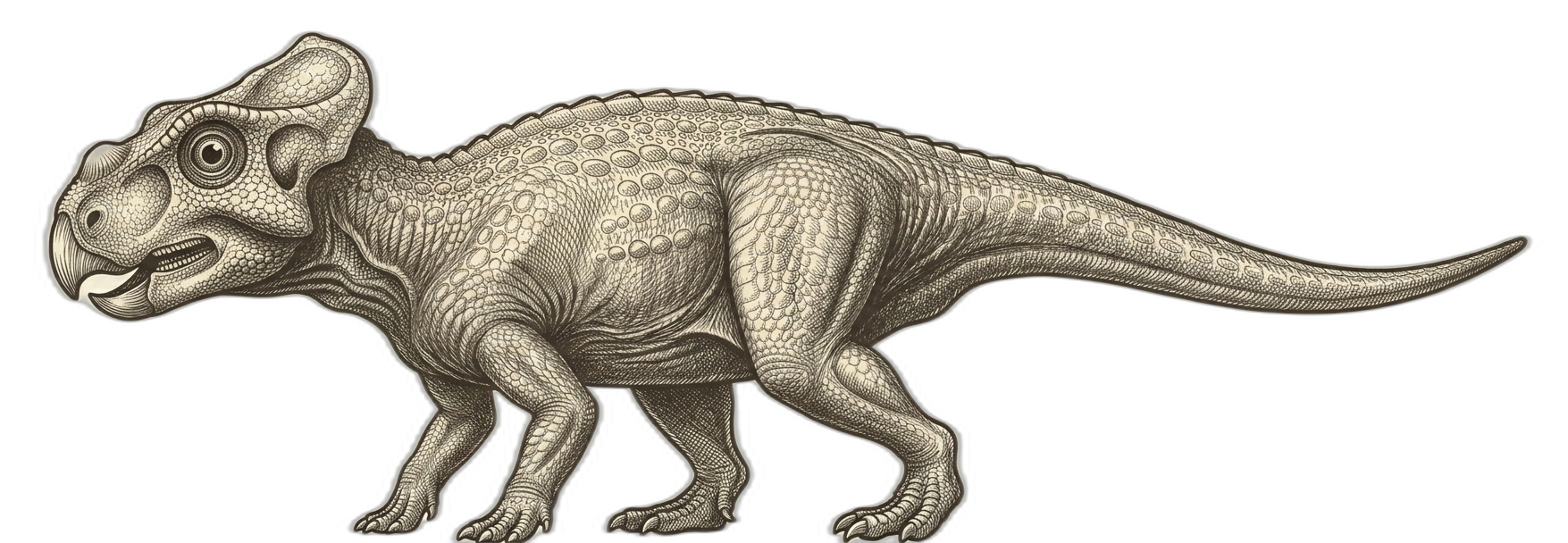
Aquilops americanus
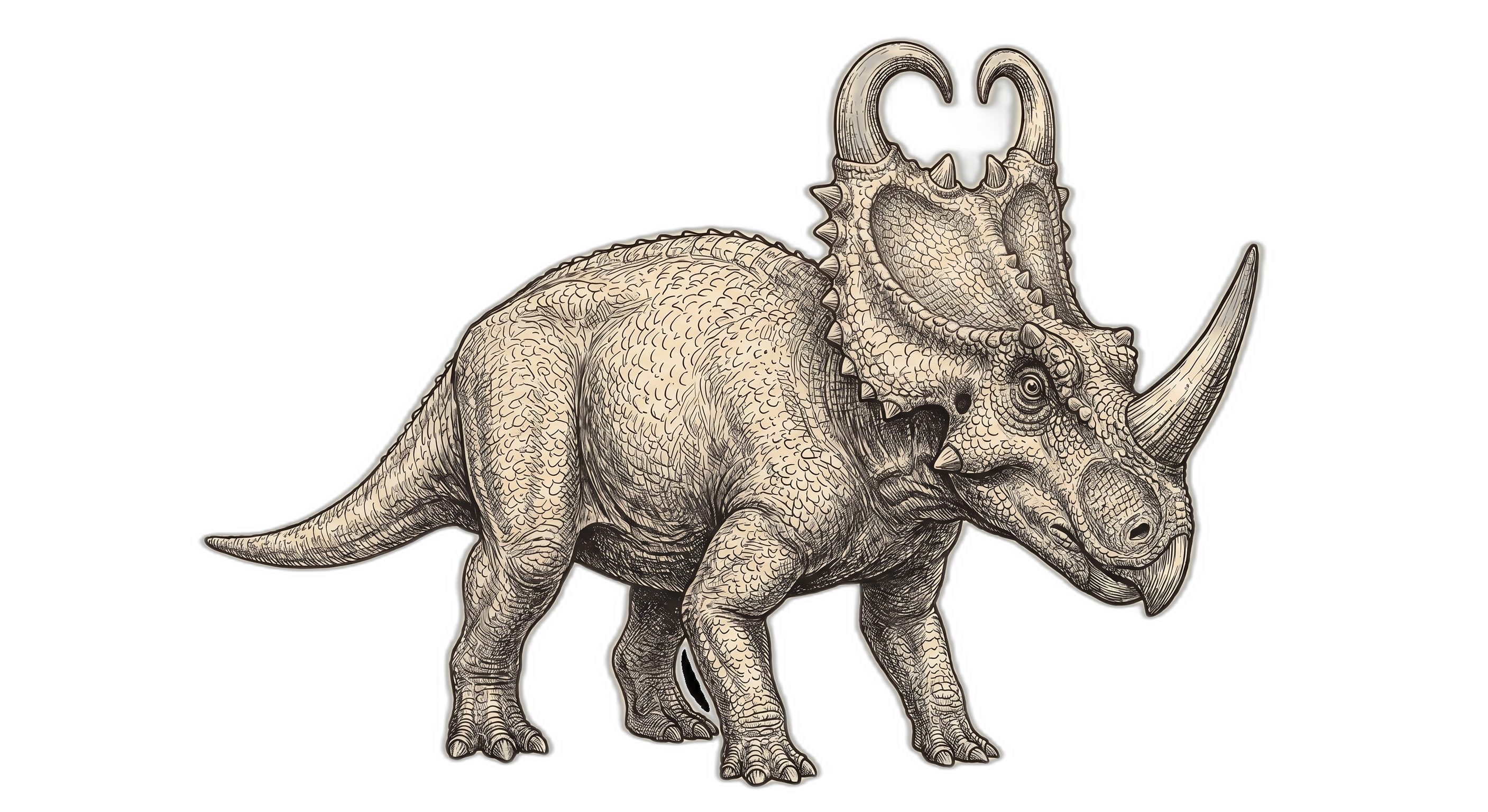
Centrosaurus
Centrosaurus apertus
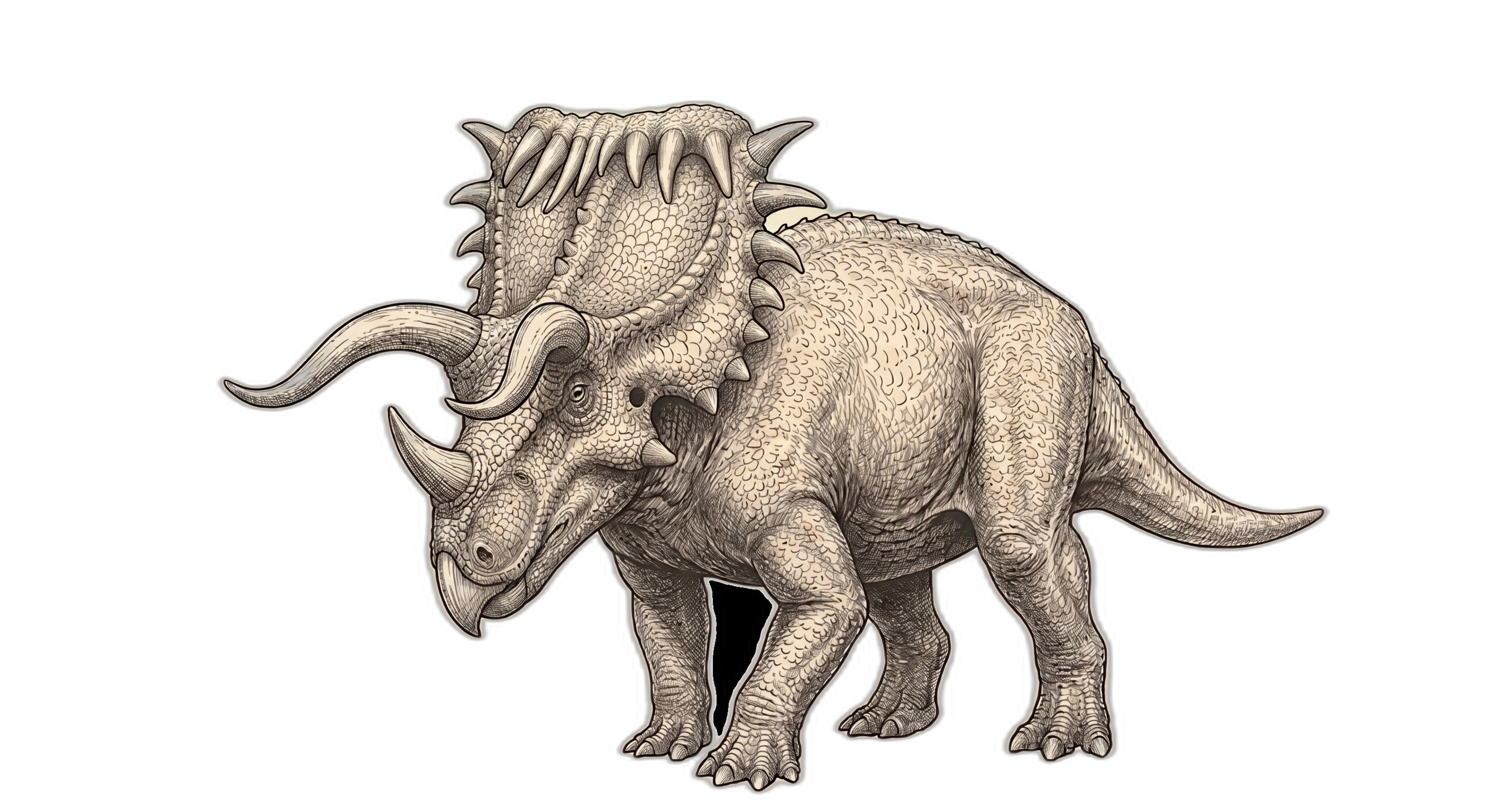
Kosmoceratops
Kosmoceratops richardsoni
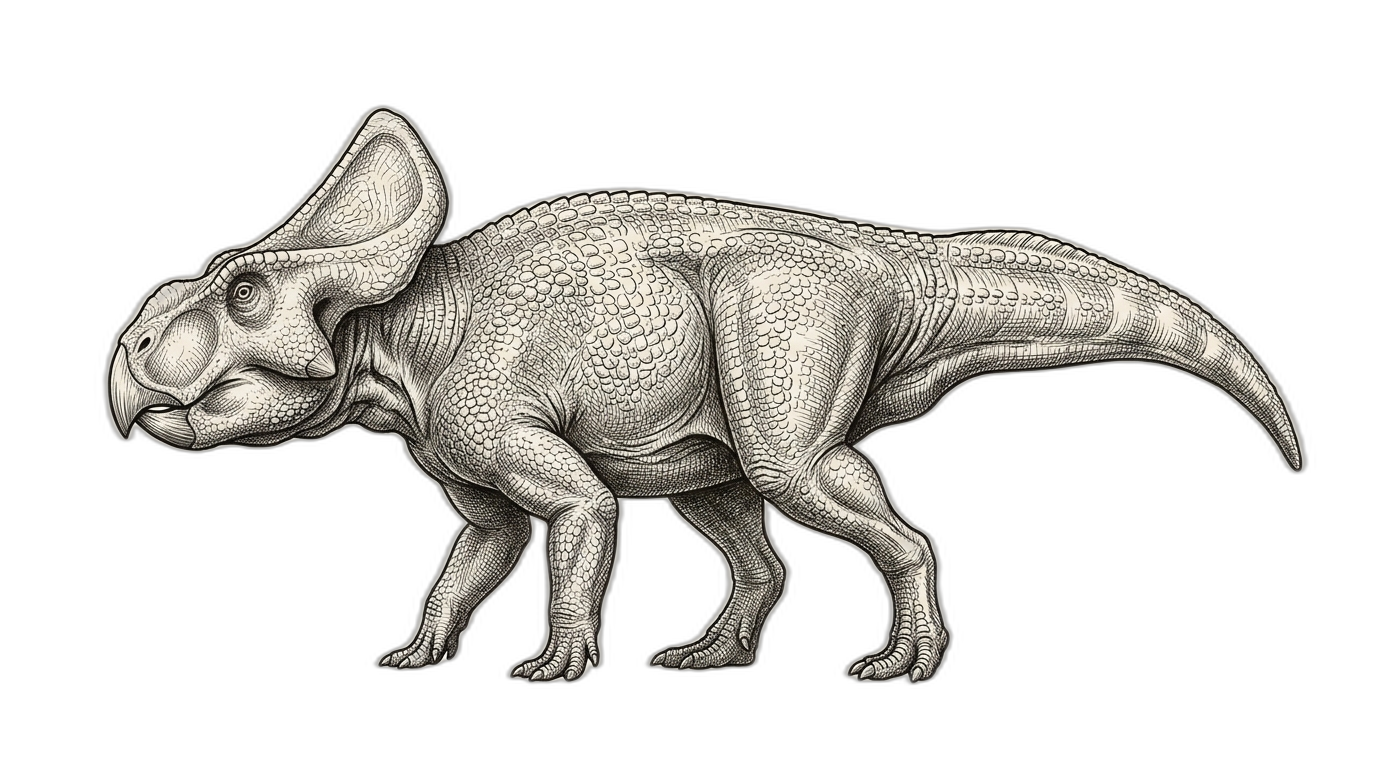
Protoceratops
Protoceratops andrewsi
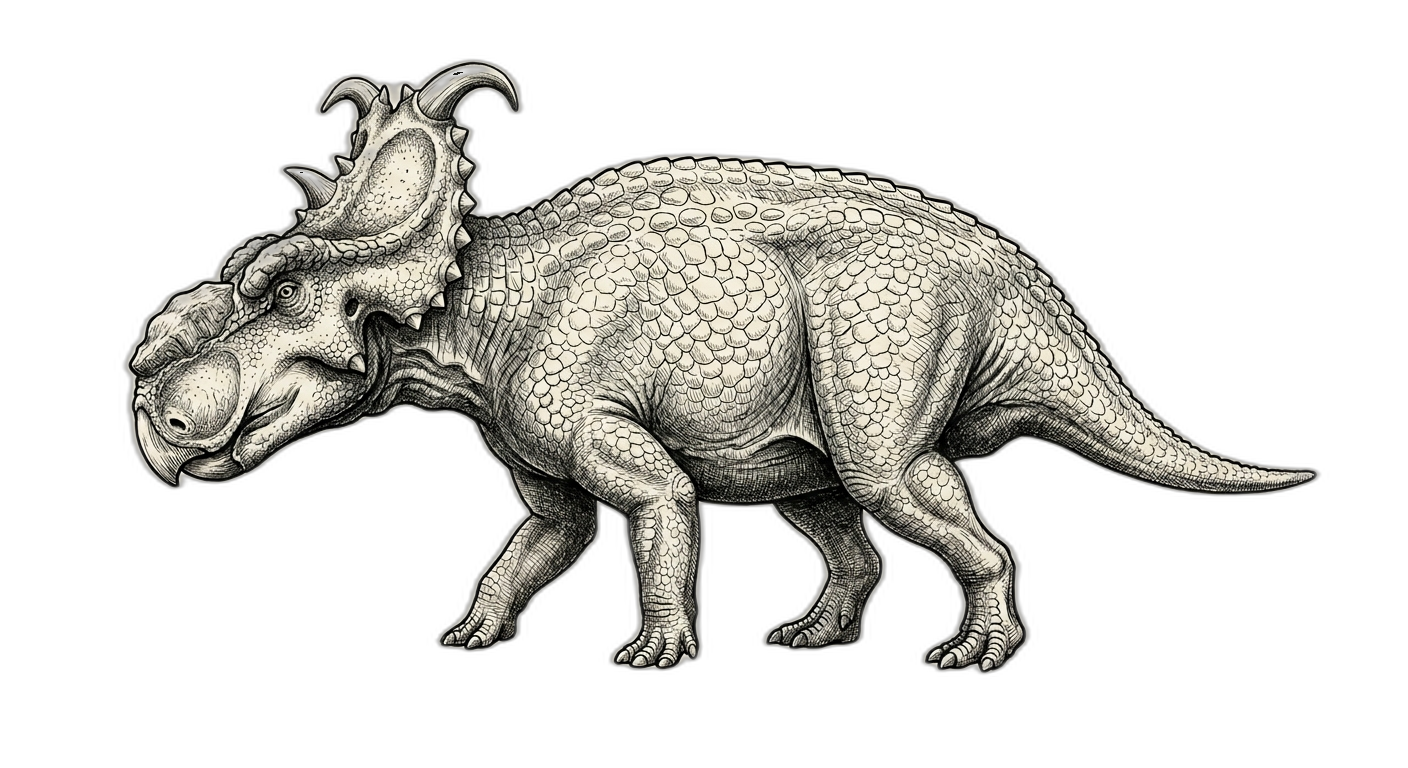
Pachyrhinosaurus
Pachyrhinosaurus canadensis
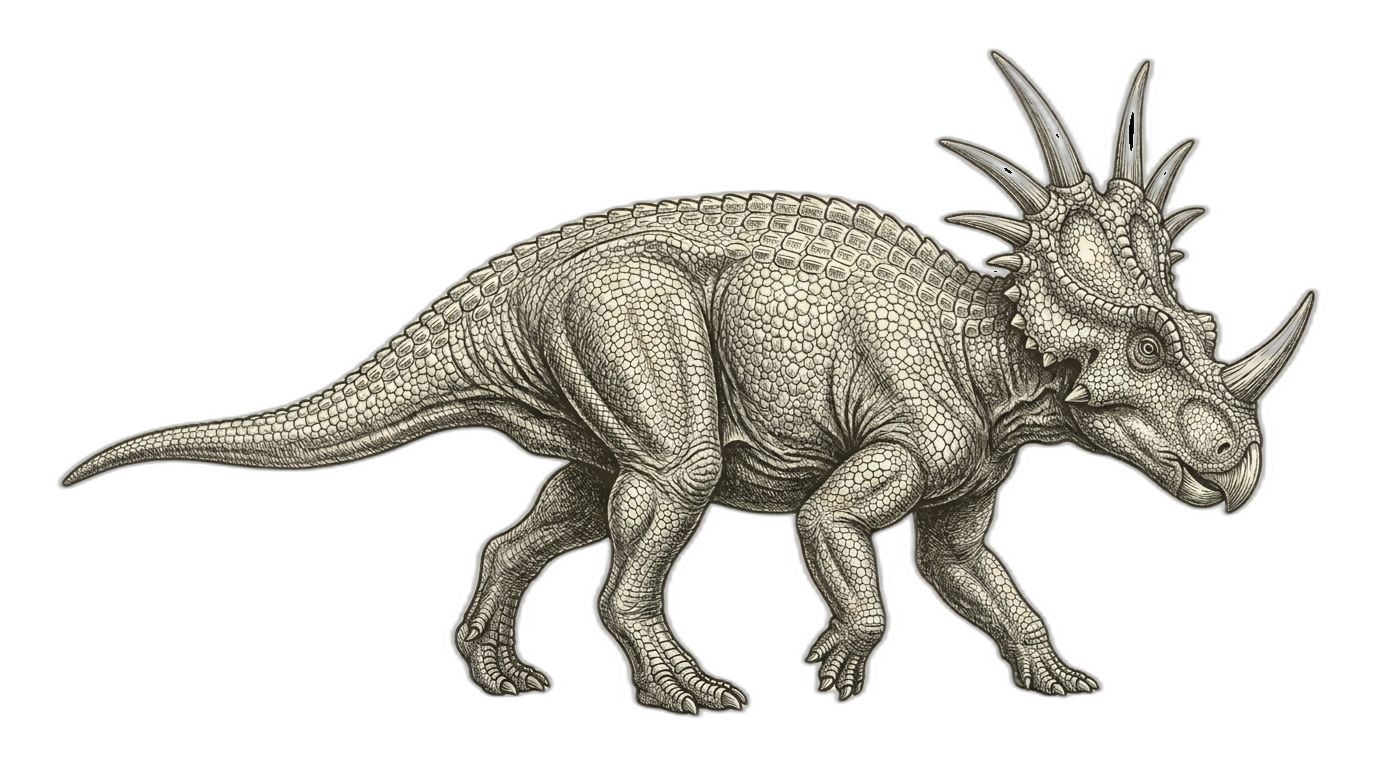
Styracosaurus
Styracosaurus albertensis
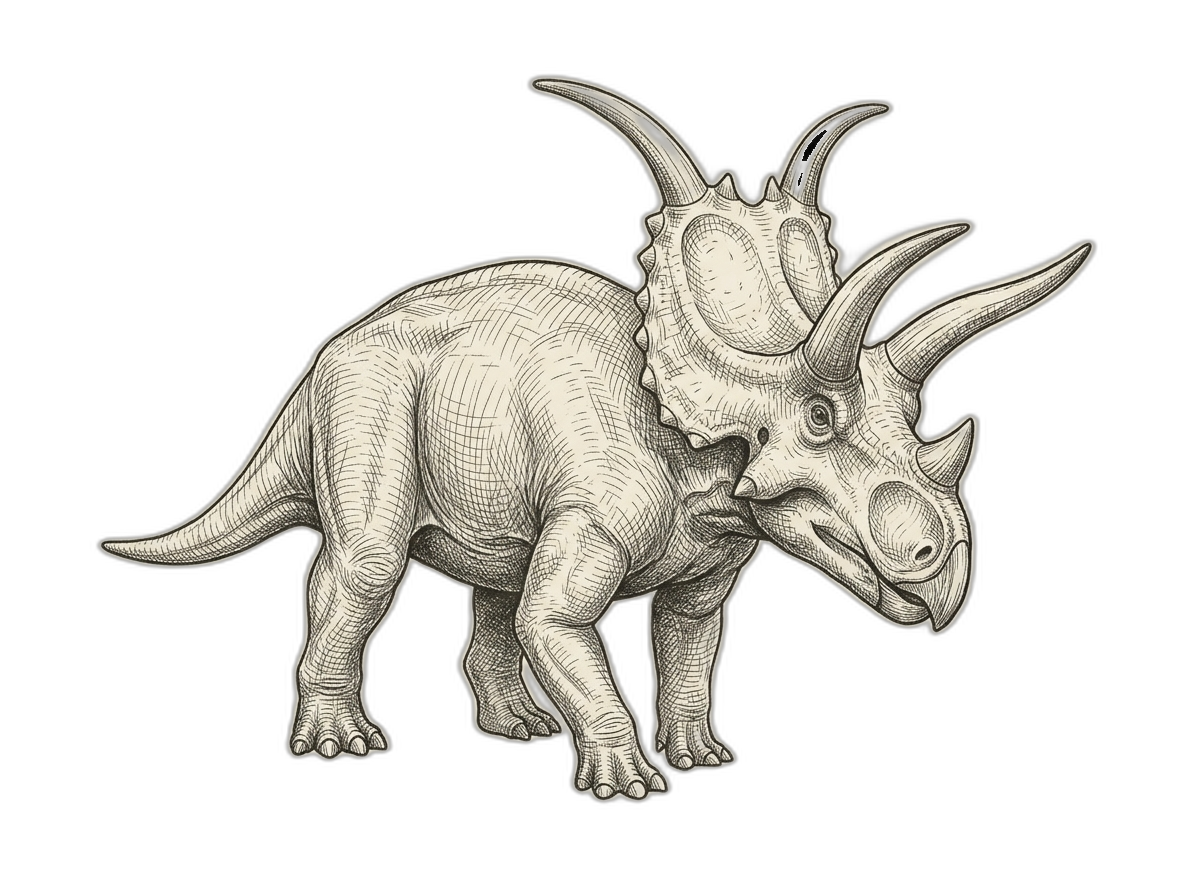
Devil Horned Face
Diabloceratops eatoni
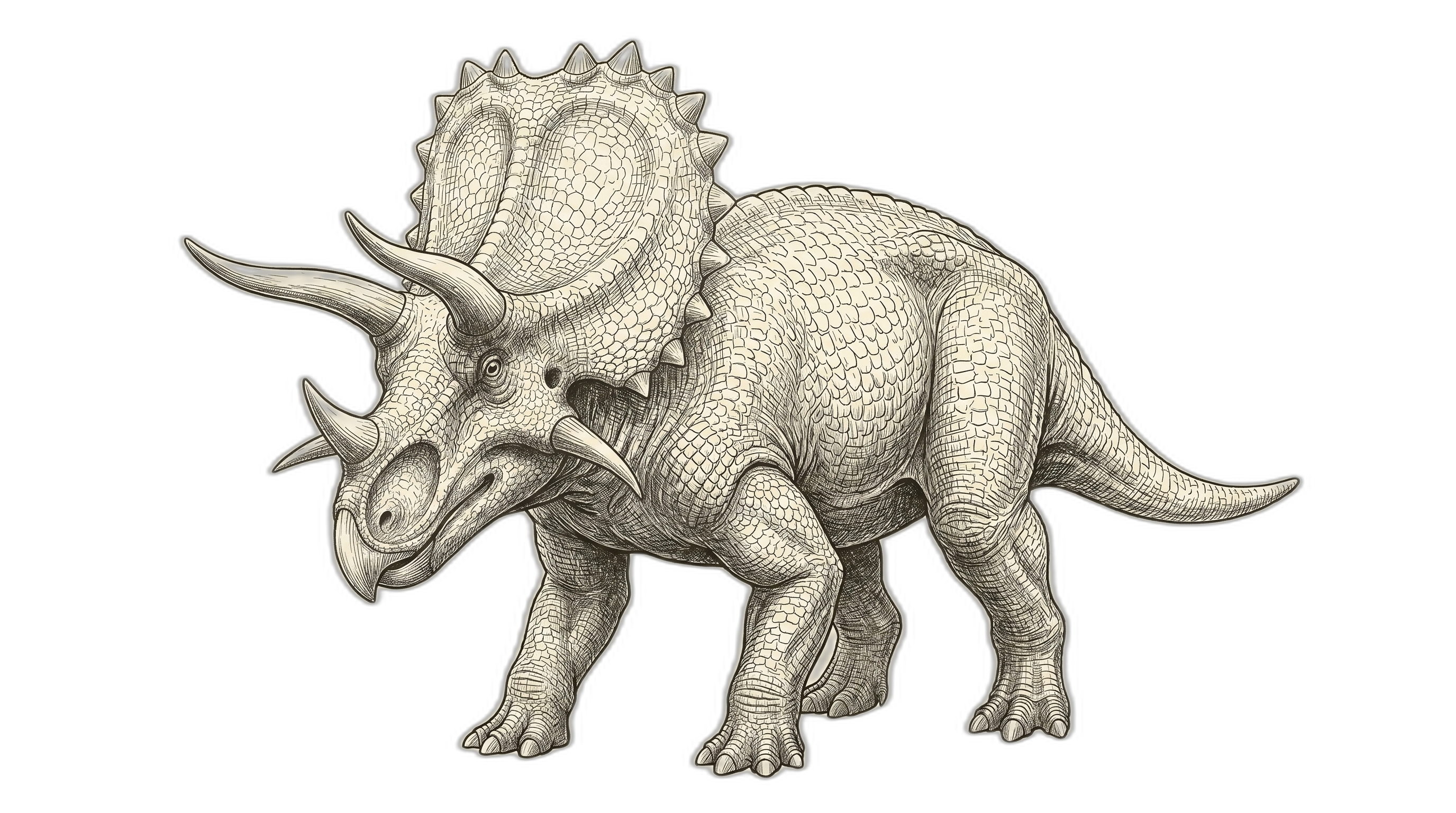
Pentaceratops
Pentaceratops sternbergii
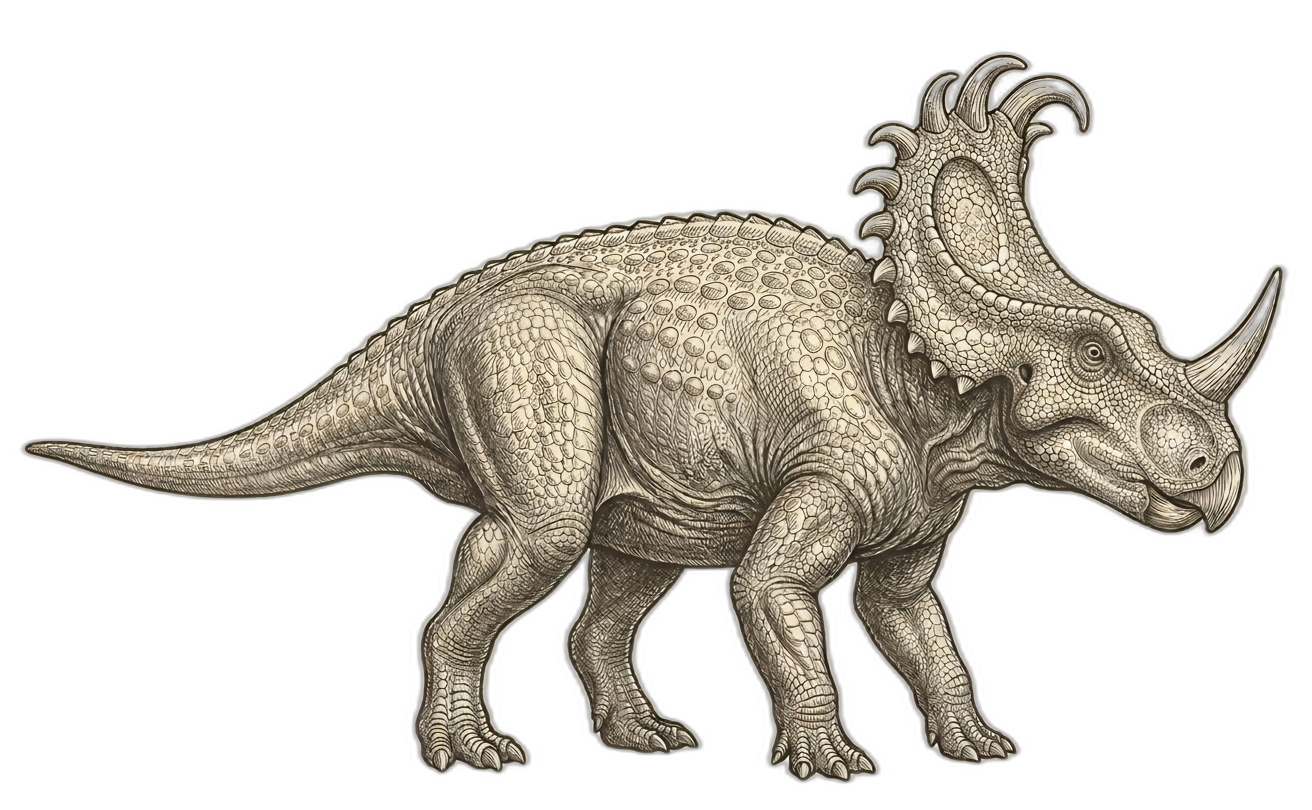
Sinoceratops
Sinoceratops zhuchengensis
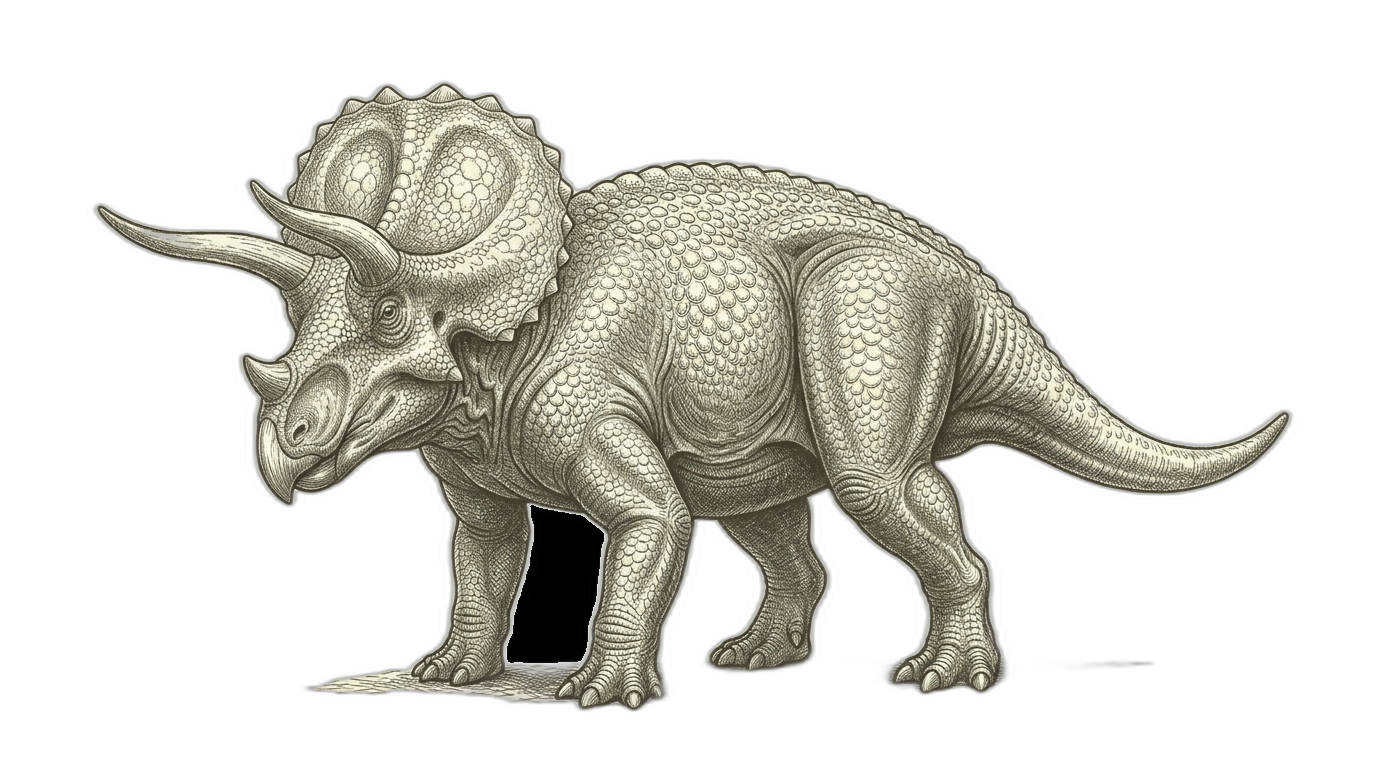
Triceratops
Triceratops horridus