About
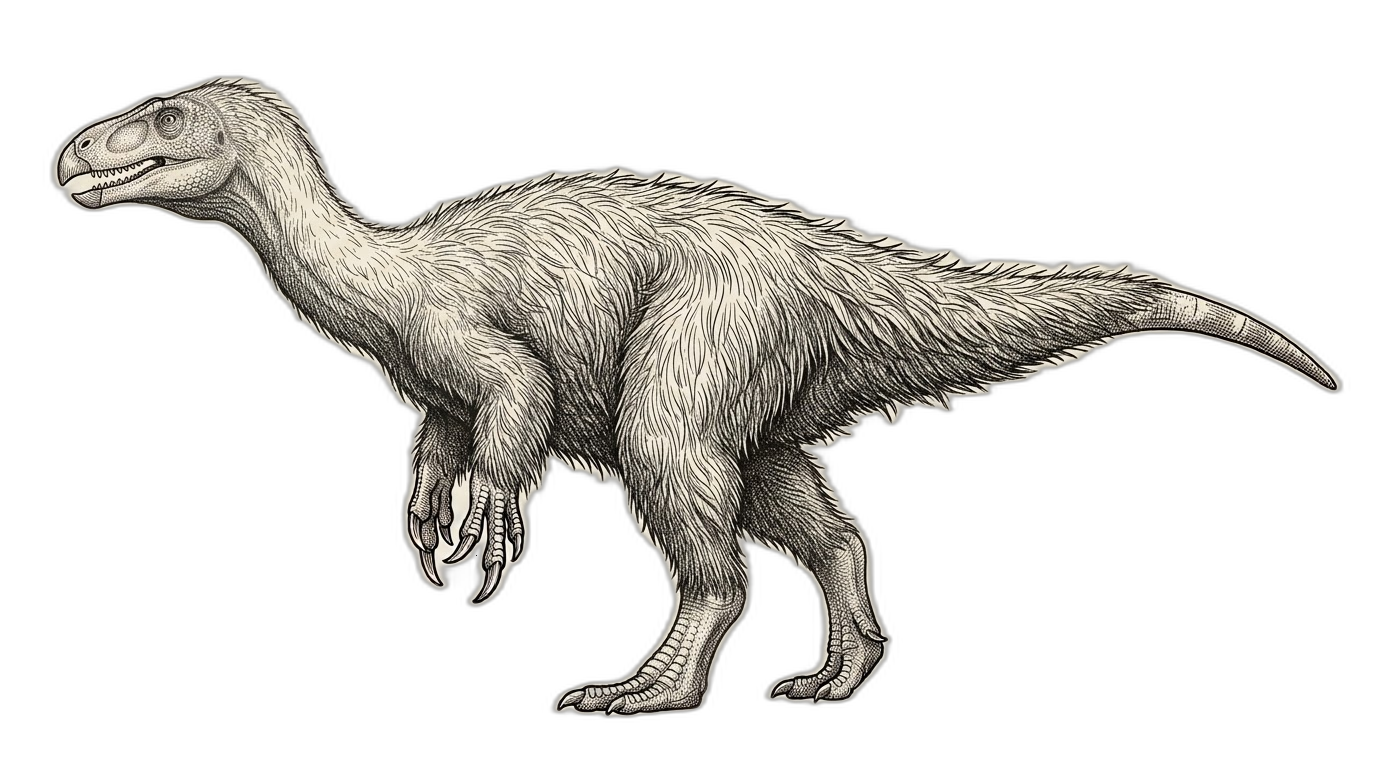
Kayrasaurus changliensis is an early-branching therizinosaur from the Yixian Formation near Beipiao in Liaoning Province, China, named in 2026 from a nearly complete, skeletally immature skeleton with a largely complete skull. At more than 3.6 metres long and an estimated 117–274 kilograms, it is at least 1.6 times the size of Beipiaosaurus, the next largest therizinosaur of the Jehol Biota, and the largest therizinosaurian specimen found there.
Its skull and neck set it apart. The teeth were extremely small and densely packed — more than 3.5 to 4 per centimetre, with over 32 in the upper jaw () and over 45 in the lower jaw (dentary). Even its shortest neck vertebra was more than 30 percent longer than a vertebra of the trunk, and the claw on its outermost finger (digit IV) carried a prominent 'lip' at its base that projected forward and upward, whereas in other therizinosaurs the lip points more backward.
The skull was crushed to a slab only 3–5 millimetres thick during burial, so the team used micro-CT scanning to study it. Fusion patterns in the skeleton show the animal was not yet fully grown, so adults may have been larger. The hind limbs were not preserved, which is why its height and speed are estimates.
Kayrasaurus is the fourth early-branching therizinosaurian known from the Jehol Group, alongside Beipiaosaurus, Jianchangosaurus and Lingyuanosaurus. The authors tentatively group it with Beipiaosaurus as a sturdier, less agile animal with features suggesting a stronger bite, while the other two look better built for running and for foraging with their forelimbs.
Quick Facts
- Scientific name
- Kayrasaurus changliensis
- Group
- Theropod · Therizinosauria (early-branching)
- Lived
- Early Cretaceous, 125–121 million years ago
- Diet
- Herbivore
- Movement
- Walked on two legs
- Fossils found in
- Yixian Formation (Liaoning, China)
- Discovery credited to
- 2026, Described by Chun-Chi Liao, William J. Freimuth, Lindsay E. Zanno & Xing Xu (2026)
- Holotype
- IVPP V 18597, Institute of Vertebrate Paleontology & Paleoanthropology, Beijing
- DinoVault record
- DVL-0071
Where fossils were found
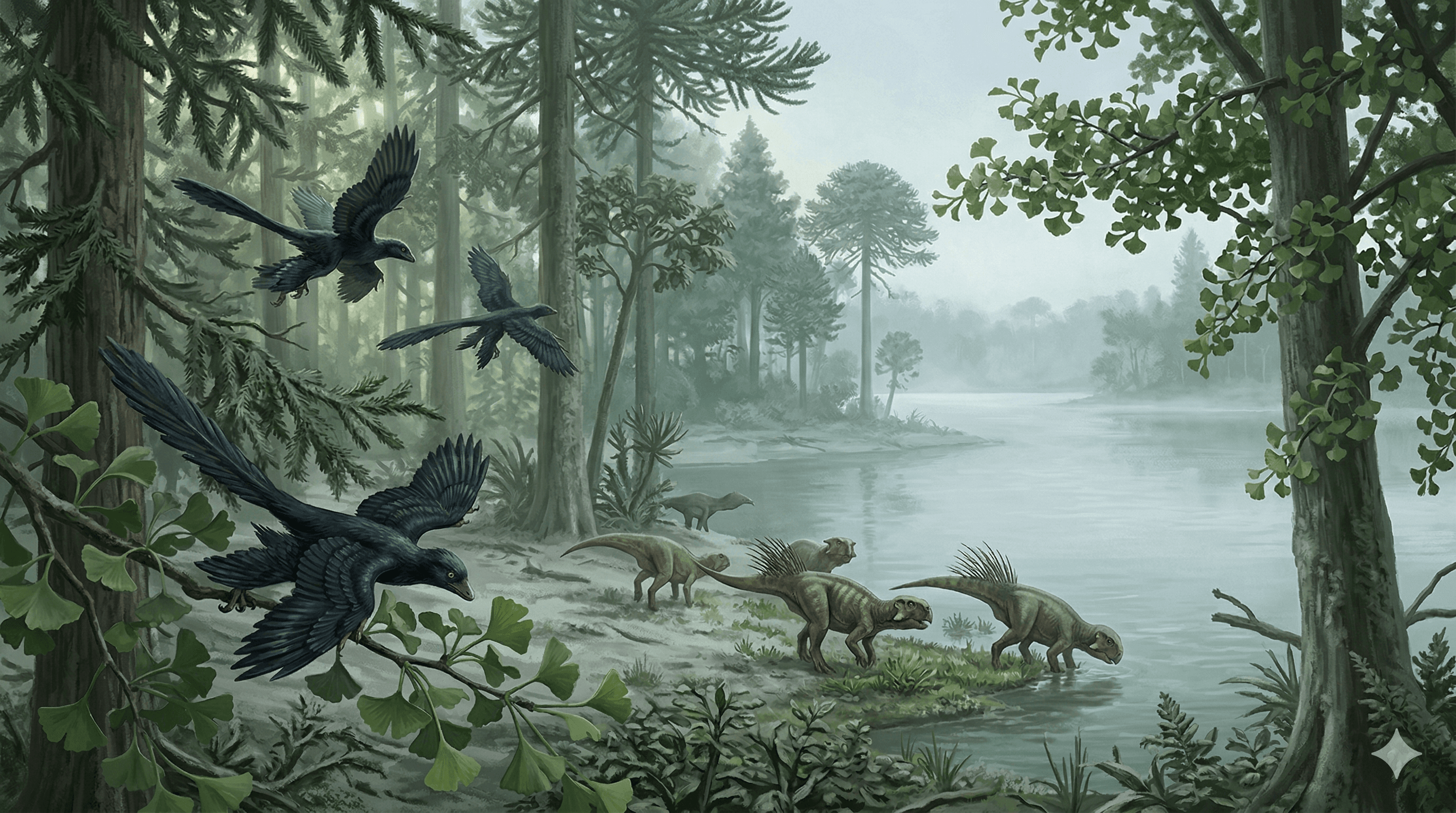
Yixian Formation
Liaoning · China
125–121 million years ago(4m year span)
Keep exploring the vault
Yutyrannus
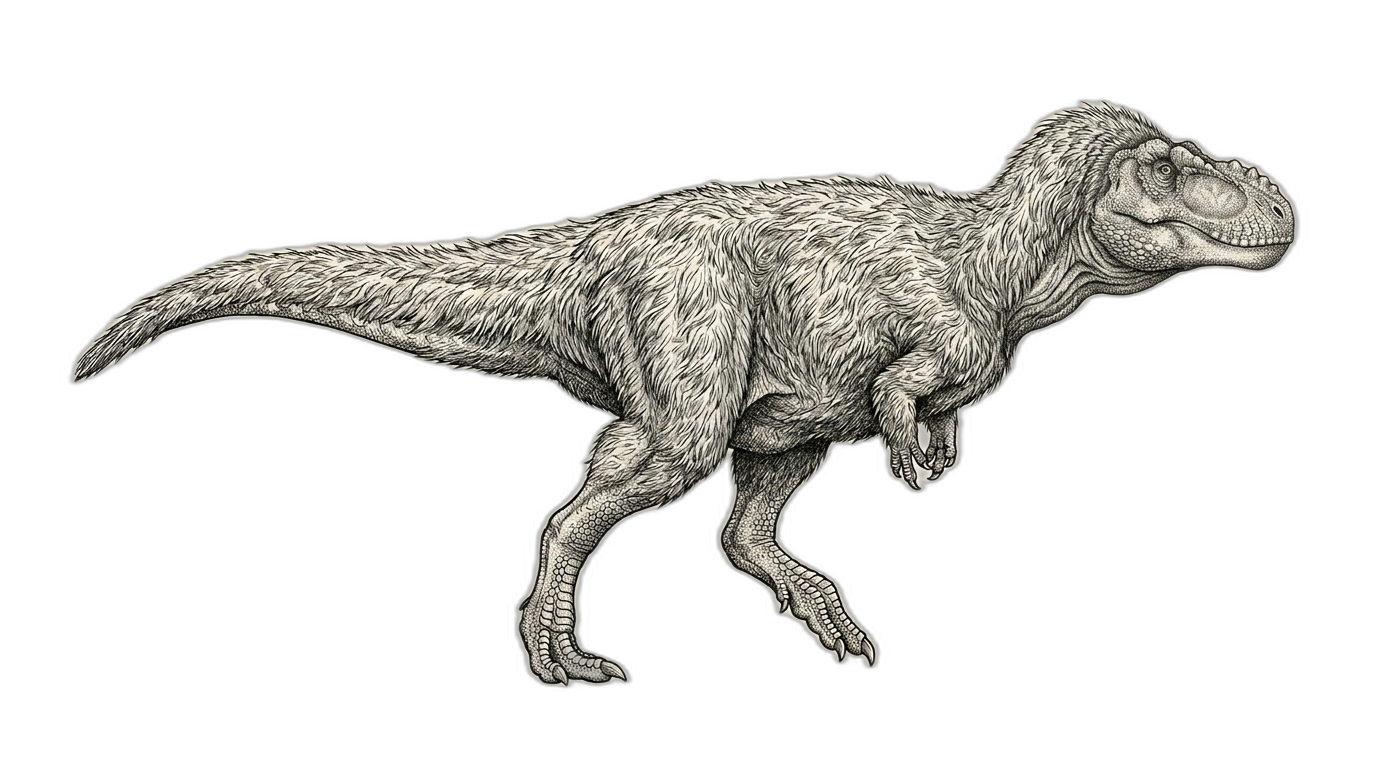
Yutyrannus huali
Speculative.
Beipiao Lizard
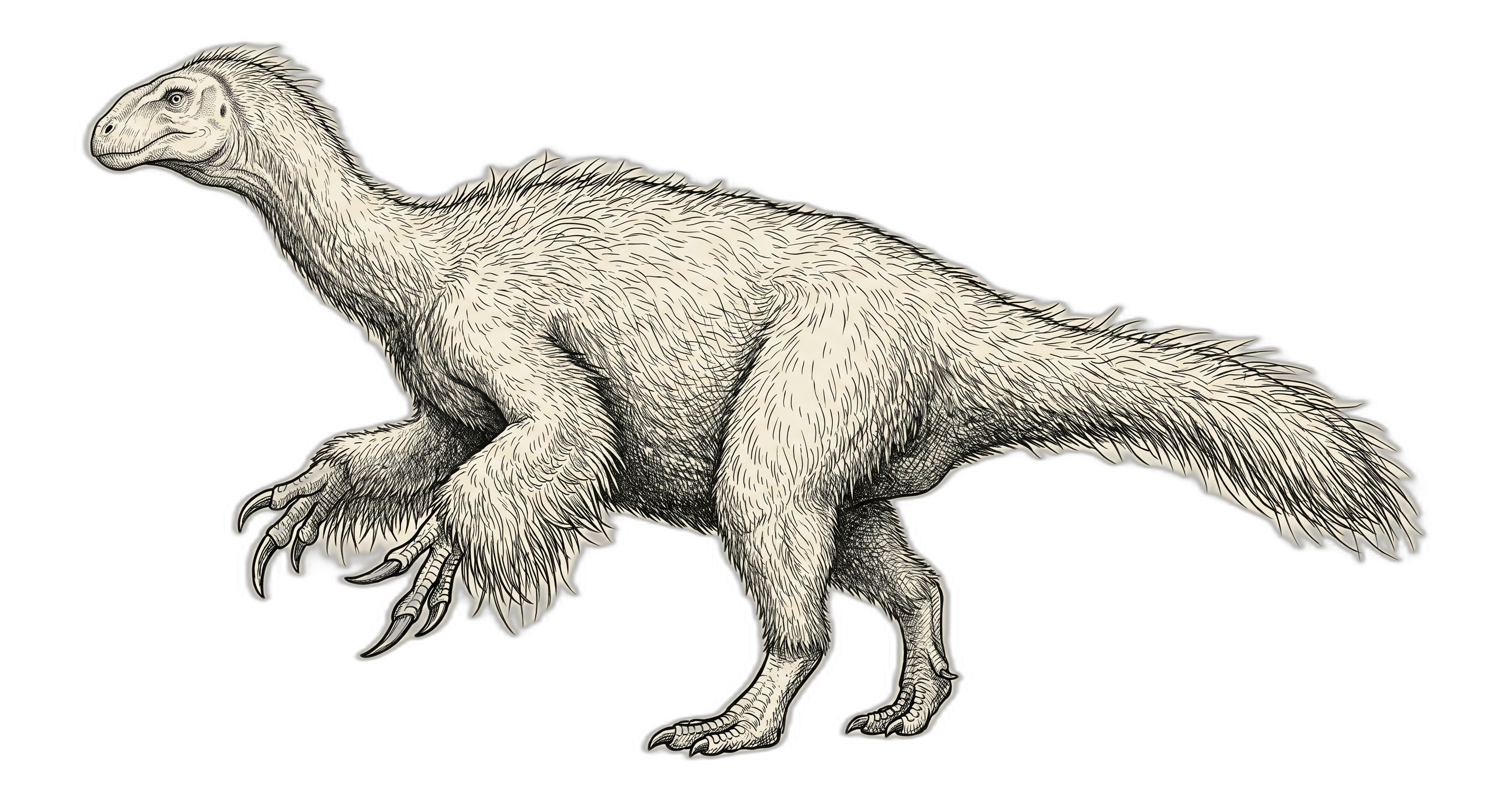
Beipiaosaurus inexpectus
Both are early-branching therizinosaurs from the Yixian Formation with herbivorous diets.
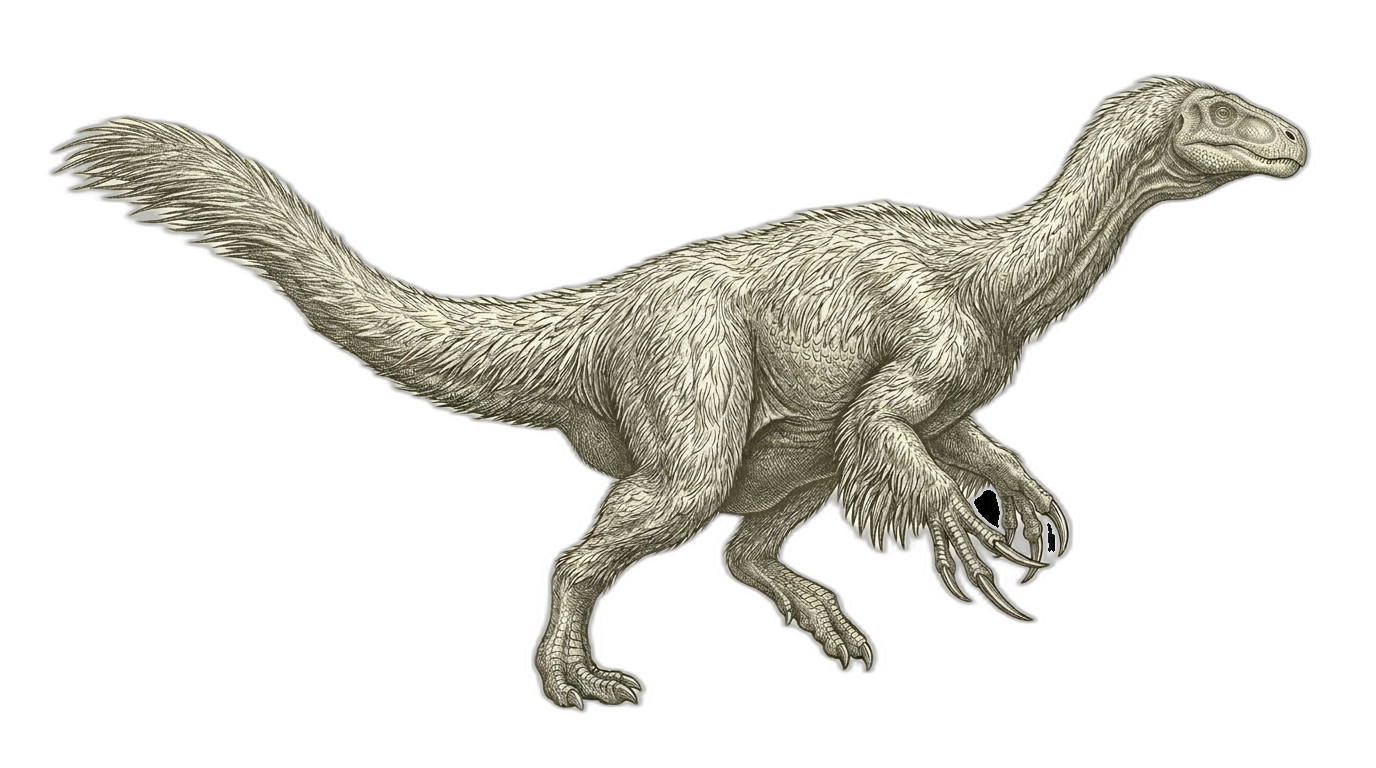
Therizinosaurus
Therizinosaurus cheloniformis
Both are therizinosaurs representing the same evolutionary trajectory toward large-bodied herbivory in theropods.
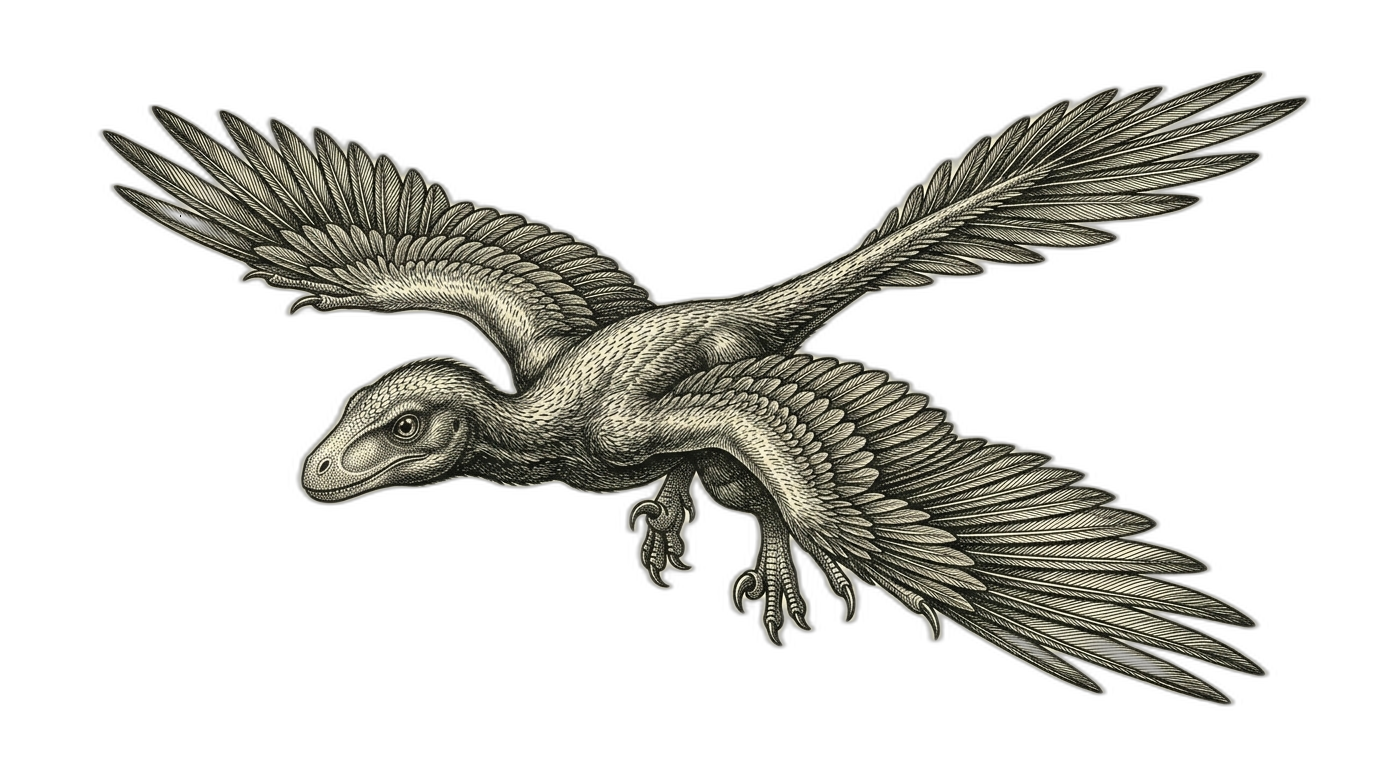
Microraptor
Microraptor gui
Microraptor's four-winged gliding form contrasts dramatically with the ground-dwelling, heavy-bodied Kayrasaurus, showcasing the extraordinary diversity of theropod body plans in the Yixian ecosystem.
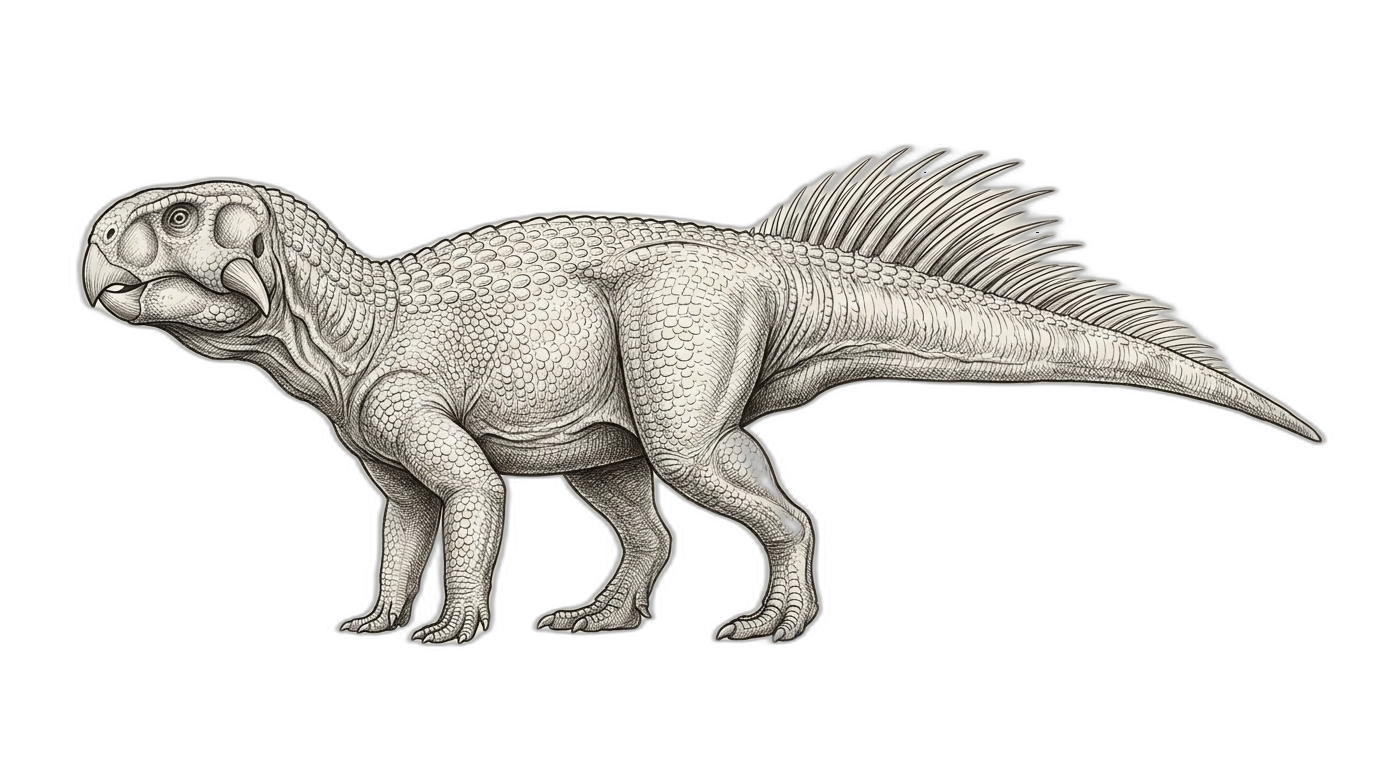
Psittacosaurus
Psittacosaurus mongoliensis
Both are herbivores from the Yixian Formation.
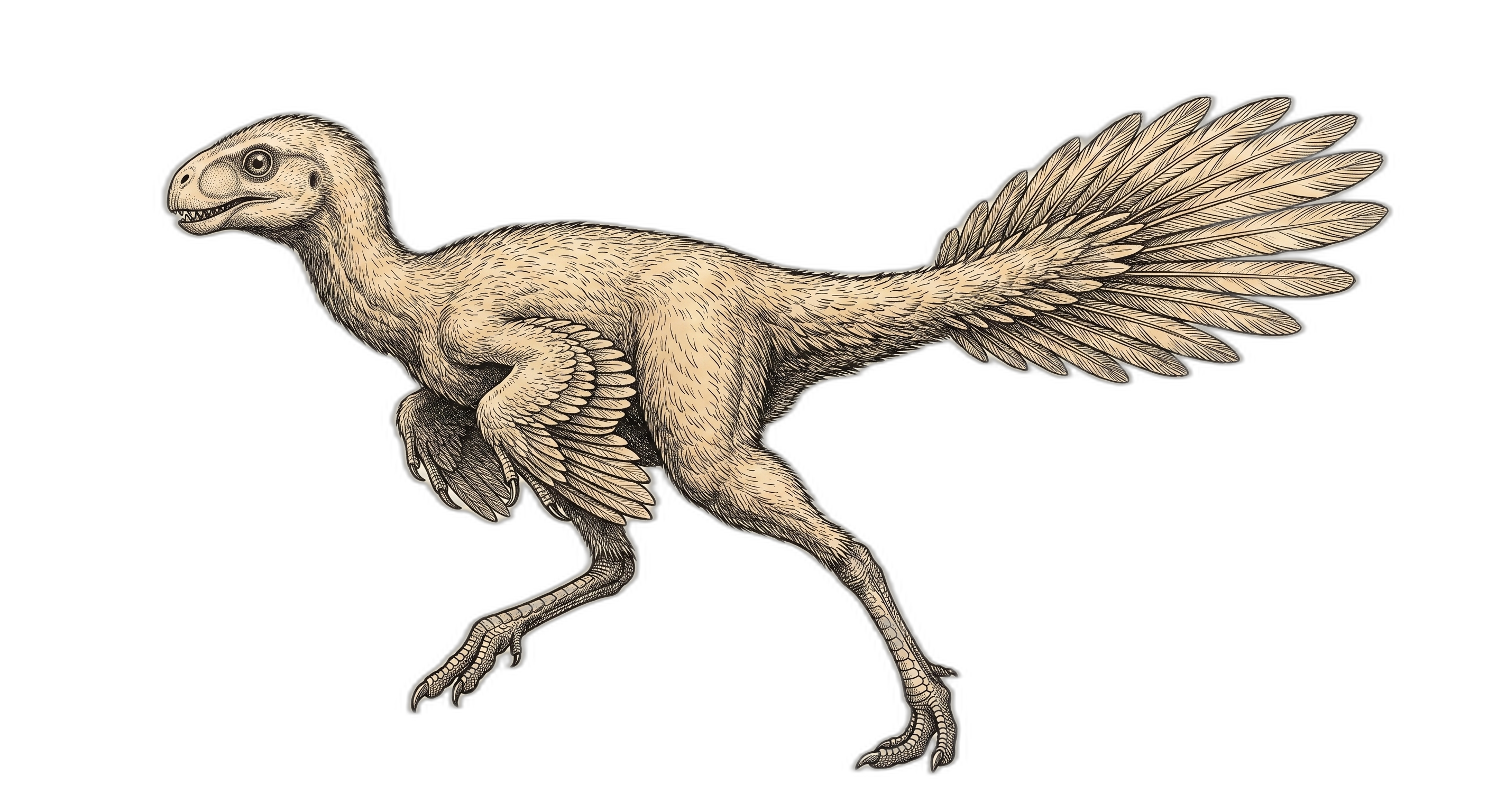
Caudipteryx
Both are feathered theropods with herbivorous/omnivorous diets from the Yixian, representing different evolutionary experiments in non-carnivorous feeding among coelurosaurs.
Sources & Citation
Original descriptiondoi:10.1080/14772019.2026.2710287
- Length estimates
- Liao, Freimuth, Zanno & Xu (2026), J. Syst. Palaeontol. 24(2): 2710287 — "more than 3.6 m"; holotype is immature, so adults may have been longer
- Height estimates
- Estimate from body proportions of related therizinosaurians; hind limbs not preserved
- Weight estimates
- Liao, Freimuth, Zanno & Xu (2026), J. Syst. Palaeontol. 24(2): 2710287 — approx. 117–274 kg; hind limbs not preserved
- Speed estimates
- Estimate from therizinosaurian body plan; the paper infers a robust, less cursorial build