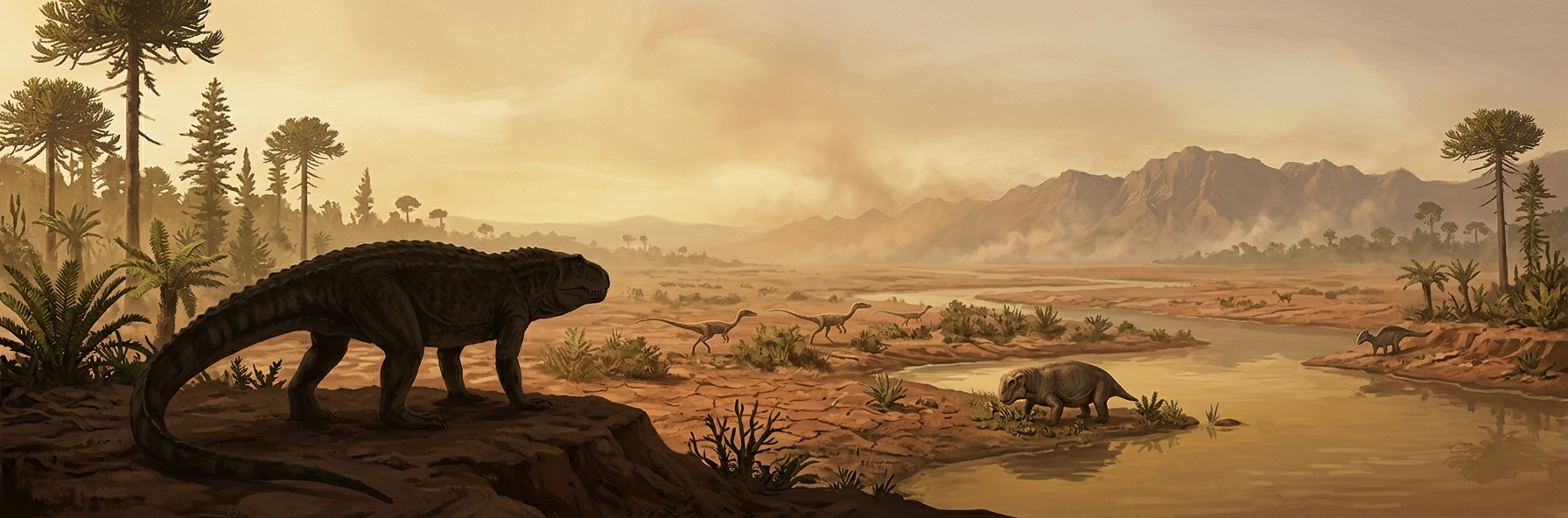
Life on earth is hanging on by a thread. The Permian-Triassic extinction was the most destructive event to life in earth's history, wiping out 90% of marine species and 70% of land vertebrates. The planet that emerges is quiet, hot, and profoundly unwelcoming.
This is where the Triassic begins: not with a bang, but with a long, staggered silence. All of earth's land is comprised of Pangaea, a single supercontinent stretching from pole to pole. The interior bakes under a relentless sun, far from any ocean moisture. For ten million years, ecosystems are barely holding together. Then life finds its footing.
Archosaurs, the group that will eventually produce dinosaurs, pterosaurs, and crocodilians, begin filling the roles that synapsids once held. The first true dinosaurs appear around 230 million years ago in what is now Argentina. They are small, fast, and walk on two legs — exceedingly rare in earth's history. For now, they would be easy to overlook.
They stay easy to overlook for 40 million years. Crocodile relatives like rauisuchians and aetosaurs are the dominant animals of the Triassic. Dinosaurs are bit players, pushed to the edges and extremes of life for now. But their time will come through another catastrophe: massive volcanic eruptions across the Central Atlantic Magmatic Province pump greenhouse gases like CO₂ into the atmosphere and 75% of species disappear. But not the dinosaurs, who have adapted, specialized, and evolved, ready to inherit the Jurassic world.
Key Events
252 Mya
Permian-Triassic Mass Extinction Event
247 Mya
Archosaurs Rise to Dominance
240 Mya
Pangaea Reaches Maximum Assembly
233 Mya
Carnian Pluvial Episode Begins
231 Mya
First True Dinosaurs Appear
215 Mya
Dinosaurs Achieve Global Distribution
201 Mya
Triassic-Jurassic Extinction Event
Life in the Triassic
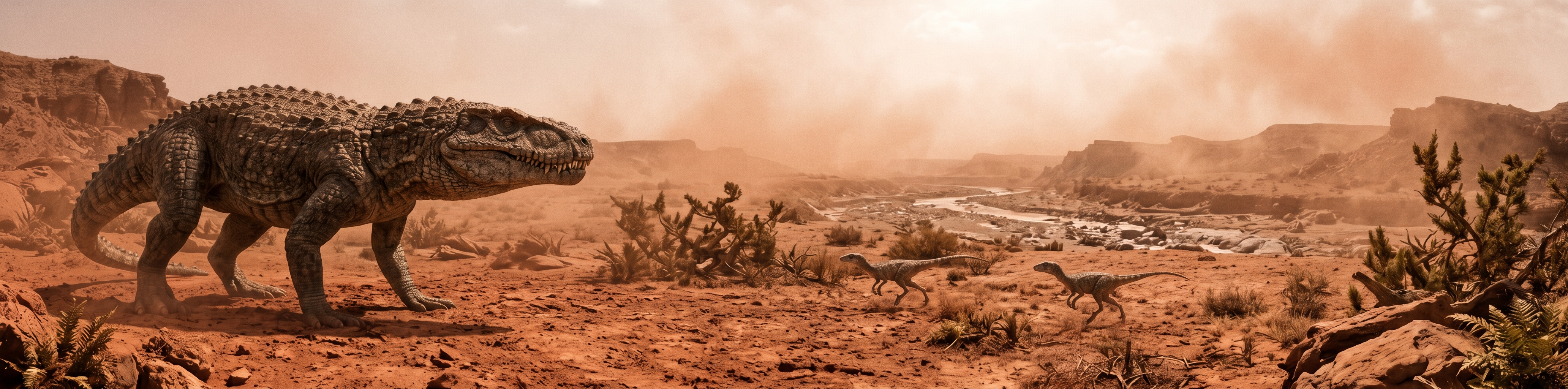
It would be easy to miss the dinosaurs entirely. When Eoraptor and Herrerasaurus appear 230 million years ago in what is now Argentina, they're small: none bigger than a Labrador, most much smaller. The dominant animals are rauisuchians and aetosaurs, crocodile-line archosaurs filling every major predator and large herbivore role. Ichthyosaurs and nothosaurs rule the seas. Giant amphibians the size of cars — such as Mastodonsaurus — are haunting freshwater systems. Early mammals — tiny, nocturnal, insect-eating — are learning to survive in the gaps. The dinosaurs are waiting. And waiting. And waiting… It will take them 40 million years before their moment arrives.
The World of the Triassic
During the Triassic, Earth's landmasses formed the supercontinent Pangaea, a C-shaped configuration stretching from pole to pole with the Tethys Sea cutting into its eastern margin and the vast Panthalassa Ocean covering the remaining 70% of the globe. The interior of Pangaea experienced extreme continental climates—hot, arid conditions with monsoon-driven wet seasons along coastal regions—because no point on the massive landmass lay far enough from another to allow moisture-bearing winds to penetrate deeply. By the Late Triassic, rifting had begun along what would become the Central Atlantic, creating narrow rift basins and volcanic activity that foreshadowed Pangaea's eventual breakup. This unified continental arrangement distinguished the Triassic from both the Permian (when Pangaea had only recently assembled) and the Jurassic (when fragmentation accelerated), creating unique dispersal
Continent Configuration
All major landmasses were fused into the supercontinent Pangaea, a massive C-shaped body stretching from pole to pole, with the Tethys Sea forming a deep eastern embayment near the equator.
Notable Seaways
Panthalassa Ocean · Tethys Sea · Paleo-Tethys Ocean
Species of the Triassic
11 species in the DinoVault collection
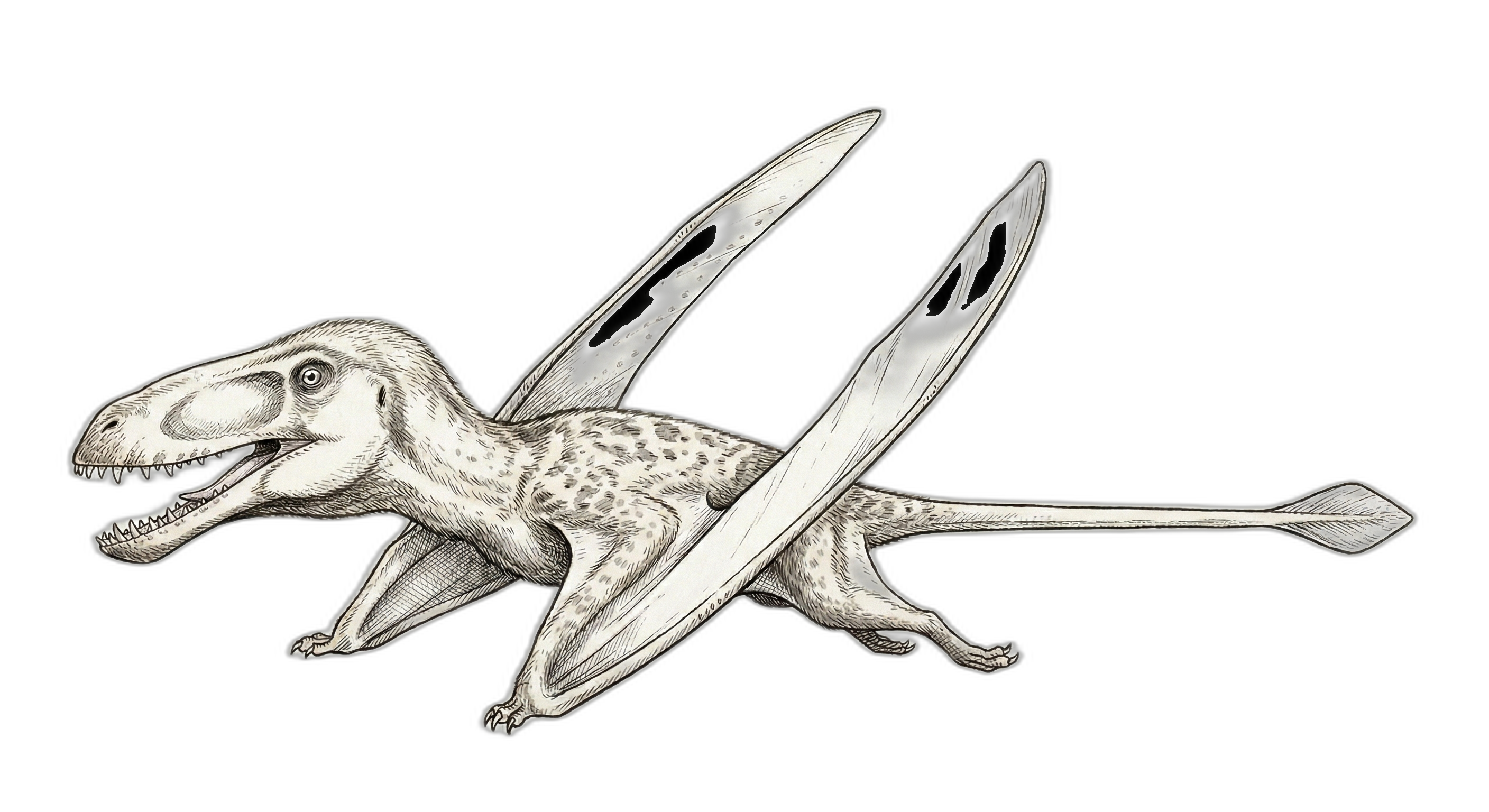
Caelistiventus hanseni
1.5m long
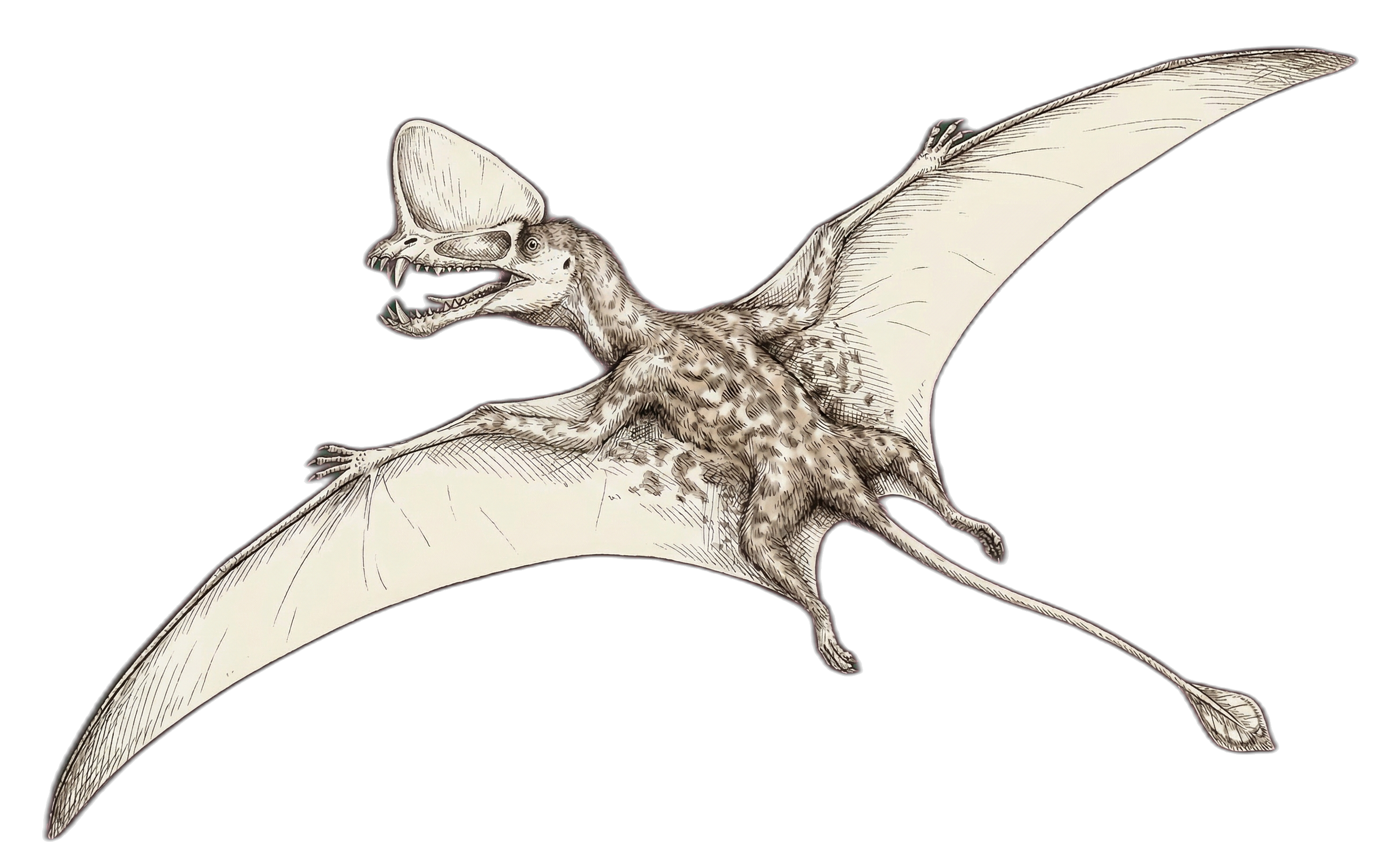
Caviramus schesaplanensis
1.35m long
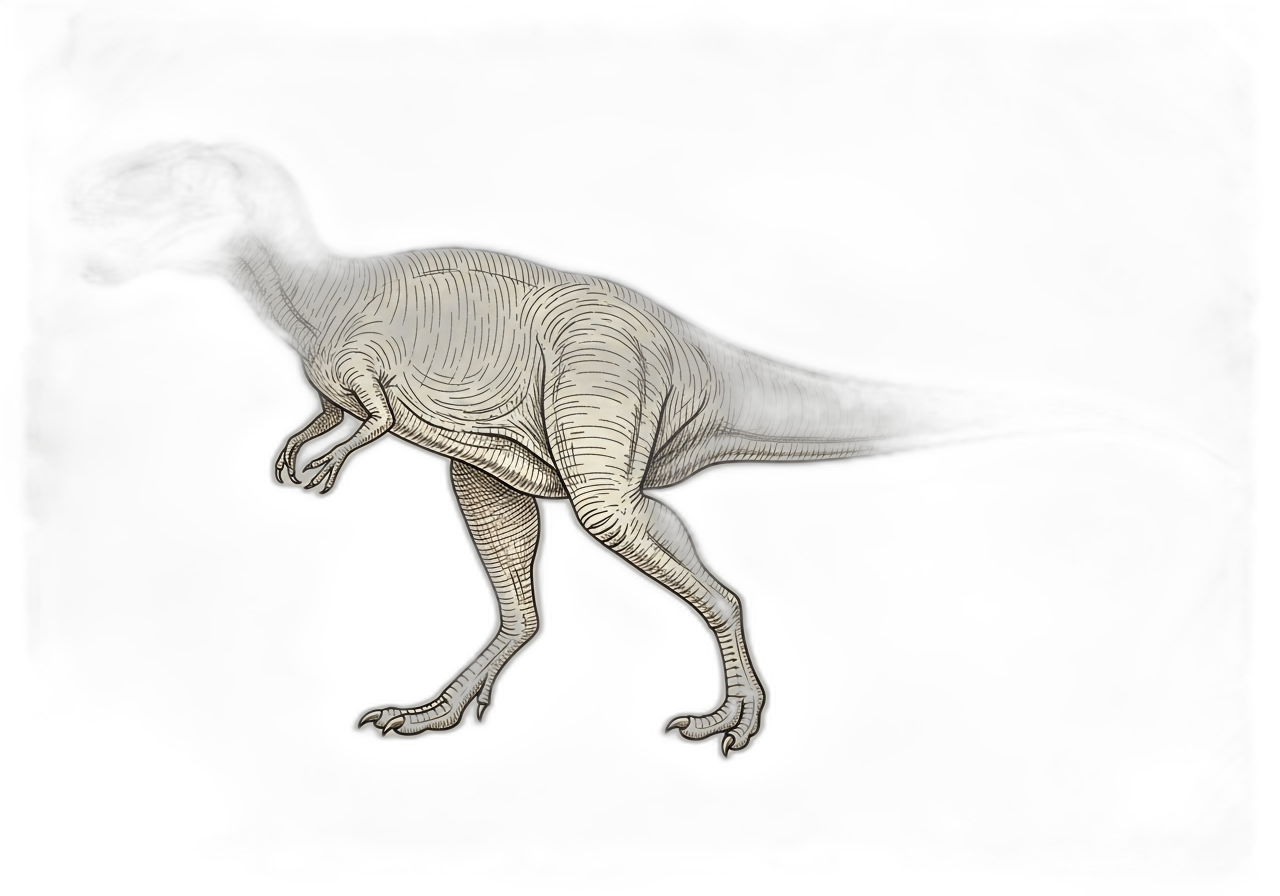
Coelophysis bauri
3m long
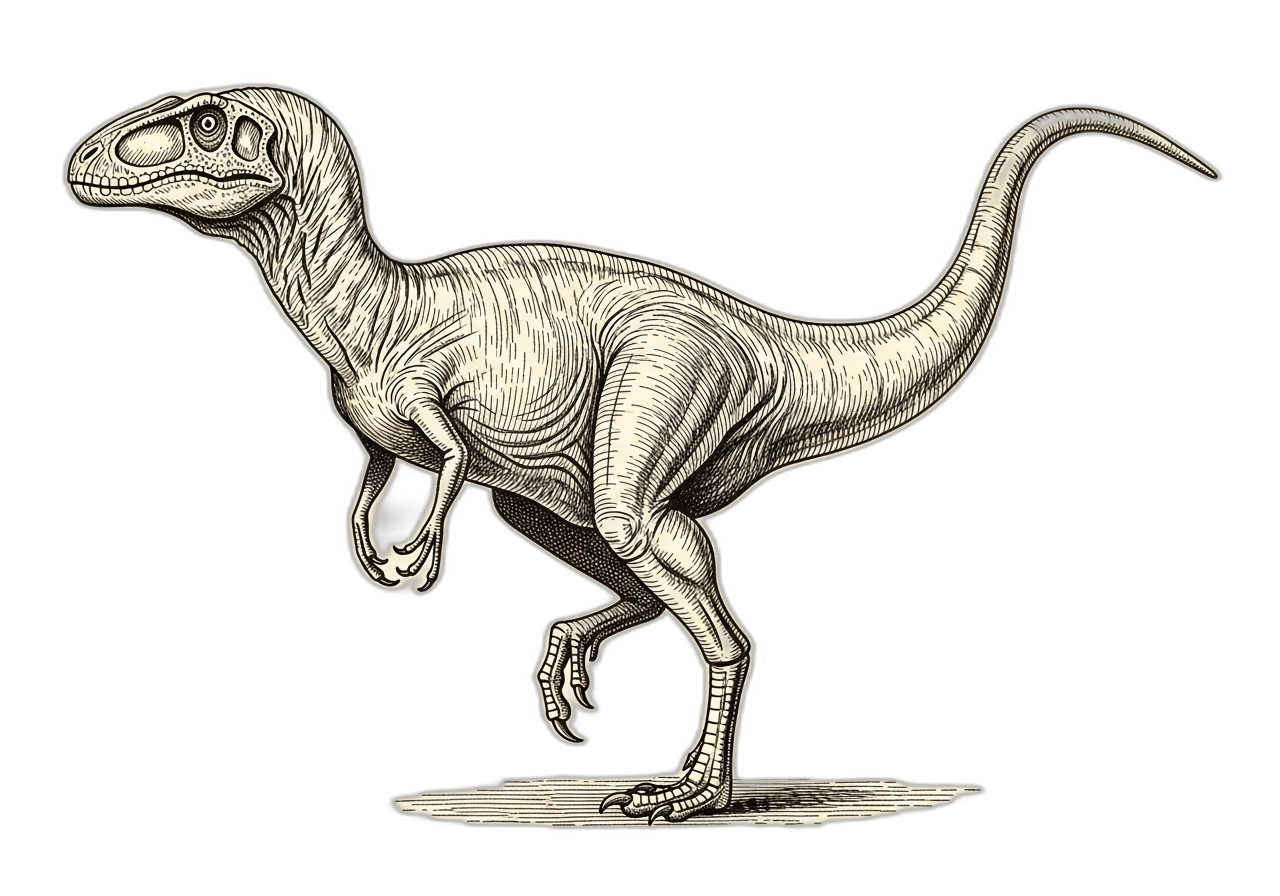
Eodromaeus murphi
1.2m long
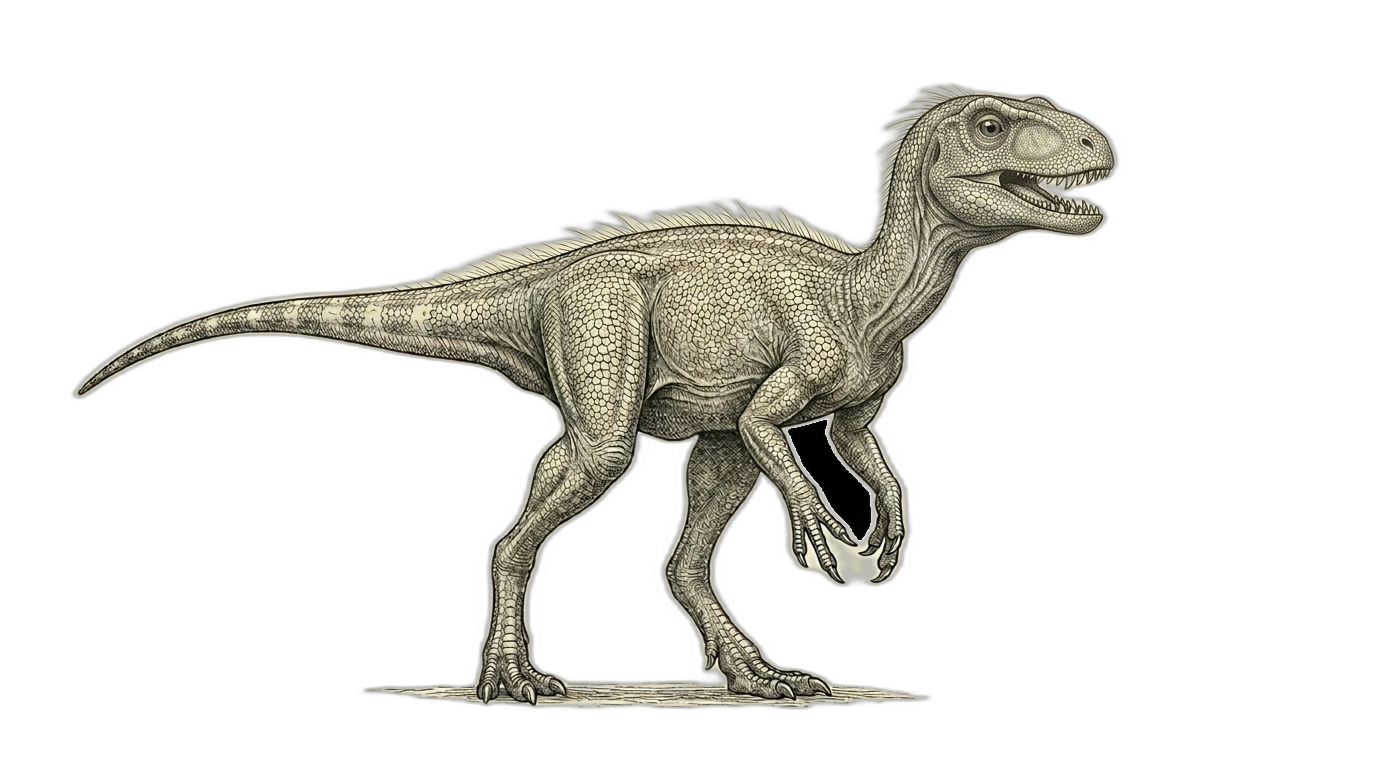
Eoraptor lunensis
1m long
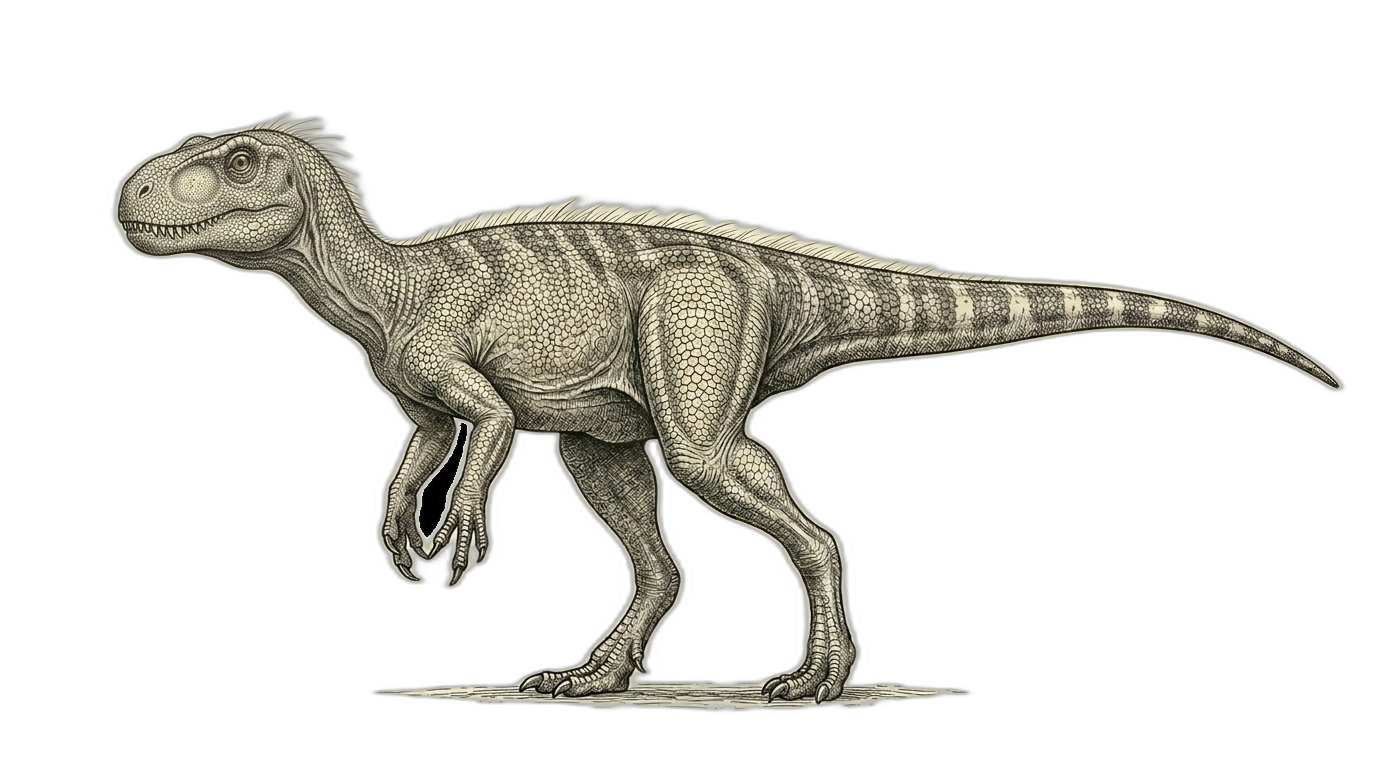
Herrerasaurus ischigualastensis
5m long
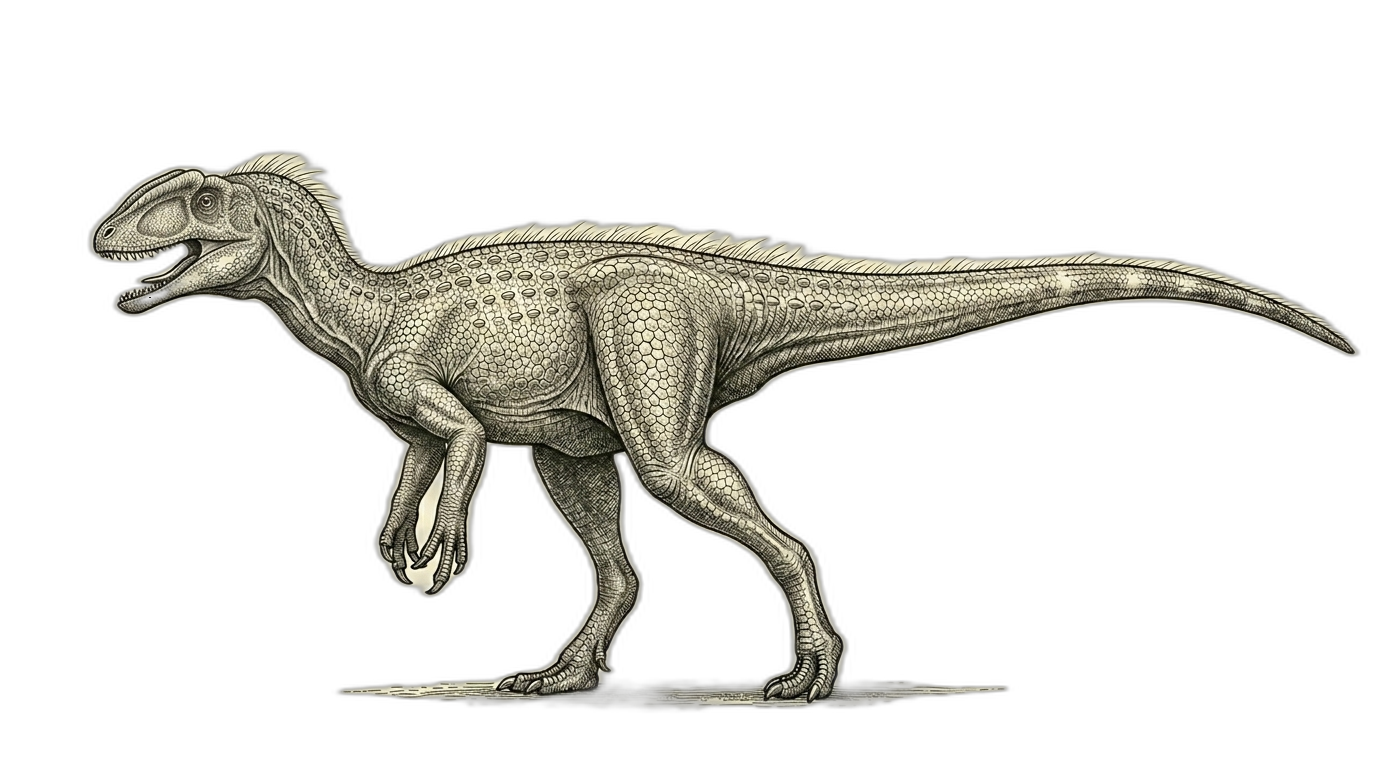
Liliensternus liliensterni
7m long
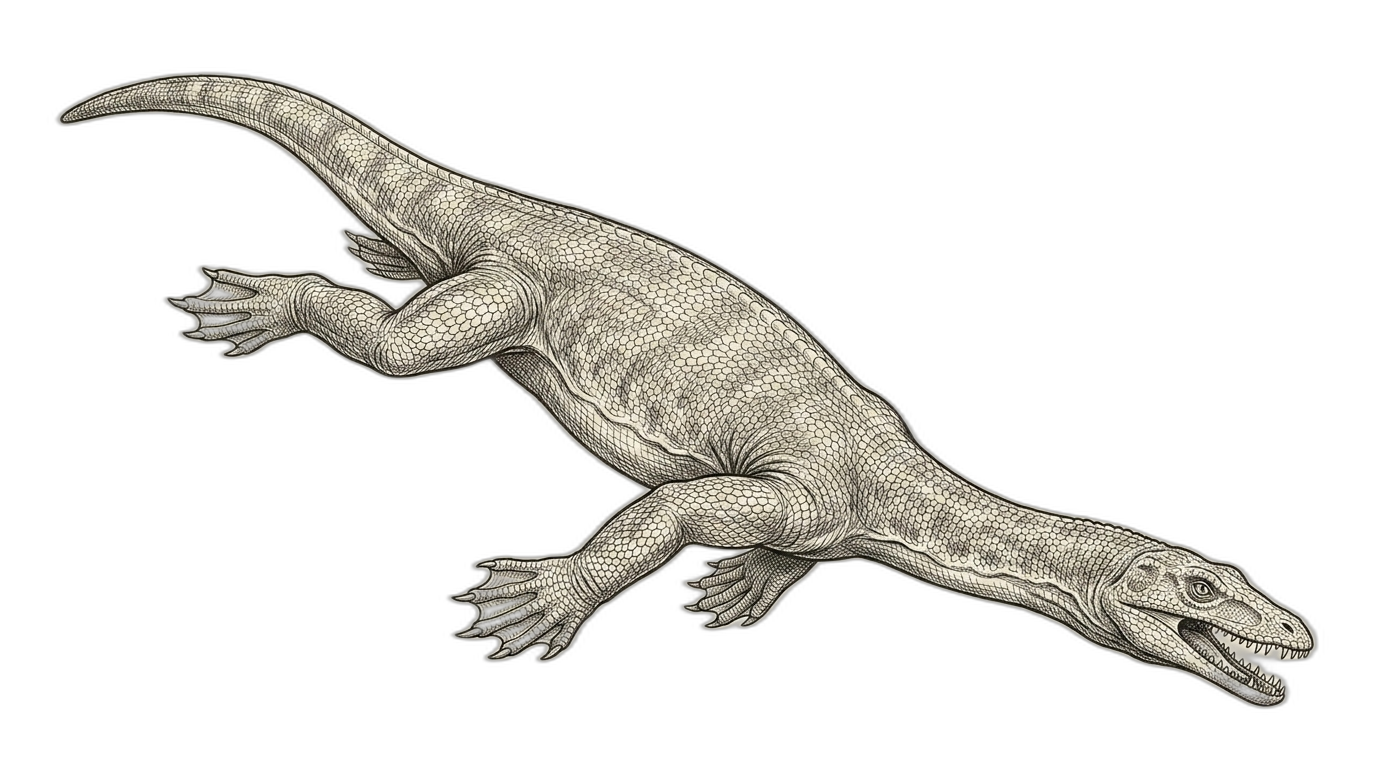
Nothosaurus mirabilis
3m long
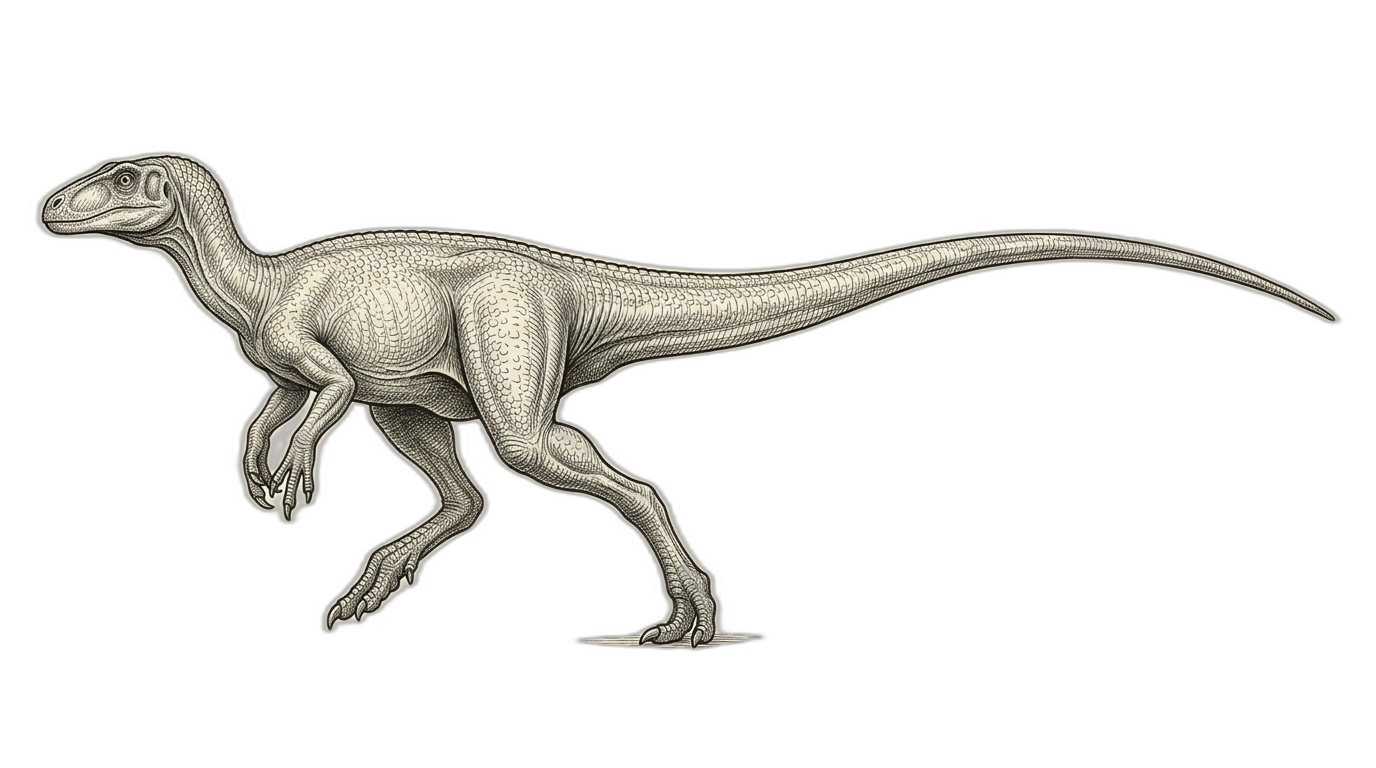
Pisanosaurus mertii
1m long
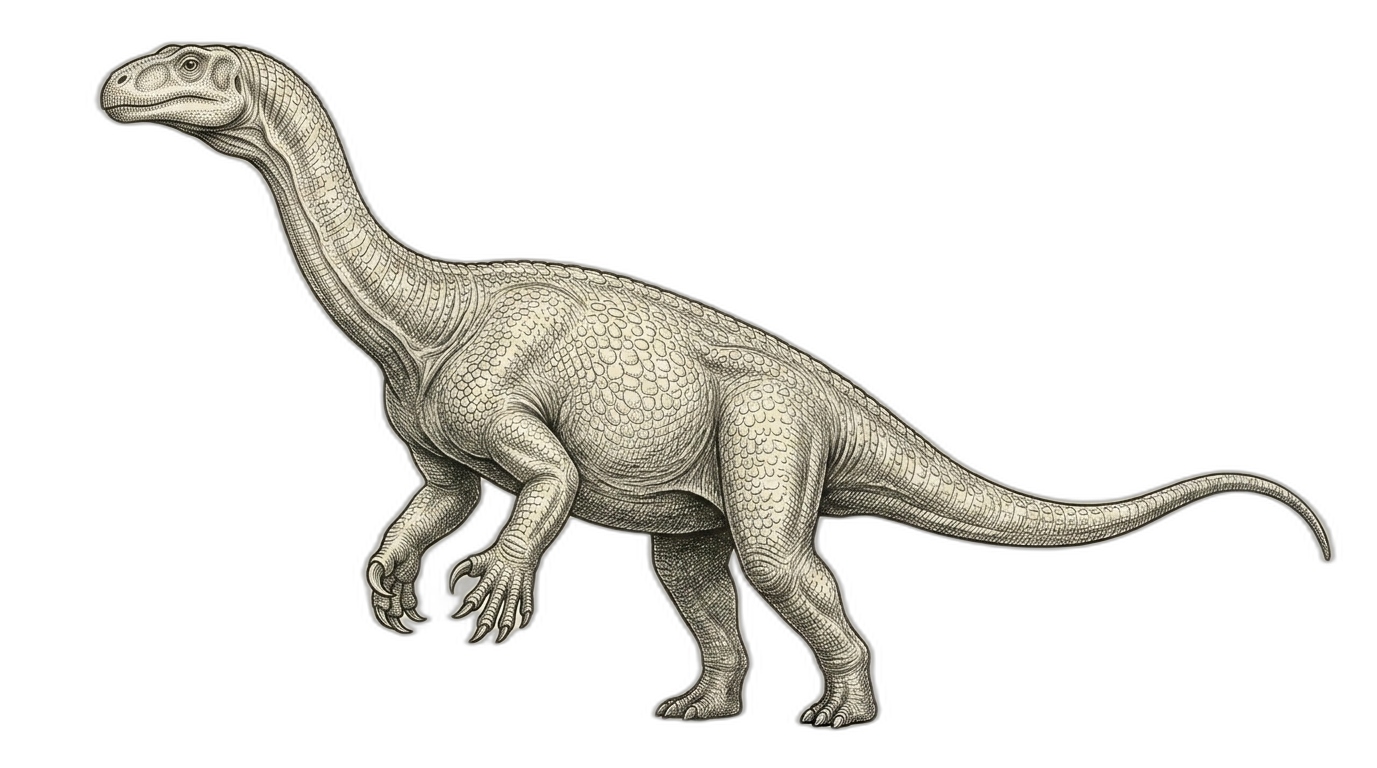
Plateosaurus engelhardti
7m long
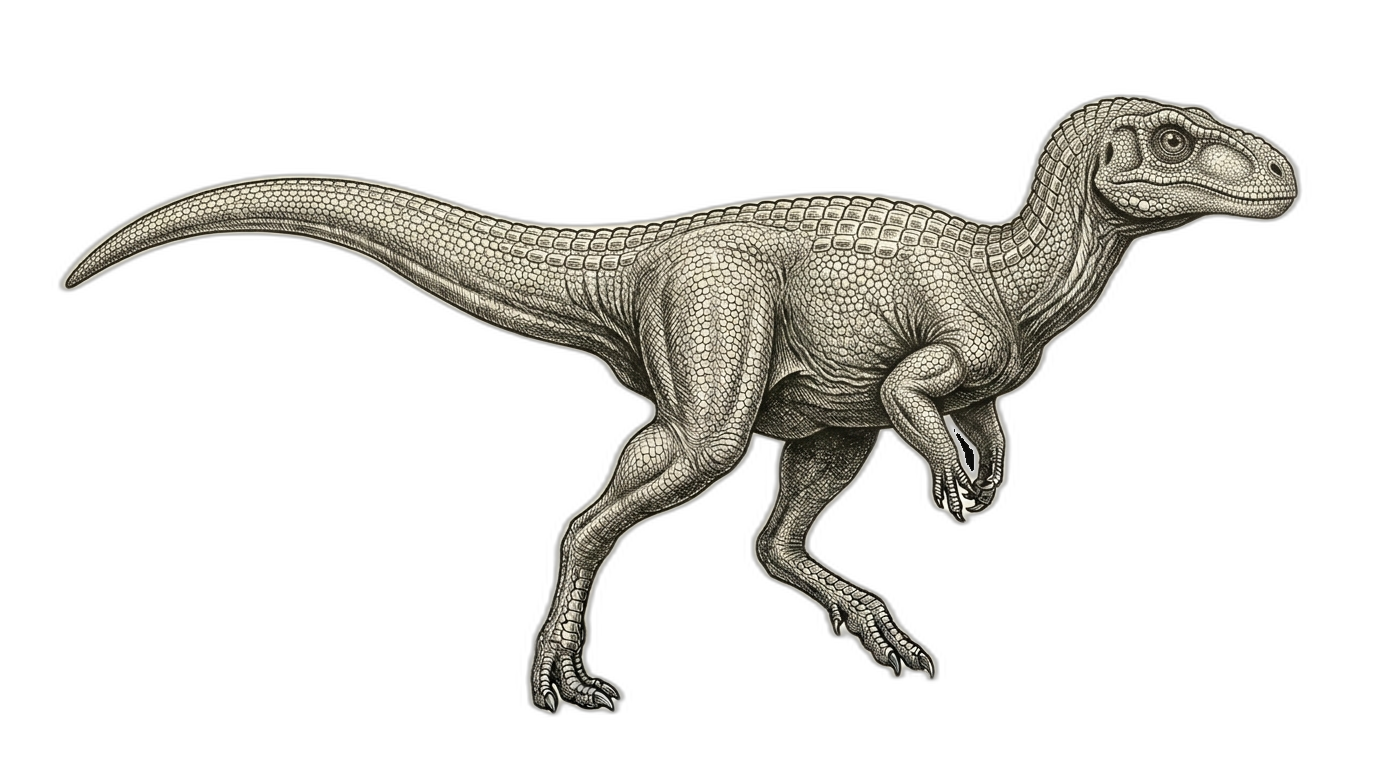
Staurikosaurus pricei
2.25m long